UK to Lead Development of Three Undersea Sensors for AUKUS Drones

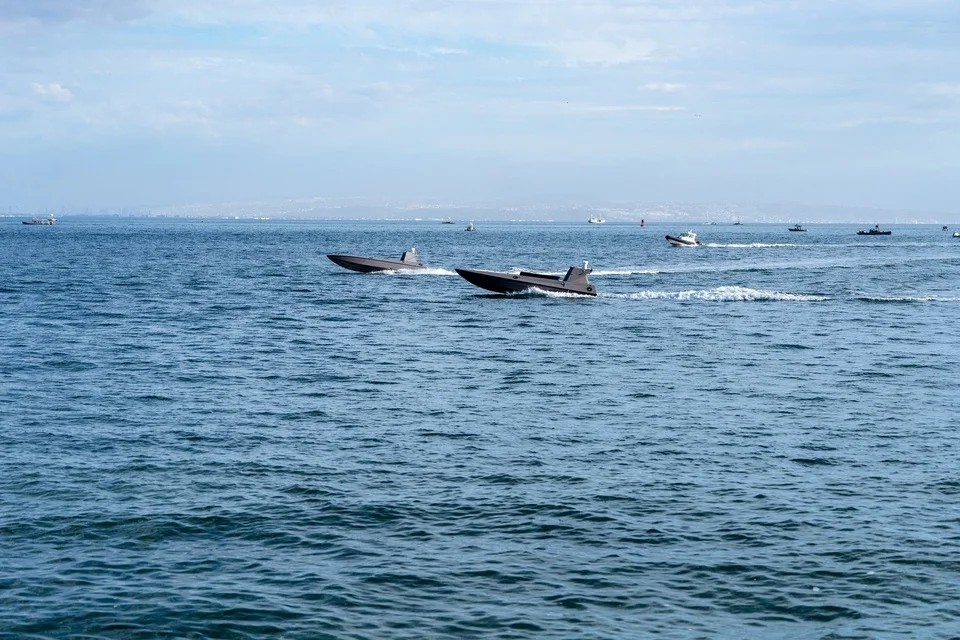
The UK Ministry of Defence says it will lead development of three new sensor payloads for uncrewed underwater vehicles under the AUKUS security partnership. The announcement, made on October 27, capped a week of trials at the Maritime Big Play-Pacific exercise in San Diego, California, and marks one of the first tangible outputs from the pact’s technology-sharing track.
The three payloads fall under AUKUS Pillar II’s first “signature project,” unveiled in May 2026. Once developed, they are due to be fitted across British, American and Australian underwater drone fleets starting in 2027.
Three sensors, three jobs
The systems are a Synthetic Aperture Sonar for detailed underwater imaging and seabed mapping; a deployable Anti-Submarine Warfare sensor to detect and classify threats; and a deployable non-kinetic effector that produces underwater effects without a conventional strike. Together, they are meant to let uncrewed vehicles cover wider ocean areas and help protect subsea infrastructure such as cables and pipelines.
What happened at Maritime Big Play
The UK led the exercise’s anti-submarine warfare strand, fielding 13 uncrewed surface vessels, two ASW targets and four underwater gliders from six British industry partners, with 12 UK firms taking part overall. Four companies that won the AUKUS Maritime Innovation Challenge — SEA Ltd, Decision Analysis Services, A2i and US-based MSI Transducers — will share £3 million (about $4 million) to build command, control and coordination systems linking different underwater platforms.
Earlier in October, Britain’s extra-large uncrewed submarine XV Excalibur fired a US-Australian-built heavyweight torpedo, which the MoD described as a first for an uncrewed submarine. The timing alongside the San Diego sensor trials suggests both the weapons and sensing sides of the programme are maturing in parallel.
What officials said
UK Defence Readiness and Industry Minister Luke Pollard said “the UK is all in on AUKUS, and this cutting-edge technology shows why,” pointing to skilled jobs supported at firms in Frome, Basingstoke and Dorchester. Sir Stephen Lovegrove, the Prime Minister’s Special Representative on AUKUS, called the partnership “uniquely powerful” and said Britain was stepping forward to lead three of its most advanced undersea sensor payloads. Royal Navy Captain Keith Taylor said the San Diego exercise helps “turn autonomy into operational advantage” by bringing scientists, industry and warfighters together.
Why it matters
The project is framed as part of the UK’s four-year Defence Investment Plan, which sets out £298 billion in spending — the largest sustained defence budget increase since the Cold War — and as a step toward what London calls a “Hybrid Navy” combining crewed and uncrewed forces.
It also matters because it is the first concrete undersea-sensor output from AUKUS Pillar II, which until now has mostly been discussed in terms of future ambitions rather than delivered hardware. Pillar I, launched in 2021, has focused on supplying Australia with nuclear-powered, conventionally armed submarines; Pillar II covers broader technology cooperation on AI, cyber, hypersonics and undersea autonomy. Integrating a common sonar and ASW sensor suite across three allied fleets could standardise undersea awareness and interoperability for future joint operations — a development NATO members, including Turkey, are likely to watch as a benchmark for allied undersea-sensing cooperation beyond the alliance’s own formal structures.
Sources
UK Ministry of Defence (GOV.UK), “UK sets pace on new undersea sensors to detect threats, as AUKUS partners test advanced kit in San Diego,” October 27, 2026. Source — official statement, quotes, programme figures and photo.
The Defense Post, “UK to Develop Three Underwater Drone Payloads Under AUKUS,” October 30, 2026. Source — confirmation and additional context.