Rafael Unveils Super Ice: A 454 kg Warhead for the Ice Breaker Family

Rafael Advanced Defense Systems has added a third missile to its Ice Breaker line. Without disclosing range or speed, the company pitches Super Ice as a long-range strike option against hardened and high-value targets, including air defense systems.
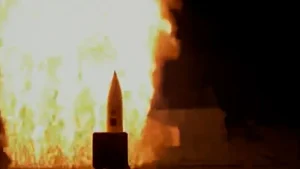
Israeli defense contractor Rafael Advanced Defense Systems unveiled a new cruise missile, Super Ice, at a presentation in Haifa in November 2026. It joins Sea Breaker, introduced in 2021, and Ice Breaker, introduced in 2023, as the third member of the family.
Rafael calls Super Ice a “fifth-generation cruise missile.” Company chairman Yuval Steinitz described it as “the best cruise missile of its kind in the world” and said it offers an ideal long-range strike option against high-value targets, including air defense systems.
According to the company, Super Ice is comparable in size to the US-made Tomahawk and is noticeably larger than both Sea Breaker and Ice Breaker. Its warhead is listed at 454 kilograms (1,000 pounds) — roughly four times the 113 kg (250 lb) warhead carried by Sea Breaker.
Rafael has not released range, speed or detailed dimensions. The company says only that the missile is “strategic” in nature and will fly farther than its two predecessors; for comparison, Sea Breaker’s known range is about 300 kilometers.
The missile is designed for air, land and sea launch. Breaking Defense reports it is compatible with the MK83 bomb body, allowing launch from aircraft that already carry that munition, such as the F-15, F-16, Tornado and Typhoon; Infodefensa reports that integration would not require major aircraft modification.
Gad Geva, senior vice president of Rafael’s Air Systems Division, said Super Ice shares launch infrastructure, mission planning and logistics support with the rest of the Ice Breaker family. He said this common architecture could lower life-cycle costs and allow operators to combine both missiles depending on the target and mission.
Rafael describes Super Ice as featuring autonomous navigation, low-altitude terrain-following flight, resistance to electronic warfare, and the ability to operate where GNSS signals are denied. Targeting relies on an electro-optical seeker using image recognition and correlation, which the company presents as its key to high accuracy.
The company lists hardened targets such as bunkers, ballistic missile launch infrastructure and large naval vessels among Super Ice’s intended uses. CEO Yoav Tourgeman said the missile answers growing international demand for standoff strike capability suited to multidomain operations.
Rafael has not named a customer or announced an order for Super Ice, and it did not answer whether the missile is operational. The company has previously cited more than $1 billion in orders by 2023 and over 1,000 units sold by 2024 for the broader Ice Breaker family — figures that predate Super Ice and are not specific to it.
The unveiling comes as several NATO and Middle Eastern air forces seek expanded standoff strike capability. With Rafael withholding range and performance data, independent assessment of Super Ice remains limited to the manufacturer’s own claims for now.
Sources
- Breaking Defense, “Israel’s Rafael unveils new, larger cruise missile dubbed ‘Super Ice'”, Nov. 11, 2026 — https://breakingdefense.com/2026/11/israels-rafael-unveils-new-larger-cruise-missile-dubbed-super-ice/ — used for technical details and company statements.
- Infodefensa, “Rafael presenta el misil crucero Super Ice, nueva arma de largo alcance con ojiva de 454 kilos para atacar objetivos estratégicos”, Nov. 11, 2026 — https://www.infodefensa.com/texto-diario/mostrar/6087376/rafael-presenta-misil-crucero-super-ice-nueva-arma-largo-alcance-ojiva-454-kilos-atacar-objetivos-estrategicos — used to verify the venue and context of the unveiling.