UK Commits £90 Million to Atlantic Net: A Sensor Web Built to Track Russian Submarines

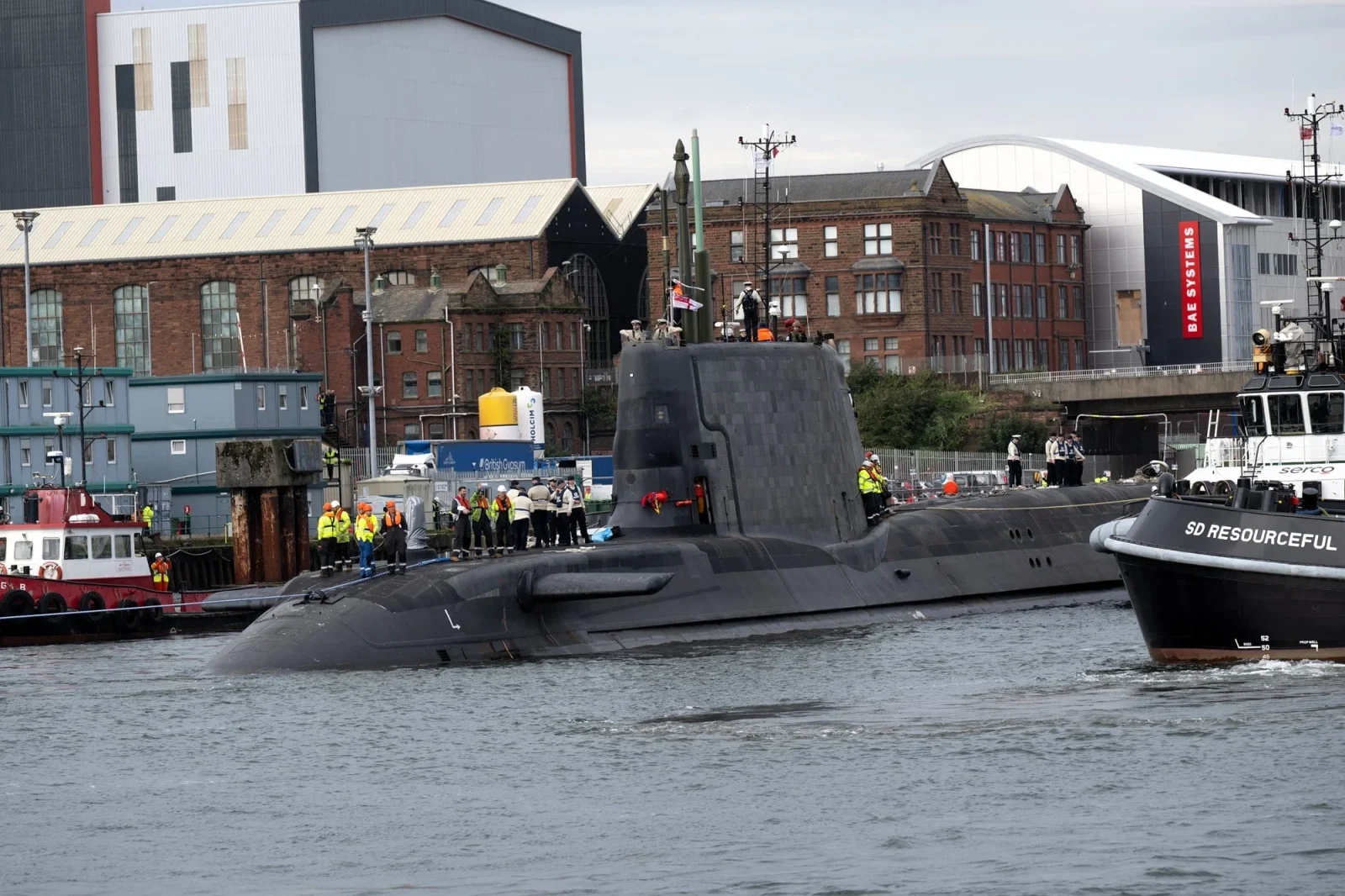
The United Kingdom is launching a £90 million investment in an underwater sensor network aimed at countering rising Russian submarine activity in the North Atlantic. The Royal Navy signed a framework agreement on 10 November 2026 with Hampshire-based Ocean Infinity Solutions to build the system, named Atlantic Net, following its announcement at the International Sea Power Conference in Oslo, Norway.
Atlantic Net is described as the first phase of the Royal Navy’s broader “Atlantic Bastion” effort. The program combines underwater sensors, maritime drones and AI-assisted data analysis to monitor undersea threats across the North Atlantic. As the Royal Navy’s newly named Commercial Mission Partner, Ocean Infinity will handle integration of maritime systems, underwater sensing, communications, remote operations and data services, along with long-term sustainment of the network.
The Royal Navy’s statement does not specify the sensor types or drone models involved. While the program covers the North Atlantic broadly, officials did not single out the GIUK gap — the Greenland-Iceland-UK chokepoint long associated with anti-submarine operations — as a specific focus area.
Defence Readiness and Industry Minister Luke Pollard linked the initiative to threat detection, protection of critical undersea infrastructure and the security of the UK’s nuclear deterrent, though no direct quote from him was given. First Sea Lord General Sir Gwyn Jenkins told the Oslo conference that Atlantic Net “will become operational within months,” without giving a firm in-service date.
The investment responds to growing Russian undersea activity in the North Atlantic, including the movement of attack submarines and the presence of vessels linked to Russia’s Main Directorate for Deep-Sea Research (GUGI), a unit associated with operations near undersea cables and energy infrastructure. On 9 April 2026, the UK Ministry of Defence disclosed an operation in which British forces, working with Norway and other allies, tracked a Russian attack submarine that officials assessed was acting as a distraction while other Russian assets operated near critical undersea infrastructure.
Ocean Infinity’s selection is expected to support close to 200 skilled jobs at the company and in its immediate supply chain. The firm’s prior experience lies largely in deep-sea search and underwater survey work; the Atlantic Net contract significantly expands its role in defence.
The program fits a wider pattern among NATO members of investing in undersea surveillance as Russian activity near subsea cables and pipelines has drawn growing concern across the alliance. Seen alongside similar investments by other allies, Atlantic Net points to a shift toward sensor- and AI-based undersea security architecture in the North Atlantic.
Technical specifics — the initial geographic coverage, the number of sensors or platforms involved, and the concrete functions of the AI component — have not been disclosed. The Royal Navy is expected to provide further detail on the program’s progress in the coming months.
Sources
- Army Recognition, “UK invests £90 million in underwater sensors to track Russian submarines in North Atlantic,” 11 November 2026 — armyrecognition.com — primary source for the facts and timeline in this article.