Kenya’s Military Strength 2026: Personnel, Budget and the Bayraktar TB2 Era

Kenya fields around 50,000 active-duty personnel across its Army, Navy and Air Force, plus roughly 25,000 paramilitary forces, backed by a defense budget of approximately KES 170 billion (about $1.1 billion). Global Firepower’s 2026 index ranks Kenya 84th of 145 countries reviewed. East Africa’s most capable navy, a decades-old counter-insurgency campaign against al-Shabaab on the Somali border, and Kenya’s new status as an operator of Turkish Bayraktar TB2 combat drones since late 2024 define the Kenya Defence Forces (KDF) heading into 2026.
Global Firepower (GFP) figures cited below are a widely used comparative index, not official government data, and are marked accordingly. Where possible, they are cross-checked against Kenyan government statements and independent reporting.
Table of Contents
- Kenya’s Military at a Glance (2026)
- Personnel and Force Structure
- Defense Budget and Spending
- Air Power: Aircraft and Helicopters
- Land Forces: Armor and Artillery
- Naval Forces: Guarding the Indian Ocean
- Turkey-Kenya Defense Ties: The Bayraktar TB2 Era
- Security Context: Al-Shabaab and the Somali Border
- How Kenya Compares to Its Neighbors
- Frequently Asked Questions
- Sources
Kenya’s Military at a Glance (2026)
| Metric | Figure | Source / Note |
|---|---|---|
| Active personnel | ~50,000 | GFP 2026; KDF does not publish a detailed public order of battle |
| Paramilitary | ~25,000 | GFP 2026 (includes police/administration police-linked units) |
| Defense budget | ~KES 170 billion (~$1.1bn) | National Treasury FY2024/25 allocation; independent trackers |
| Defense budget, GFP estimate | ~$1.65bn | Global Firepower 2026 (uses different methodology, not directly comparable) |
| Share of GDP | ~1.1% | World Bank / Trading Economics series |
| GFP world rank | 84 of 145 | Global Firepower 2026 PowerIndex |
| Total aircraft | ~120–154 (source-dependent) | GFP 2026; includes trainers and utility types |
| Tanks | ~78 Vickers Mk3 | IISS Military Balance-style estimates; GFP lists a higher, likely inflated count |
| Naval assets | ~20–27 vessels | GFP 2026; mostly patrol craft, no submarines or major surface combatants |

Personnel and Force Structure
The Kenya Defence Forces comprise three services — the Kenya Army, the Kenya Navy and the Kenya Air Force — under a joint KDF command structure headed by the Chief of the Defence Forces, with the Ministry of Defence providing civilian oversight. Global Firepower’s 2026 dataset puts active personnel at roughly 50,000, with an additional 25,000 in paramilitary roles, a category that in Kenya’s case overlaps with police-linked security units rather than a separate reserve army.
Kenya has been one of the largest African troop contributors to multinational peace-support operations in Somalia. KDF forces entered southern Somalia in October 2011 in a joint operation with Somali government forces against al-Shabaab, and were absorbed into the African Union mission (then AMISOM, now the African Union Support and Stabilization Mission, ATMIS/AUSSOM) in mid-2012. Kenyan troops have operated mainly in the Juba regions of southern Somalia (then-designated Sector 2) and along the Gedo–Mandera–Wajir corridor (Sector 3), a deployment pattern that still shapes force posture in 2026.
Defense Budget and Spending
Kenya’s National Treasury allocated approximately KES 170 billion (roughly $1.1 billion at prevailing exchange rates) to defense for FY2024/25, a figure independent trackers expect to hold roughly steady in nominal terms into 2026 as the budget tracks GDP growth. That puts military spending at about 1.1% of GDP — modest by regional standards, though the absolute budget is among the largest in East Africa. Global Firepower’s own budget estimate for 2026 (~$1.65 billion) uses a different, broader methodology and should not be read as a second confirmation of the same number; the gap between the two figures is a reminder that GFP’s financial figures are a modeled estimate, not a substitute for a government’s own budget documents.
Spending priorities reported in recent budget cycles include naval patrol-vessel procurement, counter-drone and surveillance equipment for the Somali border, and the drone acquisition covered below.
Air Power: Aircraft and Helicopters
The Kenya Air Force’s fixed-wing combat fleet is built around an aging core: about 17 Northrop F-5E and 4 F-5F Tiger II fighters flown from Laikipia Air Base near Nanyuki, supplemented by roughly 8 BAE Hawk Mk52 light-attack and trainer jets. Both types date to the 1970s–80s and Kenyan officials and regional defense press have flagged the need for a modern replacement, though no fighter contract has been confirmed as of 2026. Global Firepower’s broader “total aircraft” figure (which ranges from roughly 120 to over 150 depending on the count date, since it bundles in transports, trainers and utility aircraft) is therefore a poor proxy for actual air-combat capability.
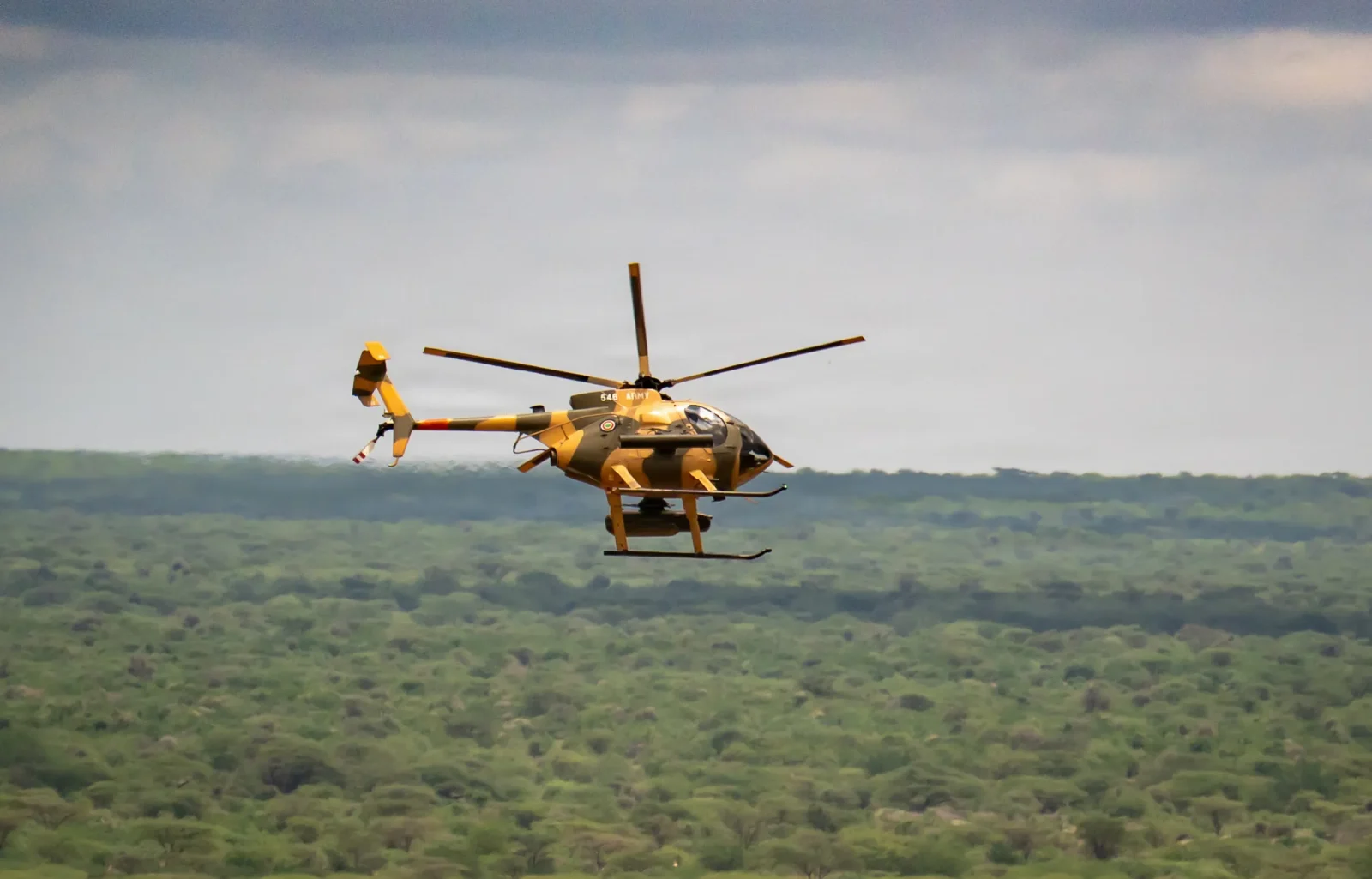
Rotary-wing assets include utility and light-attack helicopters such as the MD 530F, used for close air support and border patrol, alongside larger transport types used in troop movement and disaster response.
Land Forces: Armor and Artillery
Kenya’s armored fleet is centered on an aging stock of Vickers Mk3 main battle tanks (independent order-of-battle estimates put the operational number well below Global Firepower’s headline armored-vehicle count, which bundles in a wide range of light and wheeled vehicles). Artillery holdings are modest and dominated by towed pieces rather than self-propelled systems, reflecting a force structure built for counter-insurgency and border operations rather than large-scale conventional maneuver warfare.
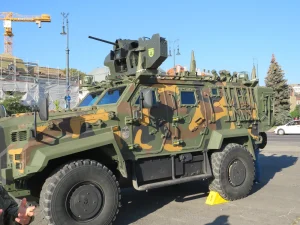
Kenya has not been reported as an operator of Turkish wheeled armored vehicles such as the Otokar Cobra or FNSS PARS, unlike several West African states; its land-forces modernization to date has focused more on aviation and maritime platforms.
Naval Forces: Guarding the Indian Ocean
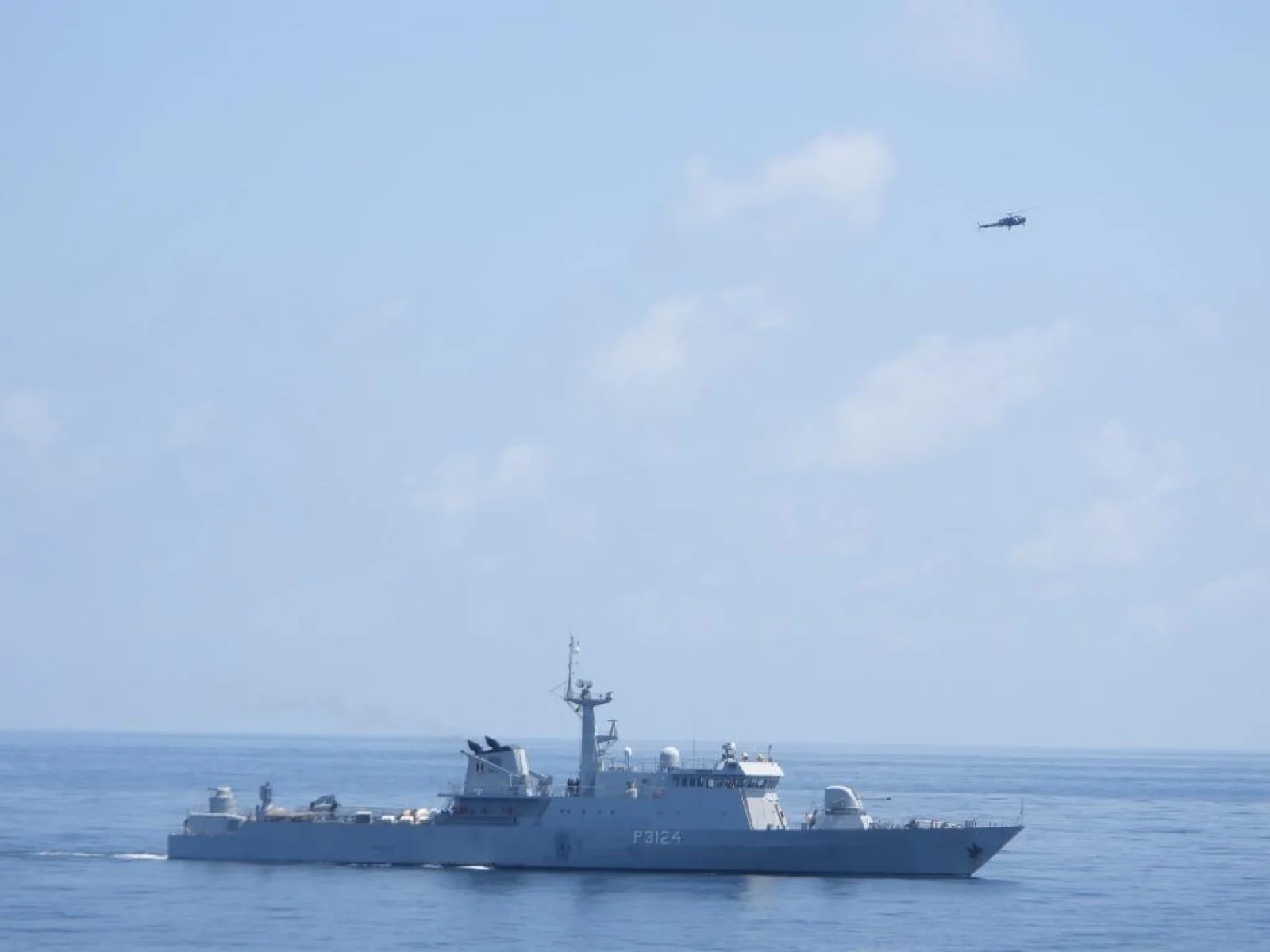
The Kenya Navy is widely regarded as the best-equipped naval force on the East African coast, a status built through sustained training and equipment support from the United States, United Kingdom, France and South Africa. Its mission set centers on Exclusive Economic Zone monitoring, anti-piracy patrols and counter-smuggling operations along a coastline that has periodically faced militant infiltration from Somalia.
The fleet’s order of battle is dominated by offshore and inshore patrol vessels rather than major surface combatants; Global Firepower lists no submarines or aircraft carriers, consistent with a coastal-defense and constabulary mission rather than blue-water ambitions. Kenya’s newest patrol asset, the KNS Jasiri, has been used both operationally and for crew training.
Turkey-Kenya Defense Ties: The Bayraktar TB2 Era
Kenya became the newest confirmed African operator of the Turkish Bayraktar TB2 combat drone in late 2024, following a training program for Kenyan Air Force personnel that concluded in August 2024. Turkish and Kenyan officials, along with multiple regional defense outlets, confirmed the delivery of six TB2 systems by early 2025; some reporting has suggested a larger eventual order based on the reported size of the training cohort, but that higher figure remains an unverified estimate rather than a confirmed contract quantity.
The acquisition places Kenya alongside a growing list of African TB2 operators that includes Nigeria, Ethiopia, Niger, Burkina Faso, Somalia, Togo and Morocco — part of a broader pattern in which Baykar’s combat-proven, comparatively low-cost platform has become a common answer to counter-insurgency surveillance and strike requirements across the continent. For Kenya specifically, the drones give the KDF a persistent intelligence, surveillance and strike capability along the Somali border that its aging F-5 fleet cannot economically provide, and complement rather than replace the manned close-air-support role played by aircraft like the MD 530F.
As with other African TB2 deals, public reporting has not disclosed a unit price for Kenya’s contract; procurement terms, financing arrangements and any associated technology-transfer or maintenance-training components have not been made public by either government.
Security Context: Al-Shabaab and the Somali Border
Kenya’s defense posture is shaped primarily by the al-Shabaab insurgency across the border in Somalia, which has repeatedly struck Kenyan territory — most notably the 2013 Westgate mall and 2015 Garissa University attacks — and continues to threaten the northeastern counties of Mandera, Wajir and Garissa. KDF’s continued troop contribution to the African Union’s stabilization mission in Somalia (now AUSSOM, the successor to ATMIS) remains the largest single driver of overseas deployment.
Secondary security concerns cited by Kenyan officials include cross-border banditry and cattle-rustling violence in the North Rift region, and, more recently, downstream effects of Red Sea shipping disruptions on regional maritime trade through the port of Mombasa. None of these threats has translated into confirmed conventional military conflict with a neighboring state, and Kenya’s 2026 force posture remains oriented toward counter-insurgency, border security and maritime patrol rather than symmetric warfare.
How Kenya Compares to Its Neighbors
| Country | Active personnel (GFP 2026) | Defense budget | GFP world rank | Confirmed Turkish platforms |
|---|---|---|---|---|
| Kenya | ~50,000 | ~$1.1bn (national budget) | 84 / 145 | Bayraktar TB2 (6 delivered, 2024–25) |
| Ethiopia | ~150,000+ | disclosed budget not publicly itemized | see Ethiopia profile | Bayraktar TB2 (confirmed operator) |
| Uganda | ~45,000 | see Uganda profile | see profile | Growing Turkish defense footprint |
| Tanzania | ~27,000 | see Tanzania profile | see profile | Not a confirmed TB2 operator |
Full breakdowns for each neighbor, including their own budget and equipment tables, are available in Envanter Medya’s Ethiopia, Uganda and Tanzania military-strength profiles linked above, alongside a continent-wide ranking in Strongest Army in Africa 2026 and a dedicated look at why several African militaries buy both Turkish and Chinese drones.
Frequently Asked Questions
How many active soldiers does Kenya have?
Global Firepower’s 2026 dataset lists approximately 50,000 active Kenya Defence Forces personnel across the Army, Navy and Air Force, plus roughly 25,000 in paramilitary roles. Kenya does not publish a detailed public order of battle, so this figure is a widely cited estimate rather than an official government release.
Does Kenya operate Bayraktar TB2 drones?
Yes. Kenya received six Bayraktar TB2 unmanned combat aerial vehicles from Turkey’s Baykar, delivered in late 2024 and early 2025 after Kenyan Air Force crews completed training in August 2024. This makes Kenya one of several African states, alongside Nigeria, Ethiopia and others, to operate the platform.
What is Kenya’s defense budget?
Kenya’s National Treasury allocated approximately KES 170 billion (about $1.1 billion) to defense for FY2024/25, equivalent to roughly 1.1% of GDP. Global Firepower’s own modeled estimate for 2026 is higher, around $1.65 billion, but the two figures use different methodologies and are not directly comparable.
What is the biggest security threat facing Kenya’s military?
The al-Shabaab insurgency based in southern and central Somalia is the dominant driver of Kenya’s defense posture, prompting a border and counter-insurgency deployment that has run continuously since 2011 and a sustained Kenyan troop contribution to the African Union’s stabilization mission in Somalia.
Is Global Firepower’s ranking an official military assessment?
No. Global Firepower is a privately compiled comparative index widely used for quick country-to-country comparisons, not an official source of military data. Where more authoritative figures exist — from Kenya’s own budget documents, SIPRI or IISS — this article notes them alongside the GFP figures.
Sources
- Global Firepower, “2026 Kenya Military Strength”
- Kenya National Treasury, FY2024/25 budget documents (via independent trackers, MilitarySpend, Trading Economics)
- DefenceWeb, “Kenya Defence Forces” country profile
- African Union Support and Stabilization Mission (AUSSOM) / former AMISOM, Kenya country page
- Türkiye Today, “Kenya acquires 6 Bayraktar TB2 drones from Türkiye, strengthening defense ties”
- Army Recognition, “Kenya Set to Receive Advanced Bayraktar TB2 Combat Drones from Türkiye”
- Military Africa, “Kenya receives Bayraktar TB2 drones from Turkey”
Last updated: September 17, 2026.