Top 10 Countries With the Most Helicopter Carriers (2026): Türkiye’s TCG Anadolu Makes the List — USA, China, Japan
Summary Not Found.
What is the most expensive, most prestigious and least common way to carry a war to an enemy’s shore? A floating airfield. Helicopter carriers — amphibious assault ships and helo-carrying flat-tops — give a navy the power to project force from sea to land, run amphibious landings, deliver humanitarian aid, and increasingly to launch unmanned aircraft. The number of nations that field such a ship is barely more than a handful.
So who belongs to this exclusive club? Which superpower sits at the very top — and is it any surprise? More importantly: where does Türkiye stand, and why does TCG Anadolu tell a much bigger story than its raw ranking suggests? One of only three single-ship nations on the list, Türkiye actually operates the newest vessel here — and the one that achieved a world first. We count down from #10 to #1; scroll to the end to see the top.
HELICOPTER CARRIERS — 2026
Türkiye fields one ship — but it is a world first. ★ = Türkiye
USA
9
China
4
Japan
4
France
3
Australia
2
Egypt
2
S. Korea
2
Türkiye ★
1
Brazil
1
Thailand
1
#10
🇹🇭 Thailand
HTMS Chakri Naruebet
1
ship
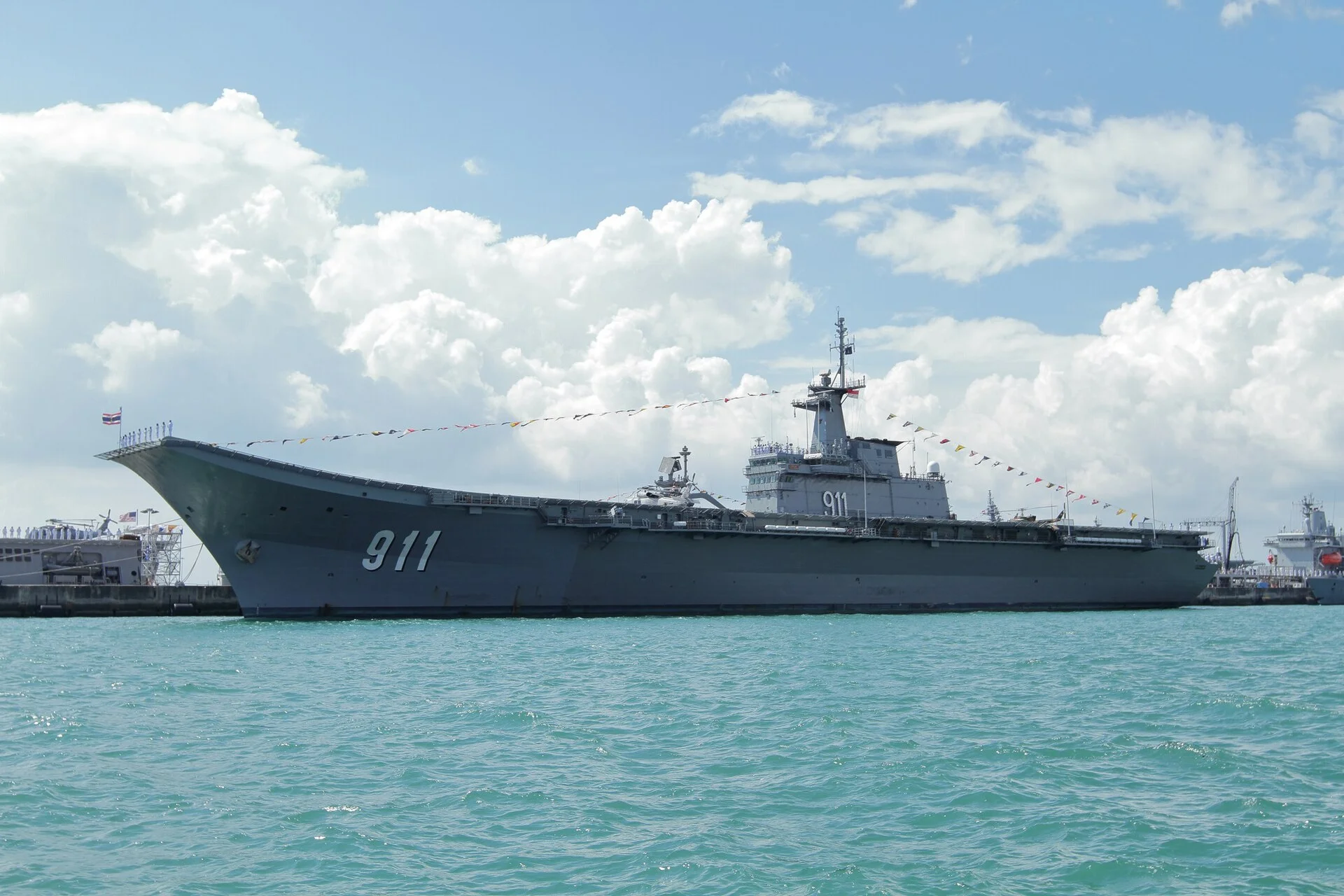
Royal Thai Navy HTMS Chakri Naruebet helicopter carrier
We open with the smallest aircraft/helicopter carrier in the world. Built in Spain in 1997, HTMS Chakri Naruebet is a scaled-down derivative of the Spanish Príncipe de Asturias design. It originally embarked AV-8S Harrier jump jets, but those were retired years ago, and the ship now operates effectively as a helicopter platform.
Tight budgets and a low operational tempo mean she spends long stretches alongside, often cited in royal-yacht and disaster-relief roles. Even so, Thailand remains one of the very few nations in Southeast Asia to operate a carrier-class ship at all — a capability most of its regional rivals simply do not have.
Ships
1
Class
Chakri Naruebet
Commissioned
1997
Role
Helicopter / amphibious support
Thailand opens the countdown with one ship. Next up: the largest warship in South America.
#9
🇧🇷 Brazil
NAM Atlântico (A140)
1
ship
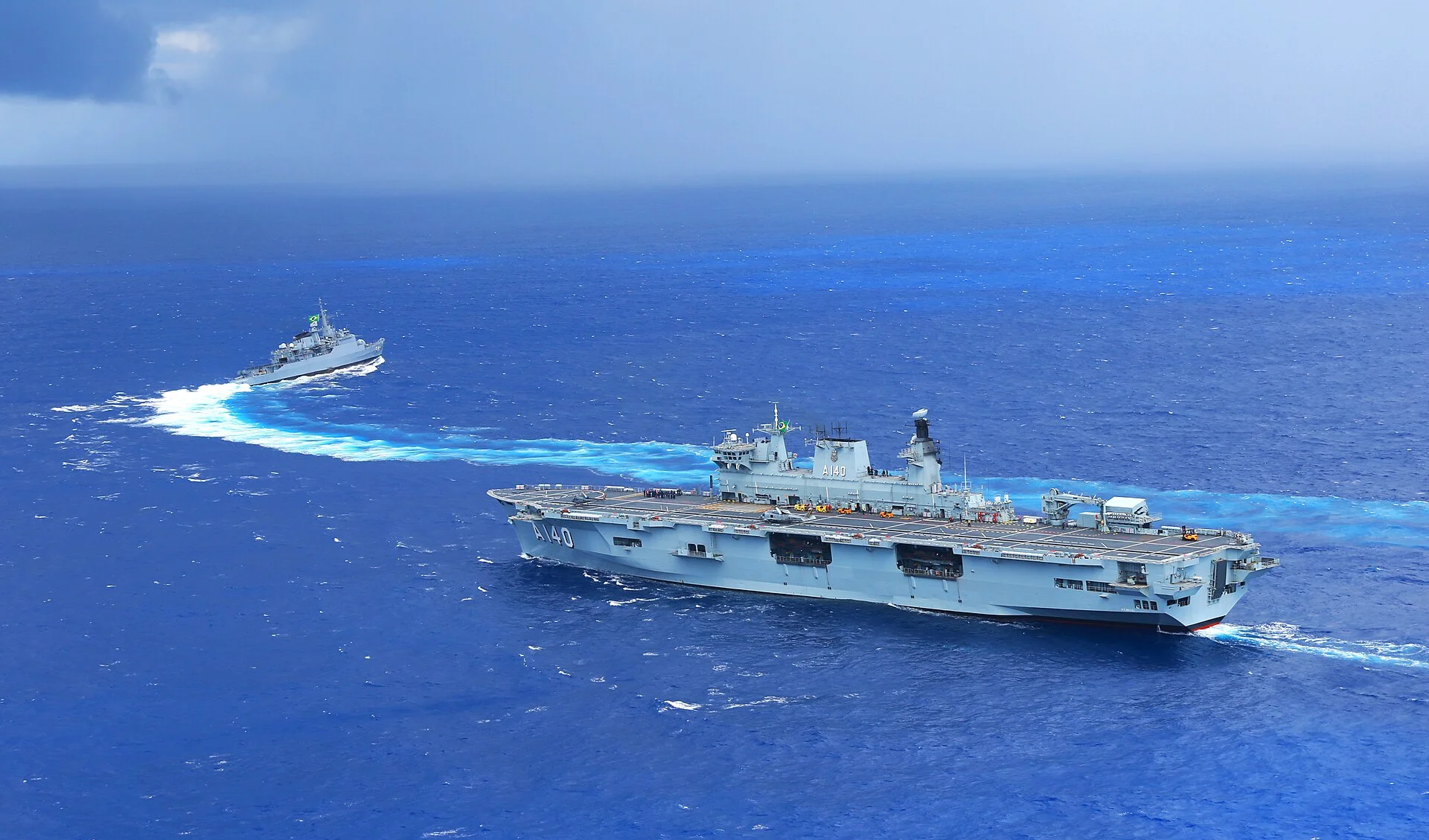
Brazilian Navy Atlântico multipurpose helicopter carrier
At #9 sits the largest warship in Latin America: NAM Atlântico. The ship is no stranger — she was formerly the Royal Navy’s HMS Ocean. Brazil bought the helicopter carrier from the UK in 2018 and made her the flagship of its fleet.
Atlântico gives Brazil continent-scale helicopter deployment, amphibious landing and disaster-relief capability. Even with a single hull, Brazil retains a decisive voice in the South Atlantic; regional neighbours such as Argentina and Chile field no ship in this class. Buying second-hand was a smart way to acquire strategic capability on a constrained budget.
Ships
1
Former name
HMS Ocean
Acquired
2018 (from UK)
Full load
~21,500 t
Now to the most remarkable ship on the list: a single hull, but a genuine world first.
#8
🇹🇷 Türkiye
TCG Anadolu (L-400)
1
ship
Turkish Naval Forces TCG Anadolu amphibious assault ship and drone carrier
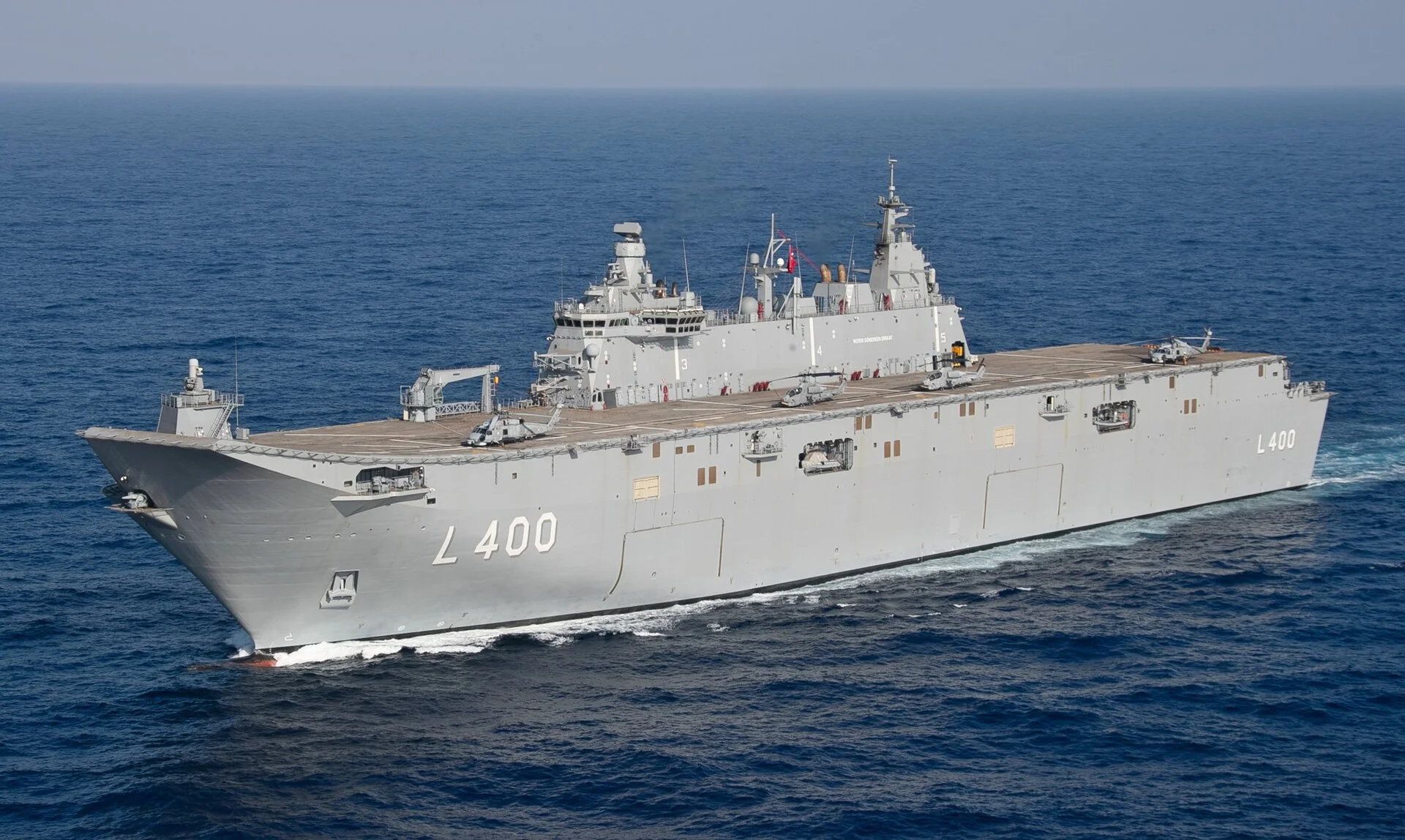
On raw hull count Türkiye is listed among the single-ship nations — but that ranking is only half the story. When TCG Anadolu entered service in 2023, the Turkish navy was suddenly promoted to the power-projection league. Built on the Spanish Juan Carlos I design, she is a sister to Australia’s Canberra class — meaning she descends from one of the most proven amphibious bloodlines afloat.
What sets Anadolu apart from every other ship on this list is her technology. After the F-35B procurement crisis, Türkiye turned a weakness into a global first by arming the ship with unmanned aircraft. TCG Anadolu is the first vessel in the world to operationally fly fixed-wing drones — the Bayraktar TB3, with the jet-powered KIZILELMA to follow. It is a template every major navy, from China to the United States, is now examining.
And this is not a one-ship story. A second LHD and national shipbuilding programmes are on the table. Anadolu is the seagoing face of the same domestic ecosystem that produces the HÜRJET jet, the MİLGEM/İstif frigates, the ALTAY tank and the KAAN fighter. She may look like one of the list’s smallest members, but Türkiye is proving that capability is not measured in numbers alone.
🇹🇷 TCG ANADOLU: THE WORLD’S FIRST DRONE CARRIER
2023
Commissioned
~27,000 t
Full load
TB3
First drone to fly off it
KIZILELMA
Jet-UAV next
TCG Anadolu became the first warship in the world to operationally launch and recover fixed-wing unmanned aircraft. A folding-wing, short-deck version of the Bayraktar TB3 was developed specifically for her; the jet-powered Bayraktar KIZILELMA is the next step. After the F-35B crisis, Türkiye reframed its ship not as a ‘carrier gap’ but as the home of a brand-new doctrine the rest of the world is now studying.
Ships
1 (+1 planned)
Class
Juan Carlos I-derived LHD
Commissioned
2023
World first
Drone carrier (TB3)
Türkiye stands out on capability. The next three nations double the hull count.
#7
🇰🇷 South Korea
ROKS Dokdo, ROKS Marado
2
ship
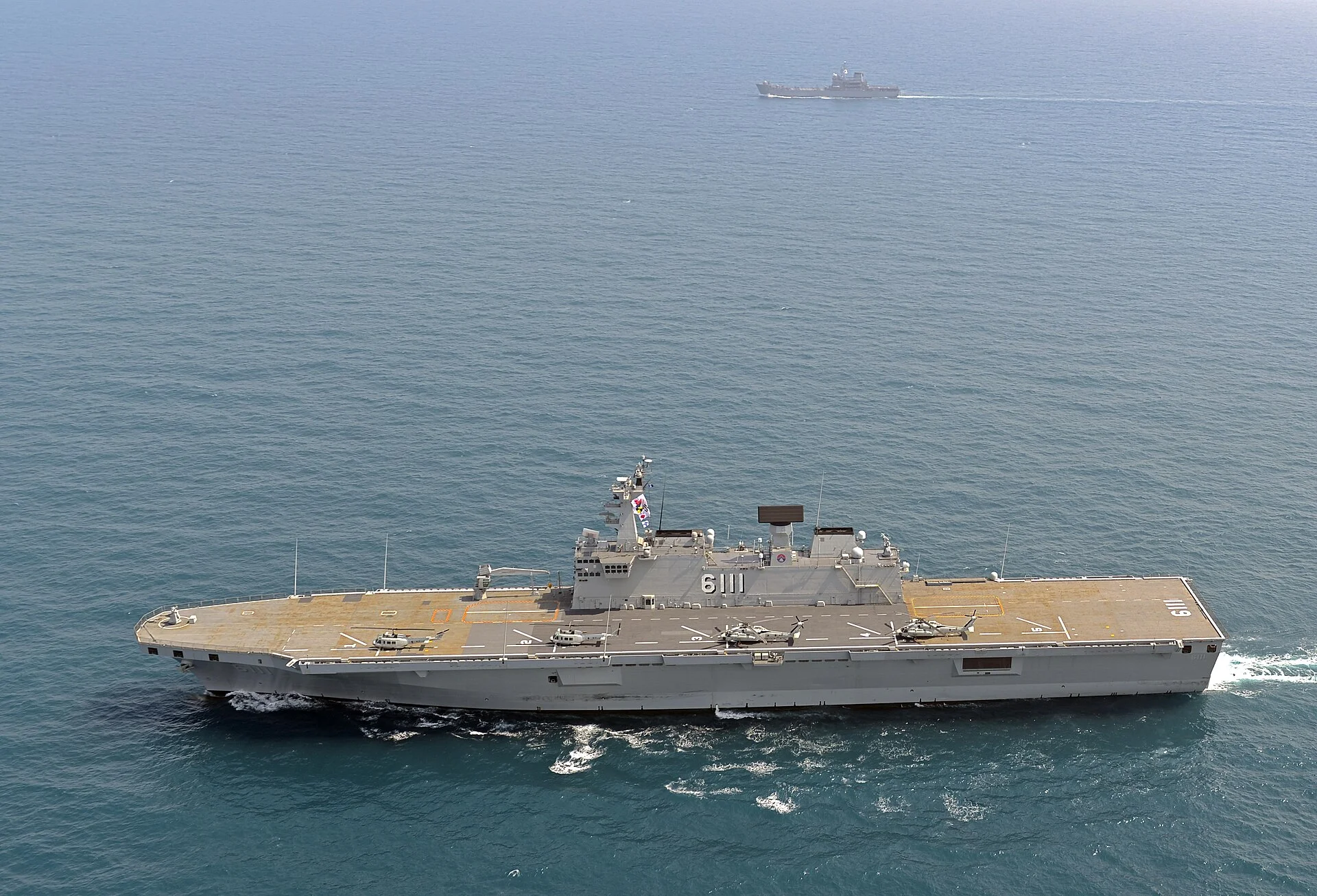
Republic of Korea Navy ROKS Dokdo amphibious assault ship
At #7, the first of the two-ship nations is South Korea. The Dokdo (2007) and Marado (2021) amphibious assault ships symbolise the Korean navy’s blue-water ambitions. Marado outclasses its predecessor with an advanced AESA radar and an enlarged flight deck.
Long known as a land-army power facing North Korea, South Korea has sharply expanded its reach at sea in recent years. Seoul is also studying a light carrier (CVX) able to embark F-35Bs. For a nation competing in the same waters as Japan and China, these ships are critical to the regional balance.
Ships
2
Class
Dokdo / Marado
Commissioned
2007 / 2021
Full load
~18,800 t
The next member of the two-ship club comes from the southern Mediterranean.
#6
🇪🇬 Egypt
Gamal Abdel Nasser, Anwar El Sadat
2
ships
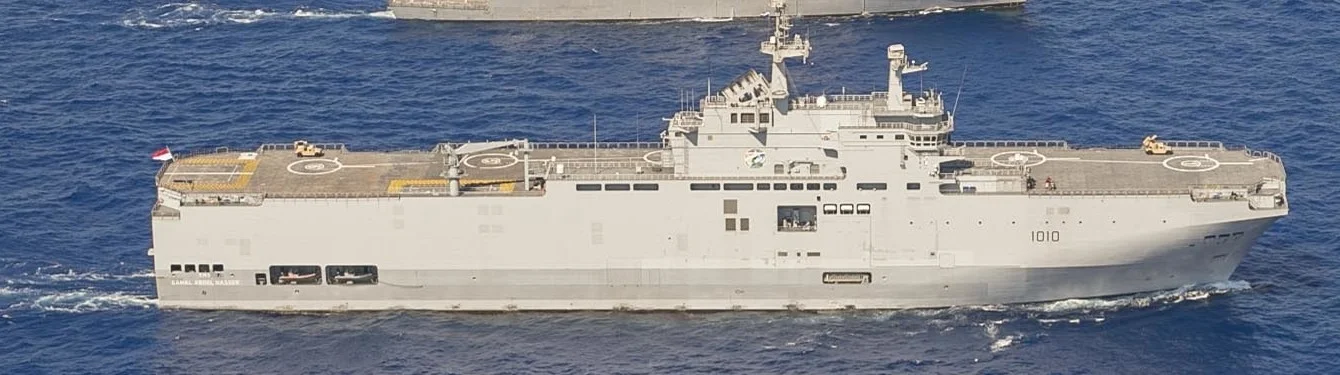
Egyptian Navy ENS Gamal Abdel Nasser Mistral-class ship
Egypt sits at #6 with two Mistral-class ships — and there is an intriguing diplomatic backstory. The vessels were originally built for Russia; when France cancelled delivery after the Crimea crisis, Egypt stepped in and bought both in 2016.
The move gave Egypt one of the most powerful amphibious navies in Africa and the Arab world. Bordering several critical theatres — the Red Sea, the Mediterranean and the Libyan coast — Cairo can now shift forces quickly across vast distances. Egypt’s navy thereby built a continent-leading helicopter-carrying capability.
Ships
2
Class
Mistral
Acquired
2016 (from France)
Origin
Originally built for Russia
The next nation comes from the same design family as TCG Anadolu.
#5
🇦🇺 Australia
HMAS Canberra, HMAS Adelaide
2
ships
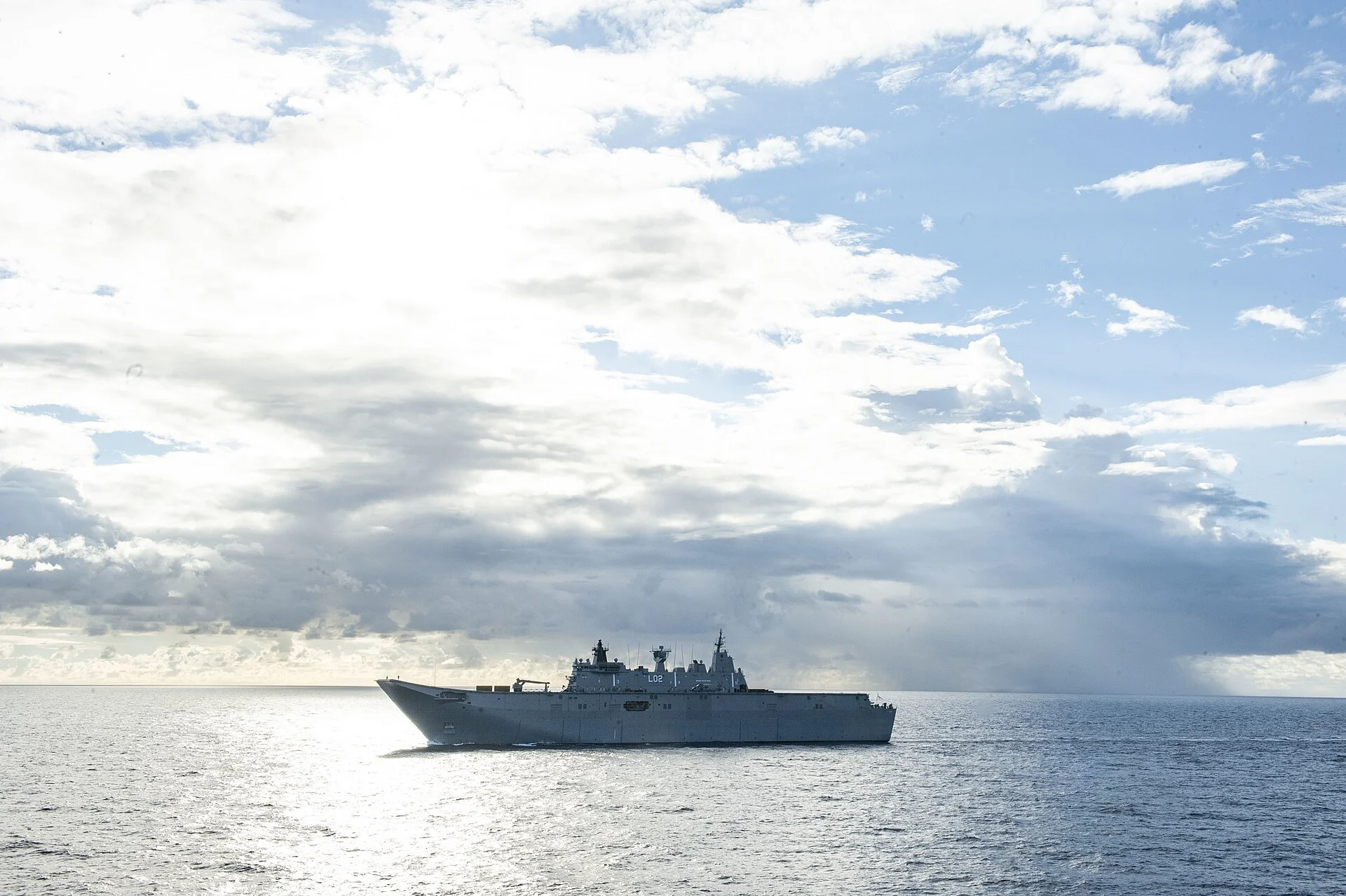
Royal Australian Navy HMAS Canberra landing helicopter dock
Australia’s two Canberra-class ships at #5 are TCG Anadolu’s closest relatives: both are based on Spanish shipbuilder Navantia’s Juan Carlos I design. That kinship is itself proof of how solid the architecture behind the Turkish ship really is.
Canberra and Adelaide give Australia amphibious-landing, humanitarian and helicopter-operations reach across the Pacific. Within a deepening alliance with the United States against China’s regional rise, these ships are the centre of gravity of the Australian fleet. Their ski-jump ramps even leave the theoretical door open to future fixed-wing integration.
Ships
2
Class
Canberra (Juan Carlos I)
Commissioned
2014-2015
Sister design
TCG Anadolu
Now to a European navy that raises the count to three.
#4
🇫🇷 France
Mistral, Tonnerre, Dixmude
3
ships
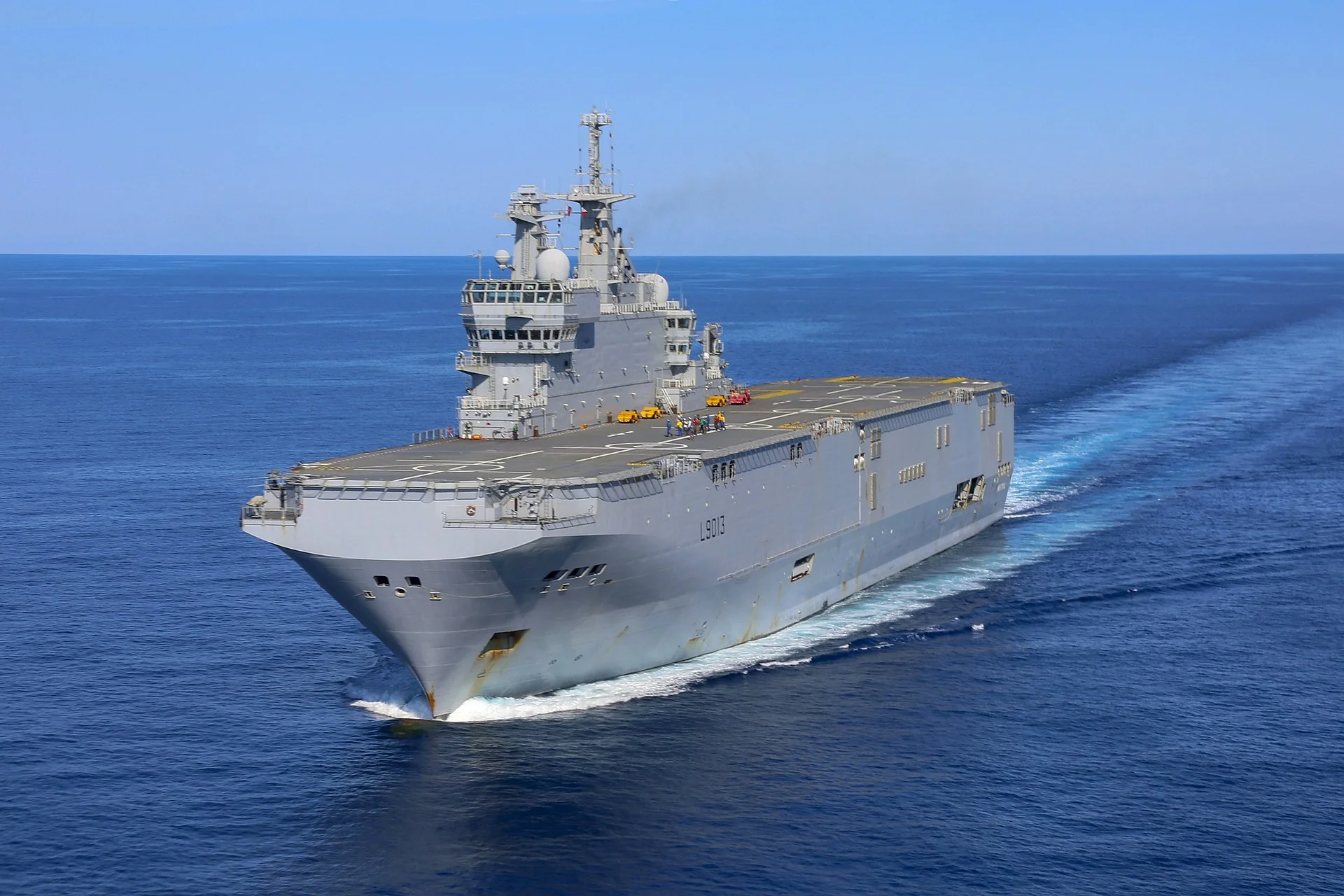
French Navy Mistral-class amphibious assault ship
France enters the top four with three Mistral-class amphibious assault ships. Mistral, Tonnerre and Dixmude give the French navy the flexibility to be present in several seas at once. The class has also been an export success — Egypt’s ships on this very list share the design.
With strong command-and-control suites, these ships are the backbone of a global maritime strategy that stretches from France’s former colonial ties to the Indo-Pacific. Alongside the nuclear carrier Charles de Gaulle, the Mistrals make France the most balanced power-projection navy in Europe, and they frequently serve as flagships in NATO operations.
Ships
3
Class
Mistral
Full load
~21,300 t
Export
Also used by Egypt
Into the top three — and the next nation is turning its helo carriers into stealth flat-tops.
#3
🇯🇵 Japan
Izumo, Kaga, Hyūga, Ise
4
ships
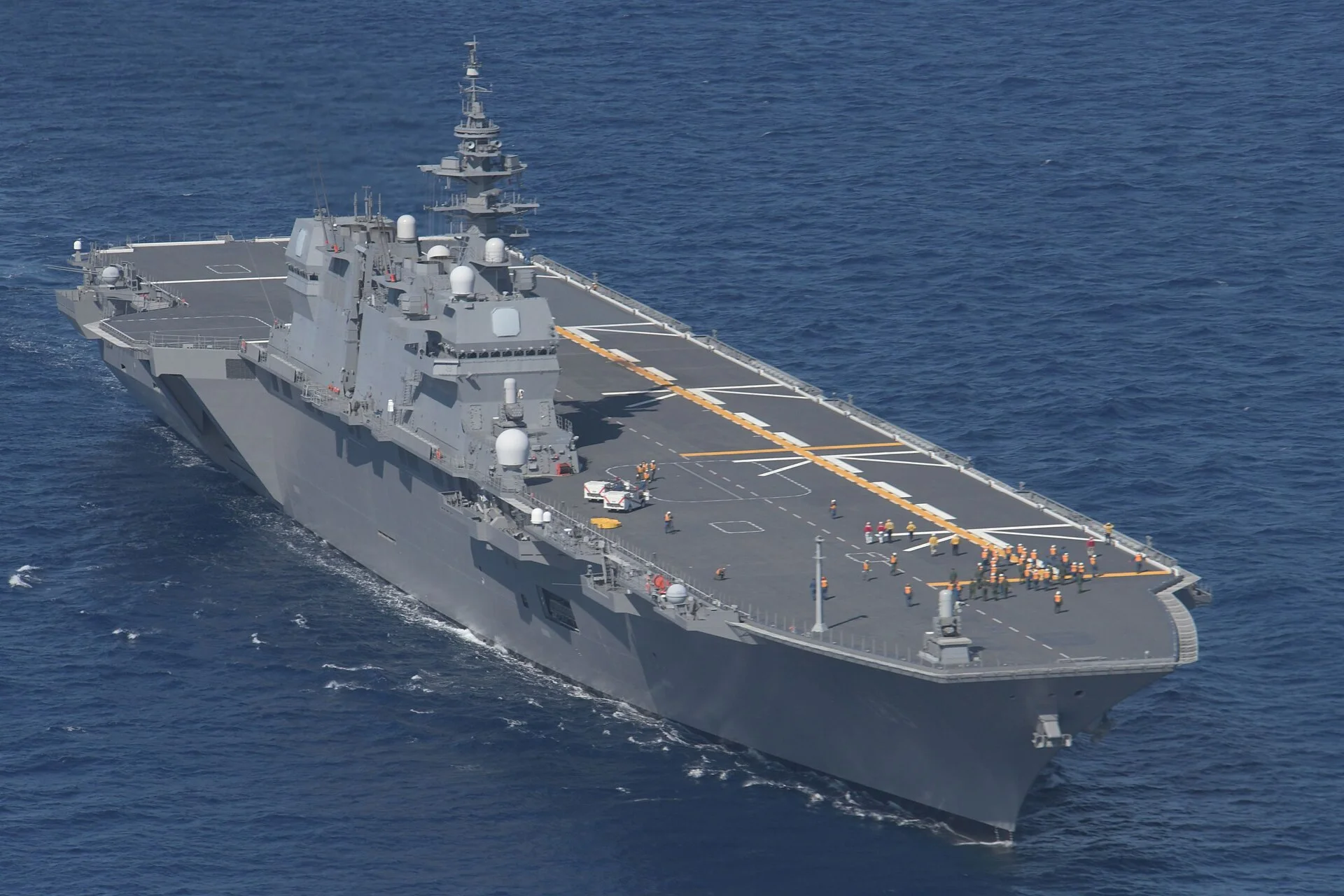
Japan Maritime Self-Defense Force JS Izumo helicopter destroyer
On the third step of the podium are Japan’s four ‘helicopter destroyers‘: Izumo, Kaga, Hyūga and Ise. Officially labelled destroyers because of constitutional constraints, they are in fact full flat-deck helicopter carriers.
The most consequential development is the conversion of Izumo and Kaga into light carriers able to operate F-35Bs. With that upgrade Japan gains fixed-wing-capable ships for the first time since World War II. Facing the rapid growth of China’s navy, Tokyo is quietly but firmly rebuilding its naval air power.
Ships
4
Classes
Izumo (2) + Hyūga (2)
Conversion
Izumo/Kaga → F-35B
Status
Officially ‘helicopter destroyers’
Two steps from the summit. The next navy is the fastest climber on this list.
#2
🇨🇳 China
Type 075 class (×4)
4
ships
People’s Liberation Army Navy Type 075 Hainan amphibious assault ship
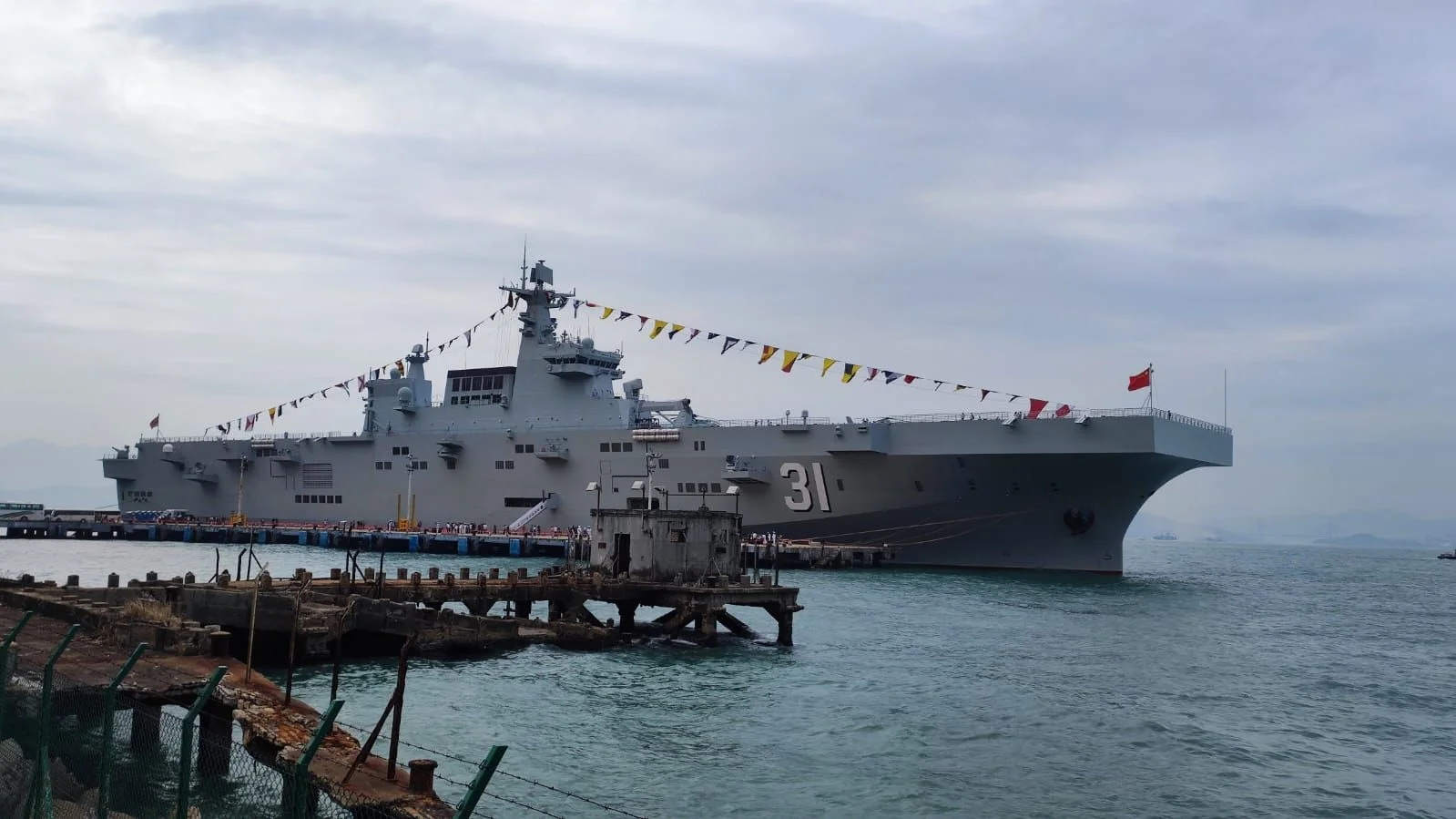
At #2 is the navy that has surprised the world most over the past decade: China. The Type 075 amphibious assault ships (Hainan, Guangxi, Anhui and more) are roughly 40,000-tonne giants — the largest in this class outside the United States.
China is mass-producing these ships at a remarkable pace and has already launched the even larger Type 076, designed to operate unmanned aircraft. Central to any Taiwan scenario, these vessels are the concrete expression of Beijing’s amphibious-assault and power-projection ambitions. A ranking this high would have been unthinkable a few years ago — China’s rise is rewriting the table.
Ships
4
Class
Type 075
Full load
~40,000 t
Next
Type 076 (UAV-capable)
And at the summit, a superpower that surprises no one — yet shocks with its sheer scale.
#1
🇺🇸 United States
America & Wasp class (×9)
9
ships
United States Navy USS America (LHA-6) amphibious assault ship
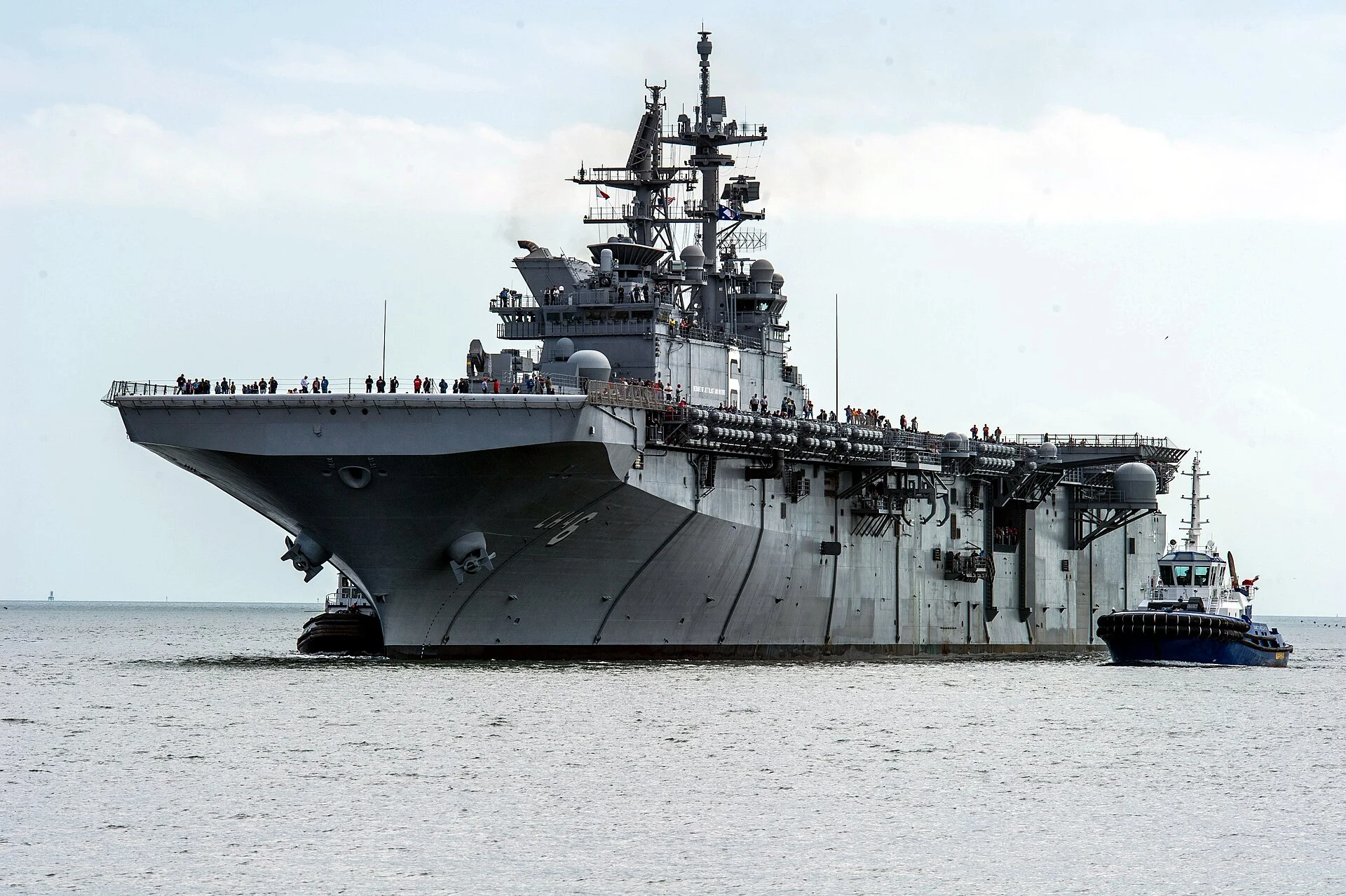
At the top sits the nation that alone fields more helicopter carriers than the rest of the world combined: the United States. Each of its nine amphibious assault ships (America and Wasp classes) is bigger than most countries’ single carrier; some outsize the full carriers of mid-tier nations.
These ships effectively operate as light aircraft carriers: each can embark a squadron of F-35B fighters. Alongside America’s 11 supercarriers, these 9 amphibious ships let Washington deploy air power across several oceans simultaneously. In total tonnage and aircraft capacity, the US amphibious fleet is more powerful than most countries’ entire navies — and that gap explains why no navy will overtake the United States any time soon.
Ships
9
Classes
America + Wasp
Aircraft
F-35B squadron each
Full load
up to ~45,000 t
The countdown is complete. Now the full table — and Türkiye’s true place on it.
Why TCG Anadolu Is the Most Important Ship on This List
Counting hulls is easy; building capability is hard. The US and China reached the top of this list through decades of accumulation. Türkiye, with a single ship, did something none of the other nine nations has managed: it operationally launched fixed-wing unmanned aircraft from a warship.
A world first: with the TB3, TCG Anadolu is the first platform to fly drones off a ship — a doctrine the US and China are now studying.
Proven architecture: from the Juan Carlos I / Canberra family, a robust and widely fielded design.
National ecosystem: part of the same domestic chain as HÜRJET, KIZILELMA, MİLGEM, ALTAY and KAAN.
Open to the future: a second LHD and national programmes are set to grow this number.
In short, Türkiye is not a nation that merely ‘joined’ this list; it is one that is rewriting the rules of the class. For navies seeking maximum strategic effect on a limited budget, TCG Anadolu is now a reference point.
Conclusion: The Helicopter-Carrier League and Türkiye’s Place in It
Operating a helicopter carrier is the clearest sign that a navy has graduated from ‘coastal defence’ to ‘power projection’. The 2026 picture shows this exclusive club has fewer than ten members — most of them NATO or major Asia-Pacific powers. The US, with nine ships, is a category of its own; each hull rivals a mid-tier nation’s carrier. China’s rise is the fastest-changing part of the list, securing a permanent podium place with the Type 075 and 076 classes within just a few years.
In Europe, France offers balanced projection with three Mistrals, while Japan — by converting Izumo and Kaga into F-35B carriers — regains seaborne fixed-wing air power for the first time since the war. Australia, Egypt and South Korea, with two ships each, are pivotal to regional balances. Their common thread: these ships are evolving from helicopter platforms into multi-role vessels carrying ever more unmanned systems.
It is precisely here that Türkiye’s single-ship status becomes misleading. TCG Anadolu is not only the newest ship on the list — she achieved a world first: the first warship to operationally fly fixed-wing drones. Turning the F-35B crisis into a doctrinal leap rather than a dead end, Türkiye is preparing to deepen the capability with HÜRJET, KIZILELMA and national shipbuilding programmes. With a second LHD on the table, it would be no surprise to see Türkiye climb this list in numbers too within the decade.
In the end, the helicopter-carrier league is a small but clear mirror of the global balance of power: the US at the top, China rising fast, a modernising Asia-Pacific, and Türkiye making the difference through technology. The numbers may favour the big navies — but the most talked-about ship of 2026 is not a superpower’s flagship; it is TCG Anadolu, the vessel that launched the unmanned era at sea.
Rank
Country
Ships
Class
Highlight
_
1
USA 🇺🇸
9
America / Wasp
F-35B light carrier
2
China 🇨🇳
4
Type 075
Rapid mass production, ~40,000 t
3
Japan 🇯🇵
4
Izumo / Hyūga
Converting to F-35B
4
France 🇫🇷
3
Mistral
Global power projection
5
Australia 🇦🇺
2
Canberra
Anadolu’s sister design
6
Egypt 🇪🇬
2
Mistral
Acquired from Russia’s order
7
S. Korea 🇰🇷
2
Dokdo / Marado
CVX project underway
8
Türkiye 🇹🇷
1
TCG Anadolu
World’s first drone carrier
9
Brazil 🇧🇷
1
Atlântico
Largest warship in Latin America
10
Thailand 🇹🇭
1
Chakri Naruebet
Smallest carrier in the world
DON’T MISS THE SERIES
More military-power galleries are coming
Up next: the world’s strongest navies, nations with the most submarines, and Türkiye head-to-head comparisons.
What is a helicopter carrier (amphibious assault ship)?
A flat-deck warship that carries helicopters and vertical take-off aircraft for amphibious landings, force projection and humanitarian aid. Unlike a full aircraft carrier, it primarily embarks helicopters and amphibious forces.
How many helicopter carriers does Türkiye have?
Türkiye has one in service: TCG Anadolu (2023). A second LHD and national shipbuilding programmes are planned.
Why is TCG Anadolu called ‘the world’s first drone carrier’?
Because she became the first warship to operationally launch and recover fixed-wing unmanned aircraft (the Bayraktar TB3); the jet-powered KIZILELMA is the next step.
Which country has the most helicopter carriers?
The United States leads by a wide margin with nine amphibious assault ships, followed by China and Japan with four each.
Are TCG Anadolu and Australia’s Canberra ships related?
Yes. Both are based on Spanish shipbuilder Navantia’s Juan Carlos I design, which shows the Turkish ship rests on a proven architecture.
Sources
Ranking data: GlobalFirepower 2026 helicopter-carrier list · national naval inventories · official navy sources · IISS Military Balance · Wikimedia Commons (ship imagery). Source: https://www.globalfirepower.com/