Saab Signs $203m Deal to Equip Sweden’s New FDI Frigates

Swedish defence company Saab has signed a contract worth roughly SEK 2bn ($203m) with French shipbuilder Naval Group to equip four new FDI-class frigates for the Swedish Navy. Naval News reported the deal on 6 November 2026.
The contract is a sub-component of Sweden’s roughly €4.3bn prime contract with Naval Group for four frigates, signed in August 2026. Saab’s share covers most of the ships’ sensors and weapons, illustrating how Sweden is weaving its own defence industry into its first major new-build warship programme as a NATO member.
What Saab will supply
Under the contract, Saab will integrate a lightweight torpedo, the RBS15 anti-ship missile, the Sea Giraffe 1X multi-mission surveillance radar and the Trackfire remote weapon station onto the frigates. The package also includes a Weapon Control System, the Ceros fire-control director and the EOS 500 electro-optical sensor. BAE Systems Bofors guns will also be fitted to the ships.
Saab’s head of the Naval business area, Mats Wicksell, said the company is “proud to equip Swedish ships with our cutting-edge products,” adding that the programme will give the Swedish Navy the ability “to detect, deter and respond to threats above and below the surface.”
Where the ship programme stands
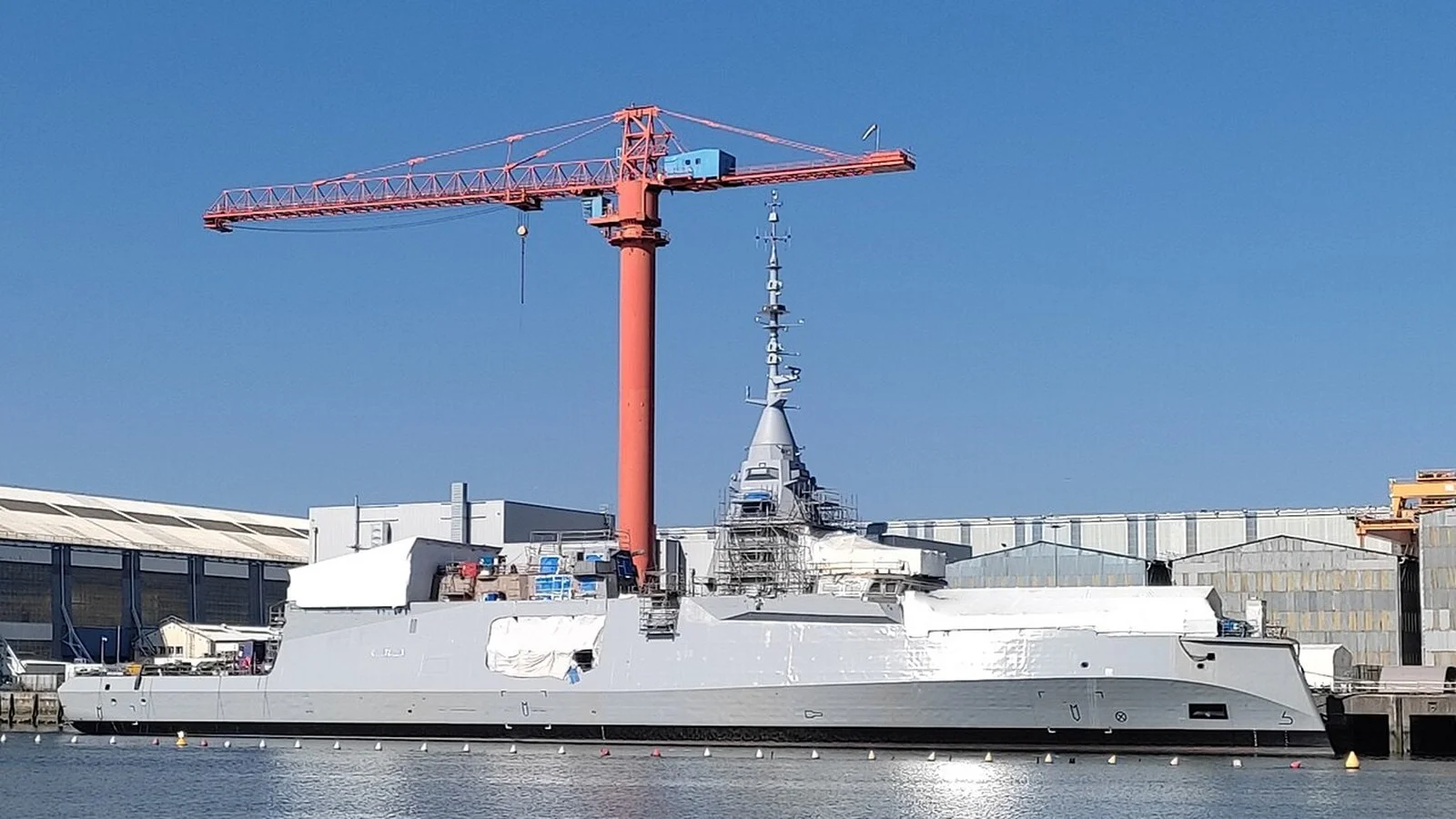
The FDI (Frégate de Défense et d’Intervention) is a French-designed frigate family built by Naval Group that has also found export customers. The first ship of Sweden’s order reached steel-cutting at the Lorient shipyard about a month after the main contract was signed. According to Naval News, serial deliveries are planned for 2030–2034, while Saab’s own deliveries to Naval Group will run from 2027 to 2034.
The FDI class is also the platform Greece has chosen: Greece took delivery of its second FDI frigate, Nearchos, in early November 2026. Sweden’s order gives the FDI family a second NATO user base in a different region — though, unlike the Greek ships, the Swedish vessels will carry a largely Swedish-made sensor and weapons package.
What this contract changes
The deal is a concrete example of French hull design being combined with a smaller ally’s own subsystems on the same platform. That model offers one way for mid-sized NATO navies to keep a domestic industrial base while still drawing on larger shipyard capacity elsewhere. A similar question is current for Türkiye’s own frigate and corvette programmes: how to balance domestic systems integration against foreign hull or shipyard partnerships is a debate that has also come up around MİLGEM-family export offers.
What remains unconfirmed
- How Saab’s deliveries under the contract are distributed across the four ships
- The names of the four frigates and which yard will complete each one
- How the rest of the roughly €4.3bn prime contract is split among other subcontractors besides Saab
Sources
- Naval News, “Saab receives order to equip Sweden’s new frigates,” 6 November 2026 — used for the contract value, systems covered, Mats Wicksell’s statement and the delivery schedule: https://www.navalnews.com/event-news/euronaval-2026/2026/11/saab-receives-order-to-equip-swedens-new-frigates/
- Infodefensa, “Saab logra un contrato para equipar las cuatro nuevas fragatas que construye Naval Group para la Marina de Suecia,” 6 November 2026 — used to corroborate the contract and for context on Sweden’s national-systems choice: https://www.infodefensa.com/texto-diario/mostrar/6081554/saab-logra-contrato-equipar-cuatro-nuevas-fragatas-construye-naval-group-marina-suecia