US Air Force Breaks Ground on New B-21 Raider Assembly Line, Lifting Capacity by 25%

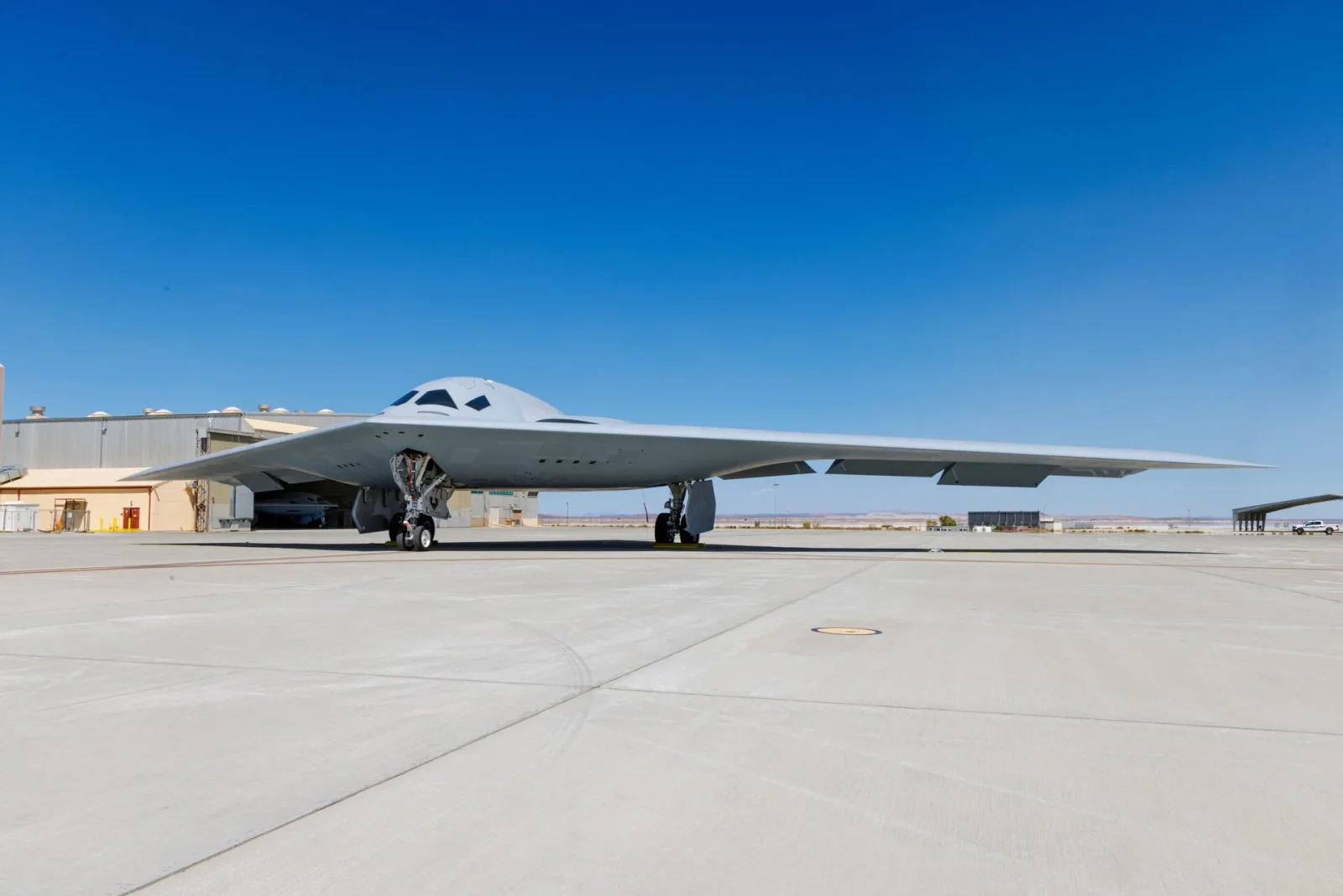
The U.S. Air Force and Northrop Grumman broke ground on September 29 on a new final-assembly line for the B-21 Raider stealth bomber, aimed at lifting annual production capacity by 25%. Images of the groundbreaking were released October 2, centred on Northrop Grumman’s facility at Air Force Plant 42 in Palmdale, California.
The expansion draws on $4.5 billion in federal funding agreed in February 2026 and authorized under the fiscal year 2025 reconciliation legislation. Northrop Grumman is matching that with roughly $2.5 billion of its own capital spread over several years.
Growth at Palmdale and Layton
The Palmdale buildout alone will add more than one million square feet of new facilities. A second site, Northrop Grumman’s 845,000-square-foot “East Gate” campus in Layton, Utah, opened in September 2026 and will feed components into the assembly line.
The program’s exact production rate remains classified, though Aviation Week has reported it could reach up to eight aircraft per year. The capacity increase is meant to compress the fielding timeline rather than grow the fleet; the first operational aircraft is still slated for delivery to Ellsworth Air Force Base, South Dakota, in 2027.
Replacing the B-2
The B-21 is designed to replace the Air Force’s 20-strong B-2 Spirit fleet. It has been moving through development and early production since its first flight in November 2023, with Northrop Grumman now working multiple test and production airframes concurrently at Palmdale.
The program’s publicly stated target of around 100 aircraft has not changed despite the faster production rate. Pentagon officials have stressed the new line is meant to reach that number sooner, not to revise the overall fleet size.
Cost Discipline and Digital Engineering
Northrop Grumman credits digital engineering and digital-twin modelling for keeping the program on a tighter cost track than its predecessor. The B-2 fleet, cut from a planned 132 jets to 21 after the Cold War, ended up costing roughly $2 billion per aircraft — a figure that dogged the program for decades. The Air Force and Northrop Grumman have both said they intend to hold the B-21’s unit cost near $550 million in 2010 dollars, and that the capacity expansion does not change that target.
Basing and Supply Chain
Work continues at Ellsworth to prepare hangars, maintenance facilities and cold-weather infrastructure ahead of the first delivery; Dyess Air Force Base in Texas and Whiteman Air Force Base in Missouri are the other two bases already designated for the Raider. Northrop Grumman says the capacity increase will extend down into its supplier base, though it has not named specific subcontractors benefiting from the expansion.
Sources
– Sandboxx News, “Northrop Grumman and Air Force agree to expand B-21 production capacity as program performs strongly,” sandboxx.us — used for the funding figures and agreement timeline.
– Air & Space Forces Magazine / Airdatanews, “U.S. Air Force to boost B-21 Raider production capacity by 25% under $4.5 billion deal,” airdatanews.com — used for facility size and capacity figures.
– The War Zone (TWZ), “100 B-21 Stealth Bomber Fleet Size Target Unchanged For Now Despite Production Acceleration,” twz.com — used to confirm the unchanged fleet-size target.