Most Expensive Missile in the World: What the Published Numbers Say

There is no single “most expensive missile in the world.” The answer depends on what you count: the price paid for one missile, the program cost divided by every missile built, or an interceptor versus a strike weapon. Using published US budget figures, the highest numbers belong to missile-defense interceptors and to the Sentinel ICBM, while the weapons fired most often cost a few million dollars each.
First, which “cost” are we talking about?
Budget documents use several measures, and they are not interchangeable:
- Flyaway (or unit procurement) cost covers the missile itself, as bought in a given year.
- Weapon-system or program unit cost adds support equipment, and in some cases development, spread across the missiles built.
- Total program cost is the whole effort, which says little about the price of one round.
Figures below come from different years and dollar bases, so treat the ranking as indicative, not exact.
Published figures at a glance
| Missile | Type | Published figure | What it measures | Source |
|---|---|---|---|---|
| Next Generation Interceptor (NGI) | Homeland missile-defense interceptor | $498 million each (31 built); $111 million each (21 operational) | Develop-and-buy average vs. purchase cost, 2021 estimate | Pentagon CAPE estimate, via Arms Control Association, 2021 |
| Ground-Based Interceptor (GBI) | Homeland missile-defense interceptor | $90-100 million | Independent estimate of purchase cost for the newest versions | Arms Control Association, 2021 |
| Sentinel (LGM-35A) | ICBM | About $162 million (2020 dollars), up from $118 million | Program unit cost after Nunn-McCurdy breach | Air Force, via Breaking Defense, January 2024; CRS |
| Dark Eagle (LRHW) | Hypersonic strike missile | $41 million (2023 dollars) | CBO estimate for 300 similar missiles | CBO, January 2023, cited by CRS |
| Trident II D5 | Submarine-launched ballistic missile | $30.9 million | Unit cost, undated figure | US Navy fact file |
| SM-3 Block IIA | Ship-launched BMD interceptor | $28.7 million | Missile only, from budget documents | The War Zone, May 2024 |
| THAAD interceptor | Theater BMD interceptor | $12.3 million flyaway; $19.7 million weapon-system | FY2024 request, 11 interceptors | MDA budget justification, March 2023 |
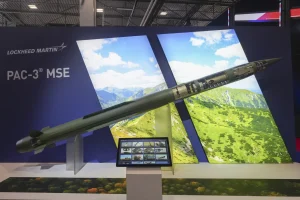
| PAC-3 MSE | Air-defense interceptor | About $5.3 million | Army FY2027 request; about $4 million historically | The War Zone, May 2026 |
| Tomahawk Block V | Cruise missile | $1.89 million | Missile only, from budget documents | The War Zone, May 2024 |
| JASSM / LRASM | Stealth cruise missiles | About $2.6 million / $3.6 million | FY2026 request (389 and 118 missiles) | Air & Space Forces Magazine, June 2025 |
The Sentinel: the biggest price tag per missile in the offensive force
The Air Force told Congress in January 2024 that Sentinel had breached the Nunn-McCurdy cost limits, with the unit cost rising by at least 37 percent from a $118 million baseline to about $162 million in 2020 dollars, according to Breaking Defense. The Congressional Research Service notes that the Pentagon completed its review in July 2024 and allowed the program to continue, and that the plan covers 634 production missiles plus 25 for testing, with 400 to be deployed (CRS, Defense Primer: LGM-35A Sentinel). Reporting on that decision put the restructured program at about $140.9 billion, 81 percent above the September 2020 estimate (Air & Space Forces Magazine). The program figure is not a price per missile; it includes silos, command and launch facilities and development. For the missile’s warhead shield, see our report on the Mk21A flight test.
Interceptors: the costliest rounds, and the ones that run out first
The Pentagon’s cost office estimated in 2021 that the Next Generation Interceptor would average $498 million each for 31 missiles when development is included, and $111 million each to buy the 21 operational ones; the Arms Control Association put purchase cost for the newest legacy Ground-Based Interceptors at $90 to $100 million per missile (Arms Control Association, June 2021). These are older estimates. The Missile Defense Agency wanted to field NGI by 2028, and a June 2024 GAO review found the plans risky (Defense News).
The ship-based SM-3 Block IIA is priced at $28.7 million per round in Pentagon budget documents, according to The War Zone, a figure that excludes development, infrastructure and sustainment. The FY2027 request seeks 136 of them, against 12 in FY2024 (Naval News, April 2026; HigherGov budget data).
For THAAD, the Missile Defense Agency’s FY2024 justification book listed a flyaway unit cost of $12.336 million and a gross weapon-system unit cost of $19.707 million for 11 interceptors. A December 2025 CSIS brief cites $15 million as the FY2026 estimated unit cost (CSIS). The same document shows why the label matters: the same missile carries two very different prices depending on the measure. Production plans are covered in our report on Lockheed Martin’s PAC-3 and THAAD expansion.
Strike missiles: hypersonic and ballistic
The Army’s Dark Eagle long-range hypersonic missile has no confirmed public price. CRS cites a January 2023 CBO estimate of $41 million per missile (2023 dollars) for 300 similar weapons, and says Army officials indicated the flyaway cost of the eight missiles in the FY2025 request would exceed that, while future costs could fall as quantities rise (CRS, LRHW: Dark Eagle).
The Navy’s fact file lists the Trident II D5 at $30.9 million per missile, with a 1990 deployment date. The page is undated and the number has not been adjusted for inflation or for later life-extension work, so it is a floor, not a current price.
Cruise missiles and the cheap end
The Tomahawk Block V appears at $1.89 million per round in budget data compiled by The War Zone. The FY2027 Navy request is for 785 Tomahawks at about $3.009 billion (Global Defense Corp, April 2026); dividing gives roughly $3.8 million, our own arithmetic, and the budget line may include costs beyond the missile. The Air Force’s FY2026 request priced the JASSM at about $2.6 million and the LRASM at about $3.6 million (Air & Space Forces Magazine). For background, see our cruise missile explainer, the report on Tomahawk warhead production and the LRASM sensor deliveries.
The PAC-3 MSE interceptor now costs about $5.3 million in the Army’s FY2027 request, up from a historical average of around $4 million (The War Zone, May 2026). Our report on RTX’s production ramp-up covers the SM-6 and SM-3 IB side.
What is missing: Russian and Chinese missiles
Systems such as Russia’s Kh-47M2 Kinzhal and Sarmat, or China’s DF-series missiles, are sometimes named as the “most expensive.” We found no credible published unit price for any of them, and no government budget document of the kind used above. Any number quoted for them is an estimate without a verifiable basis.
So which is the most expensive?
- By average program cost per missile: the NGI estimate ($498 million) and Sentinel (about $162 million in 2020 dollars) lead the published figures.
- By price of a production missile: homeland interceptors (NGI at $111 million, legacy GBI at $90-100 million) sit at the top, then the Dark Eagle (CBO’s $41 million), Trident II D5 ($30.9 million) and SM-3 Block IIA ($28.7 million).
- By what gets fired in volume: Tomahawk, JASSM, PAC-3 MSE and SM-6 are priced in the low millions, and their budgets are growing quickly.
The most expensive missile is therefore the answer to a narrower question than the headline asks, and the published numbers behind it come with large caveats about year, scope and estimating basis.
Sources: Breaking Defense (19 January 2024); Congressional Research Service (Sentinel and LRHW primers); Air & Space Forces Magazine; Arms Control Association (June 2021); Defense News (27 June 2024); The War Zone (21 May 2024 and 18 May 2026); Missile Defense Agency FY2024 budget justification (March 2023); CSIS (5 December 2025); Naval News (April 2026); Global Defense Corp (29 April 2026); US Navy Trident II D5 fact file; CBO (January 2023), as cited by CRS. Figures are as published and not adjusted to a common year.