What Is a Cruise Missile? Definition, Types, Guidance and Examples

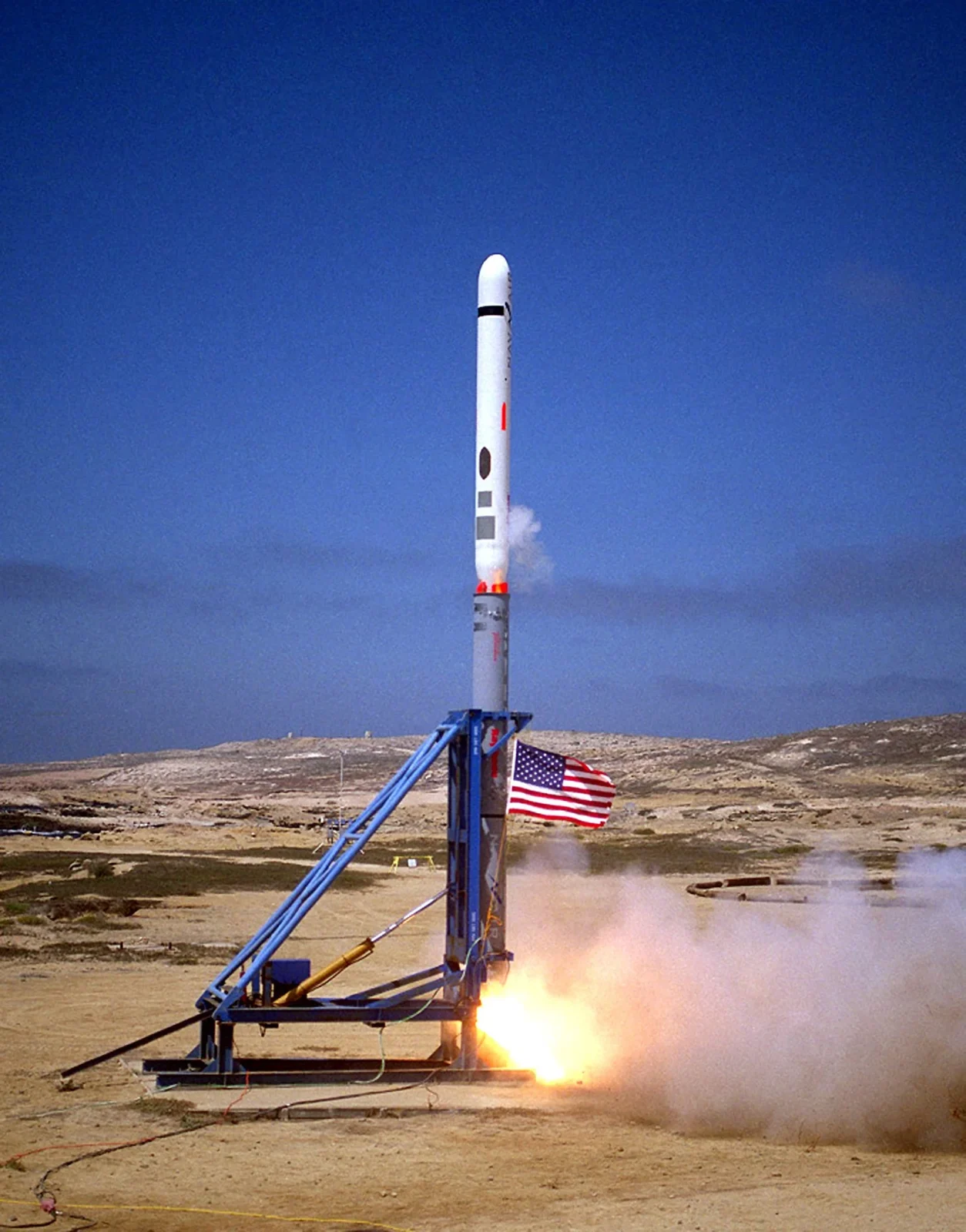
A cruise missile is a guided missile that flies most of its route like a small unmanned aircraft. It is powered throughout its flight, usually by a jet engine, and uses wings for lift, often at low altitude, until it hits its target. A ballistic missile works differently: it is boosted by a rocket and then follows a high, arcing trajectory largely under gravity. Cruise missiles can be launched from ships, submarines, aircraft and ground vehicles. Well-known examples include the US Tomahawk, the European Storm Shadow/SCALP, Taurus KEPD 350 and Naval Strike Missile, and Türkiye’s SOM and Çakır. This guide covers the definition, the main types, how guidance works, real-world examples, and how cruise missiles differ from ballistic and hypersonic missiles.
Cruise missile in one minute
- Definition: an unmanned, self-propelled guided weapon that flies an aerodynamic path supported by wings for most of its flight.
- Propulsion: usually a turbofan or turbojet, plus a booster rocket for launch from ships, submarines or the ground. Supersonic types use ramjets.
- Speed: most are subsonic, around airliner speeds; some are supersonic.
- Flight profile: often very low, hugging the terrain or sea surface to avoid radar.
- Guidance: inertial navigation plus GPS, terrain matching and an imaging seeker at the end of the flight.
- Example: the US Navy’s Tomahawk Block IV/V has a range of about 1,600 km (900 nautical miles).
What makes a missile a “cruise” missile?
The word “cruise” refers to the flight phase. After launch, the missile cruises at a steady speed and altitude, like an aircraft, powered by an air-breathing engine and held up by its wings. That is the key difference from a ballistic missile, whose rocket burns for a short time and then leaves the warhead coasting along a high arc that can reach space. Because a cruise missile is powered and steered throughout its flight, it can follow a winding route around air defences and strike from unexpected directions.
Types of cruise missiles
By launch platform
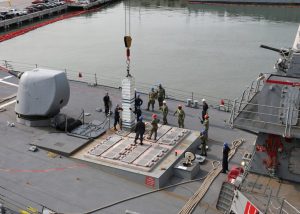
- Ship- and submarine-launched: for example, Tomahawk, fired from US Navy surface ships and from US and Royal Navy submarines.
- Air-launched: for example, Storm Shadow/SCALP, Taurus KEPD 350, the US AGM-158 JASSM and Türkiye’s SOM.
- Ground-launched: launched from truck-mounted or containerised launchers. One example is the ground-launched version of Roketsan’s Çakır.
By target
- Land-attack cruise missiles (LACM): designed to strike fixed or high-value targets ashore, such as the Tomahawk Land Attack Missile.
- Anti-ship cruise missiles (AShCM): sea-skimming weapons with active seekers that find ships, such as the Naval Strike Missile, Harpoon and Atmaca.
- Multi-role: newer designs combine both roles. The Tomahawk Block Va Maritime Strike variant adds a seeker to hit ships.
By speed
- Subsonic: the majority, including Tomahawk, Storm Shadow and NSM. They are cheaper, have longer range and are easier to hide.
- Supersonic: ramjet-powered missiles such as BrahMos, which are faster but heavier and costlier.
- Hypersonic cruise missiles: scramjet-powered weapons above Mach 5, an emerging category. See why hypersonic missiles are different.
How does a cruise missile find its target?
The US Navy lists four guidance aids for the Tomahawk Block IV/V:
- INS (inertial navigation system): gyroscopes and accelerometers track the missile’s position without outside signals.
- GPS: satellite updates correct inertial drift.
- TERCOM (terrain contour matching): a radar altimeter compares the ground below with stored height maps.
- DSMAC (digital scene-matching area correlation): a camera compares the scene below with stored images for final accuracy.
The Tomahawk Block IV can also be retargeted in flight over a two-way satellite link to any of 15 pre-programmed alternate targets or to new GPS coordinates. It can loiter over a target area and send back battle damage images from its on-board camera.
Cruise missile vs ballistic missile
| Cruise missile | Ballistic missile | |
|---|---|---|
| Propulsion | Air-breathing engine for most of the flight | Rocket that burns early in the flight |
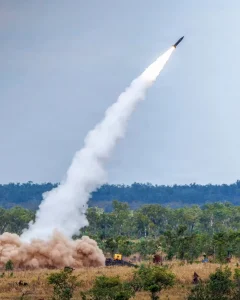
| Trajectory | Flat, often low, can manoeuvre around defences | High arc, largely under gravity after burnout |
| Speed | Mostly subsonic | Very fast on re-entry (supersonic to hypersonic) |
| Detection | Hard to see early because of low altitude | Visible to early-warning radars, but hard to intercept |
| Examples | Tomahawk, Storm Shadow, Taurus, SOM | ATACMS, Iskander-M, Tayfun |
For a closer look at the ballistic side, see Tayfun and comparable ballistic missiles.
Famous cruise missiles
- Tomahawk (USA): made by Raytheon. Its first operational use was in Operation Desert Storm in 1991, and it has been used in many conflicts since. The United Kingdom was the first export customer, in 1995. Australia and Japan are also buying it; see Australia’s Tomahawk mission planning centre.
- Storm Shadow / SCALP EG (UK/France): MBDA’s air-launched stealthy cruise missile.
- Taurus KEPD 350 (Germany/Sweden): air-launched. Spain is upgrading its stock; see Taurus Neo for Spain.
- SOM and Çakır (Türkiye): TÜBİTAK SAGE’s air-launched SOM family and Roketsan’s multi-platform Çakır.
- Low-cost cruise missiles: a new class of cheaper, mass-producible weapons; see our low-cost cruise missile explainer.
Frequently asked questions
What is a cruise missile in simple terms?
A guided, unmanned, jet-powered weapon that flies like a small aircraft to its target and explodes on impact.
How fast is a cruise missile?
Most fly at high subsonic speed. The US Navy describes Tomahawk as flying “at extremely low altitudes at high subsonic speeds”. Supersonic and hypersonic types also exist.
What is the range of a Tomahawk cruise missile?
According to the US Navy, the Block IV/V TLAM-E has a range of 900 nautical miles (about 1,600 km).
Is a cruise missile better than a ballistic missile?
Neither is simply better. Cruise missiles are precise, flexible and hard to detect at low altitude. Ballistic missiles are much faster and harder to intercept. Armed forces use both.
Sources
- US Navy: Tomahawk Cruise Missile fact file, updated 27 September 2021.
- CSIS Missile Defense Project: Tomahawk.