Ballistic Missiles Comparable to TAYFUN: Iskander, ATACMS, DF-15

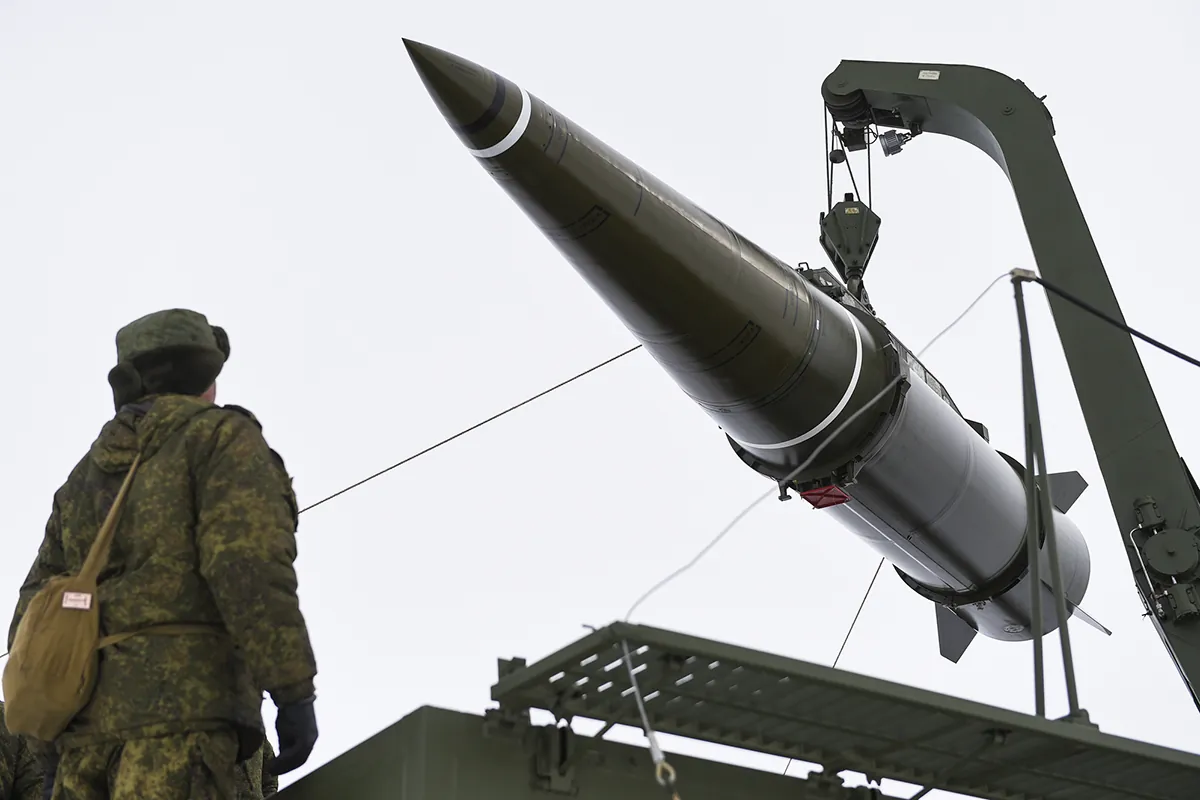
The closest international counterparts to ROKETSAN’s TAYFUN short-range ballistic missile are Russia’s Iskander-M, the American ATACMS and its successor PrSM, China’s DF-15 and Iran’s Fateh-110 family. ROKETSAN officially lists TAYFUN’s range as 280+ km, while independent assessments put it at roughly 800 km.
| TAYFUN — Comparison Fact Sheet | |
|---|---|
| Class | Short-range ballistic missile (SRBM) |
| Developer | ROKETSAN (Türkiye) |
| First test | 20 October 2022, Black Sea coast |
| Range | Official 280+ km; independent est. ~800 km |
| Warhead | ~500 kg HE/fragmentation |
| Guidance | INS + GPS/GLONASS, CEP ≤10 m |
| Launcher | Road-mobile TEL (VOLAT chassis) |
| Closest peers | Iskander-M, ATACMS/PrSM, DF-15, Fateh-110 |
Where does TAYFUN sit in the ballistic missile landscape?
TAYFUN is a short-range ballistic missile (SRBM) developed by ROKETSAN and first tested on 20 October 2022 over the Black Sea. It is Türkiye’s longest-ranged domestically built ballistic missile: roughly 2,300 kg at launch, 6.5 m long and 610 mm in diameter, powered by a single-stage composite solid-propellant motor and reaching Mach 5-6 in the terminal phase.
Range is the single most sensitive figure in this class. ROKETSAN’s catalogue states “280+ km” — a number sitting just below the 300 km / 500 kg threshold of the Missile Technology Control Regime (MTCR). Independent defence publications and open-source analysts, working from test geometry and airframe dimensions, assess the real reach at around 800 km. This dossier cites both figures throughout and treats neither as definitive.
Iskander-M (Russia) — the closest analogue
The system most often placed alongside TAYFUN is Russia’s 9K720 Iskander-M, in service since 2006. Open sources credit it with a range of about 500 km and a warhead of 480-700 kg, flying a quasi-ballistic, manoeuvring trajectory designed to complicate interception.
- Similarities: road-mobile TEL, solid propellant, single stage, inertial-plus-satellite guidance, high terminal speed.
- Differences: Iskander-M is a mature, combat-proven and exported system (the downgraded Iskander-E is limited to 280 km), whereas TAYFUN entered series production only in 2023 and serves exclusively with the Turkish Armed Forces. An Iskander vehicle carries two missiles; the TAYFUN TEL carries one.
Notably, Russia caps the export Iskander-E at 280 km for MTCR compliance — the same threshold logic that open sources see behind TAYFUN’s official “280+ km” declaration.
ATACMS and PrSM (United States)
The US MGM-140 ATACMS, in service since 1991 and fired from M270 and HIMARS launchers, reaches about 300 km in its most common versions with a unitary warhead of roughly 230 kg. Its extensive combat use in Ukraine has generated a large body of open-source performance data.
Its successor, the Precision Strike Missile (PrSM), began deliveries in late 2023 with a published range of 500+ km and two missiles per HIMARS pod. Against TAYFUN, the American pair trades warhead weight for compatibility with an existing rocket-artillery fleet; TAYFUN, with its ~500 kg warhead, sits at the heavy end of the class.
DF-15 (China) and the Fateh-110 family (Iran)
China’s DF-15 (Dong Feng-15) has served since the 1990s; open sources give variant-dependent ranges of roughly 600-900 km with warheads of 500-600 kg. In size and payload class it is one of TAYFUN’s nearest matches, though it is an older-generation design, with some variants using manoeuvrable re-entry vehicles.
Iran’s Fateh-110 family — Fateh-110, Fateh-313 and Zolfaghar — is a solid-fuel SRBM line stretching from 300 km out to about 700 km, with reported warheads of 350-580 kg. The family has seen heavy operational use, so open-source data is abundant, but official Iranian figures lack independent verification and should be read with caution.
The table below summarises the short-range ballistic missiles most often grouped with TAYFUN. All competitor data is compiled from manufacturer statements, combat reporting from Ukraine and the Middle East, and independent defence publications; uncertain values are given as ranges.
What sets TAYFUN apart in this class?
Read objectively, TAYFUN’s distinguishing features are its ~500 kg warhead (more than double ATACMS’), a declared CEP of 10 m or better, and a fully domestic design-and-production chain that frees it from export-licence dependencies. On the other side of the ledger, Iskander-M and ATACMS bring combat records, the Fateh family brings production scale, and DF-15 brings variant depth. TAYFUN has not been exported: it is a strategic asset held solely by the Turkish Armed Forces.
The development roadmap also matters: Block 2 is expected in 2026, Block 3 has been test-fired from a naval platform, and the hypersonic Block 4 was unveiled on 23 July 2025, with independent estimates of 1,000-1,500 km range that remain officially unconfirmed.
The MTCR context: why does 280 km keep appearing?
The Missile Technology Control Regime places systems able to carry 500 kg to 300 km under its strictest Category I export controls. That is why both Russia (Iskander-E) and Türkiye (TAYFUN) publish official ranges in the 280 km band. The figure describes a declaration shaped by export-regime sensitivities, not necessarily the missile’s ceiling — while the ~800 km independent estimate is likewise an analytical assessment derived from test observations and design parameters, not a verified measurement.
ROKETSAN’s official range figure for TAYFUN is “280+ km”, while independent defence sources estimate roughly 800 km. The gap reflects MTCR export-regime sensitivity, and neither figure has been confirmed by independent measurement. All data on rival systems (Iskander-M, ATACMS, PrSM, DF-15, Fateh-110) is compiled from open sources; manufacturer-state claims are not always independently verified.
Frequently Asked Questions
What is the closest foreign equivalent of TAYFUN?
In class, weight and concept, Russia’s Iskander-M is the nearest analogue: both are road-mobile, solid-fuel SRBMs with satellite-aided inertial guidance. By warhead class, China’s DF-15 is also a close parallel.
What is TAYFUN’s actual range?
ROKETSAN officially states “280+ km”; independent analysts estimate around 800 km. No definitive figure has been published. The official number sits deliberately just under the MTCR export threshold of 300 km with a 500 kg payload.
Is TAYFUN better than Iskander-M?
There is not enough verified data for a direct verdict. Iskander-M offers a combat record, a manoeuvring trajectory and two missiles per vehicle; TAYFUN is a newer design with a declared ~500 kg warhead and CEP ≤10 m. They are products of different doctrines.
Are ATACMS and TAYFUN in the same class?
Both are SRBMs, but ATACMS is the lighter system, with a ~230 kg warhead and reliance on existing HIMARS/M270 launchers. By warhead weight and estimated range, TAYFUN compares more closely with PrSM and DF-15 than with ATACMS.
Has TAYFUN been exported?
No. TAYFUN is a strategic system held only by the Turkish Armed Forces. Analysts read the sub-MTCR official range declaration as leaving room for future export scenarios, but no export agreement has been announced.
Is TAYFUN Block 4 a hypersonic missile?
ROKETSAN unveiled TAYFUN Block 4 as a hypersonic version on 23 July 2025. Independent estimates suggest a 1,000-1,500 km range; these figures have not been officially confirmed.
Sources
- ROKETSAN official product page — roketsan.com.tr (TAYFUN, range 280+ km)
- US Army / Lockheed Martin published data — ATACMS and PrSM range and warhead figures
- CSIS Missile Threat project — Iskander-M, DF-15 and Fateh-110 technical profiles
- Independent defence publications and OSINT assessments — TAYFUN ~800 km range estimate and Block 4 analysis
- Anadolu Agency and Daily Sabah reporting on TAYFUN tests (2022-2025)