ROKETSAN International Partnerships and Joint Production Deals

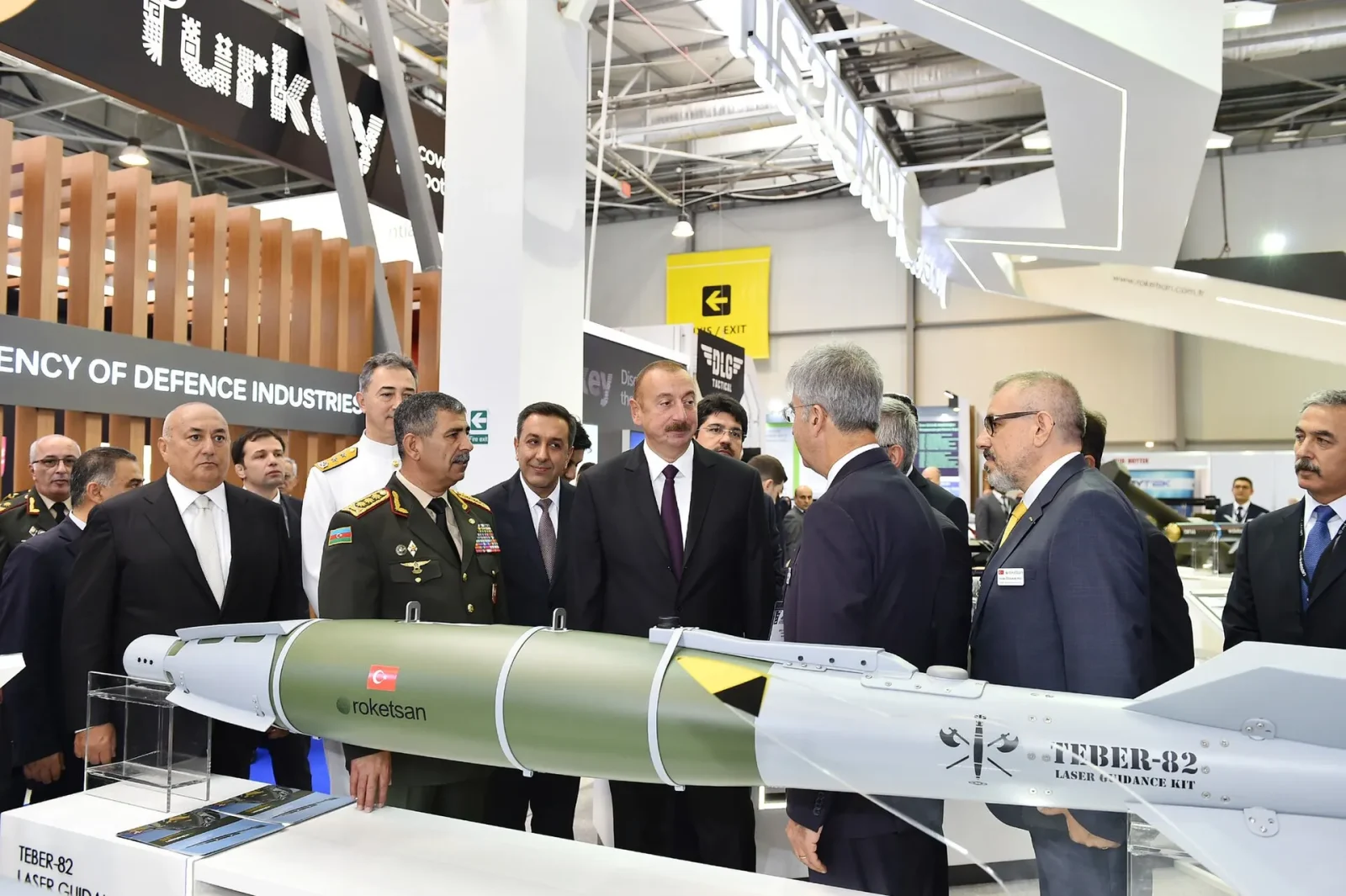
ROKETSAN’s international partnerships run along four main tracks: subcontracting within European consortia (Stinger, ESSM), joint development with global primes (SOM-J with Lockheed Martin), regional joint production agreements (SAMI in Saudi Arabia, Republikorp in Indonesia) and a strategic relationship with Azerbaijan that has now moved into production. Since its first international programme in 1989, the company has evolved from subcontractor to a partner that exports technology.
| ROKETSAN International Partnerships — At a Glance | |
|---|---|
| First international programme | European Stinger Joint Production Consortium (subcontract with LFK, 20 June 1989) |
| Consortium membership | NATO SeaSparrow / ESSM programme (Türkiye a member nation; ROKETSAN responsible for the flight termination unit) |
| Joint development | SOM-J teaming agreement with Lockheed Martin (2014) |
| Gulf track | Joint production of cruise missiles and anti-tank missiles with SAMI (WDS 2026, Riyadh) |
| Asia track | Missile production joint venture with Republikorp in Indonesia; KHAN and ATMACA contracts |
| Caucasus track | Artillery systems protocol with Azerbaijan (2025) and a production dimension at ADEX 2026 |
| First export customer | UAE Armed Forces — CİRİT ($196.2 million, IDEX 2013) |
| European file | Eurosam-ASELSAN-ROKETSAN long-range air defence definition study (2018) |
What do ROKETSAN’s international partnerships cover?
ROKETSAN’s cross-border cooperation is not a single model; it comes in four complementary layers. The first layer is the multinational consortium memberships that delivered technology acquisition in the company’s early years: the European Stinger Joint Production Consortium and the NATO SeaSparrow (ESSM) programme. The second layer is joint development with global prime contractors, the best-known example being the SOM-J project with Lockheed Martin. The third layer, which has gained weight in the 2020s, consists of regional joint production and technology transfer agreements: SAMI in Saudi Arabia and Republikorp in Indonesia are the two largest examples of this model. The fourth layer is state-to-state strategic cooperation carried into the production domain, as in the case of Azerbaijan.
This picture is separate from the company’s domestic shareholding structure (TSKGV, ASELSAN, MKE) and its Turkish subsidiaries, which are covered in dedicated files. The question here is a different one: beyond Türkiye’s borders, who does ROKETSAN build with, what does it build, and under which model?
The Stinger consortium: the first international programme (1989-2004)
ROKETSAN stepped onto the international stage only a year after its founding. Under the European Stinger Joint Production Consortium, a subcontract was signed with Germany’s LFK on 20 June 1989. Investments were completed between 1988 and 1991, deliveries began in the second half of 1991, and the programme closed with the final deliveries in 2004.
For ROKETSAN the project was far more than a revenue line. By manufacturing the propulsion systems of the Stinger missile, the company built internationally certified competence in rocket and missile propulsion. The facilities established and the engineering teams trained in this period underpin the production base of today’s national programmes such as CİRİT, HİSAR and ATMACA.
NATO SeaSparrow and ESSM: continuity in consortium membership
Türkiye is one of the members of the 12-nation NATO SeaSparrow Consortium, and within that framework ROKETSAN took an active role in the Evolved Sea Sparrow Missile (ESSM) programme. Working with Raytheon through the missile’s engineering and development phases, the company was responsible for the design, testing and production of the ESSM’s flight termination unit.
Because ESSM is a point-defence missile fielded on the Turkish Navy’s frigates, the membership carries a dual value: industrial participation and inventory security. Holding a defined area of responsibility in a multinational missile programme was a major threshold in institutionalising ROKETSAN’s NATO-standard design and quality processes.
SOM-J with Lockheed Martin: the joint development experience
In 2014, ROKETSAN and Lockheed Martin signed a teaming agreement for SOM-J, the variant of the TÜBİTAK SAGE-developed SOM cruise missile tailored to the F-35’s internal weapons bay. The agreement covered the joint development, production, marketing and support of the missile. With folding control surfaces and a compact airframe, SOM-J was designed for internal carriage on the F-35 and external carriage on other aircraft.
After Türkiye’s removal from the F-35 programme in 2019, the project’s F-35 leg was shelved; the design and integration experience accumulated on SOM-J, however, continued to feed the SOM family’s development line for national platforms. The project is on record as the first major case demonstrating that ROKETSAN could work as a partner sharing equal responsibility with the world’s largest defence company.
Until the 2020s, ROKETSAN’s foreign relationships consisted mainly of export contracts and consortium memberships. In recent years the model has changed: buyer nations no longer want only missiles, they want production lines and technology transfer. ROKETSAN has answered that demand with joint production footholds established in three regions.
Saudi Arabia: a production base in the Gulf with SAMI
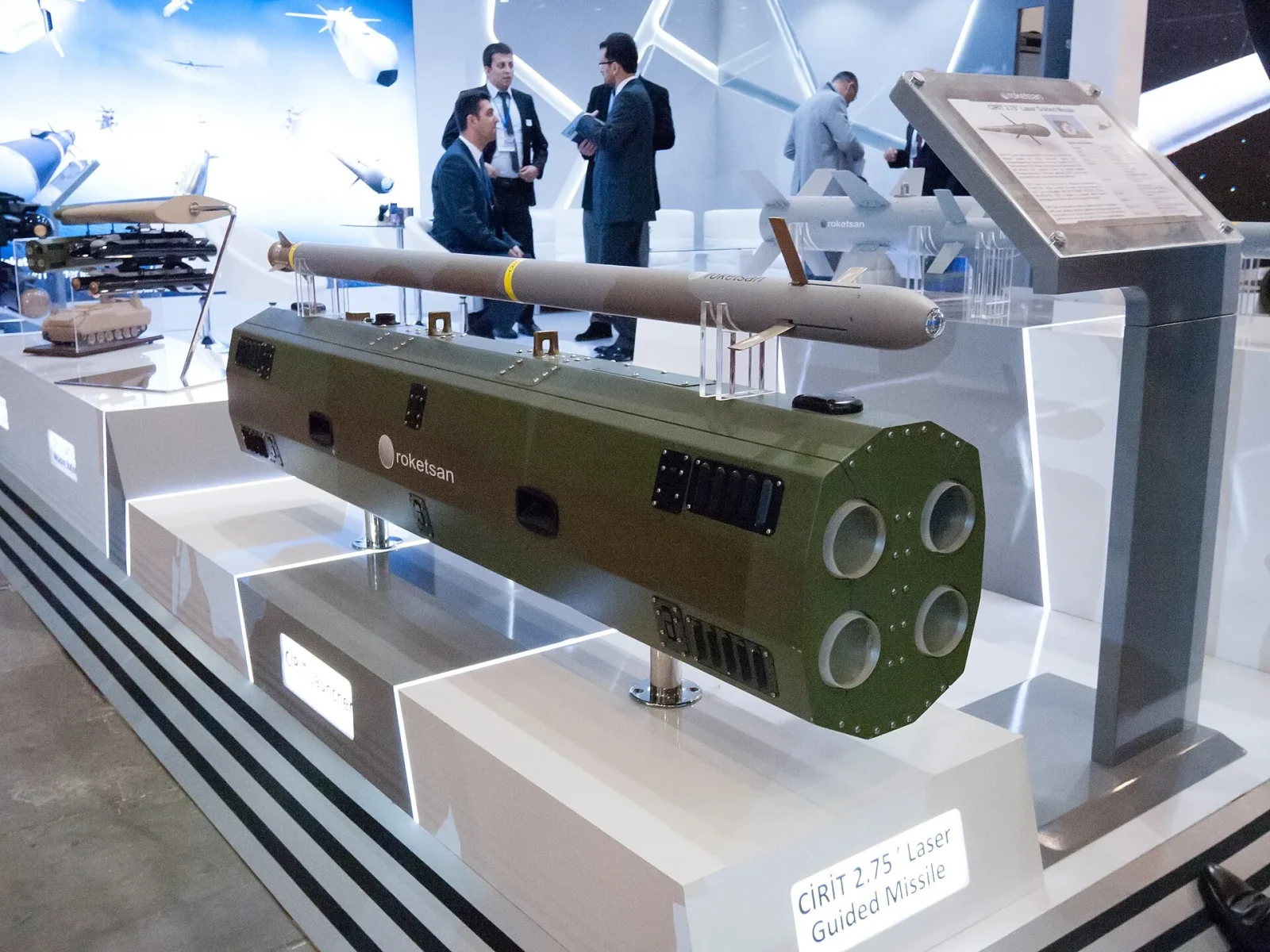
At World Defense Show 2026 in Riyadh, ROKETSAN signed an agreement with SAMI, Saudi Arabia’s largest state-owned defence company, for the joint production of cruise missiles in the Kingdom. At the same show, a second contract was concluded with SAMI Land Systems covering both the sale and the joint production of anti-tank guided missile systems. The third step completing the package was a memorandum of understanding on investment signed with the Saudi Ministry of Investment (MISA) and the General Authority for Military Industries (GAMI).
This three-part package forms ROKETSAN’s first comprehensive production foothold in the Gulf and marks the point where Turkish missile technology meets the defence goals of Saudi Arabia’s Vision 2030 localisation programme.
Indonesia: the Republikorp joint venture, KHAN and ATMACA
The most comprehensive cooperation in the Asia-Pacific was built with Indonesia. A relationship that began with Jakarta’s 2022 order for KHAN (the 280 km-range export version of BORA) moved to a new stage in 2025 with an agreement signed in the presence of the two countries’ presidents: ROKETSAN and Indonesia’s private defence holding Republikorp established a joint venture company for the production of anti-ship cruise missiles and multi-platform missile systems in Indonesia. The model’s priority is technology transfer and the expansion of local industrial capacity.
With two further contracts covering the ATMACA anti-ship missile signed in June 2025, Indonesia became the first Asian country to be both a customer and a production partner of ROKETSAN. Indonesian military delegations receiving KHAN training at ROKETSAN’s facilities in Ankara show that the relationship has also built its training and logistics layer.
Azerbaijan: from the exhibition floor to a production partnership
Azerbaijan is one of the countries where ROKETSAN products are most visible; the company’s stand at the ADEX exhibitions in Baku is regularly visited at head-of-state level. The relationship was given a formal framework with the artillery systems cooperation protocol signed on 22 July 2025, and at ADEX 2026 it moved into a production dimension as part of the defence package between the two countries.
The package of defence agreements exceeding $500 million announced at ADEX 2026 on the Türkiye-Azerbaijan track laid the groundwork for turning ROKETSAN’s role in the Caucasus from supplier into production partner.
The European file: the Eurosam definition study
In January 2018, the Presidency of Defence Industries awarded ROKETSAN, ASELSAN and the Franco-Italian Eurosam consortium (a partnership of MBDA and Thales) an 18-month definition study contract to shape the architecture of Türkiye’s future long-range air and missile defence system. The study set out the system definition against the operational requirements of the Turkish Air Force.
The programme did not convert into a joint development contract; Türkiye placed the weight of its long-range air defence effort on the national SİPER programme. Even so, the study stands among ROKETSAN’s international engineering references as the first project in which the company sat down with Europe’s largest missile manufacturers at system-architecture level.
What the international partnerships have brought ROKETSAN
Looked at over thirty-five years, the arc is clear. The company that learned technology as a subcontractor in the Stinger consortium in 1989 formed an equal partnership with Lockheed Martin in 2014; in 2025-2026 it became the party transferring its own technology to Saudi Arabia and Indonesia. At company scale, this is a fair summary of the Turkish defence industry’s transformation from importer to technology exporter.
The joint production model delivers three concrete gains for ROKETSAN: permanence in export markets (a country that hosts a production line turns from customer into partner), economies of scale (unit costs fall as order volumes grow) and geopolitical depth (institutional, industry-level ties in the Gulf, Asia-Pacific and the Caucasus). Within the company’s turnover, which passed $2 billion at the end of 2025, and its total order book of roughly $10 billion, the share of international programmes is expected to rise.
The programme dates and contract values in this file have been verified against ROKETSAN’s official announcements, consortium records and statements released during exhibition periods. The contract values of the SAMI and Republikorp agreements have not been officially disclosed by the parties. Items that remain unconfirmed, such as the current status of the SOM-J project and the KHAN delivery schedule, are reported within the limits of official statements. The page will be updated as new agreements are announced.
Frequently Asked Questions
What was ROKETSAN’s first international partnership?
The European Stinger Joint Production Consortium. A subcontract was signed with Germany’s LFK on 20 June 1989; ROKETSAN produced the propulsion systems of the Stinger missile, and the programme was completed with the final deliveries in 2004.
In which countries does ROKETSAN have joint production?
In Saudi Arabia with SAMI, covering cruise missiles and anti-tank missile systems, and in Indonesia through the Republikorp joint venture, covering anti-ship and multi-platform missiles. Cooperation with Azerbaijan also moved into the production domain as of ADEX 2026.
What was ROKETSAN’s partnership with Lockheed Martin?
Under an agreement signed in 2014, the two companies teamed to jointly develop, produce and market SOM-J, the variant of the SOM cruise missile compatible with the F-35’s internal weapons bay. After Türkiye’s removal from the F-35 programme in 2019, the project’s F-35 leg was shelved.
Which country was ROKETSAN’s first export customer?
The United Arab Emirates. A $196.2 million contract with the UAE Armed Forces for the CİRİT laser-guided missile was announced at IDEX 2013, making the UAE the first international operator of CİRİT.
What does ROKETSAN do in the ESSM programme?
Within the 12-nation NATO SeaSparrow Consortium, of which Türkiye is a member, ROKETSAN took on the design, testing and production of the missile’s flight termination unit in the ESSM programme, working alongside Raytheon.
What do the agreements with SAMI cover?
The two agreements signed at World Defense Show in Riyadh in February 2026 cover the joint production of cruise missiles in Saudi Arabia, and the sale and joint production of anti-tank guided missile systems. A memorandum of understanding on investment was also signed with MISA and GAMI.
Sources
- ROKETSAN official news release: WDS 2026 participation in Saudi Arabia and the SAMI agreements — roketsan.com.tr
- ROKETSAN official news release: two new contracts with Indonesia — roketsan.com.tr
- Eurosam official announcement: Türkiye long-range air and missile defence definition study — eurosam.com
- Anadolu Agency: strategic defence deals signed by ROKETSAN at IDEF — aa.com.tr
- US Navy official fact file: Evolved SeaSparrow Missile (ESSM) — navy.mil
- Defence Turkey: ROKETSAN’s role in multinational missile projects (Stinger, ESSM) — defenceturkey.com