ROKETSAN Production Facilities: Elmadag, Lalahan, Kirikkale

ROKETSAN’s production facilities are concentrated in and around Ankara, Turkey. The company’s main production and test campus is at Elmadag. Two major sites were added in 2026: the Lalahan Missile Integration Facility and the Kirikkale Fuel Production Facility. Together these investments are designed to sharply expand ROKETSAN’s missile manufacturing capacity.
| ROKETSAN Facilities — At a Glance | |
|---|---|
| Full name | ROKETSAN Roket Sanayii ve Ticaret A.S. |
| Headquarters | Ankara, Turkey |
| Main production/test | Elmadag (Ankara) |
| Missile integration | Lalahan (Ankara) — April 2026 |
| Fuel production | Kirikkale — April 2026 |
| New investment | Over USD 1 billion in new facilities |
| Capacity target | Roughly 5x increase in missile output |
| CEO/GM | Murat Ikinci |
Where are ROKETSAN’s production facilities?
The heart of ROKETSAN’s manufacturing base is in Ankara. Since the company was founded there on 14 June 1988, it has carried out most of its production and testing in and around the Turkish capital. This geographic concentration is no accident: Ankara is Turkey’s principal hub for defence technology and engineering, and it allows ROKETSAN to work closely with other major players such as ASELSAN and Turkish Aerospace.
The company’s main campus is in the Elmadag district of Ankara. Beyond production halls, the Elmadag site includes extensive test areas. Activities that require large safety distances — such as rocket motor firing tests, live-fire trials and integration work — depend on the size of the terrain Elmadag offers. In that sense, Elmadag is the central base where both serial production and research and development converge.
Rising missile demand and a growing export order book have pushed ROKETSAN to expand its manufacturing footprint. Rather than relying on a single campus, the company has moved toward a structure that distributes distinct functions across dedicated sites. The Lalahan and Kirikkale facilities, both brought into service in 2026, are the most concrete steps in this expansion. The production chain is now split into more specialised stages: sub-component manufacturing, fuel production, integration and testing.
The close geographic clustering of these sites also gives ROKETSAN a logistical edge. Producing fuel in Kirikkale, preparing airframes and sub-systems in Elmadag, and carrying out final assembly in Lalahan creates a division of labour that makes the production flow easier to manage. The table below summarises the function of each facility.
Elmadag: main production and test campus
Elmadag is the main production and test campus ROKETSAN has operated since its founding. The bulk of the company’s rocket and missile programmes are realised here. Elmadag is not merely a factory; it is a comprehensive complex that brings together production lines, laboratories, engineering units and test infrastructure.
One of Elmadag’s defining features is its extensive test capability. Ground firing tests of rocket motors, trials of guidance systems and evaluation of munitions under varying conditions all require large, controlled areas. The Elmadag campus was designed to meet that need, allowing ROKETSAN to test the systems it develops from design through to serial production within the same site.
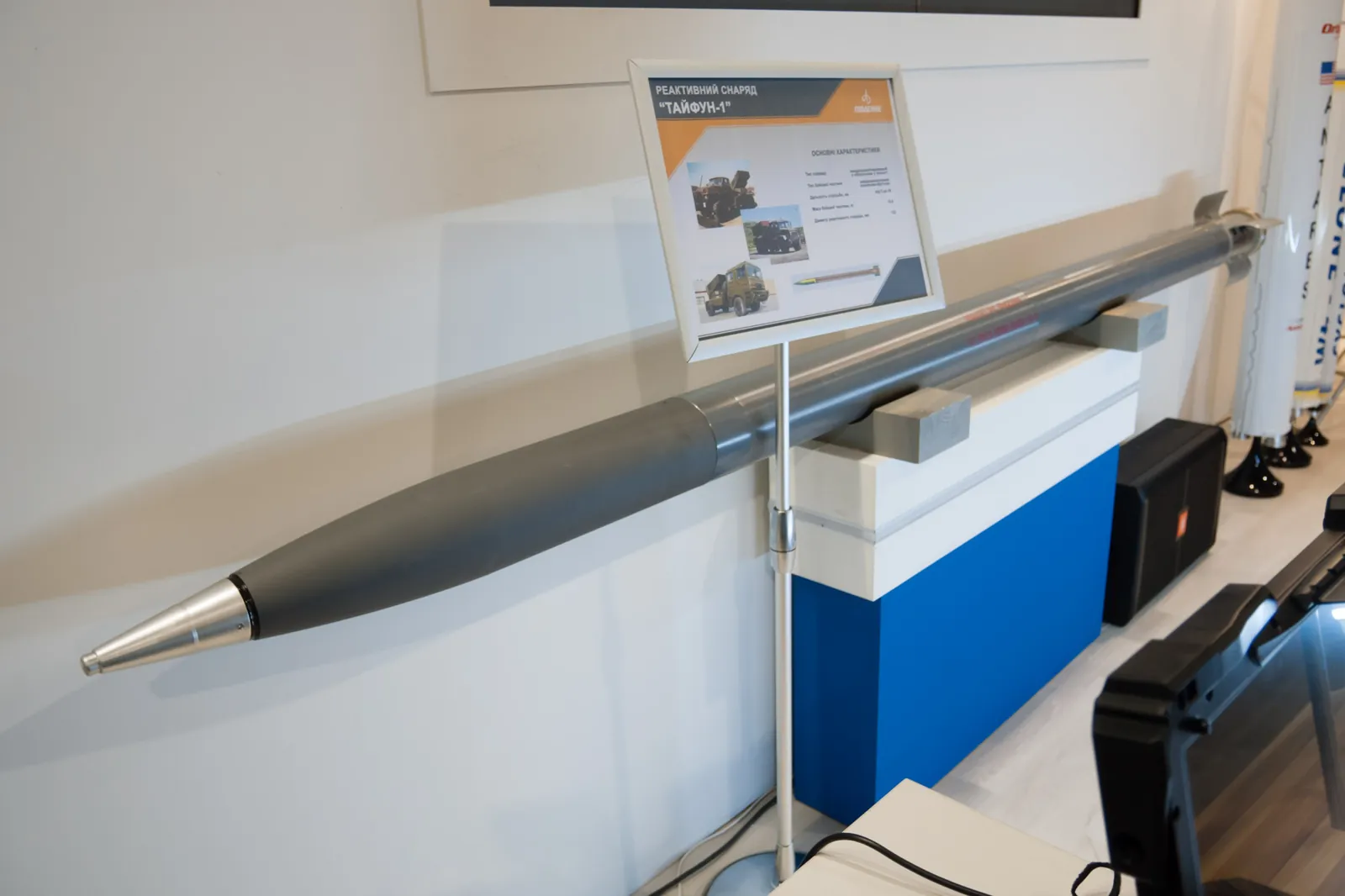
From the ATMACA anti-ship missile to the CIRIT laser-guided rocket, and from the HISAR air defence family to the TAYFUN ballistic missile, Elmadag plays a central role in the production and verification of ROKETSAN’s broad product portfolio. A significant share of the company’s roughly 5,000 employees — and much of its ~2,000-strong R&D staff — work within this ecosystem.
ROKETSAN’s production facilities form a structure specialised by function. The table below summarises the main sites, their locations and their core roles:
Lalahan Missile Integration Facility
The Lalahan Missile Integration Facility is one of the new sites ROKETSAN brought into service in 2026. Located in the Lalahan area of Ankara, the facility focuses, as its name suggests, on integration — the stage where different sub-systems are brought together to form the finished missile.
Producing a missile is not a single step. The airframe, guidance and control systems, warhead, propulsion (motor) and software are manufactured separately, and these components must then be precisely assembled. Integration is the critical link where the parts come together, pass quality control and are prepared for delivery. Dedicating the Lalahan site to this role shows that ROKETSAN aims to specialise its production chain and increase serial output.
With Lalahan online, part of the integration work previously concentrated at Elmadag has shifted to the new site, easing the load on Elmadag’s lines. This matters for meeting a growing order volume and shortening delivery times.
Kirikkale Fuel Production Facility and capacity expansion
The most striking element of ROKETSAN’s 2026 facility investments is the Fuel Production Facility established in Kirikkale. This site focuses on producing the solid propellant needed for the propulsion systems of rockets and missiles. Fuel is one of a missile’s most critical and technologically sensitive components; range, speed and reliability are directly tied to fuel technology.
The Kirikkale facility is not merely a new factory but a strategic capacity move. According to disclosed figures, the investment exceeds USD 1 billion, and once operational the plant is intended to raise ROKETSAN’s missile production capacity roughly fivefold. Localising and scaling fuel production is decisive for meeting both rising domestic demand and expanding export contracts.
This capacity increase is consistent with ROKETSAN’s recent growth. According to CEO Murat Ikinci, the company’s 2025 turnover surpassed USD 2 billion, and its total order book reached around USD 10 billion with new contracts. Sustaining growth on this scale requires expanding production infrastructure in parallel. The Kirikkale and Lalahan facilities are investments that answer precisely this need.
In short, ROKETSAN’s facility structure has evolved from a single campus into a multi-function network: Elmadag remains the main production and test base, Lalahan handles integration, and Kirikkale takes on fuel production. This division of labour builds an integrated infrastructure that lets the company raise output while preserving its technological depth.
Location and function details for the Elmadag, Lalahan and Kirikkale facilities are based on public statements by ROKETSAN and Turkish defence-industry sources. Detailed technical measures such as covered floor area or the number of production lines have not been officially disclosed in detail for security reasons.
Frequently Asked Questions
Where are ROKETSAN’s production facilities?
ROKETSAN’s production facilities are concentrated mainly in and around Ankara. The main production and test campus is at Elmadag (Ankara). Added to this are the Lalahan Missile Integration Facility (Ankara) and the Kirikkale Fuel Production Facility, both opened in 2026.
Which is ROKETSAN’s main site?
ROKETSAN’s main production and test campus is in the Elmadag district of Ankara. Since its founding, the company has carried out most of its production, testing and integration work at this site.
What was the Kirikkale facility built for?
The Kirikkale Fuel Production Facility focuses on producing the solid propellant needed for rockets and missiles. With this investment of over USD 1 billion, ROKETSAN aims to increase its missile production capacity roughly fivefold. The plant entered service in April 2026.
What is done at the Lalahan facility?
The Lalahan Missile Integration Facility focuses on integration — the stage where a missile’s various sub-systems are brought together into a finished product. Operational since April 2026, it is designed to increase serial production capacity.
Why is ROKETSAN expanding its capacity?
Rising domestic demand and expanding export contracts have pushed ROKETSAN to grow its production capacity. The company’s 2025 turnover exceeded USD 2 billion and its total order book reached around USD 10 billion. The Kirikkale and Lalahan facilities were built to meet this growth.
In how many provinces are ROKETSAN’s facilities located?
ROKETSAN’s main production facilities are in Ankara (Elmadag and Lalahan) and Kirikkale. Operations are concentrated largely around Ankara and neighbouring Kirikkale.
Sources
- ROKETSAN official — roketsan.com.tr
- Turkish Armed Forces Foundation (TSKGV) — tskgv.org.tr
- Anadolu Agency and Daily Sabah reporting (2026)
- Defense News Top 100, 2025 edition
- Wikipedia (English) — ROKETSAN