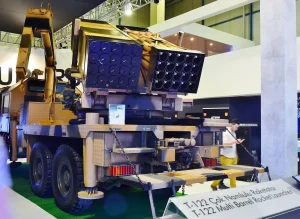
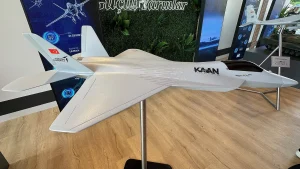
ROKETSAN R&D: ~2,000 Engineers Driving Missile Technology

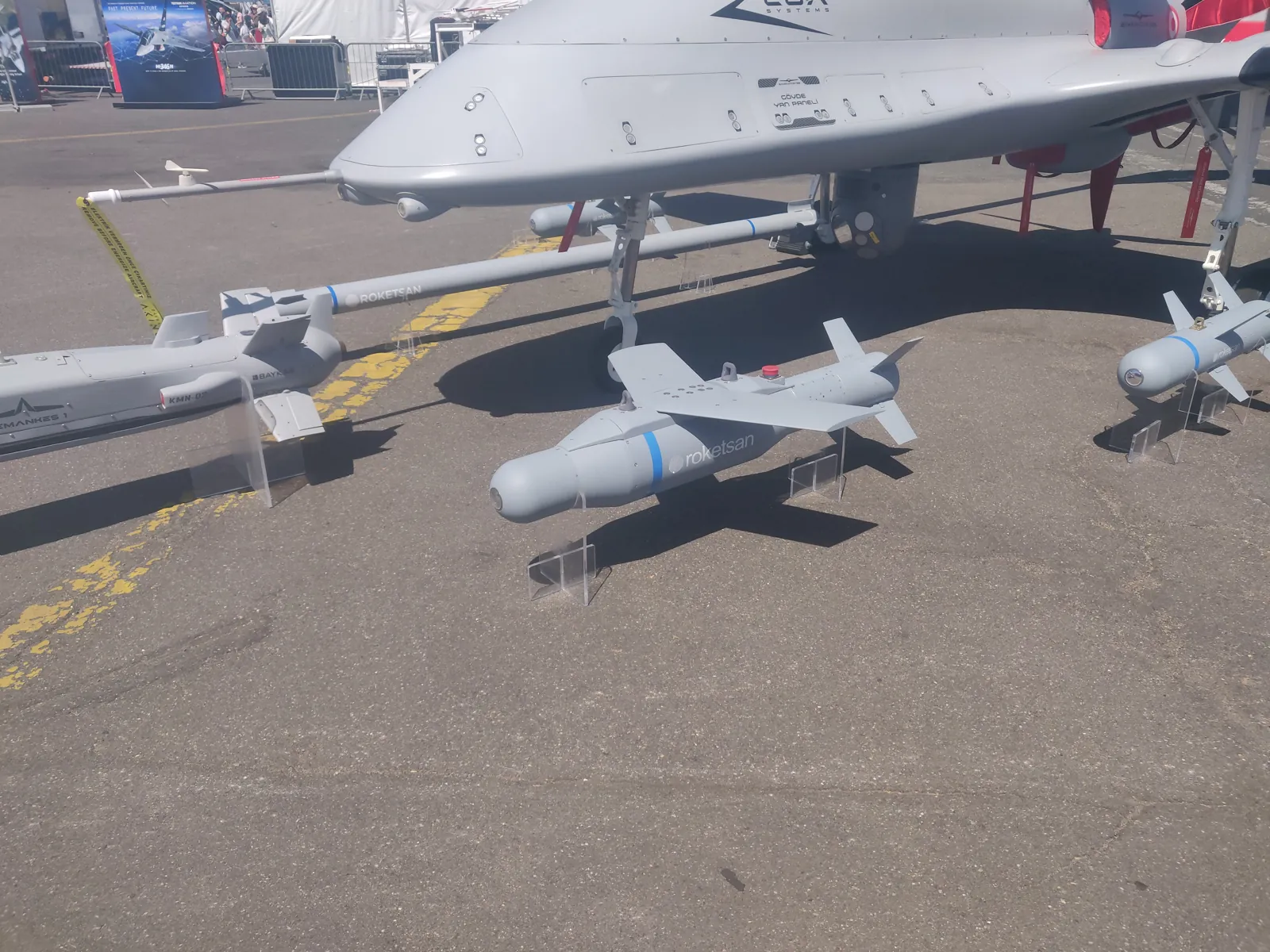
Research and development sits at the core of ROKETSAN. Of the company’s roughly 5,000 employees, about 2,000 work in R&D. These teams develop propulsion technology such as rocket motors and propellants, along with guidance and control, composite materials and test infrastructure — the capabilities that give Turkey a sovereign hand in missile and rocket technology rather than depending on foreign suppliers.
| ROKETSAN R&D — At a Glance | |
|---|---|
| Company | ROKETSAN Roket Sanayii ve Ticaret A.Ş. |
| R&D staff | ~2,000 (of ~5,000 total employees) |
| Main R&D fields | Propulsion (motors, propellant), guidance, composites, munitions |
| Site | Ankara (Elmadağ main production/test) |
| New plants | Lalahan (integration), Kırıkkale (propellant) — April 2026 |
| Purpose | Localise critical technologies and reduce foreign dependence |
| CEO/GM | Murat İkinci |
| Status | TSKGV foundation company — not publicly traded |
Why is ROKETSAN’s R&D so important?
Missile and rocket technology is mastered end to end by only a handful of nations. The propulsion, guidance and warhead technologies at the heart of these systems are hard to acquire and easy to have cut off by an export embargo. From its founding in 1988, ROKETSAN was set up not merely to manufacture but to design and develop these technologies with its own engineers. Research and development is therefore not a secondary function for the company — it is the reason the company exists.
Its roughly 2,000 R&D staff represent about 40% of the total workforce. That ratio makes ROKETSAN less a conventional manufacturer than an engineering and technology organisation equipped with a production capability. The R&D workforce brings together specialists from mechanical, chemical, materials, electronics, software, aerospace and other engineering disciplines under one roof.
What does ROKETSAN’s R&D work on?
ROKETSAN’s R&D covers all of the critical subsystems needed to create a missile. Its main areas of work include:
- Propulsion: Solid- and liquid-fuel rocket motors, propellant formulation and production. Propulsion is the single most critical capability, because it directly determines a missile’s range and performance.
- Guidance and control: Navigation, homing and control algorithms, together with work on seekers and control surfaces.
- Composites and advanced materials: Light, durable airframe structures and components resistant to heat and pressure.
- Warheads and munitions: Effect mechanisms and the design and integration of smart munitions.
- Test and verification: The infrastructure and methods needed for motor firing, launch and environmental testing.
These fields are interdependent, and ROKETSAN’s strength lies in integrating them under a single roof.
The table below summarises ROKETSAN’s principal R&D capability areas and their role in missile technology. Some technical values for specific programmes have not been officially disclosed.
Localisation and propulsion technology
One of the clearest goals of ROKETSAN’s R&D is localisation. A single foreign-dependent component can render an entire missile useless under an embargo. The company therefore prioritises the ability to design and produce critical subsystems at home — from seekers to rocket motors, from propellant chemistry to control electronics.
At the centre of this effort is propulsion. Rocket-motor and propellant production is the most demanding and strategic area of missile technology. The Kırıkkale propellant plant and Lalahan missile integration plant that ROKETSAN inaugurated in April 2026 are investments aimed at expanding capacity in this field; total investment exceeds $1 billion and targets roughly a fivefold increase in missile production capacity. These plants provide infrastructure not only for production but also for developing and validating new propellant and motor technologies.
Test infrastructure and engineering talent
Turning R&D into a fielded product requires a strong test and verification infrastructure. Firing a rocket motor, proving a guidance algorithm in a live launch, or measuring an airframe’s resistance to environmental stress is impossible without laboratory and field testing. ROKETSAN’s production and test infrastructure at the Elmadağ site near Ankara sits at the centre of this validation process, and the new plants expand that test and integration capacity further.
Behind all of this is the roughly 2,000-strong R&D workforce. It is continuously renewed through joint university projects, internships and young-engineer programmes. ROKETSAN is among the most engineering-intensive employers in Turkey’s defence sector and describes its technical staff as its most valuable asset. Details such as the exact breakdown of R&D personnel and the R&D budget share have not been officially disclosed.
The R&D headcount (~2,000) and the general capability areas here rest on official and open-source information. Technical values for specific programmes and details such as the R&D budget have not been officially disclosed.
Frequently Asked Questions
How many R&D staff does ROKETSAN have?
Of ROKETSAN’s roughly 5,000 employees, about 2,000 work in research and development.
What technologies does ROKETSAN’s R&D work on?
The main fields are propulsion (rocket motors and propellant), guidance and control, composite materials, warheads/munitions and test infrastructure.
What is ROKETSAN’s most critical R&D area?
Propulsion — rocket-motor and propellant production — is considered the most critical, because it directly sets a missile’s range and performance.
What does localisation mean for ROKETSAN?
It means designing and producing critical subsystems such as seekers, rocket motors, propellant and control electronics at home, reducing foreign dependence and embargo risk.
How do the new plants affect R&D?
The Kırıkkale propellant and Lalahan integration plants opened in April 2026, with over $1 billion of investment, expand capacity and provide infrastructure to develop and validate new propellant and motor technologies.
How large is ROKETSAN’s R&D budget?
Precise details such as the R&D budget’s share of turnover have not been officially disclosed.
Sources
- ROKETSAN official — roketsan.com.tr
- Turkish Armed Forces Foundation (TSKGV) — tskgv.org.tr
- Defense News — Top 100 Defense Companies 2025
- Anadolu Agency and Daily Sabah reporting (2026)