


Who Is ROKETSAN’s CEO? Murat İkinci and His Vision

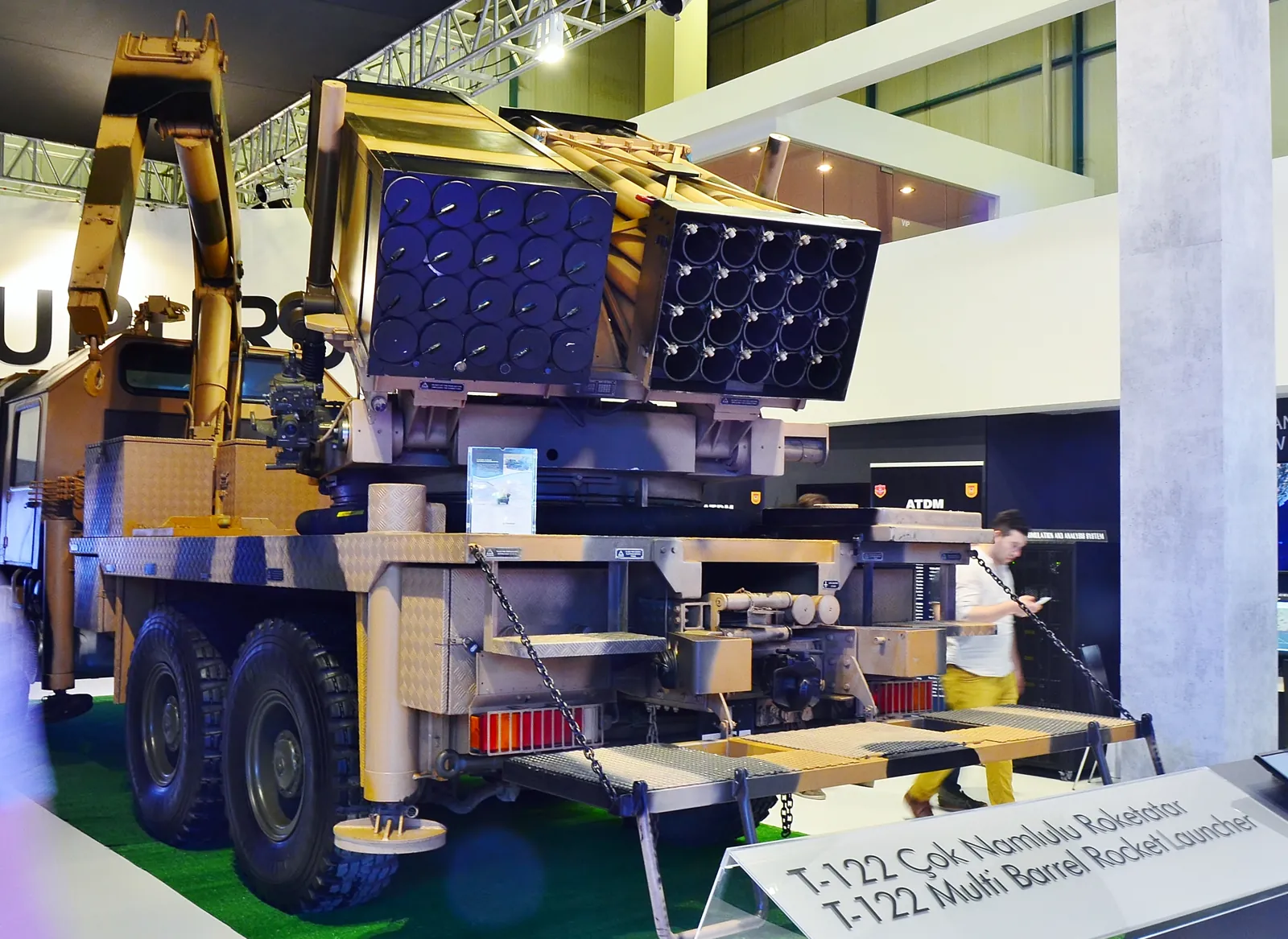
ROKETSAN’s General Manager (its chief executive) is Murat İkinci. As the company’s most senior executive, İkinci is responsible for the overall management of ROKETSAN’s missile and rocket programmes, its growth strategy and the targets it communicates publicly. Under his leadership the firm has focused on turnover exceeding $2 billion, on lifting exports above 50% of turnover, and on investments to expand production capacity roughly fivefold.
| ROKETSAN Leadership — At a Glance | |
|---|---|
| Company | ROKETSAN Roket Sanayii ve Ticaret A.Ş. |
| General Manager (CEO) | Murat İkinci |
| Headquarters | Ankara (Elmadağ; Lalahan, Kırıkkale) |
| Founded | 14 June 1988, Ankara |
| Parent foundation | TSKGV (55%) — not publicly traded |
| Employees | ~5,000 (~2,000 in R&D) |
| 2025 turnover | $2B+ (CEO statement) |
| Headline goals | Exports 50%+ of turnover, ~5x capacity |
Who is ROKETSAN’s CEO?
ROKETSAN’s General Manager — the equivalent of a chief executive officer — is Murat İkinci. The general manager is the most senior executive running the company’s day-to-day operations, its programme management and its strategic direction. At ROKETSAN this role carries considerable weight: it means leading Turkey’s pioneering rocket and missile house, a company with defence revenue above two billion dollars, more than five thousand employees and a rapidly growing order book.
ROKETSAN operates as a joint-stock company under the umbrella of the Turkish Armed Forces Foundation (TSKGV), which holds 55% of its shares; the company is not listed on the stock exchange. Within this structure the general manager is accountable both for the firm’s commercial performance and for a production agenda aligned with national defence priorities. The role therefore goes well beyond ordinary business management: it involves steering a technology institution that contributes directly to the country’s deterrence capacity.
Among İkinci’s principal functions as general manager are: setting and publicly communicating the company’s long-term growth and export goals; overseeing new production-plant investments at Lalahan and Kırıkkale; sustaining a technology and localisation agenda while preserving an R&D-heavy workforce; and positioning the company as a more visible supplier in international markets. These functions map directly onto the themes of growth, export and capacity that recur in İkinci’s public statements.
Details of the general manager’s personal career history, appointment date and educational background are not treated here as confirmed fact to the extent that they have not been officially disclosed. ROKETSAN’s corporate communication has emphasised the company’s targets and performance rather than the identity of its chief executive. Accordingly, the focus here is on the strategic direction the company pursues under İkinci’s leadership.
Leadership approach and priorities
Under Murat İkinci, ROKETSAN’s publicly stated agenda clusters around three axes: growth, export and localisation. These three headings are the common denominator of the company’s recent statements and investment decisions, and they summarise the strategic priorities of the general management.
On growth, İkinci has stated that the company’s 2025 turnover exceeded two billion dollars and that, with new contracts, the total order book reached roughly ten billion dollars — a substantial expansion. This growth is underpinned not only by selling existing products but by widening the production base. Management’s most concrete step is the plants at Lalahan (missile integration) and Kırıkkale (propellant production); together these investments exceed one billion dollars, with the stated goal of raising missile output roughly fivefold.
On export, the explicit goal is to lift export revenue above 50% of total turnover. Because ROKETSAN derives all of its revenue from defence sales, the path to sustainable growth runs through increasing foreign sales. Management has placed this goal at the centre of the company’s long-term strategy rather than treating it as a secondary revenue line.
- Growth: $2B+ turnover, ~$10B total order book.
- Export: target of 50%+ of turnover; strengthening the company’s position as an international supplier.
- Capacity: goal of roughly 5x growth in missile output through the new plants.
- Localisation: domestic production and R&D in rocket motors, propellant and propulsion technologies.
On localisation, the company’s workforce of around two thousand R&D staff and its domestic capacity in critical technologies — particularly solid propellant, rocket motors and propulsion systems — stand out. The Kırıkkale propellant plant is a concrete example of this localisation agenda: it is positioned as an investment that reduces external dependence and improves supply security. Running these three axes in parallel reflects ROKETSAN’s ambition to become both a larger and a more independent institution.
The table below summarises the key indicators that stand out in general manager Murat İkinci’s statements and the company’s official data. Some figures rest on the general manager’s statements and should be updated once audited annual reports are published.
Vision toward 2030: growth, export, capacity
Under Murat İkinci, ROKETSAN sets an ambitious course for the period ahead. The essence of the vision management projects publicly is to transform the company from a producer that merely meets domestic needs into a defence-technology institution that competes on a global scale. This transformation rests on three concrete pillars: growth, export and production capacity.
Production capacity is the most visible component of this vision. The Lalahan (missile integration) and Kırıkkale (propellant production) plants, brought online in April 2026, represent an investment exceeding one billion dollars. The goal management has announced for this investment is to raise missile production roughly fivefold. Capacity growth on this scale is intended to meet both expanding domestic commitments and rising export orders — it forms the infrastructural basis for the growth and export goals.
On the export pillar, lifting exports above 50% of turnover sits at the centre of the company’s medium-term road map. Because all of ROKETSAN’s revenue comes from defence sales, this goal is both necessary and meaningful: the sustainable source of growth must come from an expanding international market rather than a limited domestic budget. In this framework, management states that it aims to place the company among the world’s leading defence exporters.
The concrete timetable and final figures of these goals are known to the extent of the company’s official statements; details such as which products will be sold to which countries, or precise annual export ratios, are mostly not officially disclosed. The growth, export and capacity goals presented here rest on the general manager’s statements and the company’s official communication; they contain no speculative projections.
Place in Turkey’s defence industry
ROKETSAN’s general manager runs not only a company but a key link in Turkey’s defence-industry ecosystem. Alongside ASELSAN and Turkish Aerospace, ROKETSAN is one of the largest and most visible institutions in the Turkish defence sector; in the 2025 Defense News Top 100 it ranked #71, one of five Turkish firms on the list: ASELSAN (43), Turkish Aerospace/TAI (47), ROKETSAN (71), ASFAT (78) and MKE (80).
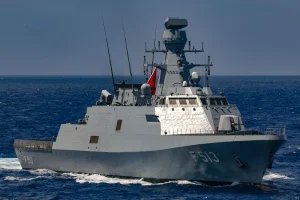
Within this ecosystem, ROKETSAN’s distinctive role lies in its expertise in guided munitions, missiles and air defence. Its product families range from the ATMACA anti-ship missile to the HİSAR and SİPER air-defence systems, from the CİRİT guided missile to the UMTAS/OMTAS anti-tank systems and ballistic missiles such as TAYFUN. The general management is charged with striking a production and R&D balance that lets this broad portfolio serve both domestic needs and the export market.
ROKETSAN’s ownership structure also shapes the general manager’s position. Because 55% of the shares belong to TSKGV, 15% to ASELSAN, 15% to MKE and 10% to VakıfBank, the company is under public-foundation control and is not publicly traded. This means the general management must balance commercial performance with national defence priorities. That İkinci’s statements emphasise localisation and supply security alongside growth and export reflects this dual responsibility.
In sum, Murat İkinci’s tenure as general manager is defined by an effort to make ROKETSAN a larger, more independent and more export-oriented institution. The success of this direction will become measurable in the years ahead through audited financial reports, export data and the commissioning of the new plants.
That ROKETSAN’s general manager is Murat İkinci, and the company’s growth, export and capacity goals, rest on official statements. Details of the general manager’s personal biography (career history, appointment date) are not treated here as confirmed fact to the extent that they have not been officially disclosed. The 2025 turnover figure rests on a statement by the general manager and will be updated when an audited annual report is published.
Frequently Asked Questions
Who is ROKETSAN’s CEO?
ROKETSAN’s General Manager (its chief executive) is Murat İkinci. As the most senior executive, he is responsible for programme management, growth strategy and the goals the company communicates publicly.
When did Murat İkinci take office?
His appointment date and prior career history are not treated here as confirmed fact to the extent that they have not been officially disclosed. What ROKETSAN’s corporate communication emphasises is the growth and export goals the general manager has set.
What are the ROKETSAN CEO’s priorities?
Management’s publicly stated priorities are growth, export and localisation: turnover above two billion dollars, lifting exports above 50% of turnover, and expanding production capacity roughly fivefold through new plants.
What is ROKETSAN’s export target?
The general management’s stated goal is to lift export revenue above 50% of total turnover. Because ROKETSAN earns all of its revenue from defence sales, export is positioned as the main engine of growth.
By how much is ROKETSAN expanding capacity?
With the Lalahan and Kırıkkale plants commissioned in April 2026, and thanks to an investment exceeding one billion dollars, ROKETSAN aims to raise its missile production capacity roughly fivefold.
Does the CEO own ROKETSAN?
No. ROKETSAN is a joint-stock company under TSKGV control (55% of shares) and is not publicly traded. The general manager does not own the company but runs it on behalf of the shareholders as the most senior executive.
Sources
- ROKETSAN official — roketsan.com.tr
- Defense News — Top 100 Defense Companies (2025 list)
- Turkish Armed Forces Foundation (TSKGV) — tskgv.org.tr
- Anadolu Agency and Daily Sabah reports (2026)
- Company and OSINT records verified 22 July 2026