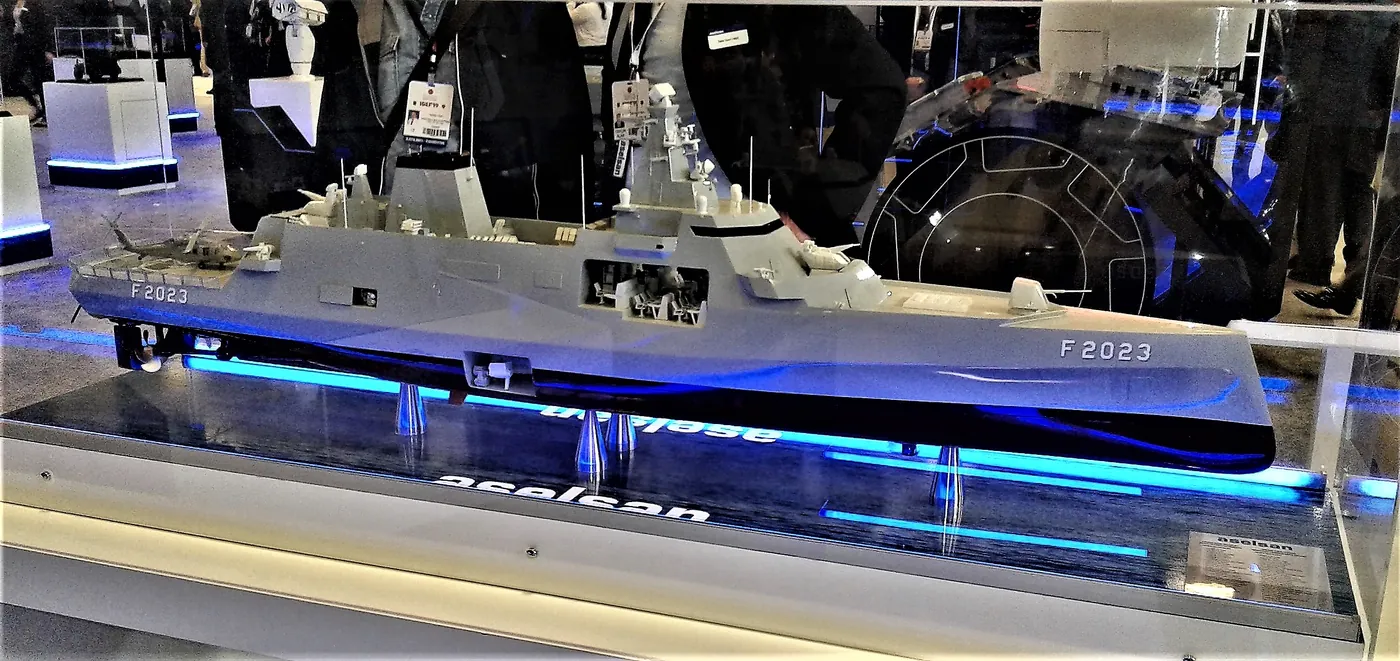
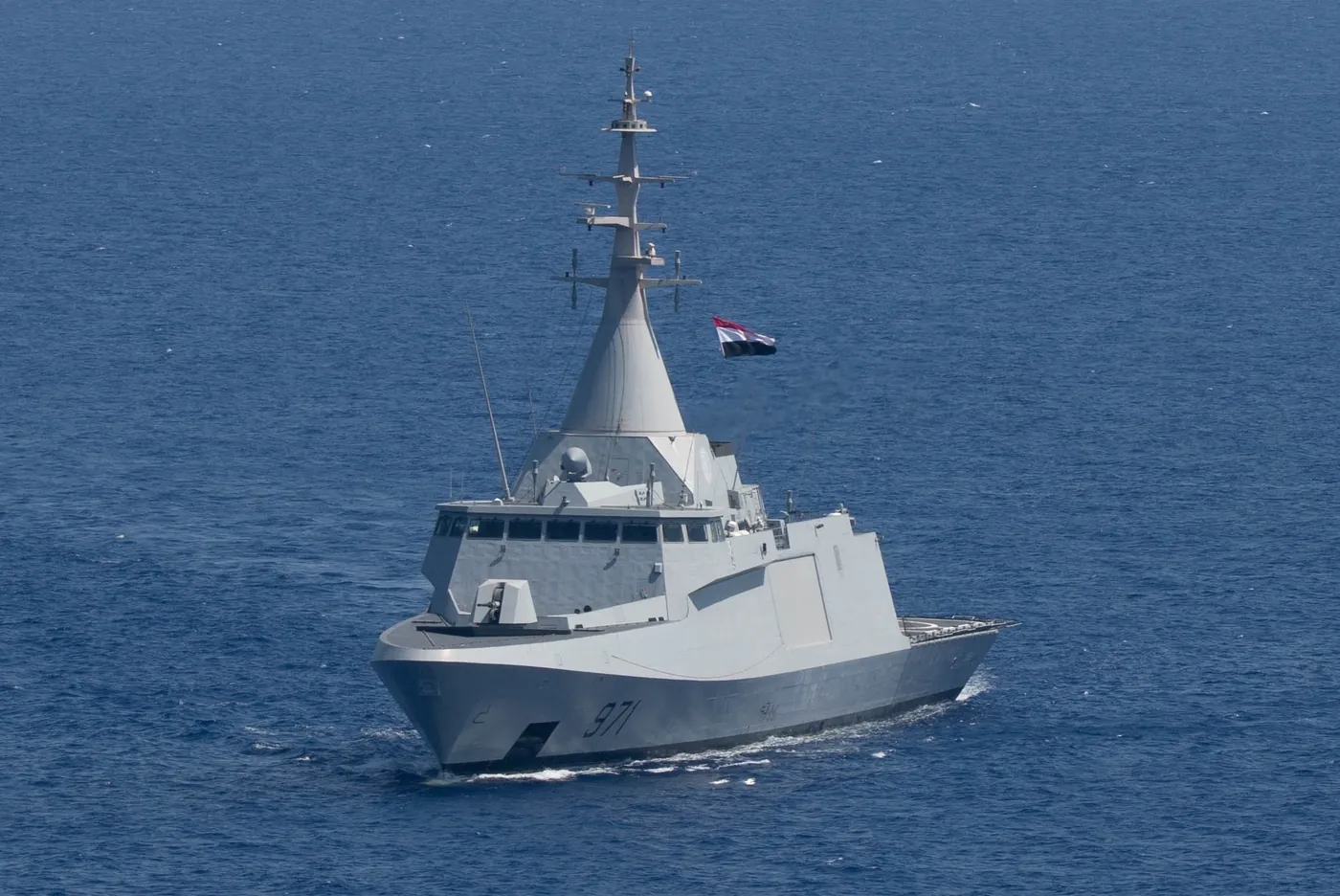
Turkiye’s Ada-class corvette, the first fruit of the national MILGEM program, and France’s Gowind 2500 from Naval Group are arguably the two most successful corvettes in today’s export market, each hovering around 2,400-2,500 tonnes. The Ada leans on an all-indigenous weapon and combat-system stack built around HAVELSAN’s GENESIS, Atmaca missiles and the GOKDENIZ CIWS; the Gowind 2500 brings a battle-tested SETIS combat system shared with the FREMM frigates and a deep roster of export operators. This comparison weighs both on firepower, sensors, survivability and export success from a NATO procurement standpoint.
76.2/100
MİLGEM (Ada Sınıfı)
Score Breakdown
| Criterion | MİLGEM (Ada Sınıfı) | Gowind 2500 |
|---|
| Operational Success | 8/10 | 8/10 |
| Combat Experience | 7/10 | 7/10 |
| Technology Level | 8/10 | 8/10 |
| Export Success | 7/10 | 9/10 |
| Operator Count | 6/10 | 8/10 |
| Upgrade Potential | 9/10 | 8/10 |
| Production Status | 8/10 | 8/10 |
| Cost-Effectiveness | 8/10 | 7/10 |
| Total | 76.2 | 78.8 |
Technical Comparison Table
| Specification | MILGEM (Ada Class) | Gowind 2500 |
|---|
| Class / role | Anti-submarine / multimission corvette | Multimission corvette |
| Displacement | ~2,400 tonnes | ~2,500 tonnes |
| Length / beam | 99.6 m / 14.4 m | 102 m / 16 m |
| Combat system | HAVELSAN GENESIS (indigenous) | Naval Group SETIS (FREMM lineage) |
| Anti-ship missiles | 8 x Atmaca (indigenous, ~220+ km) | 8 x Exocet MM40 Block 3 (~200 km) |
| Air defense | GOKDENIZ 35 mm CIWS + HISAR / RAM-class | 16 x VL MICA VLS |
| Main gun / ASW | 76 mm + twin 324 mm torpedo tubes | 76 mm + 324 mm torpedo tubes |
| Speed / range | 29-30 kn / 3,500 nm | 25+ kn / 4,000 nm |
| In service / status | 4 in Turkish Navy; exported to Pakistan, Ukraine | Operated by Egypt, UAE; ordered by Malaysia, Argentina |
Firepower and Strike
Sensors and Combat System
The Ada’s combat backbone is HAVELSAN’s GENESIS, a network-centric command-and-control system developed in Turkiye and progressively upgraded across the fleet, fused with ASELSAN radars, electro-optics and electronic-warfare suites. This end-to-end national integration enables rapid software updates, sovereign cyber assurance and customer-specific tailoring, and newer MILGEM derivatives extend the same architecture toward AESA radars and national VLS, signalling a clear technology roadmap.
The Gowind 2500 is built around Naval Group’s SETIS combat system, the same family that equips the FREMM frigates, married to the Sea Fire or SMART-S Mk2 radar depending on configuration and a panoramic sensor mast. SETIS is a proven, export-hardened system with a large installed base and strong anti-submarine pedigree. In combat-system terms the Gowind offers battle-validated maturity and commonality with a frigate-class lineage, while the Ada offers a fresher, sovereign baseline with faster national upgrade cycles.
Survivability and Seakeeping
The Ada class was designed with a low radar and infrared signature hull, shock-hardened systems and a robust anti-submarine focus, reflecting the Turkish Navy’s operational priorities in the contested Aegean and Eastern Mediterranean. Its slightly smaller hull keeps unit cost down while still delivering a 30-knot top speed, and the indigenous sensor and EW fit can be hardened and updated against emerging threats without export-control friction.
The Gowind 2500 emphasizes a stealthy enclosed mast, comprehensive damage-control automation and a layered self-defense suite, with its larger 16-metre beam giving slightly better stability and growth margin for additional systems. Its design is validated across multiple navies operating in demanding conditions from the Mediterranean to the South Atlantic. Both are modern, well-protected platforms; the Gowind’s extra beam and margin offer growth headroom, while the Ada offers a tightly optimized, sovereign-hardened package.
Cost, Exportability and Alliance Relevance
From a NATO procurement lens the Ada/MILGEM is a rising export success: technology transfer and local construction underpin the Babur-class deal with Pakistan and the Hetman Ivan Mazepa corvettes for Ukraine, both NATO-relevant partners, with ASFAT offering attractive financing and industrial offsets. Its limitation is a smaller pool of operators to date and a combat record still being written compared with longer-established Western yards, though its trajectory is steep.
The Gowind 2500 enjoys one of the broadest corvette export footprints in the world, with operators including Egypt and the UAE and orders from Malaysia and Argentina, backed by Naval Group’s global sustainment network and FREMM commonality. Its drawbacks are a higher unit cost and French export-control gatekeeping, and the cancelled Romanian deal showed program risk. For many buyers the Gowind is the low-risk, widely fielded default; the Ada is the sovereign-minded challenger rapidly closing the export gap.
Operating Nations
| System | Operators |
|---|
| MILGEM (Ada Class) | Turkiye (4 commissioned); Pakistan (Babur class) and Ukraine (Hetman Ivan Mazepa) under construction |
| Gowind 2500 | Egypt (El Fateh class) and UAE in service; Malaysia and Argentina ordered |
Verdict
The Gowind 2500 edges the comparison overall on its broader export footprint, battle-proven SETIS combat system and FREMM commonality (80/100). The MILGEM Ada matches it closely on firepower and survivability with a fully sovereign, rapidly upgradeable package and growing export wins (77/100), and is the platform to watch as Turkiye scales its naval industry.
Frequently Asked Questions
Which is better, the MILGEM Ada or the Gowind 2500?
Overall the Gowind 2500 holds a slight edge today thanks to a wider base of operators, the battle-validated SETIS combat system and commonality with the FREMM frigates. The MILGEM Ada matches it closely in firepower and survivability with a fully indigenous, faster-upgrading package and is rapidly winning export orders of its own.
What anti-ship missile does each corvette carry?
The Ada class carries the indigenous Atmaca, a sea-skimming missile with a range beyond 200 km and re-attack capability, while the Gowind 2500 typically carries the combat-proven MBDA Exocet MM40 Block 3. Both are eight-round fits in standard configuration.
Has the MILGEM Ada been exported?
Yes. Beyond the four corvettes in Turkish service, the design has been exported as the Babur class to Pakistan and as the Hetman Ivan Mazepa corvettes to Ukraine, both deals including technology transfer and local construction through ASFAT and partner shipyards.
What combat system does the Gowind 2500 use?
The Gowind 2500 is built around Naval Group’s SETIS combat management system, the same family used on the FREMM frigates, which gives it proven maturity, a large installed base and strong anti-submarine warfare pedigree.
Which corvette is more affordable?
The MILGEM Ada is generally positioned as the more cost-competitive option, particularly when bundled with technology transfer and local production, whereas the Gowind 2500 carries a higher unit cost but the reassurance of a very broad, established operator network.
Sources
▶ Bu iki platformu karşılaştırın →