South Korea Rebuilds the K2 Around the Drone Threat in $2.4 Billion Programme

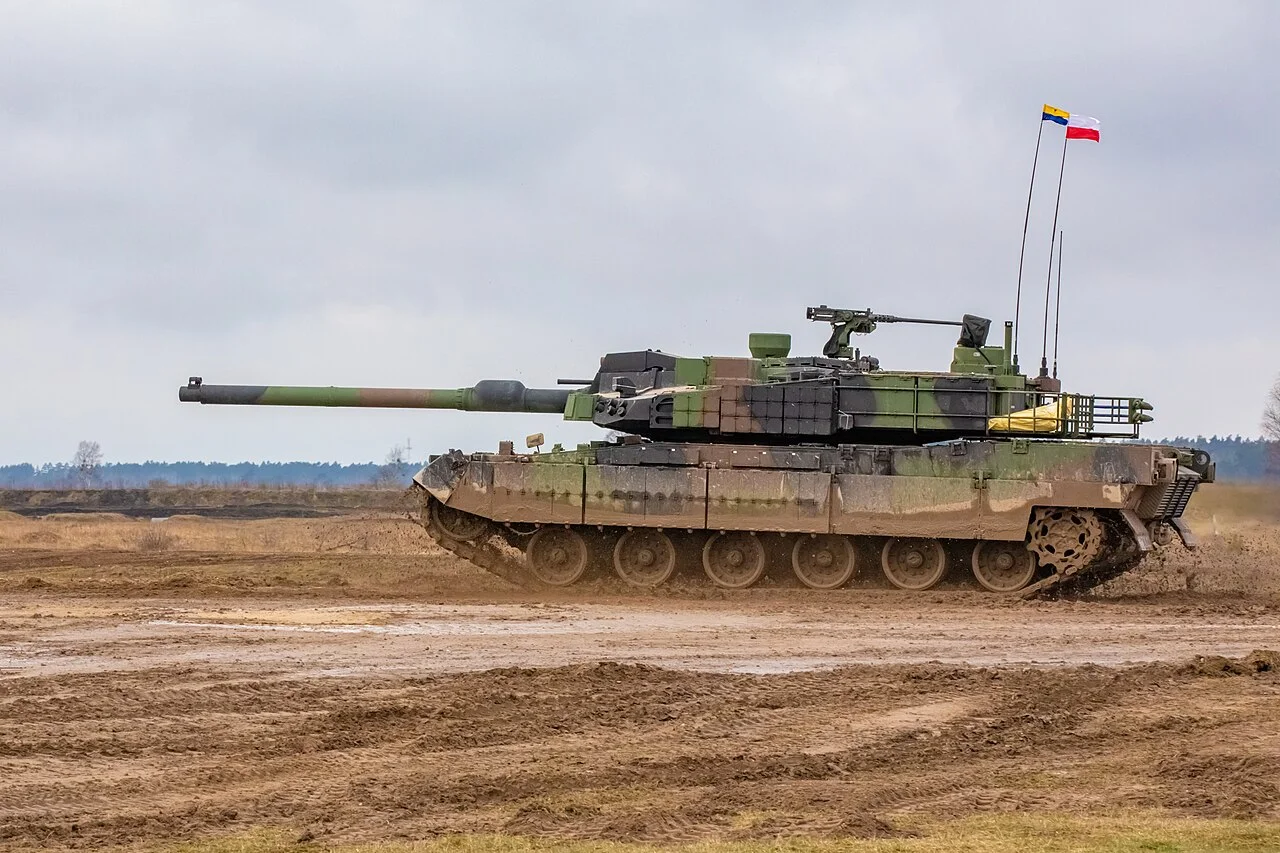
South Korea is reworking the armoured backbone of its ground forces around a threat that barely existed when the tank was designed. The Defense Acquisition Program Administration (DAPA) has approved a modernisation package for the K2 Black Panther main battle tank worth 3.43 trillion won, roughly $2.43 billion, built around three additions: an active protection system, jammers effective against drones and remotely triggered explosive devices, and a remote weapon station.
What the programme covers
Work under the K2 Tank Performance Upgrade Project begins in 2028, with the first upgraded vehicles expected to reach units around 2033. The long tail of the programme runs well into the following decade, which tells its own story: this is a fleet-wide rolling refit rather than a single block change.
The active protection system is intended to defeat incoming anti-tank guided missiles and certain aerial threats before impact. The jammer targets the radio-frequency link that first-person-view attack drones depend on, and covers command-detonated roadside charges at the same time. The remote weapon station lets the crew engage close-in threats without opening a hatch.
Why the layering matters
The three elements were not chosen at random. Hard-kill interceptors work well against fast, guided threats but cannot be spent economically on drones that cost a few hundred dollars each. Electronic attack fills exactly that gap by severing the operator’s link before the drone arrives. Fibre-optic-guided drones, immune to jamming, are the reason the third layer exists at all — a stabilised gun the crew can fire from under armour.
That layered logic is quickly becoming the default in armour modernisation worldwide. Sensors, soft-kill and hard-kill are converging on a single turret rather than being split across separate vehicles.
The platform
Built by Hyundai Rotem, the 55-tonne K2 carries a 120 mm L55 gun with an autoloader and uses hydropneumatic suspension that lets it adjust hull attitude on Korea’s steep terrain. Export contracts have also put the type into NATO service with Poland, making it one of the most visible Asian-designed armoured systems on the alliance’s eastern flank.
Regional context
Seoul’s decision follows North Korea’s rapid expansion of its loitering munition programme, and the assessment that Pyongyang’s newer Chonma-20 tank already carries an active protection system of its own. The armour balance on the peninsula is being reset in both directions at once.
The programme also carries a wider signal. With K2s in Polish service, the upgrade package is a plausible export item in its own right — and a reminder that anti-drone protection has moved from an optional extra to a baseline requirement for any tank offered on the European market.
Sources
- Defense Acquisition Program Administration (DAPA) statement, 13 August 2026
- Army Recognition, 13 August 2026
- The Defense Post, 12 August 2026