Europe’s 10 Strongest Air Forces in 2026: Russia, Türkiye, France

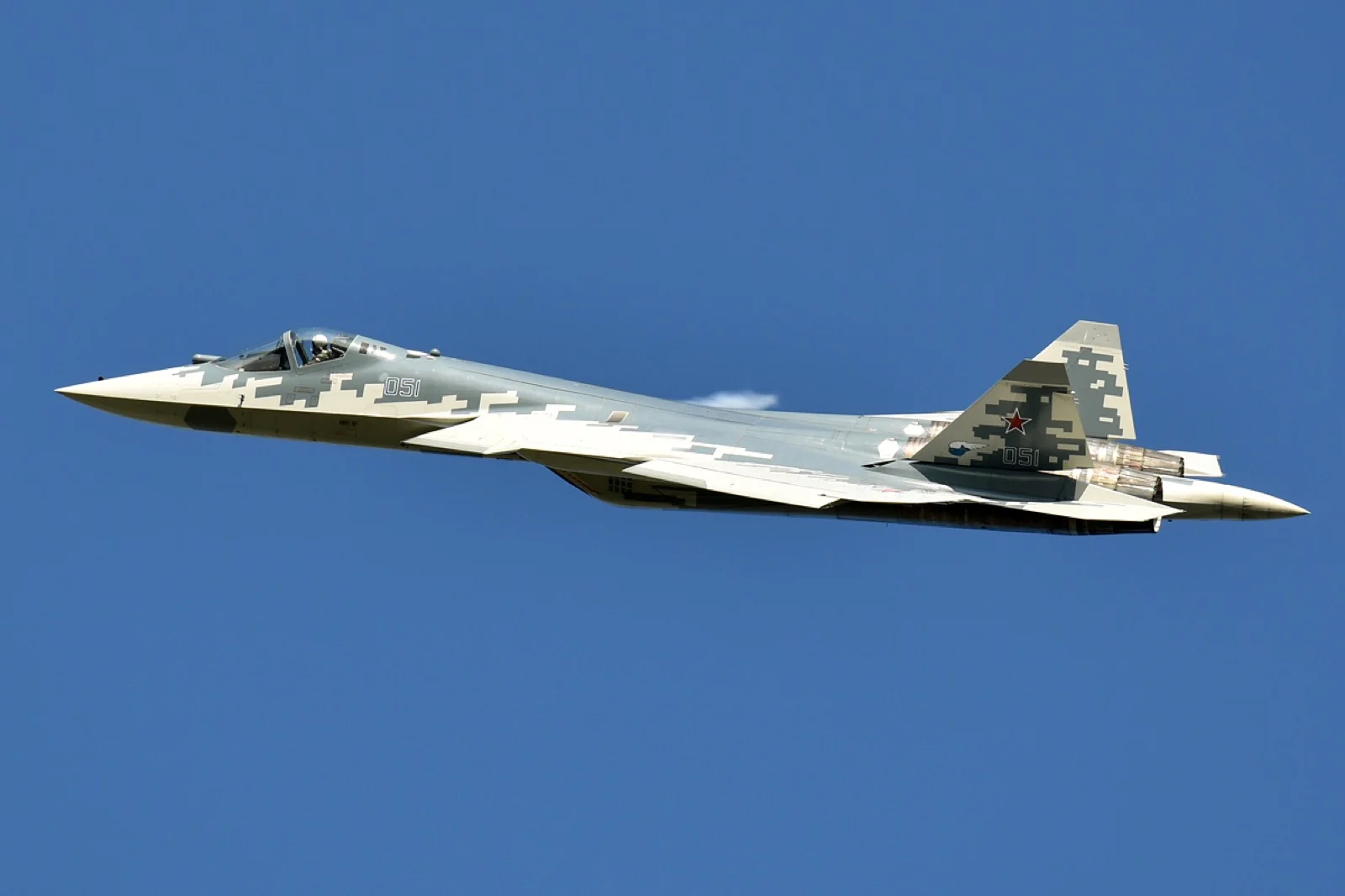
Who owns European airspace in 2026? Russia’s 4,237 aircraft, Türkiye’s 1,101 platforms, France’s Rafale fleet — the continent’s largest air arms counted down from 10 to 1 on current inventory figures.
Who actually owns European airspace? The question looks simple and has never been harder to answer. Poland is running the continent’s fastest modernisation, Germany is arguing about readiness rates despite a record budget, and Ukraine is fighting a war in which the decisive aircraft often has no pilot in it.
Global Firepower’s 2026 dataset ranks European air arms by total aircraft. The result bears almost no relationship to the defence spending table: Europe’s biggest spender finishes sixth. Where Türkiye lands is the genuine surprise of the countdown.
We work down from 10 to 1, with inventory, rotary fleet, manpower and budget figures alongside doctrine and modernisation analysis for every entry. The full comparison table sits at the end.
Ukraine
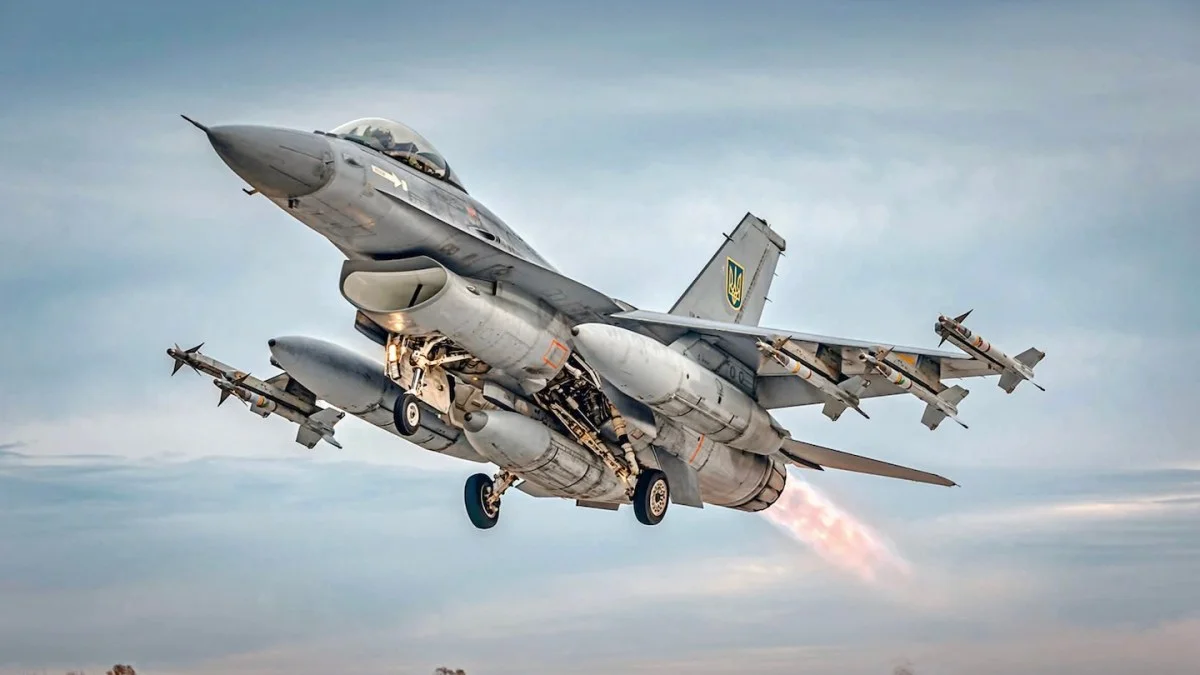
Ukraine is the only European air force fighting inside the densest air-defence environment on earth. The backbone is still Soviet: MiG-29 and Su-27 fighters, Su-24 and Su-25 strike aircraft. Western support changed the picture visibly with F-16 and Mirage 2000-5 deliveries, giving Kyiv AMRAAM and Storm Shadow-class stand-off weapons for the first time. But aircraft numbers are not the story. Russian S-400 and S-300 coverage keeps Ukrainian pilots tens of kilometres behind the line of contact, which has reduced manned air operations largely to low-altitude tossing of glide weapons. Unmanned systems fill the gap: reconnaissance drones, FPV swarms and long-range one-way attack aircraft carry the deep strike mission against refineries and airbases inside Russia. The lesson being absorbed across NATO is that air superiority is now a function of the integrated sensor-to-shooter chain, not the size of the fighter fleet.
Benchmark: Despite years of attrition Ukraine sits just 93 airframes behind Spain.
| Power Element | Figure |
|---|---|
| Total aircraft | 347 |
| Helicopters | 140 |
| Active personnel | 900,000 |
| Defence budget | $45bn |
The next country’s fleet has never fired a shot in anger — and flies some of Europe’s newest aircraft.
Spain
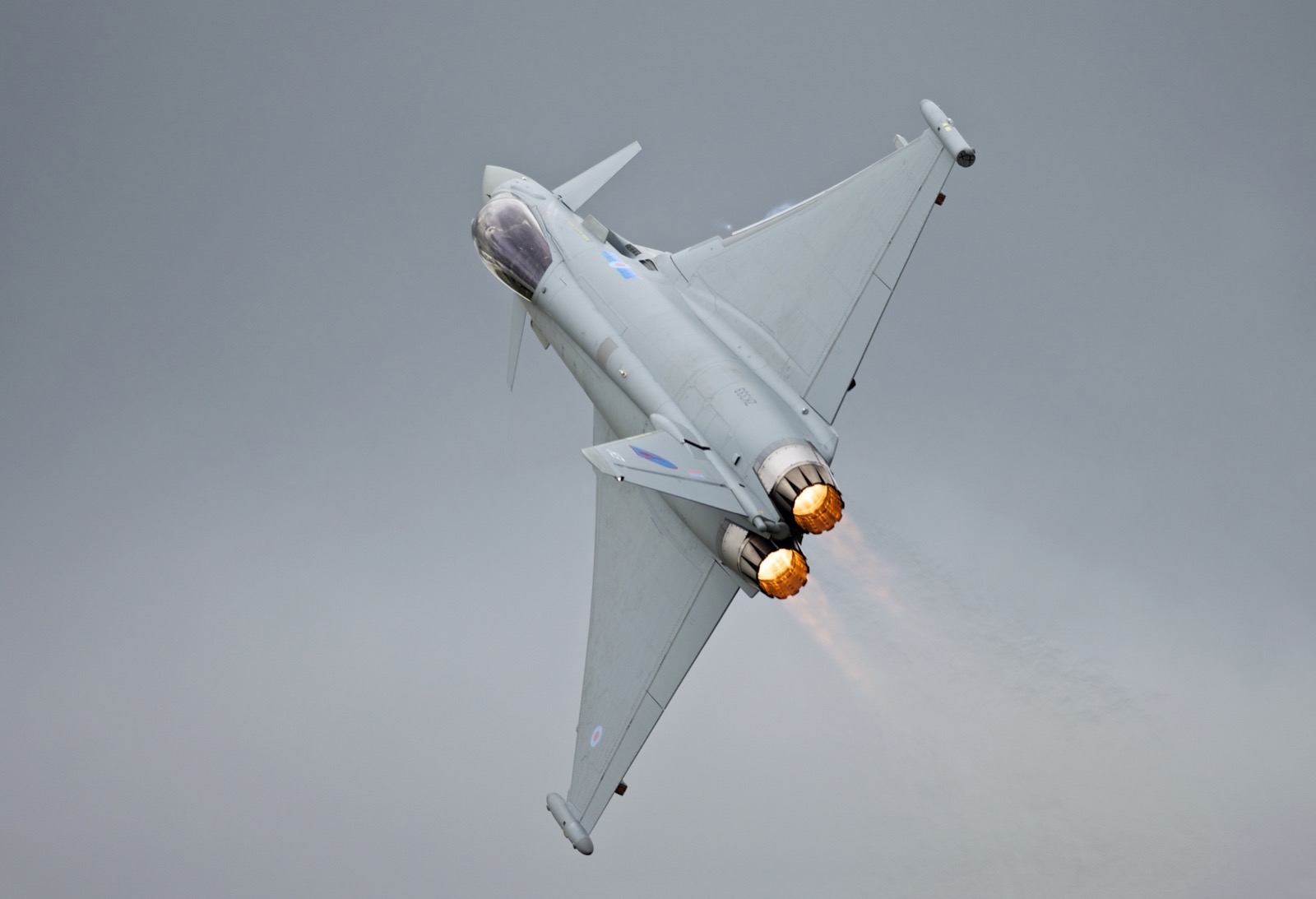
Spain flies a balanced force built on the Eurofighter Typhoon and the F/A-18 Hornet. The Halcón programme is progressively renewing the Typhoon fleet, and a second tranche will replace the ageing Hornets toward the end of this decade. Spain’s real leverage, though, is in support aviation rather than fighters: the A400M transport and the A330 MRTT tanker are assembled in Seville, making the country a load bearing part of NATO’s logistics spine rather than merely a customer of it. In naval aviation the AV-8B Harriers still operate from Juan Carlos I, but the future of that capability depends on an F-35B decision Madrid has deferred for years. Doctrinally Spain concentrates on air defence of the Gibraltar-Canaries axis, NATO air policing rotations in the Baltics and eastern Europe, and ISR and airlift support in the Sahel. Its stake in FCAS will define Spanish air power in the 2040s.
Benchmark: Spain trails Poland by 17 airframes overall and fields roughly half of Greece’s helicopter fleet.
| Power Element | Figure |
|---|---|
| Total aircraft | 440 |
| Helicopters | 169 |
| Active personnel | 121,802 |
| Defence budget | $39bn |
Next: the most aggressive rearmament programme in Europe over the past five years.
Poland
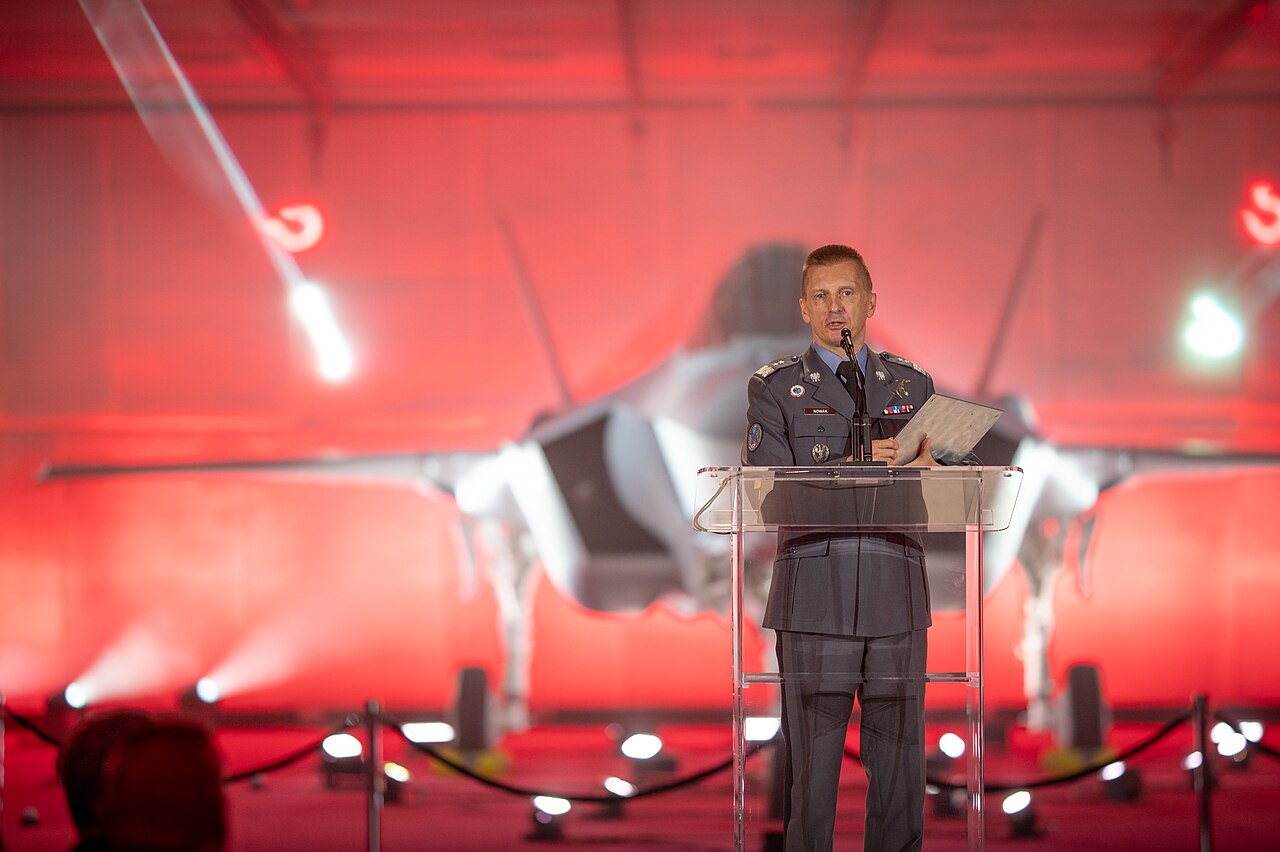
No European air force is growing faster. Immediately after Russia’s full-scale invasion of Ukraine, Warsaw launched a simultaneous jump in both quantity and quality: F-35A Husarz on order, FA-50 light combat aircraft from South Korea delivered at speed, AH-64E Apache attack helicopters and AW149 utility helicopters entering service in the same window. Nothing on NATO’s eastern flank compares in scale. Soviet-legacy MiG-29s and Su-22s are being retired while the F-16C/D Jastrząb fleet remains the combat backbone. Polish doctrine is unusually explicit: enough air-land integration density to stop a short-warning attack in the Suwałki Gap and along the Belarusian border within the first hours. Having pushed defence spending to the highest share of GDP in the alliance, Poland is the one European country plausibly positioned to overtake Germany in deployable air power this decade.
Benchmark: Poland now outspends Türkiye on defence — $55.8bn to $51.4bn — while fielding under half its aircraft.
| Power Element | Figure |
|---|---|
| Total aircraft | 457 |
| Helicopters | 224 |
| Active personnel | 250,000 |
| Defence budget | $55.8bn |
The next entry carries Europe’s densest fighter fleet relative to population.
Greece
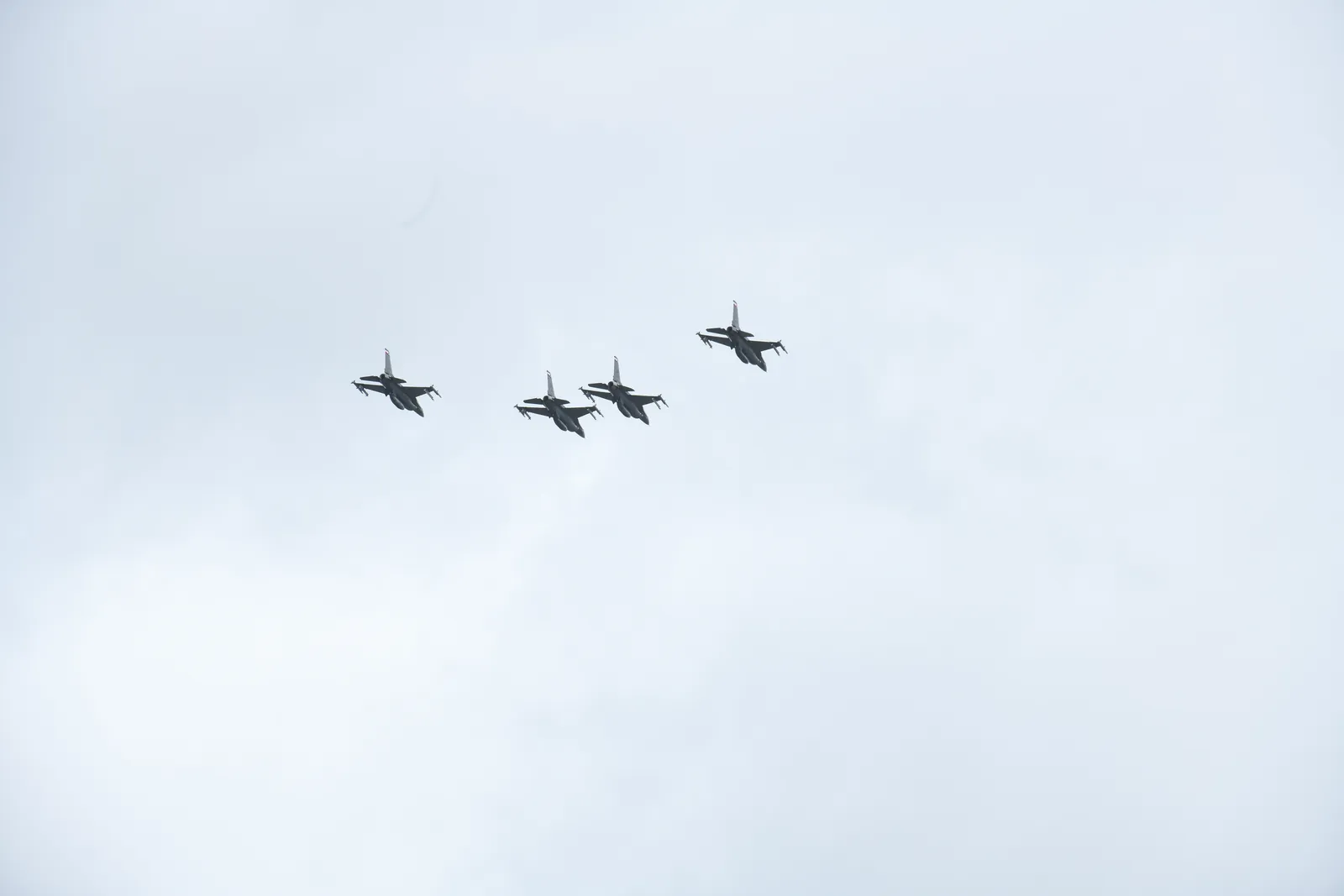
Ten million people, 560 aircraft — one of the highest ratios of air power to population anywhere in Europe. The fleet has changed substantially: French-supplied Rafales carrying Meteor are intended to give Athens a range advantage in the Aegean, the F-16 fleet is being upgraded to Viper standard, and an F-35A order is meant to open the fifth-generation chapter. Against that, a substantial share of the inventory still dates to the 1980s in the form of Mirage 2000s and early-block F-16s, and the sustainment burden weighs heavily. Greek doctrine is transparently Türkiye-centric: island-based air defences, S-300 systems and short-reaction deployment plans aimed at closing the Aegean. The structural problem is arithmetic. An $8.2 billion defence budget is roughly a sixth of Türkiye’s, which makes the pace of modernisation difficult to sustain across a full life cycle.
Benchmark: Greece nearly matches Germany’s helicopter fleet, 285 to 292, on roughly one-fifteenth of the German defence budget.
| Power Element | Figure |
|---|---|
| Total aircraft | 560 |
| Helicopters | 285 |
| Active personnel | 142,700 |
| Defence budget | $8.2bn |
Speaking of which — Europe’s biggest spender only manages sixth place.
Germany
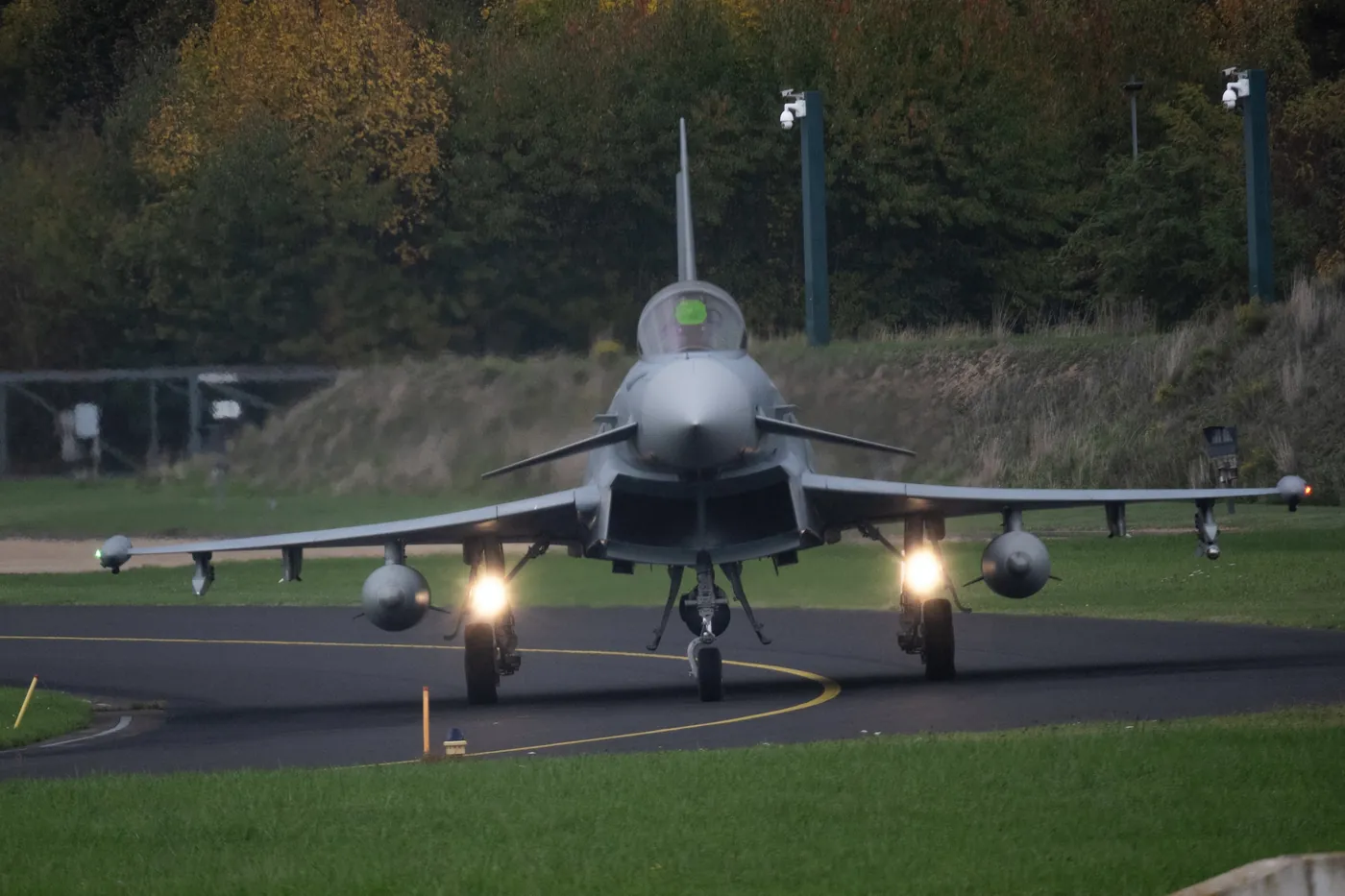
Germany manages Europe’s largest defence budget, and it has not yet turned into airframes. The Luftwaffe’s backbone is the Eurofighter Typhoon; the F-35A was ordered specifically to inherit the nuclear sharing role as the Tornado retires. Much of the €100 billion Sondervermögen fund went to aviation — F-35, CH-47F Chinook heavy lift and P-8A Poseidon maritime patrol all came out of that package. The constraint is not money but procurement speed and readiness rates, which German audit reports have flagged for years. Berlin’s doctrine is also in transition: the post-Cold War peace dividend logic has been abandoned, a permanent brigade is deploying to Lithuania and NATO air policing commitments have grown. FCAS, run with France and Spain, is the long-term answer, but recurring disputes over workshare keep pushing the timeline right.
Benchmark: Germany outspends Türkiye by roughly 2.5 times on defence while fielding about half as many aircraft.
| Power Element | Figure |
|---|---|
| Total aircraft | 569 |
| Helicopters | 292 |
| Active personnel | 184,324 |
| Defence budget | $127.4bn |
The next country can take its fifth-generation fleet to sea.
United Kingdom
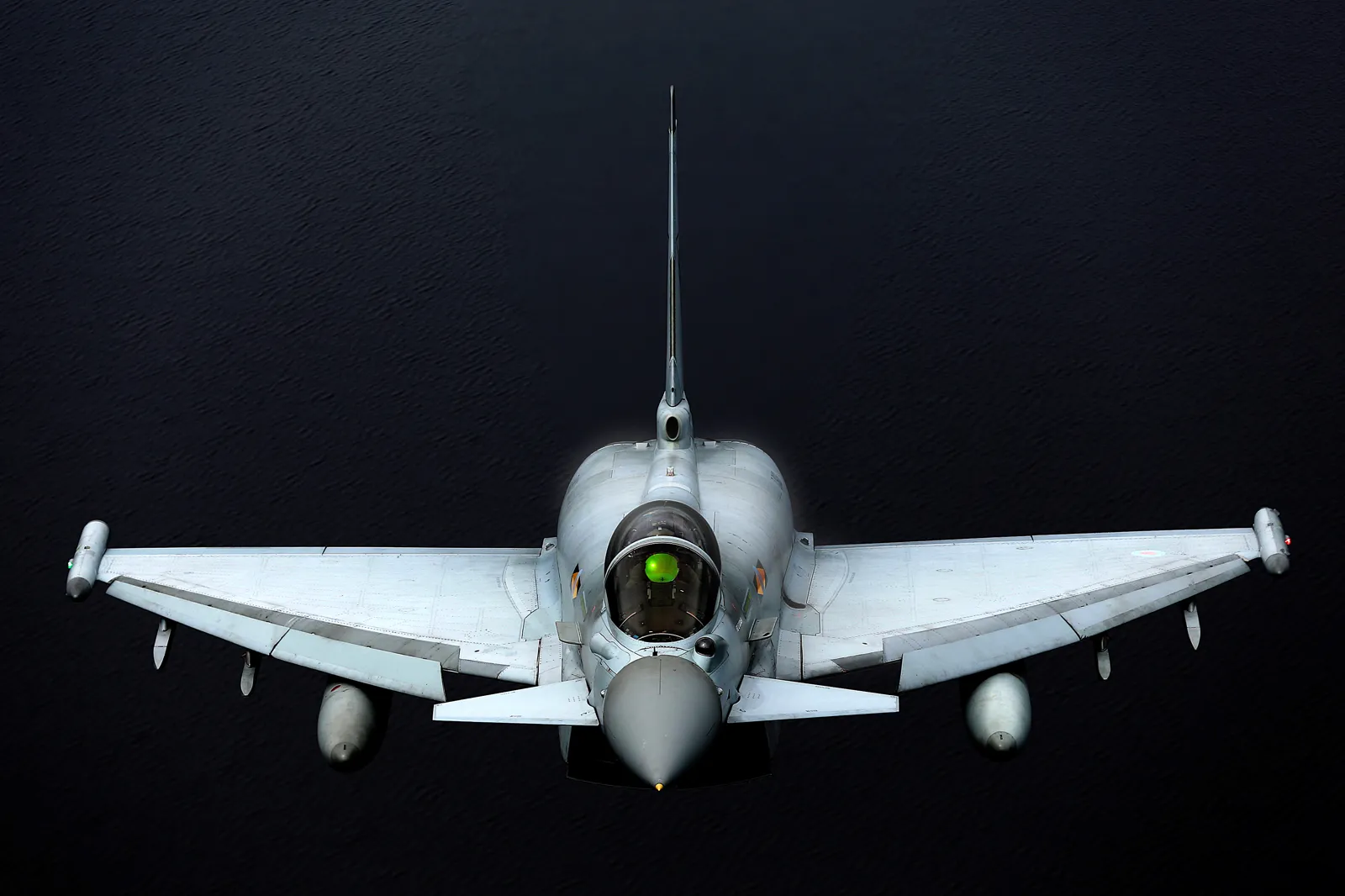
The UK’s strength is depth of capability rather than raw numbers. The RAF’s combat core is the Typhoon FGR4, while F-35B Lightnings operating from the Queen Elizabeth-class carriers give London a power projection option almost nobody else in Europe has. The enablers matter just as much: Voyager tankers, A400M and C-17 airlift, P-8A Poseidon maritime patrol and Wedgetail airborne early warning. That combination makes Britain one of very few NATO members able to plan and run a full-spectrum air campaign without American enablers. The weakness is mass — the retirement of Tranche 1 Typhoons and the cut to the Wedgetail order have left fleet depth contested. The Global Combat Air Programme, with Italy and Japan, is intended to close that gap with a sixth-generation aircraft by the mid-2030s, and it is one of two competing sixth-generation efforts on the continent.
Benchmark: The UK trails Italy by 89 airframes, but joins it as one of only two European operators of sea-based F-35Bs.
| Power Element | Figure |
|---|---|
| Total aircraft | 625 |
| Helicopters | 262 |
| Active personnel | 141,330 |
| Defence budget | $88.5bn |
And Italy pairs that capability with a far larger rotary fleet.
Italy
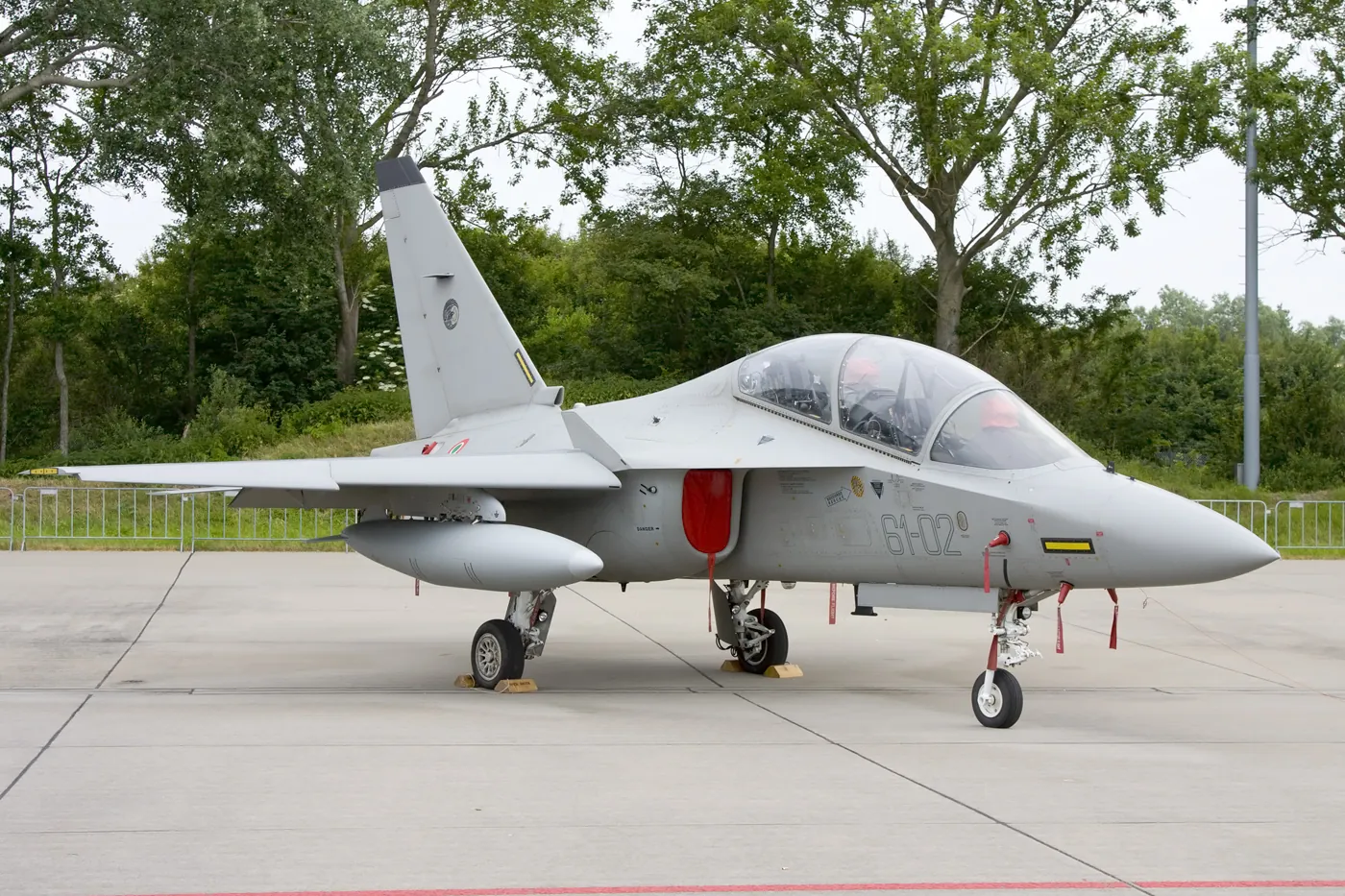
Italy is one of only two European countries operating both the F-35A and the F-35B, meaning fifth-generation operations from land bases and from the carrier Cavour alike. Typhoons hold the air superiority role, while Leonardo’s M-346 has become the de facto NATO standard for advanced jet training and a significant export earner in its own right. On the rotary side, the AW101, AW139 and NH90 families give Italy one of the continent’s largest helicopter fleets — 352 airframes, second in Europe only to Türkiye. Doctrine is Mediterranean-centred: instability from Libya and the Sahel, migration flows and the security of maritime trade routes drive both ISR and airlift requirements. Membership of GCAP places Rome at the same table as Britain and Japan in the sixth-generation race, on the opposite side of the ledger from the French-German-Spanish FCAS bloc.
Benchmark: Italy cannot match France’s 452 helicopters, but its 714 total airframes put it ahead of both Germany and the United Kingdom.
| Power Element | Figure |
|---|---|
| Total aircraft | 714 |
| Helicopters | 352 |
| Active personnel | 165,500 |
| Defence budget | $37.3bn |
Into the top three — and the scale changes entirely from here.
France
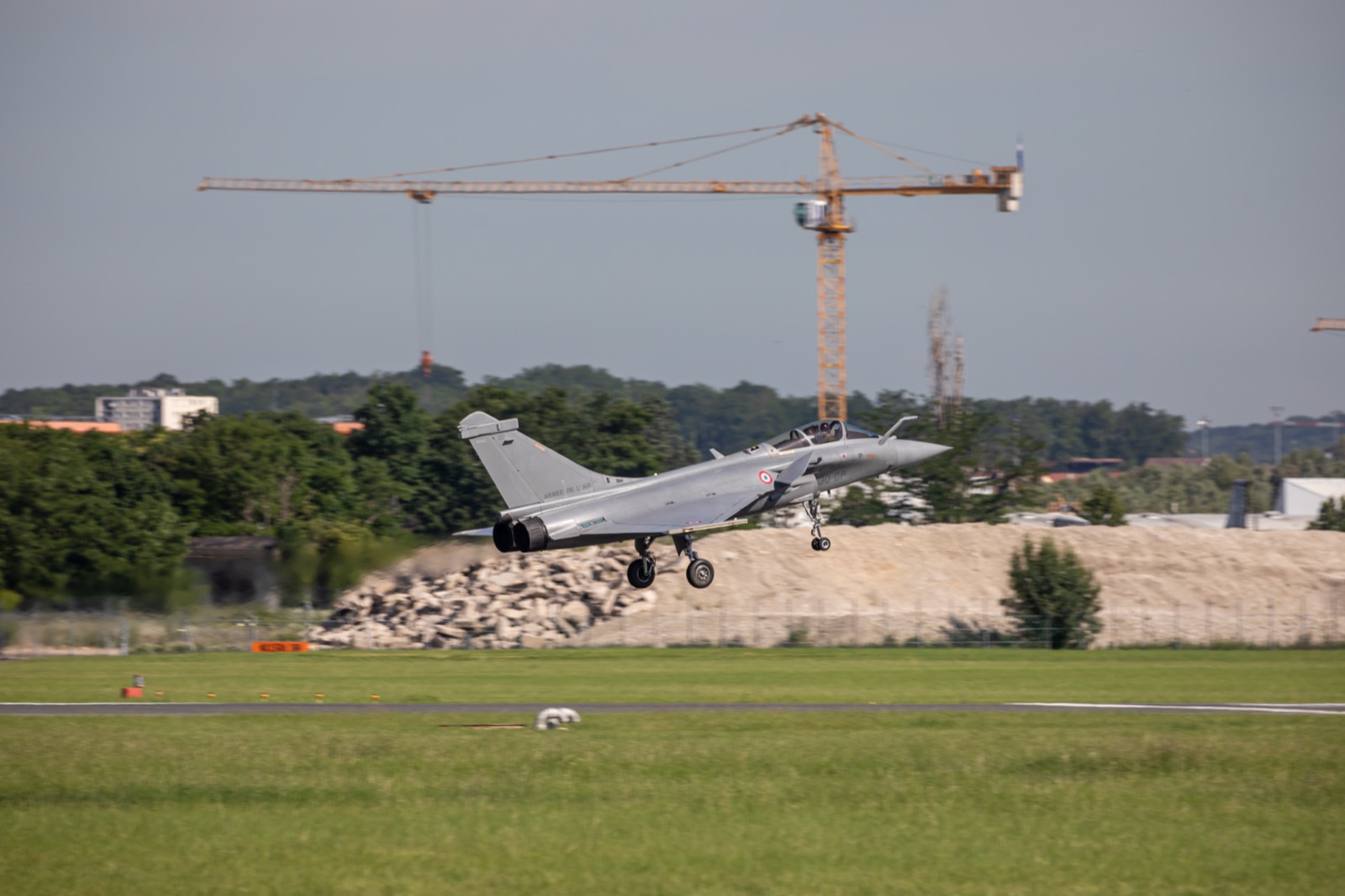
France is the only European country with a fully sovereign air power chain: Dassault builds the airframe, Safran the engine, Thales the radar and electronic warfare suite, MBDA the missiles. Rafale is the emblem of that integration, and its export record from Egypt and India to the UAE and Indonesia converts industry into diplomacy. The distinguishing capability is airborne deterrence — Rafales carrying the ASMP-A nuclear missile form the air leg of the French triad, a role no other European state fills alone. With 452 helicopters France runs the continent’s largest rotary fleet; Tiger attack and Caracal combat search-and-rescue airframes were tested across a decade of Sahel operations. The A330 MRTT Phénix tanker fleet gives Paris independent reach into Africa and the Middle East. FCAS is meant to carry that autonomy into the 2040s, though workshare disputes with Germany and Spain remain the programme’s main risk.
Benchmark: France leads Europe in helicopters with 452 — but trails Türkiye by 127 airframes overall.
| Power Element | Figure |
|---|---|
| Total aircraft | 974 |
| Helicopters | 452 |
| Active personnel | 264,000 |
| Defence budget | $67.2bn |
Which brings us to the most-argued line on this list.
Türkiye
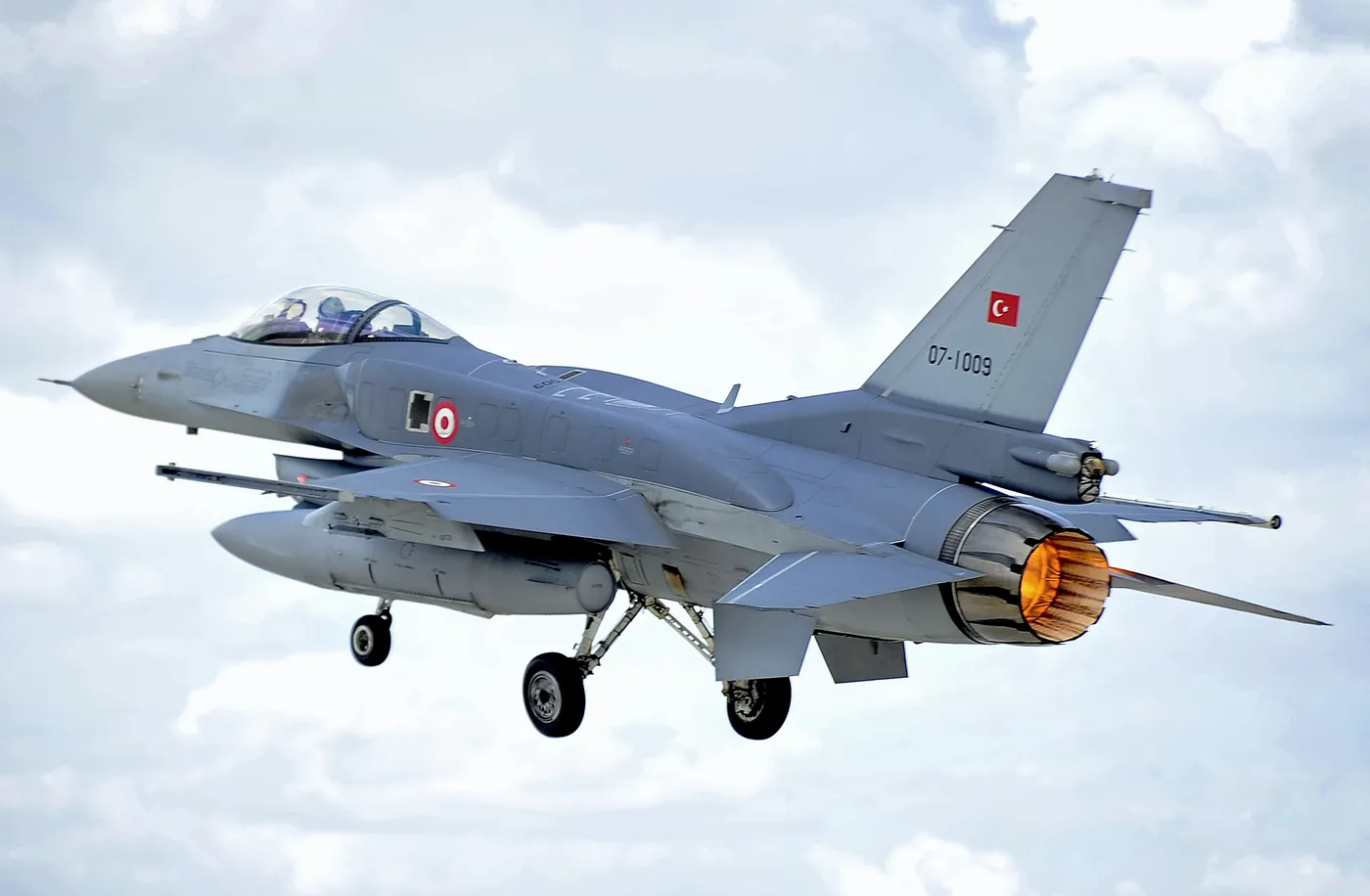
Türkiye operates the second-largest air inventory in Europe, ahead of every country on the continent except Russia. The combat backbone is still the F-16 — but that fleet is being rebuilt from the inside with ASELSAN’s ÖZGÜR modernisation package, national avionics, a national electronic warfare suite and the GÖKDOĞAN and BOZDOĞAN air-to-air missiles. The platform is American; the fighting capability is increasingly Turkish. With 509 helicopters Türkiye fields Europe’s largest rotary fleet, and it is nationalising that too: the T129 ATAK and the heavier ATAK-2 cover attack, while GÖKBEY takes the utility role. The decisive difference, though, is unmanned. The Bayraktar TB2, AKINCI and ANKA families made Türkiye not merely an operator but one of the world’s leading exporters of armed drones, and doctrine followed: the find-fix-strike loop can now be closed without manned aircraft in the chain. The fifth and sixth-generation transition rests on KAAN.
Benchmark: Türkiye leads Europe in helicopters, 509 to France’s 452, and holds a 127-airframe lead over France overall.
| Power Element | Figure |
|---|---|
| Total aircraft | 1,101 |
| Helicopters | 509 |
| Active personnel | 481,000 |
| Defence budget | $51.4bn |
And the fleet at the top is close to four times this size.
Russia
Russia’s 4,237 aircraft exceed the combined total of the other nine countries on this list. The VKS inventory spans Su-35S and Su-30SM air superiority fighters, Su-34 strike aircraft, Tu-95 and Tu-160 strategic bombers and 1,643 helicopters — a rotary fleet alone larger than Türkiye’s entire air inventory. The war in Ukraine, however, demonstrated how poorly that paper advantage translated. Russian aviation never established full air superiority at any stage, took heavy losses and has largely been confined behind the line of contact by modern Western ground-based air defences. Sanctions have squeezed avionics and spare parts, and the fifth-generation Su-57 programme has not reached its intended production numbers. The result is an air force unmatched in size whose qualitative edge and operational effectiveness are both genuinely contested.
Benchmark: Russia’s helicopter fleet alone (1,643) is larger than Türkiye’s entire air inventory (1,101).
| Power Element | Figure |
|---|---|
| Total aircraft | 4,237 |
| Helicopters | 1,643 |
| Active personnel | 1,320,000 |
| Defence budget | $212.6bn |
The Verdict
The most striking feature of this ranking is the disconnect between money and inventory. Germany, running Europe’s largest defence budget, finishes sixth; Poland, with the steepest spending increase on the continent, finishes eighth. Greece operates 560 aircraft on roughly a fifteenth of the German budget. The explanation lies in fleet age and personnel cost structures: western European forces fly small numbers of very expensive platforms, while eastern Mediterranean and eastern European air arms carry large but older inventories.
The second theme is that the fifth-generation transition has split the continent. On one side sit the F-35 operators — Italy, the UK, Poland, Germany, Greece; on the other, states running sovereign programmes. France’s FCAS and the British-Italian-Japanese GCAP mean two competing sixth-generation efforts on the same continent, which all but guarantees that European air power will not converge on a single standard in the 2040s.
The third lesson comes from Ukraine and cuts straight to doctrine. Russia, with 4,237 aircraft on paper — more than everyone else here combined — has not achieved full air superiority in more than three years of war. Modern ground-based air defence proved that aircraft counts do not equal control of the air. That is why investment priorities across European air forces are shifting rapidly toward electronic warfare, stand-off munitions and unmanned systems.
Türkiye’s second place occupies a distinctive position in that picture. With 1,101 aircraft and 509 helicopters, the Turkish Air Force outranks everything in Europe apart from Russia — and it is one of very few forces actively nationalising its inventory rather than simply buying more of it. The ÖZGÜR upgrade for the F-16 fleet, the GÖKDOĞAN and BOZDOĞAN missiles, the ATAK and GÖKBEY helicopters, and unmanned platforms from AKINCI to ANKA-3 are all facets of one strategy: generating capability without depending on another government’s export licence. The interruption of the F-35 process accelerated that strategy rather than slowing it.
The decisive variable for the next decade is KAAN. Following its first flight, the national combat aircraft programme has moved to engine, avionics and serial production questions; if it holds schedule, Türkiye joins the very short list of countries building their own fifth-generation fighter. Add KIZILELMA operating as an unmanned combat aircraft from TCG Anadolu, and HÜRJET entering the export market in both trainer and light attack roles, and the trajectory is clear — from customer to supplier. What this ranking looks like in the 2030s depends largely on the schedules of those three programmes.
Full Comparison Table
| # | Country | Total aircraft | Helicopters | Active personnel | Defence budget | Main combat type |
|---|---|---|---|---|---|---|
| 1 | Russia | 4,237 | 1,643 | 1,320,000 | $212.6bn | Su-35S · Su-34 · Tu-160 |
| 2 | Türkiye | 1,101 | 509 | 481,000 | $51.4bn | F-16 ÖZGÜR · AKINCI · KAAN (in development) |
| 3 | France | 974 | 452 | 264,000 | $67.2bn | Rafale · Tiger · A330 MRTT |
| 4 | Italy | 714 | 352 | 165,500 | $37.3bn | F-35A/B · Typhoon · M-346 |
| 5 | United Kingdom | 625 | 262 | 141,330 | $88.5bn | Typhoon FGR4 · F-35B · Wedgetail |
| 6 | Germany | 569 | 292 | 184,324 | $127.4bn | Typhoon · F-35A (ordered) · CH-47F |
| 7 | Greece | 560 | 285 | 142,700 | $8.2bn | Rafale · F-16 Viper · Mirage 2000 |
| 8 | Poland | 457 | 224 | 250,000 | $55.8bn | F-35A Husarz · F-16 · FA-50 |
| 9 | Spain | 440 | 169 | 121,802 | $39.0bn | Eurofighter · F/A-18 · A400M |
| 10 | Ukraine | 347 | 140 | 900,000 | $45.0bn | F-16 · Mirage 2000-5 · Su-27 |
A new ranking gallery tomorrow
Coming next: Israel versus Türkiye compared line by line, the armies of the Organization of Turkic States, and Africa’s most powerful navies.
Frequently Asked Questions
Which country has the strongest air force in Europe?
By total aircraft, Russia leads with 4,237, followed by Türkiye with 1,101 and France with 974.
Where does Türkiye rank in Europe?
Türkiye is second in Europe and eighth worldwide with 1,101 aircraft, and it operates the continent’s largest helicopter fleet with 509 airframes.
Why is Germany so far down the list?
Germany runs Europe’s largest defence budget at $127.4 billion, but its inventory consists of small numbers of expensive platforms, and readiness rates have drawn criticism for years.
How would KAAN change Türkiye’s position?
Once in serial production, KAAN would place Türkiye among the very few countries producing their own fifth-generation fighter — a shift in qualitative standing rather than in raw numbers.
How is Ukraine’s air force still operating?
F-16s and Mirage 2000-5s added to the Soviet-legacy MiG-29 and Su-27 fleet provide stand-off strike, while unmanned systems carry much of the deep attack mission.
Where does this data come from?
The ranking uses Global Firepower’s 2026 dataset; doctrinal and modernisation analysis is envantermedya’s editorial assessment.
Sources
- Global Firepower 2026 — country profiles and air force inventory pages
- NATO Allied Air Command (AIRCOM) open-source releases
- SIPRI Military Expenditure Database
- IISS The Military Balance
- Official releases from TUSAŞ, ASELSAN, Baykar and the defence ministries concerned
- Source: https://www.globalfirepower.com/ (2026 Military Strength Ranking)