HİSAR-A+ vs Pantsir-S1: How Do They Compare?

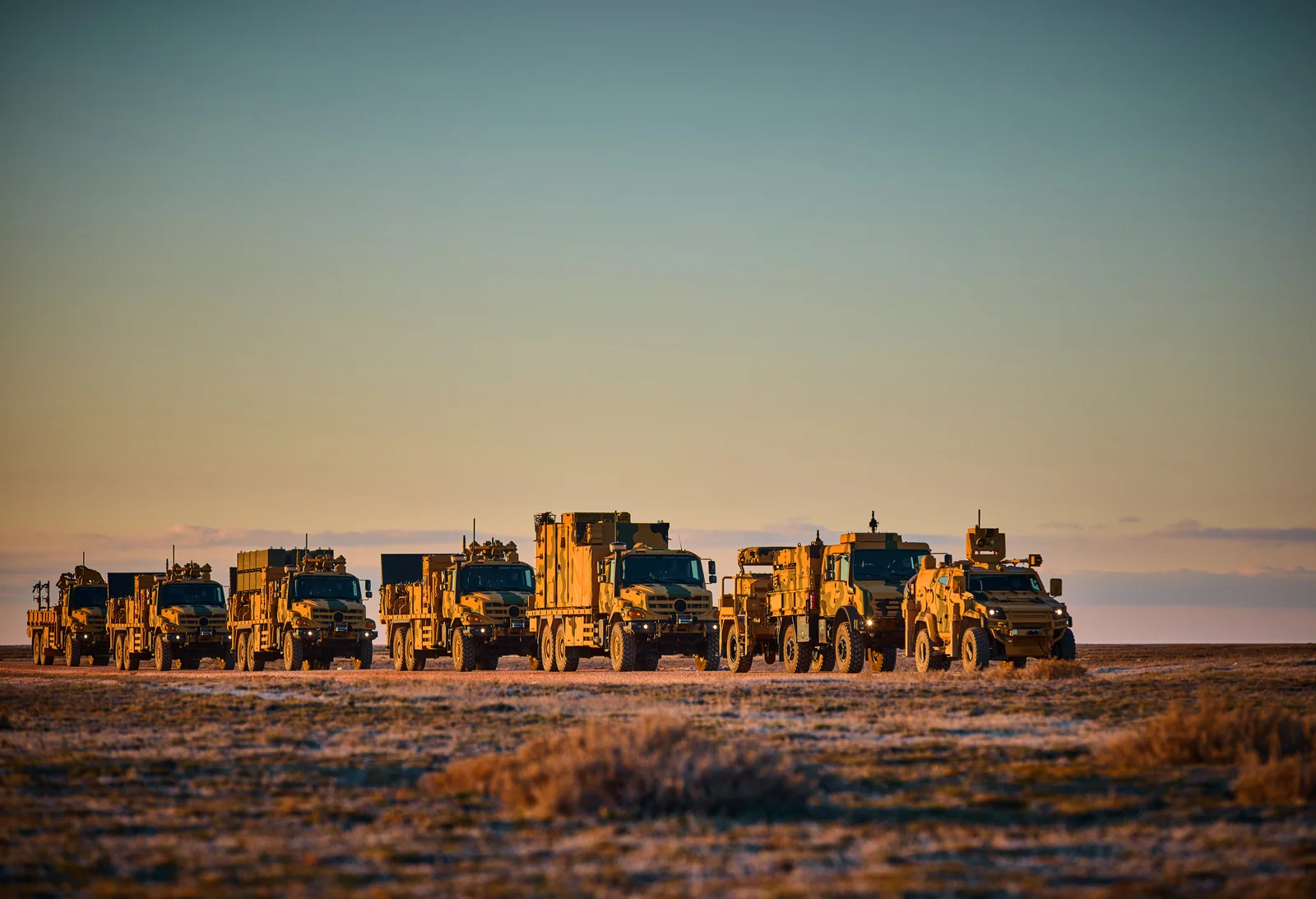
In short: HİSAR-A+ and Pantsir-S1 answer the same low-altitude threat with different engineering choices. Turkey’s HİSAR-A+ is a missile-only system with a published range of 15+ km; Russia’s Pantsir-S1 pairs 20 km-class 57E6 missiles with twin 30 mm cannons on a single vehicle. They serve different operational concepts rather than being direct equivalents.
Same layer, two schools of thought
Drones, cruise missiles and low-flying attack helicopters have pushed short-range air defence back to the top of army procurement lists. Two systems that illustrate the market’s diverging approaches are Türkiye’s HİSAR-A+, developed by Roketsan with ASELSAN, and Russia’s Pantsir-S1, designed by the KBP bureau in Tula and now produced under Rostec.
Both are meant to shield manoeuvre units, critical sites and longer-range SAM batteries. But HİSAR-A+ is a networked, missile-only fire unit, while Pantsir-S1 packs radar, electro-optics, missiles and guns onto one truck. This piece compares them on published specifications, mission concept, operators and what they mean for Türkiye, without declaring a winner.
The systems
HİSAR-A+
HİSAR-A+ is the low-altitude member of Türkiye’s HİSAR missile family. Roketsan’s 2024 catalogue credits it with more than 15 km range and more than 10 km engagement altitude, and says the missile can be integrated on tracked and wheeled vehicles as well as naval platforms. Army Technology cites 8 km for altitude; we note the gap and use the manufacturer’s figure. Defense News reported in July 2021 that Roketsan had begun deliveries to the Turkish Land Forces. Open sources describe inertial and datalink midcourse guidance with an imaging infrared terminal seeker. The full set of differences between HİSAR-A and HİSAR-A+ has not been made public.
Pantsir-S1
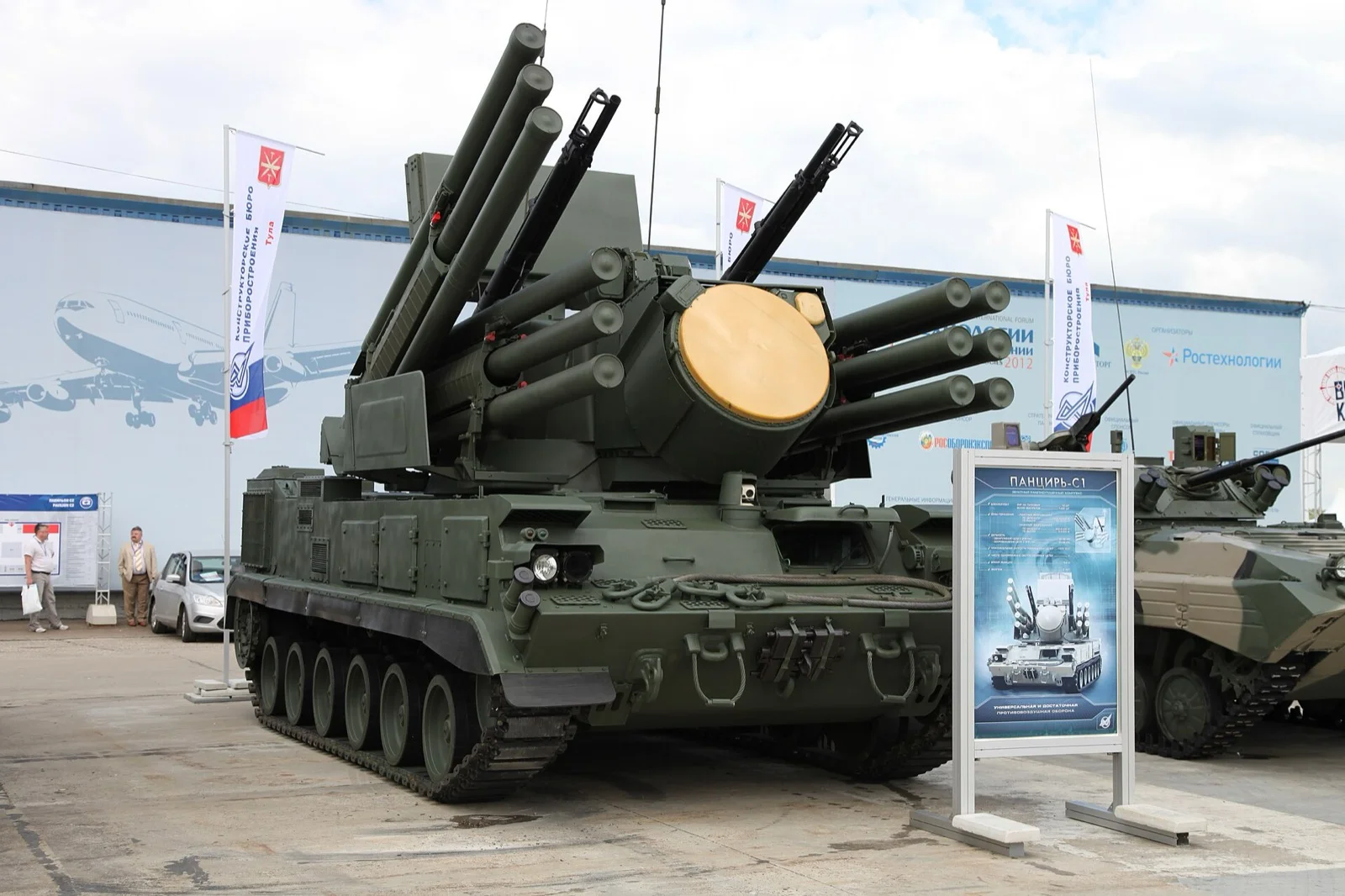
Pantsir-S1 (NATO: SA-22 Greyhound) carries up to twelve 57E6 missiles and two 30 mm 2A38M cannons in its baseline configuration. Rostec lists the 57E6E at 1.2-20 km range and 15 m-15 km altitude, with the guns effective from 200 m to 4 km. The CSIS Missile Threat project gives 20 km against aircraft and a 10 km ceiling, and notes that range drops sharply against crossing targets. The system entered Russian service in 2012 after the UAE, its first export customer, helped fund its maturation. Newer Pantsir-S1M and Pantsir-SM variants use longer-range missiles; this comparison covers the baseline S1.
Different mission concepts
Pantsir-S1 is a self-contained point-defence vehicle: it can detect, track and engage on its own, and its guns allow cheaper engagements against low-cost targets. HİSAR-A+ has no gun. In the Turkish model, close-in gun defence is handled by separate platforms such as the KORKUT 35 mm system, while HİSAR-A+ works as a missile layer tied into a wider sensor and command network. What Pantsir combines on one vehicle, the Turkish architecture spreads across several, in line with the layered Steel Dome (Çelik Kubbe) concept that links HİSAR, SİPER and KORKUT.
Specifications compared
| Criterion | HİSAR-A+ | Pantsir-S1 |
|---|---|---|
| Prime contractor | Roketsan (missile), ASELSAN (system & sensors) | KBP Tula (Rostec), Russia |
| Architecture | Missile-only low-altitude SAM | Hybrid gun-missile SHORAD |
| Missile range | 15+ km (Roketsan) | 1.2-20 km (57E6E, Rostec) |
| Engagement altitude | 10+ km (Roketsan); 8 km in some sources | 15 m-15 km (Rostec); CSIS: 10 km ceiling |
| Gun armament | None | 2 × 30 mm 2A38M, 200 m-4 km |
| Ready missiles per vehicle | no verified figure in open sources | 12 × 57E6 (baseline) |
| Guidance | INS + datalink midcourse, IIR terminal seeker (open sources) | Radio command guidance |
| Platform | Tracked and wheeled vehicles, naval option (Roketsan) | Mainly KAMAZ 8×8; tracked and naval variants |
| Simultaneous engagements | no verified figure in open sources | Up to 4 targets |
| In service | 2021 (Turkish Land Forces) | 2012 (Russia); exports from late 2000s |
| Operators | Türkiye | Russia, UAE, Syria, Algeria, Iraq, Oman, Serbia |
| Combat record | None publicly documented | Syria, Libya, Ukraine |
Sources: Roketsan HİSAR catalogue (2024); Rostec; CSIS Missile Threat; Army Technology; Defense News.
Operators and combat record
Türkiye is the only known operator of HİSAR-A+, and no combat use or export deal has been officially disclosed, which limits independent assessment of its field performance. Pantsir-S1, by contrast, is in service with at least seven countries and has seen combat in Syria, Libya and Ukraine. Open-source records are mixed: the system has documented intercepts of drones and cruise missiles, but a significant number were also reported lost in Libya in 2020. Analysts largely attribute those losses to isolated deployment without network support and to the electronic warfare environment.
Where each fits
HİSAR-A+ is better suited to
- Serving as the missile tier inside a networked, layered air defence system
- Mobile protection of manoeuvre formations on tracked or wheeled carriers
- Buyers seeking a NATO-member supply chain outside Russian sanctions risk
Pantsir-S1 is better suited to
- Point defence of critical sites and long-range SAM batteries
- Cost-efficient gun engagements against cheap drones and munitions
- Operators already running Russian-origin air defence networks
Limitations
HİSAR-A+: no gun, so very low-cost targets depend on other layers; ready-round count, simultaneous engagement capacity and combat performance are not publicly verified.
Pantsir-S1: radio command guidance ties the vehicle to the target until intercept; range falls against crossing targets; combat records show vulnerability when deployed without network support; Russian origin brings CAATSA sanctions risk for Western-aligned buyers.
Why it matters for Türkiye
HİSAR-A+ fills a low-altitude gap that Türkiye long covered with imported systems, and it is planned as one tier of Steel Dome alongside KORKUT, HİSAR-O+ and SİPER. The Pantsir comparison also carries operational weight: Turkish planners have watched the system in the same theatres as Turkish drones in Libya and Syria. Whether HİSAR-A+ will compete for the same export customers as the Pantsir family cannot yet be confirmed from open sources.
Bottom line
Pantsir-S1 is a combat-tested, widely exported hybrid that bundles sensors, missiles and guns on one vehicle.
HİSAR-A+ is a newer, missile-only system designed to work inside a network, with no public combat record yet.
According to open sources, they address different mission concepts; the right choice depends on threat type, existing sensor networks, and supply and sanctions constraints.
Sources
- Roketsan — HİSAR Air Defence Missiles — Official product page
- Roketsan — HİSAR catalogue (2024) — HİSAR-A+ range and altitude
- Rostec — Pantsir-S1M — 57E6E and 2A38M engagement data
- CSIS Missile Threat — Pantsir S-1 — Range, ceiling, missile data
- Army Technology — HİSAR-A — Technical overview
- Defense News — July 2021 — HİSAR-A+ deliveries
Editor’s note: Based on manufacturer documents and international defence sources. Fields that could not be verified are marked as such in the table.
Are HİSAR-A+ and Pantsir-S1 the same type of system?
Both sit in the short-range, low-altitude air defence (SHORAD) layer, but they are built differently. HİSAR-A+ is a missile-only system. Pantsir-S1 is a hybrid that combines 57E6 missiles with two 30 mm 2A38M cannons on one vehicle.
What is the range of HİSAR-A+?
Roketsan’s 2024 HİSAR catalogue lists HİSAR-A+ at more than 15 km range and more than 10 km altitude. Some international outlets give 8 km for altitude; this article uses the manufacturer’s figure.
What is the range of the Pantsir-S1 missile?
Rostec gives the 57E6E missile an engagement envelope of 1.2-20 km in range and 15 m-15 km in altitude. The 30 mm cannons engage between 200 m and 4 km.
Who operates Pantsir-S1?
According to open sources, Russia, the UAE (the launch export customer), Syria, Algeria, Iraq, Oman and Serbia. UN Panel of Experts reports on Libya also recorded the system in the hands of Haftar-aligned forces.
Has HİSAR-A+ been exported?
No export contract for HİSAR-A+ has been publicly announced. The system has been entering Turkish Land Forces service since 2021.