Asia’s Biggest Defence Budgets in 2026: China Outspends the Other Nine Combined

A defence budget describes a military’s future rather than its present. Inventory is the sum of past purchases; the budget shows where a country is investing for the coming decade. On that measure, Asia is the fastest-changing region in the world.
Using Global Firepower’s 2026 dataset, we ranked Asia’s ten largest defence budgets. Non-regional Pacific powers – the United States, Russia and Australia – are excluded, so this table shows the balance among Asian states themselves.
We start at tenth and work up. Read to the end for why budget size alone settles nothing, which country turned its spending into export revenue, and where Turkiye would rank if it were included.
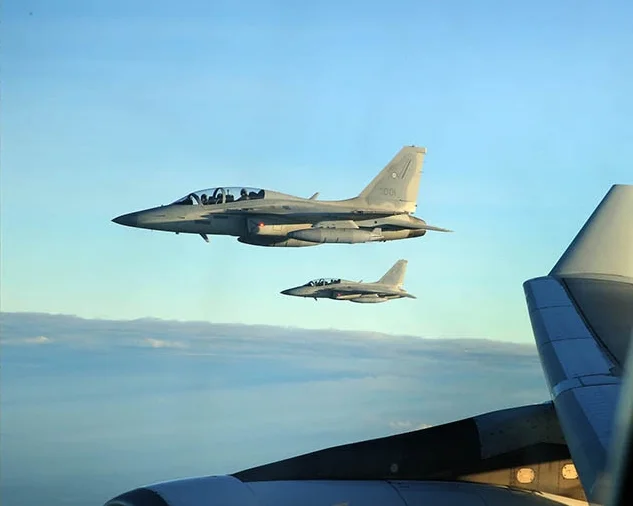
The Philippines closes the list at $6.57 billion. For a force of 160,000 personnel, that is among the lowest spending per soldier in Asia.
Manila’s priorities have shifted sharply. After decades focused on internal security and counter-insurgency, the armed forces have turned outward, driven by competing claims in the South China Sea and tension around Scarborough Shoal. The ‘Re-Horizon’ modernisation programme frames that transition.
There are no fighter jets in the inventory; the air force’s most capable platform is the South Korean FA-50 light combat aircraft. With 130 helicopters and 127 naval vessels, the fleet is patrol- and transport-weighted.
The Philippines occupies a particular place in this table for Turkish industry: Manila was the first export customer for the T129 ATAK attack helicopter. That sale was among the first concrete demonstrations of Turkish platform-level export capability, and it raised Philippine close air support capacity directly.
For scale: the Philippines spends about three-quarters of what Pakistan does on a quarter of Pakistan’s active personnel.
| Capability | Figure |
|---|---|
| Defence budget | $6.57 billion |
| Total aircraft | 204 |
| Fighter jets | 0 |
| Helicopters | 130 |
| Warships | 127 |
| Active personnel | 160,000 |
Ninth place sustains nuclear power status on one of the smallest budgets here.
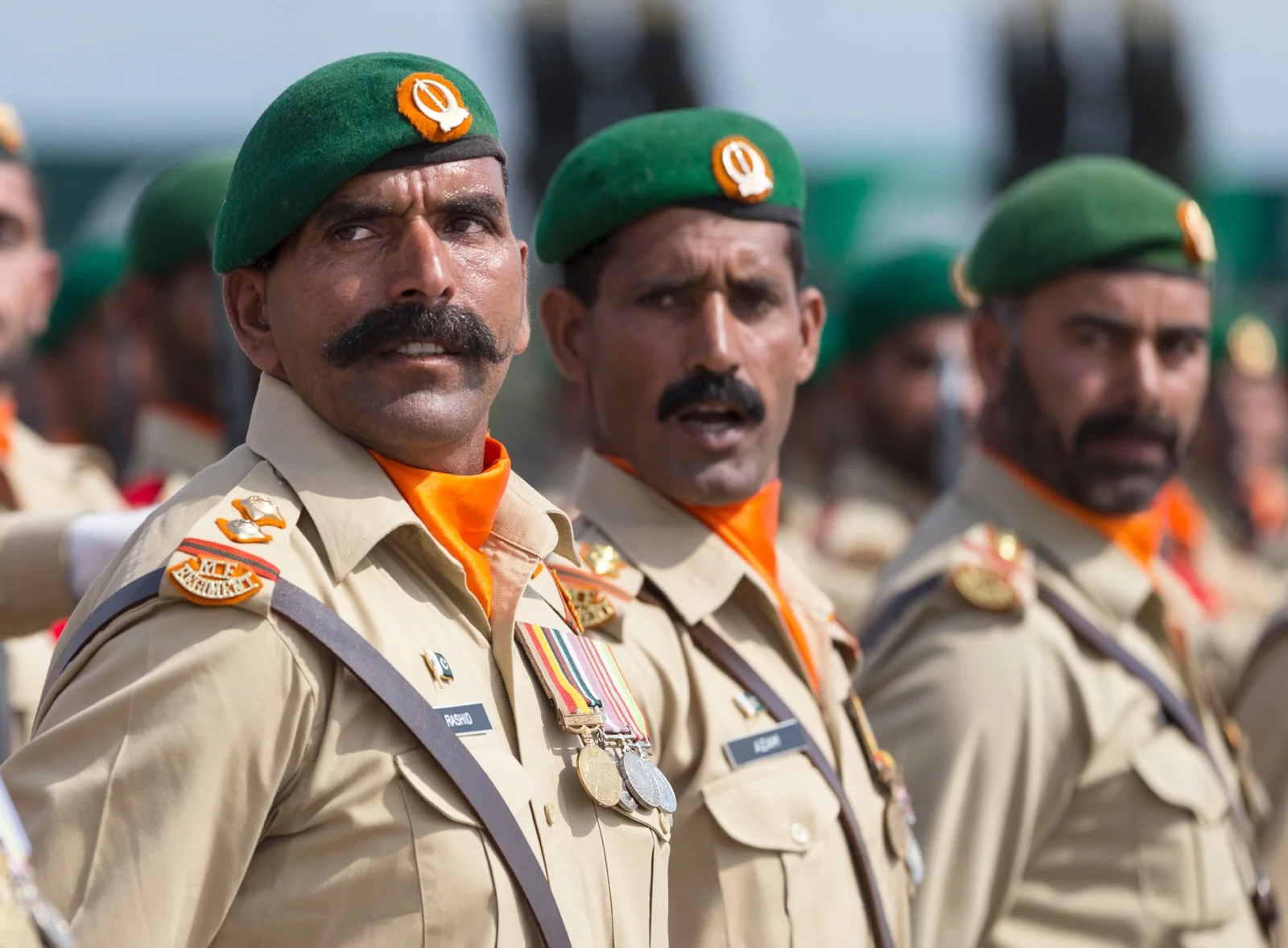
Pakistan is ninth at $9.1 billion – a strikingly low figure for a nuclear-armed state with 660,000 active personnel, ranked 14th worldwide in the 2026 index.
Its procurement model explains the equation. Islamabad sources much of its inventory from China on favourable terms: the JF-17 Thunder is co-produced, half the Hangor-class submarines are being built at Karachi, and Type 054A/P frigates come from Chinese yards.
With 331 combat aircraft, Pakistan operates Asia’s fourth-largest fighter fleet. The wider structure remains land-heavy, with 2,677 tanks and 379 helicopters. Domestic industry is limited but real, centred on the aeronautical complex at Kamra and armoured vehicle plants at Taxila.
The Turkish relationship is a chapter of its own. Babur-class ships, an evolved Ada-class design, are built to Turkish designs, and the modernisation of Pakistan’s Agosta 90B submarines was carried out by Turkish industry – two of the largest references in Turkish naval export.
For scale: Pakistan spends less than Vietnam yet operates more than five times as many combat aircraft.
| Capability | Figure |
|---|---|
| Defence budget | $9.1 billion |
| Total aircraft | 1,397 |
| Fighter jets | 331 |
| Tanks | 2,677 |
| Submarines | 8 |
| Active personnel | 660,000 |
Eighth place concentrates most of its budget on deterrence in a single sea.
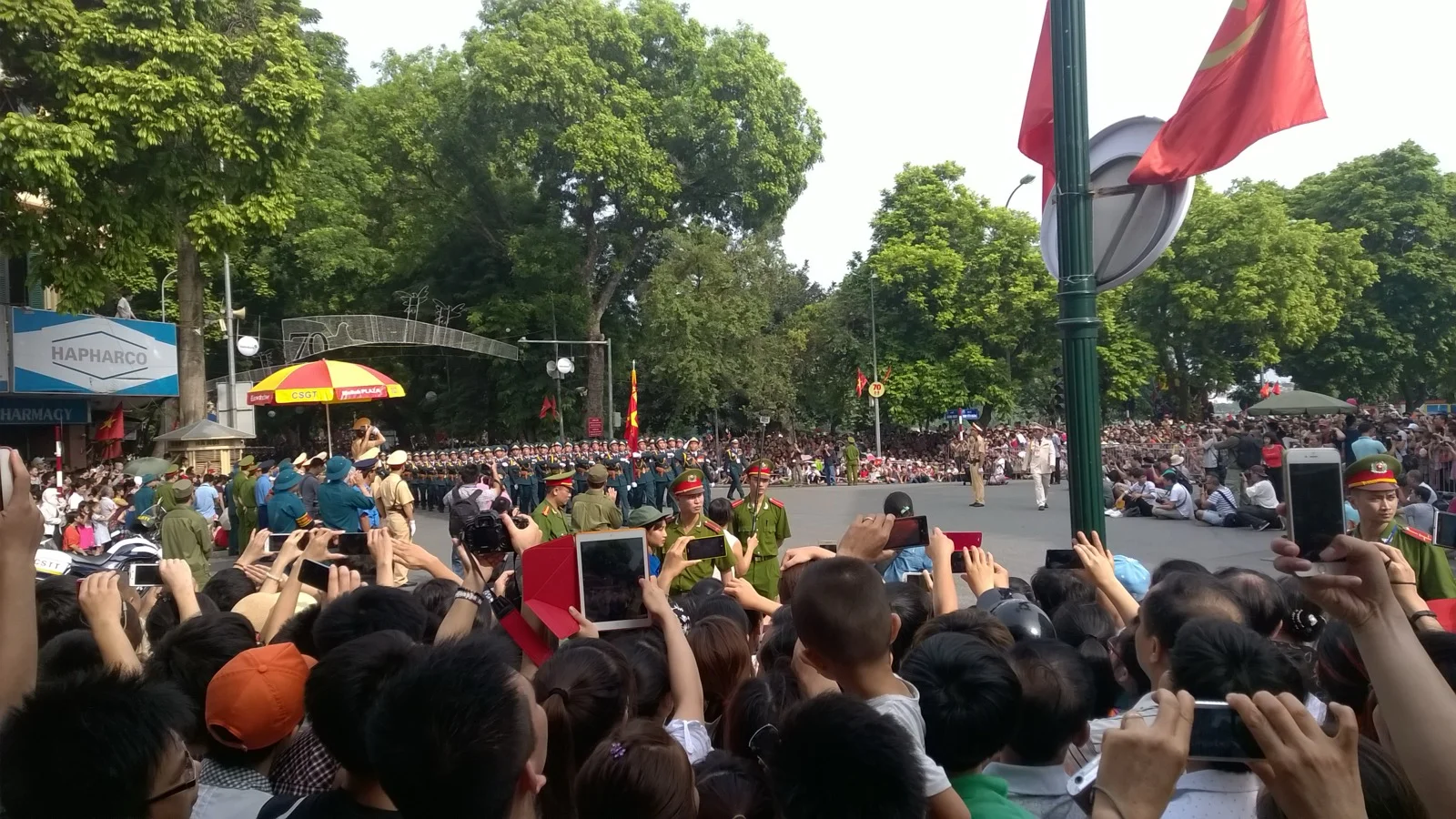
Vietnam is eighth at $10.2 billion. For a force of 450,000 personnel and 1,999 tanks, that budget indicates just how tightly resources are managed.
Hanoi’s spending priority shifted seaward over two decades. Six Russian-built Kilo-class submarines were the single largest defence investment of that period. Facing competing claims in the South China Sea, Vietnam chose undersea deterrence over surface competition.
The air force lags: 61 combat aircraft in an ageing Su-27/Su-30 fleet. Hanoi has been searching for a next-generation type for years while seeking to diversify suppliers.
Domestic industry is growing too. Viettel has built a portfolio spanning telecommunications, radar and uncrewed systems, and the Hanoi defence exhibition has drawn Turkish, Indian, Israeli and Korean firms – with talks under way with Turkiye on uncrewed aircraft and naval systems.
For scale: Vietnam’s budget is close to Indonesia’s, but its tank inventory is six times larger.
| Capability | Figure |
|---|---|
| Defence budget | $10.2 billion |
| Total aircraft | 265 |
| Fighter jets | 61 |
| Tanks | 1,999 |
| Submarines | 6 |
| Active personnel | 450,000 |
Seventh place has to defend the world’s largest archipelago.
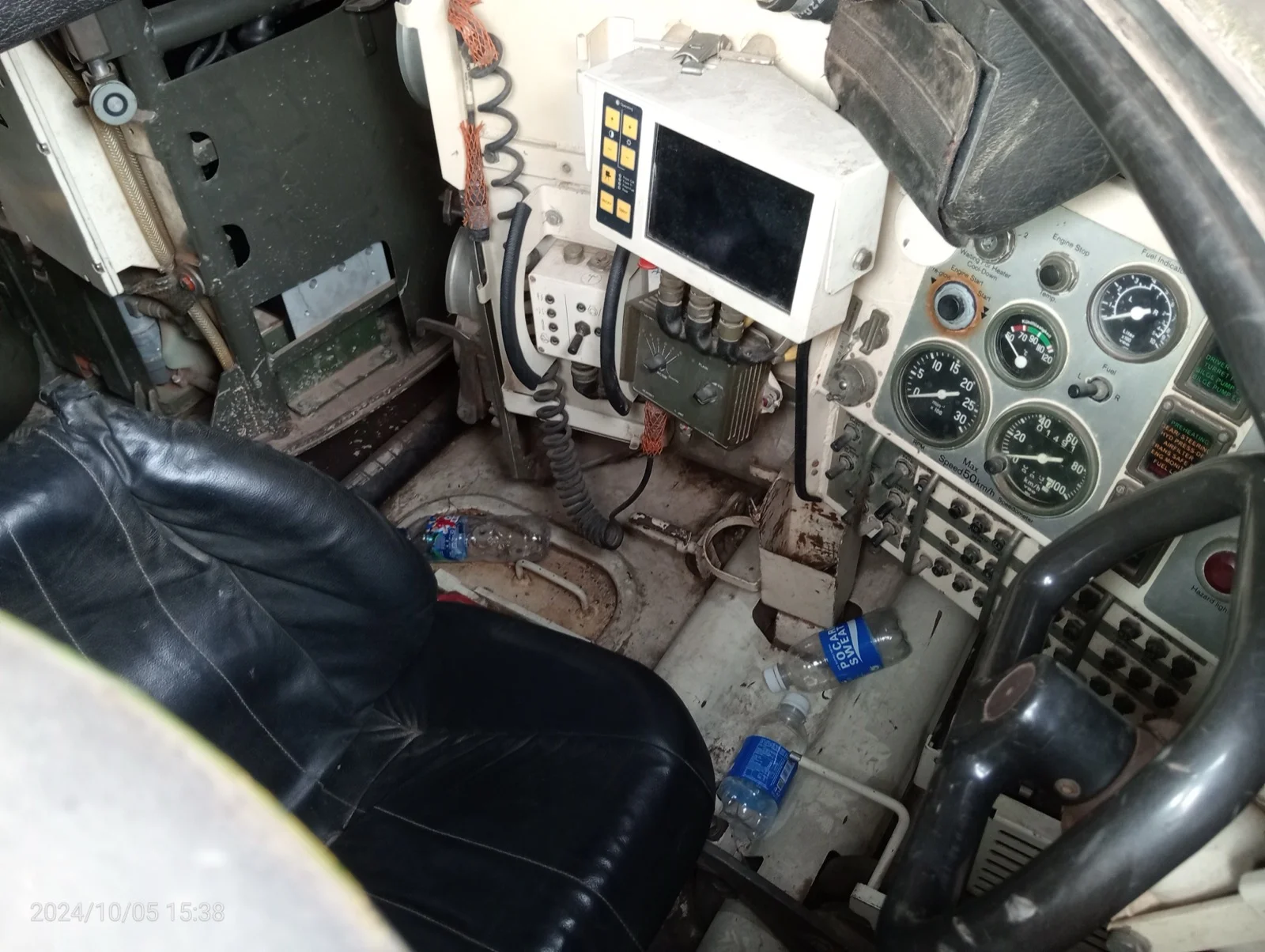
Indonesia is seventh at $11.16 billion – a thin resource base for a country spread across more than 17,000 islands and commanding three strategic straits.
Jakarta’s answer has been diversification: Rafale fighters and Scorpene Evolved submarines from France, Nagapasa-class boats from South Korea plus partnership in the KF-21 programme, frigates from Italy. It avoids single-supplier dependence at the cost of a heavier maintenance and training burden.
With 338 warships, Indonesia has Asia’s most numerous naval inventory after China, though mostly patrol and landing craft. At 41 combat aircraft, air power is thin relative to the country’s geographic span.
Indonesia is among Turkish industry’s most active partners in Southeast Asia. The Kaplan MT (Harimau) medium tank was jointly developed by FNSS and Indonesia’s Pindad and entered service with both countries – one of the clearest examples of Turkish industry exporting a co-production model rather than just a product.
For scale: Indonesia spends two-thirds of what Singapore does, with eight times the active personnel.
| Capability | Figure |
|---|---|
| Defence budget | $11.16 billion |
| Total aircraft | 460 |
| Fighter jets | 41 |
| Warships | 338 |
| Submarines | 4 |
| Active personnel | 404,500 |
Sixth place is the size of a city – and outspends Indonesia.
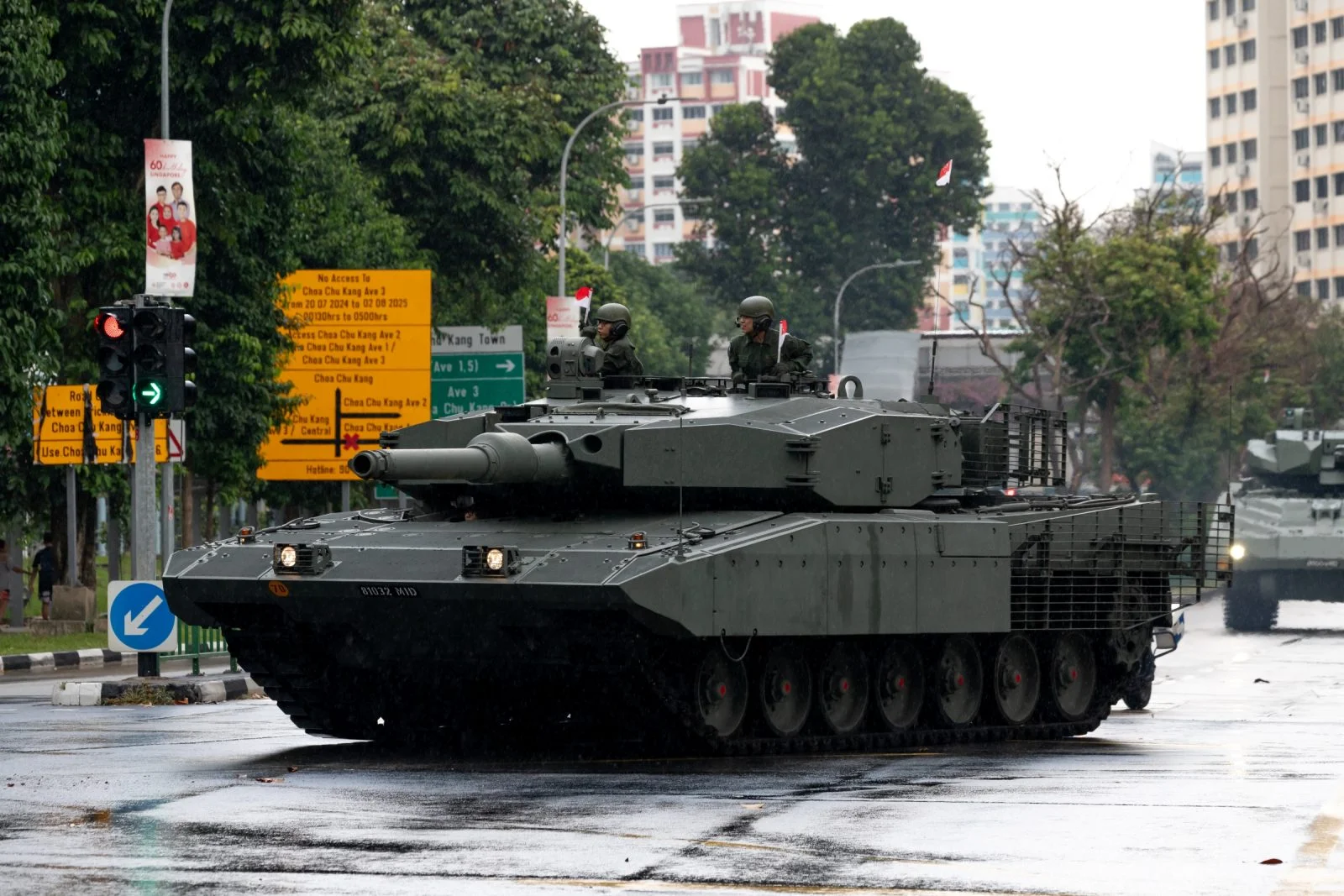
Singapore is sixth at $18 billion. That a 730-square-kilometre city-state outspends countries hundreds of times its size is the most striking figure on this list.
The distribution matters as much as the total. Singapore keeps personnel numbers low (51,000 active) and concentrates resources on technology: F-15SG and F-16 fleets, F-35Bs on order, airborne early warning aircraft, German-built Invincible-class submarines and a layered air defence network.
The doctrine is known as the ‘poisoned shrimp’: be small, but expensive to swallow. Conscription and a deep reserve pool put hundreds of thousands of mobilisable personnel behind those 51,000 regulars.
The country also sustains a serious defence industry. ST Engineering builds and exports armoured vehicles, naval platforms and munitions – the Terrex vehicle and Formidable-class frigates among them. Singapore also ranks near the top in Asia for defence spending as a share of GDP.
For scale: Singapore outspends Indonesia by 60 percent with one-eighth the personnel.
| Capability | Figure |
|---|---|
| Defence budget | $18 billion |
| Total aircraft | 235 |
| Fighter jets | 100 |
| Warships | 101 |
| Submarines | 6 |
| Active personnel | 51,000 |
Fifth place plans almost its entire budget around a single scenario.
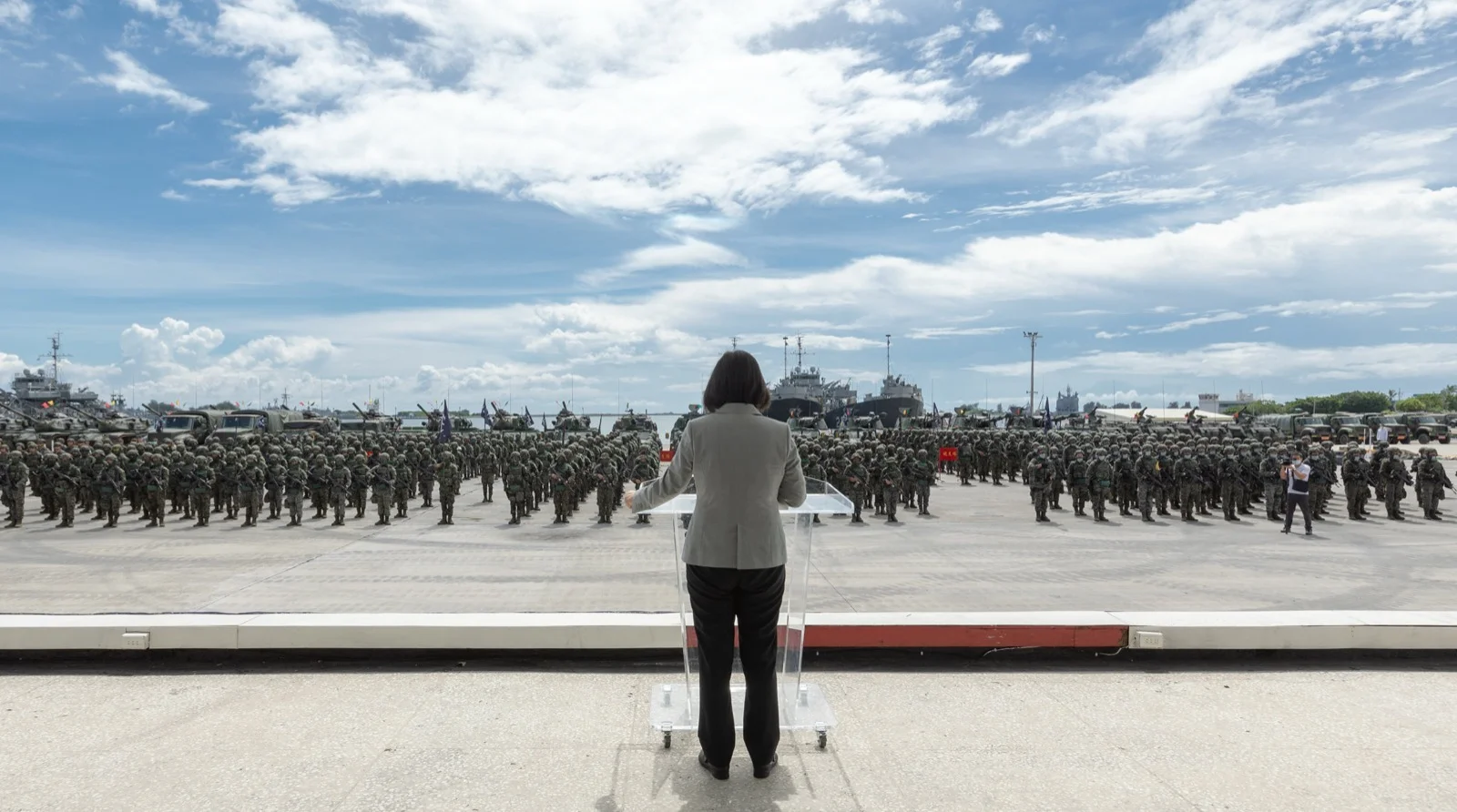
Taiwan is fifth at $31.18 billion. For an island of 23 million people, that is among the highest per-capita defence spending in Asia.
The budget is planned around one scenario: defence against amphibious assault. Resources concentrate in three areas. Air defence, through Patriot batteries and the indigenous Tien Kung (Sky Bow) systems. Coastal defence missiles, through the Hsiung Feng anti-ship series. And asymmetric naval capability, through the Hai Kun submarine programme and fast missile craft.
With 258 combat aircraft, Taiwan operates Asia’s fourth-largest fighter fleet, including F-16s upgraded to Viper standard and the indigenous F-CK-1 Ching-kuo. The National Chung-Shan Institute of Science and Technology develops missiles and radar domestically.
At 1,090 tanks and 91 warships the inventory is comparatively small. But Taiwan’s recent strategy is not to add large platforms; it is to build a dispersed, hard-to-target defensive network from many small systems. Conscription has been extended in line with that shift.
For scale: Taiwan spends roughly twice what Singapore does and fields two and a half times as many fighters.
| Capability | Figure |
|---|---|
| Defence budget | $31.18 billion |
| Total aircraft | 720 |
| Fighter jets | 258 |
| Tanks | 1,090 |
| Warships | 91 |
| Active personnel | 230,000 |
Fourth place turned a large share of its defence budget into export revenue.
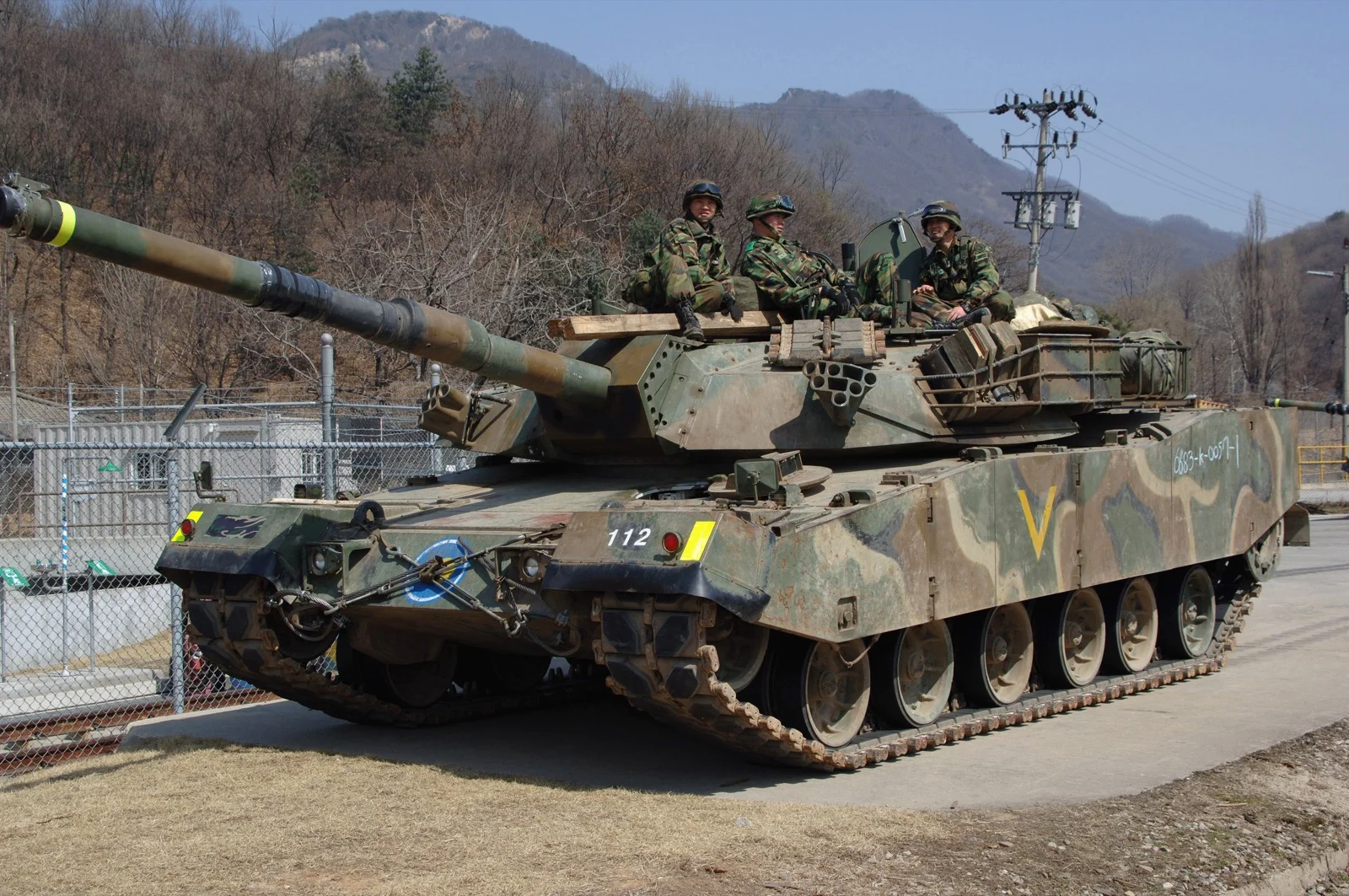
South Korea is fourth at $44.8 billion. Ranked 5th worldwide, it stands out for treating that budget as investment rather than expenditure.
Seoul’s model is explicit: channel the procurement budget into domestic industry, then export the product. The K2 main battle tank, K9 Thunder howitzer, FA-50 light combat aircraft, KSS-III submarines and KF-21 Boramae fighter are all products of it. The multi-billion-dollar package signed with Poland made Korea one of the world’s fastest-growing defence exporters.
The inventory reflects the return: 1,540 aircraft, 242 combat jets, 827 helicopters – among Asia’s largest rotary fleets – 1,831 tanks, 215 warships and 22 submarines.
The driver sits to the north. North Korea’s 1.32 million active personnel and its ballistic missile programme keep Seoul investing in both readiness and technological edge. With 450,000 active personnel, South Korea is one of very few advanced economies still running conscription.
For scale: South Korea spends three-quarters of Japan’s budget yet fields more combat aircraft.
| Capability | Figure |
|---|---|
| Defence budget | $44.8 billion |
| Total aircraft | 1,540 |
| Fighter jets | 242 |
| Tanks | 1,831 |
| Helicopters | 827 |
| Active personnel | 450,000 |
Third place is raising defence spending faster than at any point in seventy years.
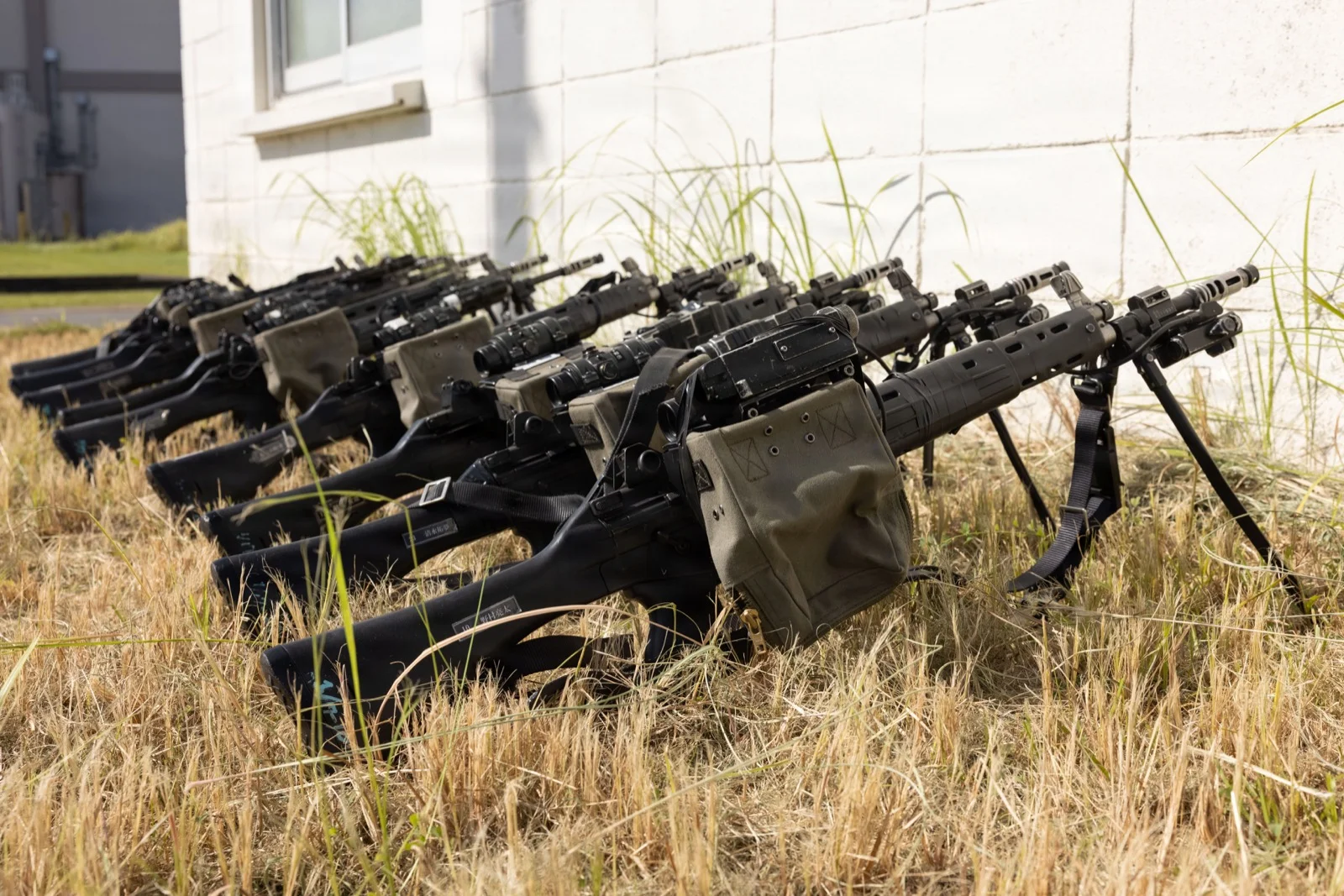
Japan is third at $58 billion. What matters is less the size than the rate of change: the decision to raise defence spending towards 2 percent of GDP represents the largest shift in Japanese defence policy since 1945.
The new priorities are set: counter-strike capability through long-range cruise missiles, integrated air and missile defence, space and cyber capability, and rebuilt munitions stocks. The Tomahawk purchase is the clearest break with post-war doctrine.
The existing inventory is already strong: 1,429 aircraft, 217 combat jets including F-35As and F-35Bs, 583 helicopters, 158 warships and 23 wholly domestically built submarines. The Izumo-class ships have been converted to operate F-35Bs.
Industrially, Mitsubishi Heavy Industries, Kawasaki and IHI cover production from aircraft to submarines. Japan is also a partner with Britain and Italy in the GCAP sixth-generation fighter – its first participation in a large-scale international weapons development programme of the post-war era.
For scale: Japan outspends South Korea by 30 percent, but leads it by a single submarine.
| Capability | Figure |
|---|---|
| Defence budget | $58 billion |
| Total aircraft | 1,429 |
| Fighter jets | 217 |
| Helicopters | 583 |
| Warships | 158 |
| Active personnel | 251,500 |
Second place sustains one of the world’s largest armies – and a full nuclear triad.
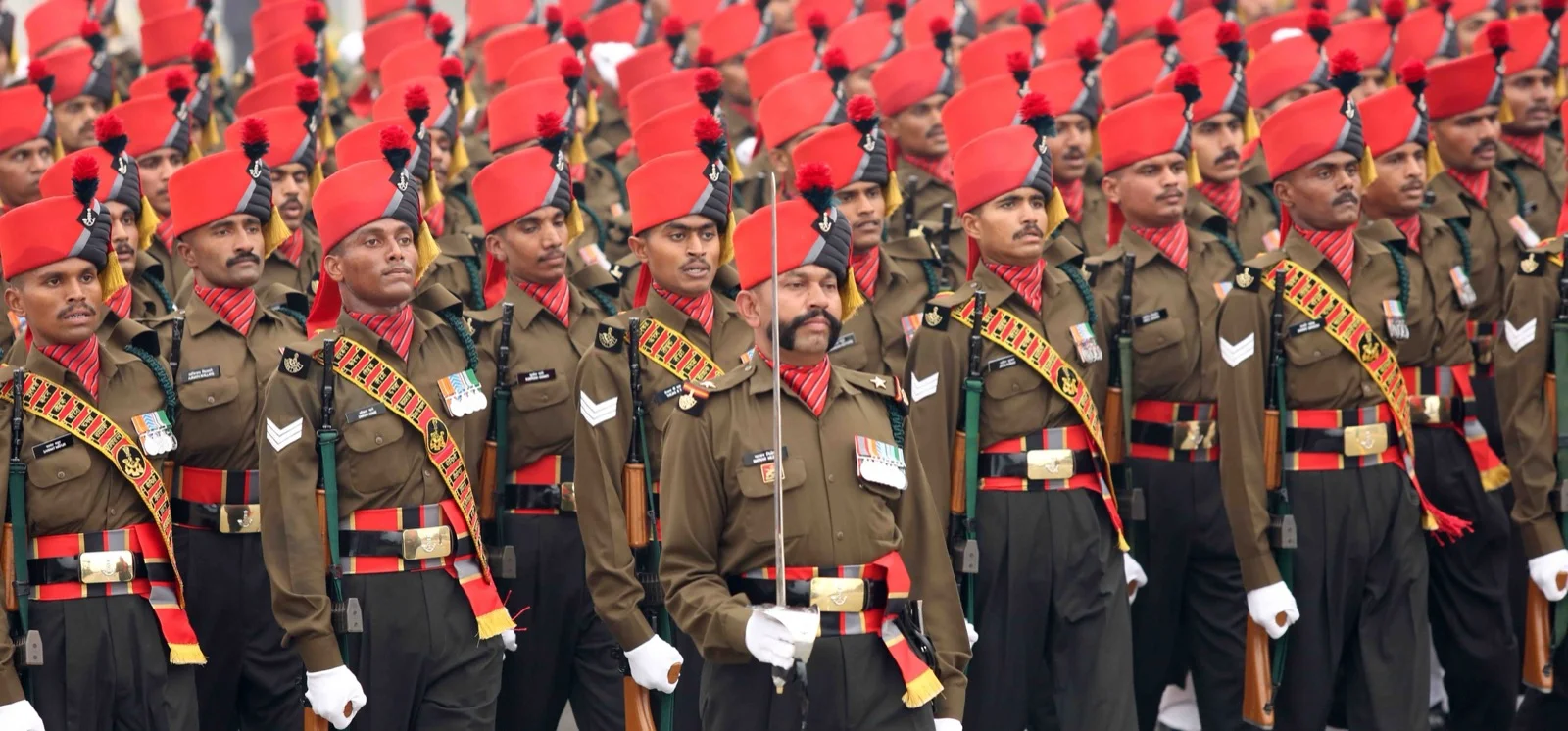
India is second at $109 billion. Ranked 4th worldwide in the 2026 index, it sustains one of the world’s largest militaries with 1.43 million active personnel.
Much of that budget goes to salaries and pensions – a structural problem New Delhi has been trying to resolve for years. The modernisation share is nonetheless growing: Rafale fighters, S-400 air defence systems, the indigenous Tejas light combat aircraft and the carrier INS Vikrant are the standout programmes of the past decade.
India is one of only two Asian states operating all three legs of a nuclear triad, combining Arihant-class ballistic missile submarines, land-based Agni missiles and air-delivered capability.
The ‘Make in India’ policy aims to raise domestic content in procurement, carried by HAL, DRDO and Bharat Dynamics – though the country remains among the world’s largest arms importers. With 3,913 tanks, 2,183 aircraft, 343 warships and 18 submarines, the inventory is broad in proportion to the budget.
For scale: India’s budget is roughly double Japan’s, with more than five times the active personnel.
| Capability | Figure |
|---|---|
| Defence budget | $109 billion |
| Total aircraft | 2,183 |
| Fighter jets | 476 |
| Tanks | 3,913 |
| Warships | 343 |
| Active personnel | 1,431,000 |
The budget at the top exceeds the other nine countries on this list combined.
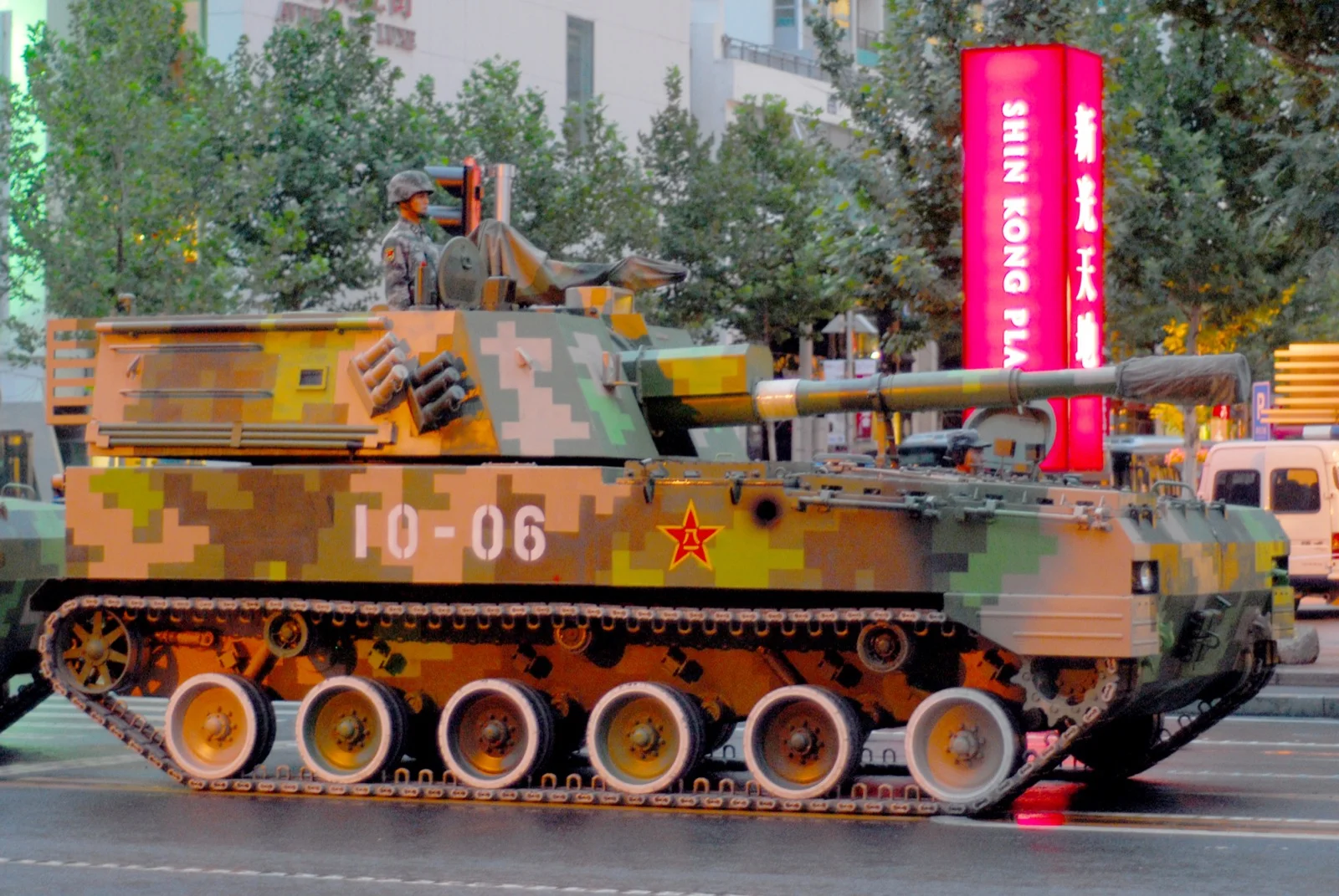
China leads Asia by a wide margin at $303 billion – more than the other nine countries here combined, and second only to the United States globally.
Where that money goes has changed fundamentally over two decades. Beijing moved away from a mass land army towards naval, air and missile forces. China now has the world’s largest navy by platform count: 841 warships, 61 submarines and a growing carrier force (Liaoning, Shandong and the electromagnetic-catapult Fujian).
In the air, 1,443 combat aircraft include the J-20 in serial production, with the J-35 programme advancing. The Rocket Force, with DF-21D and DF-26 anti-ship ballistic missiles, sits at the centre of an access-denial belt across the Western Pacific.
What sustains all of this is the industrial base. China holds the world’s largest shipbuilding capacity, with commercial yards feeding military production, and import dependence in aircraft, engines, radar and munitions is falling steadily. With 2.03 million active personnel, 5,870 tanks and 3,529 aircraft, it leads Asia in nearly every category.
For scale: China’s budget is roughly triple India’s, and its warship count two and a half times larger.
| Capability | Figure |
|---|---|
| Defence budget | $303 billion |
| Total aircraft | 3,529 |
| Fighter jets | 1,443 |
| Tanks | 5,870 |
| Warships | 841 |
| Active personnel | 2,035,000 |
The more useful comparison, though, is with the Korean model. Seoul turned defence spending into export revenue by routing it through domestic industry. Turkiye is on the same track: Baykar is among the world’s largest exporters of uncrewed aircraft; ASELSAN in electronics and electro-optics, ROKETSAN in munitions and TUSAS at platform level with the T129 ATAK and HURJET. FNSS co-developed the Kaplan MT tank with Indonesia, on this very list; Turkish industry handled Pakistan‘s submarine modernisation and its Babur-class corvettes; and the Philippines was the first export customer for the T129 ATAK.
Turkiye would therefore enter this table not merely as a spender, but as a supplier to three of the countries on it.
The verdict: what defence spending actually buys in Asia
The defining feature of this list is the gap at the top. China’s $303 billion exceeds the other nine countries combined. India follows at $109 billion, and third-placed Japan at $58 billion. Asian defence spending is not distributed evenly; it is concentrated around a single centre.
Budget size alone, however, does not equal capability. A large share of India’s $109 billion goes to salaries and pensions, leaving far less for modernisation than the headline implies. Singapore, sixth at $18 billion, can direct almost all of its budget to technology and platforms. Pakistan, ninth at $9.1 billion, still operates 331 combat aircraft – because it procures from China on favourable terms.
The second and more decisive distinction is whether spending converts into industry. South Korea is the clearest case. Seoul routed most of its procurement budget through domestic manufacturers, and the resulting K2 tank, K9 howitzer and FA-50 aircraft now sell from Poland to Malaysia. Defence spending stops being purely a cost line and starts generating export income. Japan is moving the same way through GCAP.
The third question is where the money is concentrated. Taiwan plans around a single scenario and invests in dispersed missile networks. Vietnam poured resources into submarines. The Philippines is shifting from internal security to external defence. Indonesia is trying to cover an enormous geography with diversified, limited procurement. The same budget produces entirely different outcomes under different doctrines.
China belongs in its own category. Beijing’s advantage is not only the size of the budget but having the industrial base to absorb it: the world’s largest shipbuilding capacity, a fifth-generation fighter in serial production and an increasingly localised engine, radar and munitions chain. That produces a multiplier effect absent in countries spending much of their budget on imports.
Were Turkiye included, it would rank fourth at $51.4 billion. More significant is that Turkish industry supplies at least three countries on this list – Pakistan, Indonesia and the Philippines. As Asian defence spending grows, being a supplier in that market increasingly matters more than one’s position in the spending table.
Asia’s biggest defence budgets: comparison table
| # | Country | GFP world | Defence budget | Total aircraft | Fighters | Tanks | Warships | Personnel |
|---|---|---|---|---|---|---|---|---|
| 1 | China | #3 | $303 billion | 3,529 | 1,443 | 5,870 | 841 | 2,035,000 |
| 2 | India | #4 | $109 billion | 2,183 | 476 | 3,913 | 343 | 1,431,000 |
| 3 | Japan | #7 | $58 billion | 1,429 | 217 | – | 158 | 251,500 |
| 4 | South Korea | #5 | $44.8 billion | 1,540 | 242 | 1,831 | – | 450,000 |
| 5 | Taiwan | #22 | $31.18 billion | 720 | 258 | 1,090 | 91 | 230,000 |
| 6 | Singapore | #29 | $18 billion | 235 | 100 | – | 101 | 51,000 |
| 7 | Indonesia | #13 | $11.16 billion | 460 | 41 | – | 338 | 404,500 |
| 8 | Vietnam | #23 | $10.2 billion | 265 | 61 | 1,999 | – | 450,000 |
| 9 | Pakistan | #14 | $9.1 billion | 1,397 | 331 | 2,677 | – | 660,000 |
| 10 | Philippines | #41 | $6.57 billion | 204 | 0 | – | 127 | 160,000 |
| – | Turkiye (outside region) | #9 | $51.4 billion | 1,101 | 201 | 2,284 | 192 | 481,000 |
Next in the series
The Black Sea military balance, Europe’s largest fighter fleets and Asia’s strongest submarine forces.
Frequently Asked Questions
Which Asian country has the largest defence budget?
China, at $303 billion in Global Firepower’s 2026 data, ahead of India ($109 billion) and Japan ($58 billion).
Where would Turkiye rank on this list?
Turkiye’s defence budget is $51.4 billion. Included in the Asian list, it would rank fourth – behind Japan and ahead of South Korea.
How does Pakistan field 331 fighters on such a small budget?
Pakistan procures much of its inventory from China on favourable terms. The JF-17 Thunder is co-produced and part of the Hangor-class submarine order is built at Karachi, cutting unit costs sharply against Western suppliers.
How does South Korea turn defence spending into exports?
Seoul routes most of its procurement budget through domestic manufacturers. The resulting K2 tank, K9 howitzer, FA-50 aircraft and KSS-III submarines are now exported widely, converting defence spending into revenue.
Which Asian countries does Turkish defence industry supply?
At least three on this list: Pakistan (Babur-class corvettes, Agosta 90B submarine modernisation), Indonesia (the Kaplan MT tank co-developed with FNSS) and the Philippines (the T129 ATAK attack helicopter).
Sources
- Global Firepower 2026 Asia-Pacific regional listing and country profiles
- SIPRI Military Expenditure Database
- Official defence ministry budget statements from the countries covered
- IISS The Military Balance
- Source: https://www.globalfirepower.com/