NATO’s 10 Biggest Defence Budgets (2026): Türkiye 6th

NATO’s 32 members don’t share the alliance’s collective defence burden anywhere close to equally. Some countries spend nearly 4% of GDP on defence, while others spent years sitting below the alliance’s own 2% target. Russia’s invasion of Ukraine turned out to be the moment that reshaped this picture for good.
As of 2026, NATO members’ combined defence spending sits at its highest level in the alliance’s history — but that increase is distributed extremely unevenly among members. Some have doubled their budgets outright; others remain stuck at roughly the same level as before.
So which NATO members carry the biggest defence budgets in 2026? Who follows behind the US’s massive number, where does Türkiye rank, and how is Poland’s rise reshaping the picture? We start the countdown at number ten.
The ranking below is based on GlobalFirepower’s 2026 defence budget data and covers NATO’s 32 members. Figures reflect each country’s official defence budget disclosures alongside GlobalFirepower’s compiled estimates.
#10Netherlands
Defence budget · Northern Europe
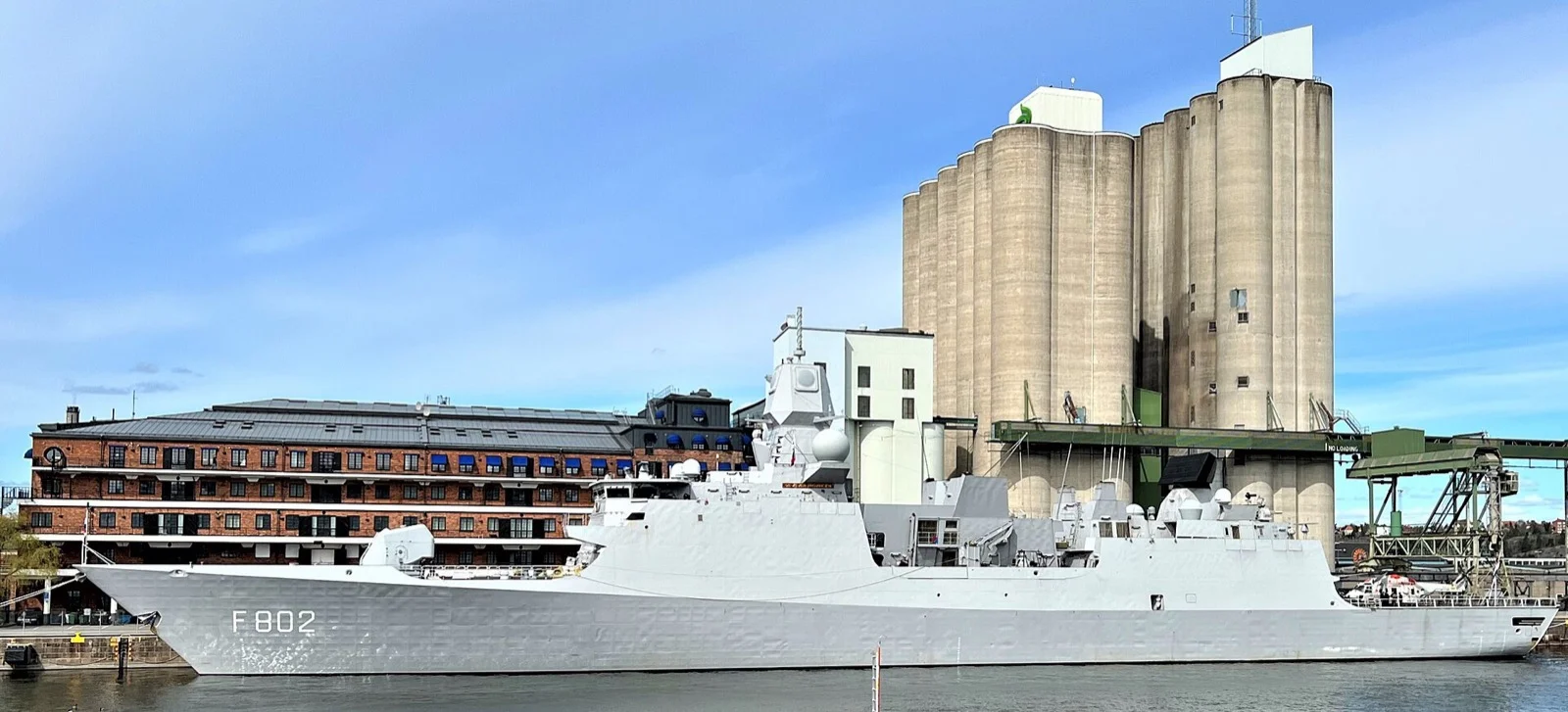
The Netherlands, with a $31.79 billion defence budget, runs NATO’s tenth-highest spend. That figure sits well above the alliance target relative to GDP; Amsterdam has been one of the Western European states raising defence spending fastest since Russia’s invasion of Ukraine.
Most of the budget goes toward expanding the F-35A fleet, air-defence systems and naval modernisation. With just 44,245 active personnel, the Netherlands runs a comparatively small force — a reflection of its professional, technology-heavy military model.
The Hague’s role within NATO is defined less by raw numbers than by logistics and command capacity; the Port of Rotterdam is a critical hub for moving troops and equipment across Europe for the alliance. Military aid packages to Ukraine are also a major driver behind the Netherlands’ recent budget increases.
The Netherlands reaches NATO’s tenth-highest budget with just 44,245 active personnel — among the highest per-capita spending on this list.
| Capability | Total |
|---|---|
| Defence budget | $31.79 billion |
| Active personnel | 44,245 |
| Tanks | 18 |
| Total aircraft | 130 |
| Helicopters | 67 |
| Warships | 140 |
The next country guards the alliance’s southern flank across the Mediterranean.
#9Italy
Defence budget · The Mediterranean’s southern flank
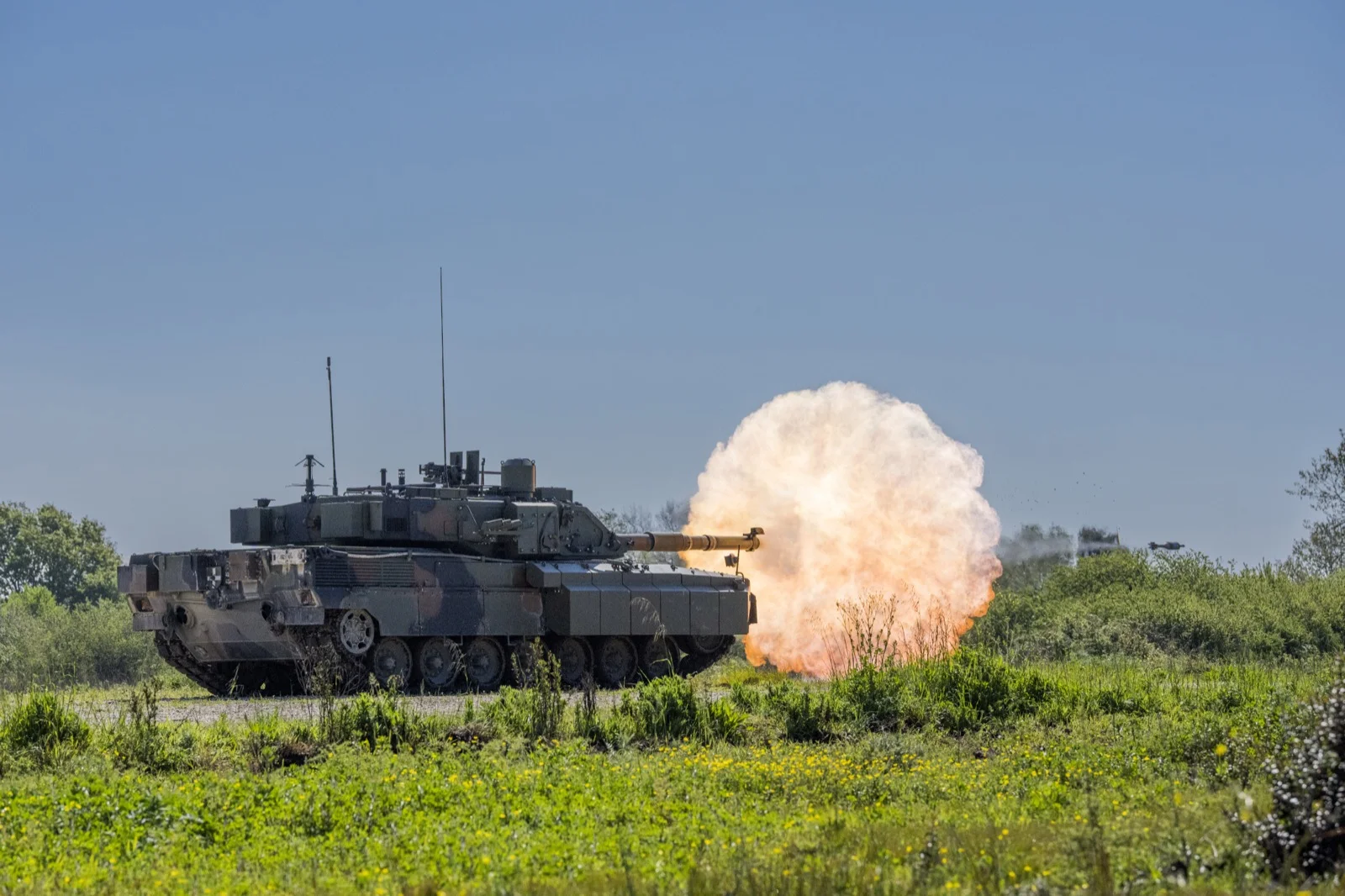
Italy, with a $37.33 billion budget, is NATO’s most important naval power in the Mediterranean. 165,500 active personnel and a 285-vessel navy make the country the alliance’s de facto guardian of the southern flank.
The inventory holds 714 aircraft and 352 helicopters; Rome aims to build Europe’s second-largest F-35A/B fleet. Italian defence industry — Leonardo above all — forms a strong production base exporting both to NATO allies and the global market.
Italy’s strategic priority centres on instability in Libya and migration pressure toward Europe across the Mediterranean. Rome is one of the biggest contributors to NATO’s Mediterranean naval operations, which explains its navy-heavy budget allocation.
Italy’s 285-vessel navy is one of NATO’s largest naval force elements in the Mediterranean.
| Capability | Total |
|---|---|
| Defence budget | $37.33 billion |
| Active personnel | 165,500 |
| Tanks | 203 |
| Total aircraft | 714 |
| Helicopters | 352 |
| Warships | 285 |
| Submarines | 8 |
The next country projects power on both sides of the Atlantic.
#8Spain
Defence budget · The Iberian Peninsula
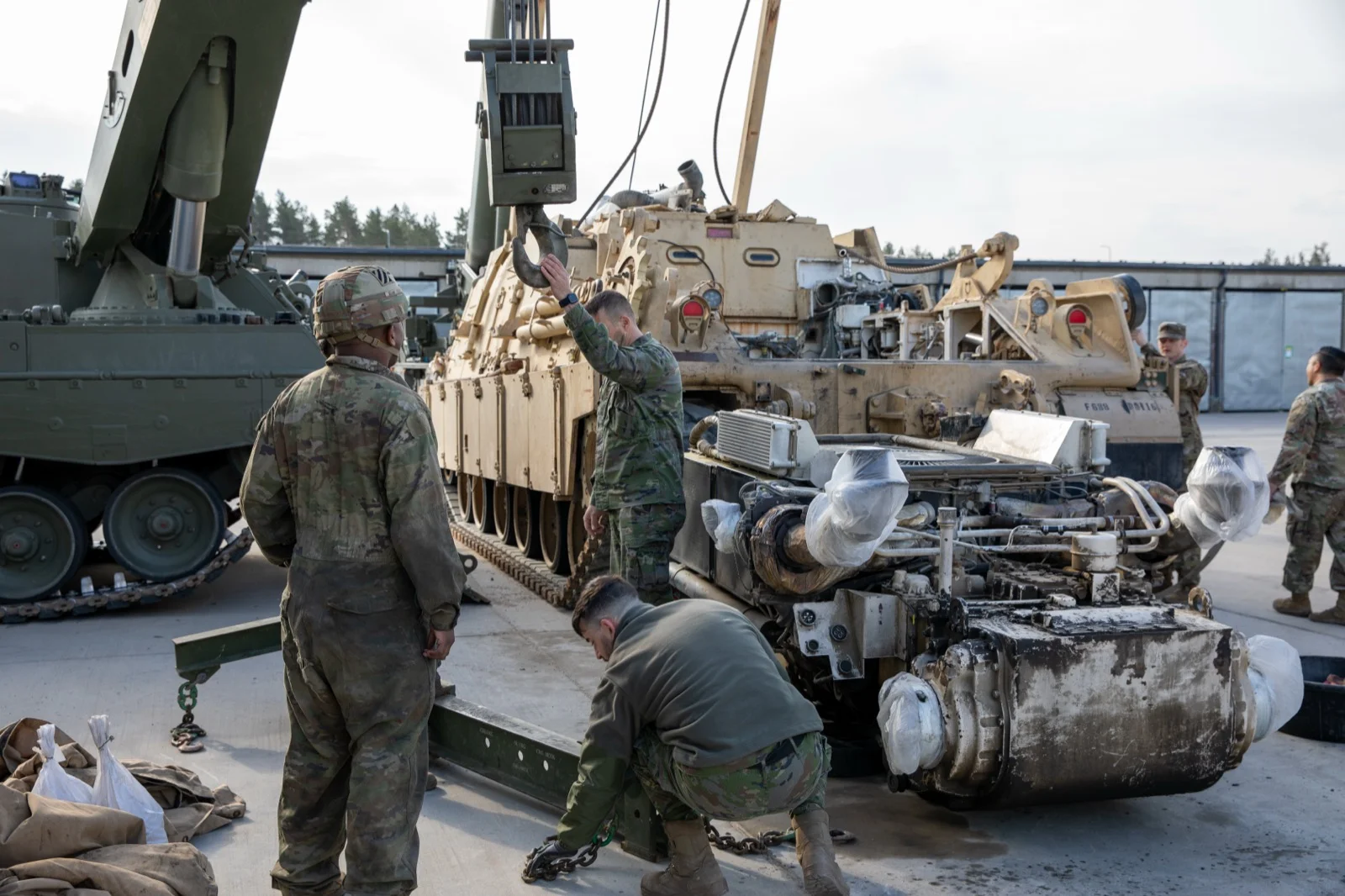
Spain, with a $39 billion budget, runs NATO’s eighth-highest defence spend. The country only recently reached the alliance’s 2% target — a delay that shows Madrid’s budget growth is still in its acceleration phase.
An inventory of 121,802 active personnel and 440 aircraft covers not just the Iberian Peninsula’s defence but also the security of the Ceuta and Melilla enclaves in North Africa. Spanish defence industry, through the Eurofighter partnership and the indigenous S-80-class submarine programme, is one of Europe’s significant production hubs.
Madrid’s defence priority centres on the security of the Strait of Gibraltar and low-intensity tension with Morocco; a 175-vessel navy plays a decisive role in controlling that strategic chokepoint.
Spain fields a larger personnel base than the Netherlands but manages a similarly sized budget.
| Capability | Total |
|---|---|
| Defence budget | $39.00 billion |
| Active personnel | 121,802 |
| Tanks | 298 |
| Total aircraft | 440 |
| Helicopters | 169 |
| Warships | 175 |
| Submarines | 2 |
The next country contributes to the alliance from North America’s Atlantic coast.
#7Canada
Defence budget · North America
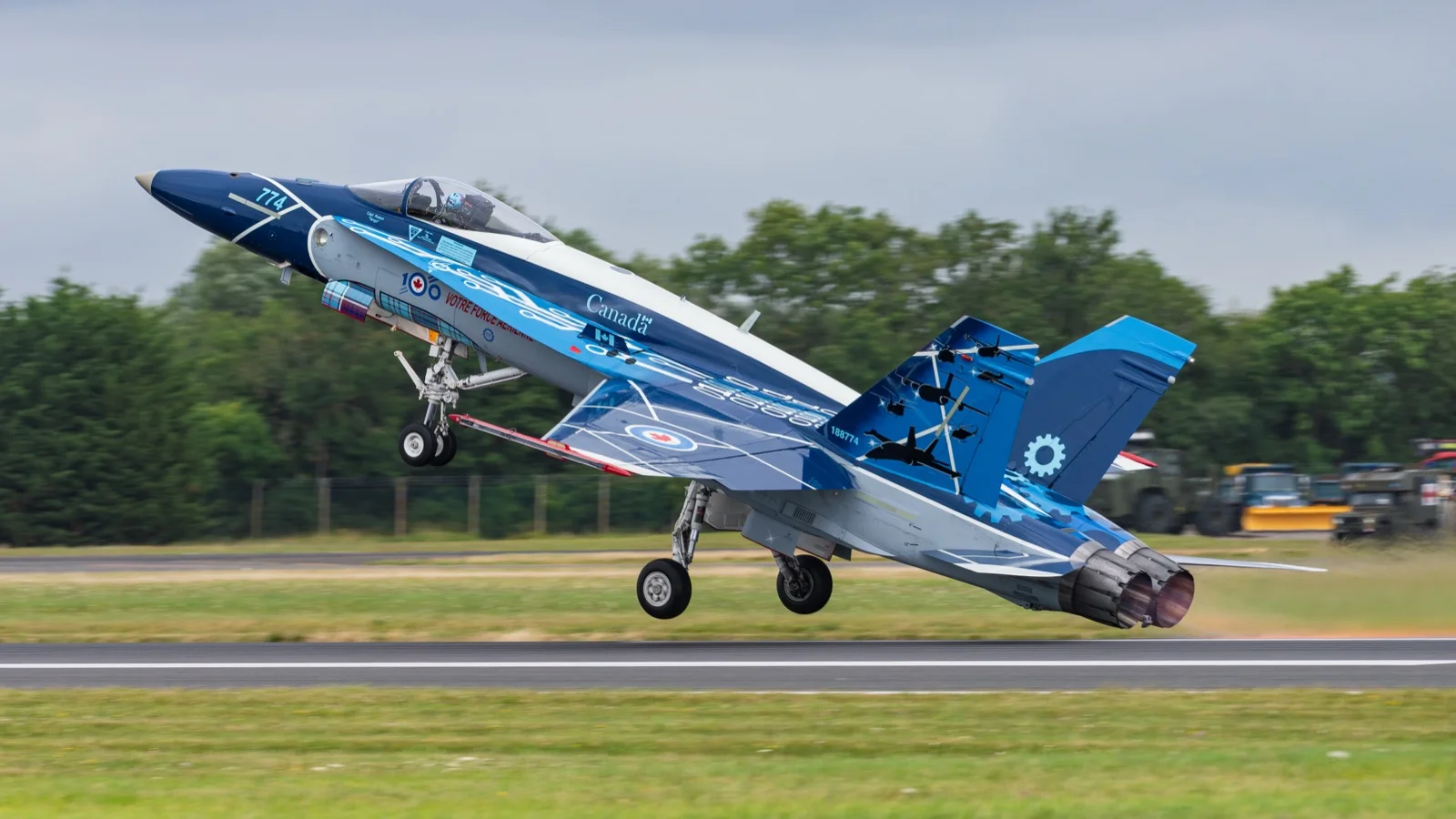
Canada, with a $45.82 billion budget, runs NATO’s seventh-highest defence spend; but the country only recently began meeting the alliance’s 2% target, a point on which it faced sustained criticism from allies for years.
At 63,500 active personnel, the force is fairly limited relative to the country’s vast geography; Canada prioritises air and naval power to defend its sovereignty claims in the Arctic. An F-35A procurement is moving forward to replace the CF-18 fleet.
Ottawa’s role within NATO forms the symbolic and logistical backbone of the North America-Europe link; Canadian troops lead one of NATO’s forward-deployed battlegroups in Latvia. Russian and Chinese activity in the Arctic is pushing Ottawa to raise defence spending quickly.
Canada’s budget exceeds Spain’s, but its active personnel count is less than half.
| Capability | Total |
|---|---|
| Defence budget | $45.82 billion |
| Active personnel | 63,500 |
| Tanks | 74 |
| Total aircraft | 354 |
| Helicopters | 146 |
| Warships | 67 |
| Submarines | 4 |
The next country feeds NATO’s eastern flank’s largest army on 481,000 troops — and does it at a fraction of Western European cost.
#6Türkiye
Defence budget · NATO’s eastern flank
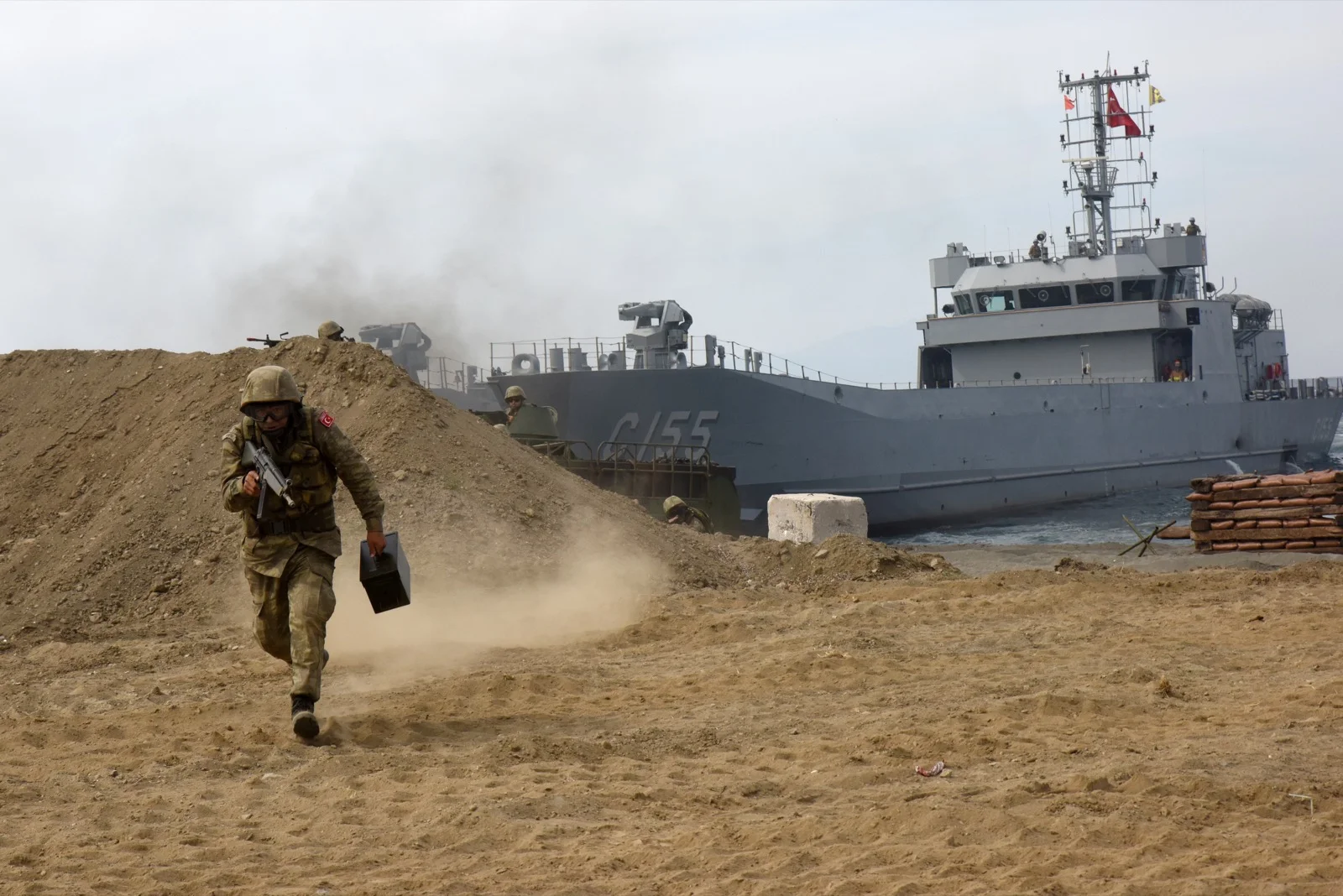
Türkiye, with a $51.4 billion budget, runs NATO’s sixth-highest defence spend — but what stands out most is that this budget sustains 481,000 active personnel, the alliance’s second-largest force after the United States.
That ratio makes Türkiye the alliance’s most cost-efficient member by personnel-per-dollar; most Western European members can’t come close to matching Türkiye’s personnel count on a comparable budget. That efficiency stems both from Türkiye’s continued conscription system and from the large share of its defence-industrial production carried out domestically.
Türkiye’s defence-industrial independence is the core factor separating its position within NATO from most other members; a significant share of its inventory’s platforms are domestically produced rather than imported.
Türkiye spends roughly 1.6 times the Netherlands’ budget while fielding 481,000 active personnel — more than ten times the Netherlands’ force.
| Capability | Total |
|---|---|
| Defence budget | $51.40 billion |
| Active personnel | 481,000 |
| Tanks | 2,284 |
| Total aircraft | 1,101 |
| Helicopters | 509 |
| Warships | 192 |
| Submarines | 14 |
The next country is Eastern Europe’s rising power, rapidly expanding its budget.
#5Poland
Defence budget · Eastern Europe’s rising power
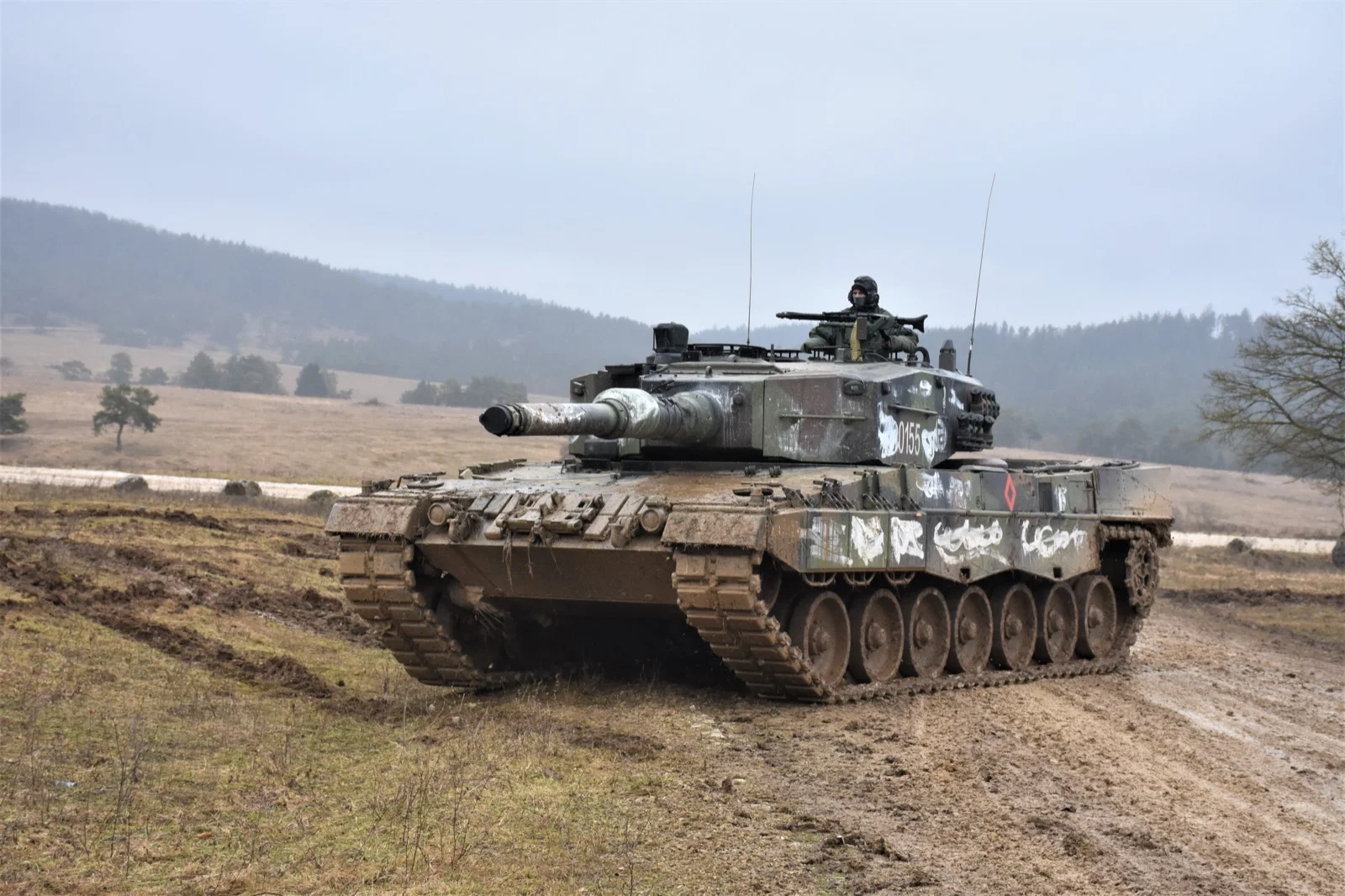
Poland, with a $55.87 billion budget, runs NATO’s fifth-highest defence spend and is one of the highest spenders relative to GDP in the entire alliance. That figure has nearly doubled over the past five years.
250,000 active personnel and a 798-tank inventory reflect Warsaw’s stated goal: building the largest land force in Europe. Massive K2 Black Panther tank and K9 howitzer deals signed with South Korea are turning Poland into Europe’s fastest-growing land power.
Warsaw’s push is a direct response to Russia’s invasion of Ukraine; Poland is positioning itself as NATO’s first line of defence on the eastern border. The country is also sustaining US-sourced procurement through an F-35A fleet and HIMARS rocket-artillery systems — a dual-track strategy that protects Warsaw from over-reliance on a single supplier.
Poland has nearly doubled its budget over the past five years — one of the fastest growth rates anywhere in NATO.
| Capability | Total |
|---|---|
| Defence budget | $55.87 billion |
| Active personnel | 250,000 |
| Tanks | 798 |
| Total aircraft | 457 |
| Helicopters | 224 |
| Warships | 63 |
| Submarines | 1 |
The next country tops the budget chart with Europe’s largest economy.
#4France
Defence budget · Independent nuclear deterrence
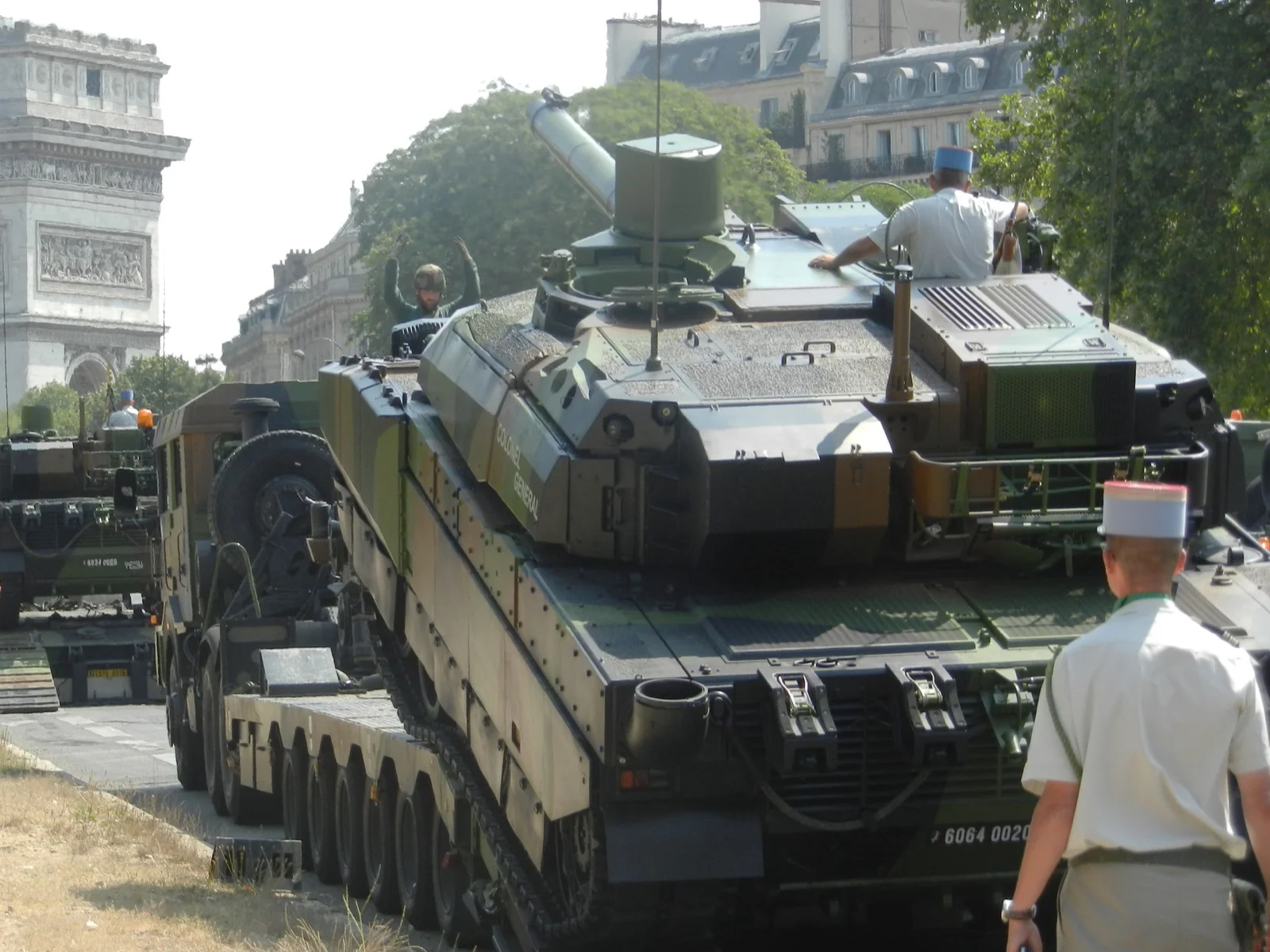
France, with a $67.23 billion budget, runs NATO’s fourth-highest defence spend. The country, alongside the UK, is one of only two alliance members possessing an independent nuclear deterrent — which requires a significant share of the budget to flow into strategic weapons systems.
An inventory of 264,000 active personnel and 974 aircraft makes France one of Europe’s most balanced powers. The nuclear-powered carrier Charles de Gaulle makes France the only NATO member besides the US operating a nuclear-powered aircraft carrier; the Rafale fleet holds a strong position both domestically and in the global export market.
Paris’s defence industry — Dassault, Thales, Naval Group — forms one of Europe’s most self-sufficient supply chains; France is one of the few NATO members capable of producing most of its own defence equipment domestically. That independence is the core foundation behind France’s claim to global power projection.
France, alongside the UK, is one of only two NATO members with independent nuclear deterrence.
| Capability | Total |
|---|---|
| Defence budget | $67.23 billion |
| Active personnel | 264,000 |
| Tanks | 427 |
| Total aircraft | 974 |
| Helicopters | 452 |
| Warships | 166 |
| Submarines | 9 |
The runner-up sits close to the top with Europe’s second-highest defence budget.
#3United Kingdom
Defence budget · An island state’s nuclear power
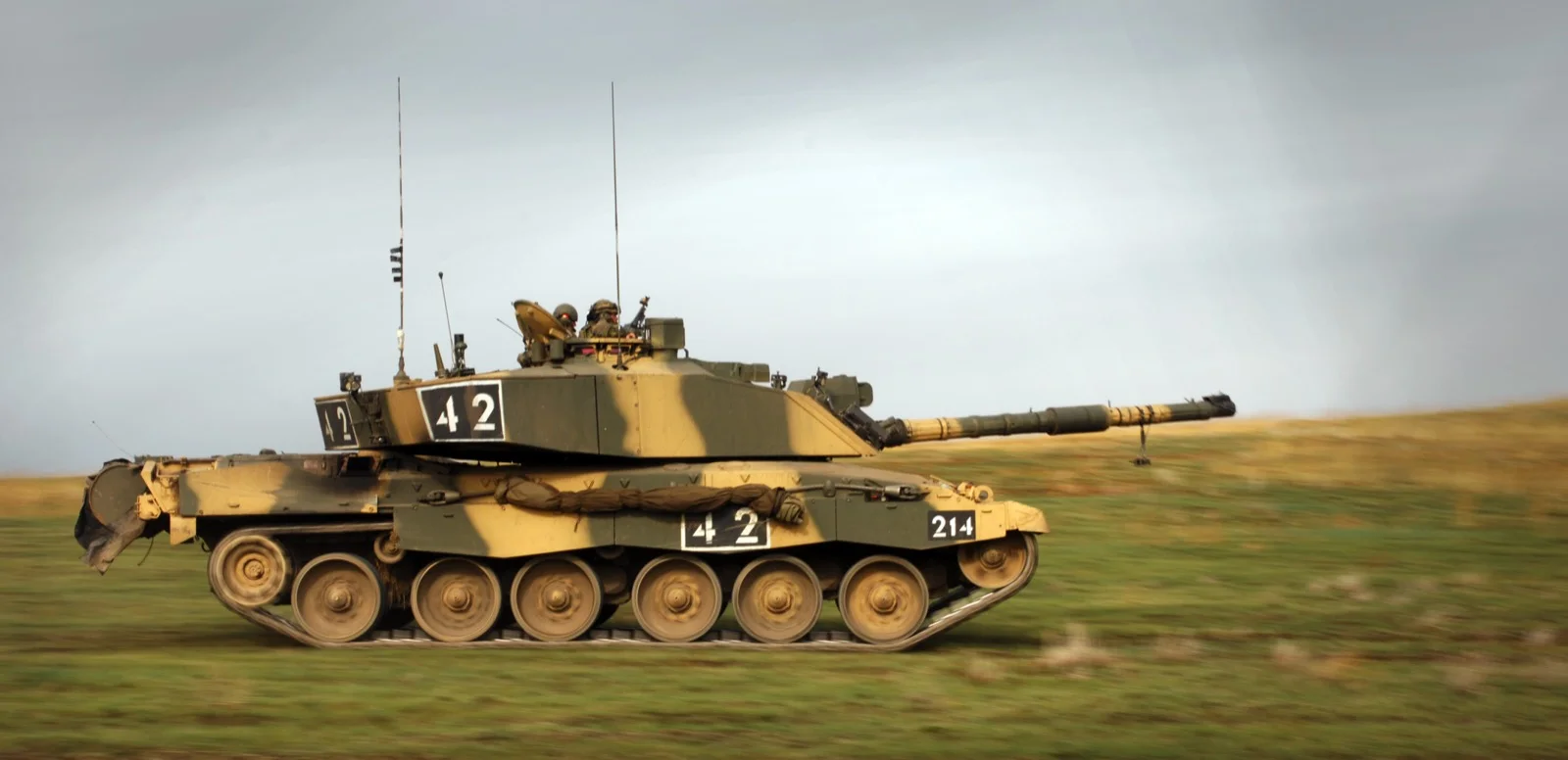
The United Kingdom, with an $88.53 billion budget, runs NATO’s third-highest defence spend after the US and Germany. The country maintains nuclear deterrence via Vanguard-class submarines and is one of the few NATO members operating two aircraft carriers.
141,330 active personnel looks relatively small against the budget’s size — the natural outcome of London’s strategy of investing in fewer but far more expensive platforms. A 288-tank land inventory shows how firmly UK defence policy has pushed land forces down the priority list.
London’s defence industry — BAE Systems, Rolls-Royce — competes on a global scale; the AUKUS partnership’s nuclear-submarine cooperation with Australia is also expanding the UK’s strategic weight in the Indo-Pacific.
The UK’s budget is 1.7 times Türkiye’s, yet its active personnel is less than a third of Türkiye’s.
| Capability | Total |
|---|---|
| Defence budget | $88.53 billion |
| Active personnel | 141,330 |
| Tanks | 288 |
| Total aircraft | 625 |
| Helicopters | 262 |
| Warships | 116 |
| Submarines | 10 |
The runner-up tops the chart as Europe’s largest economy.
#2Germany
Defence budget · Europe’s economic giant
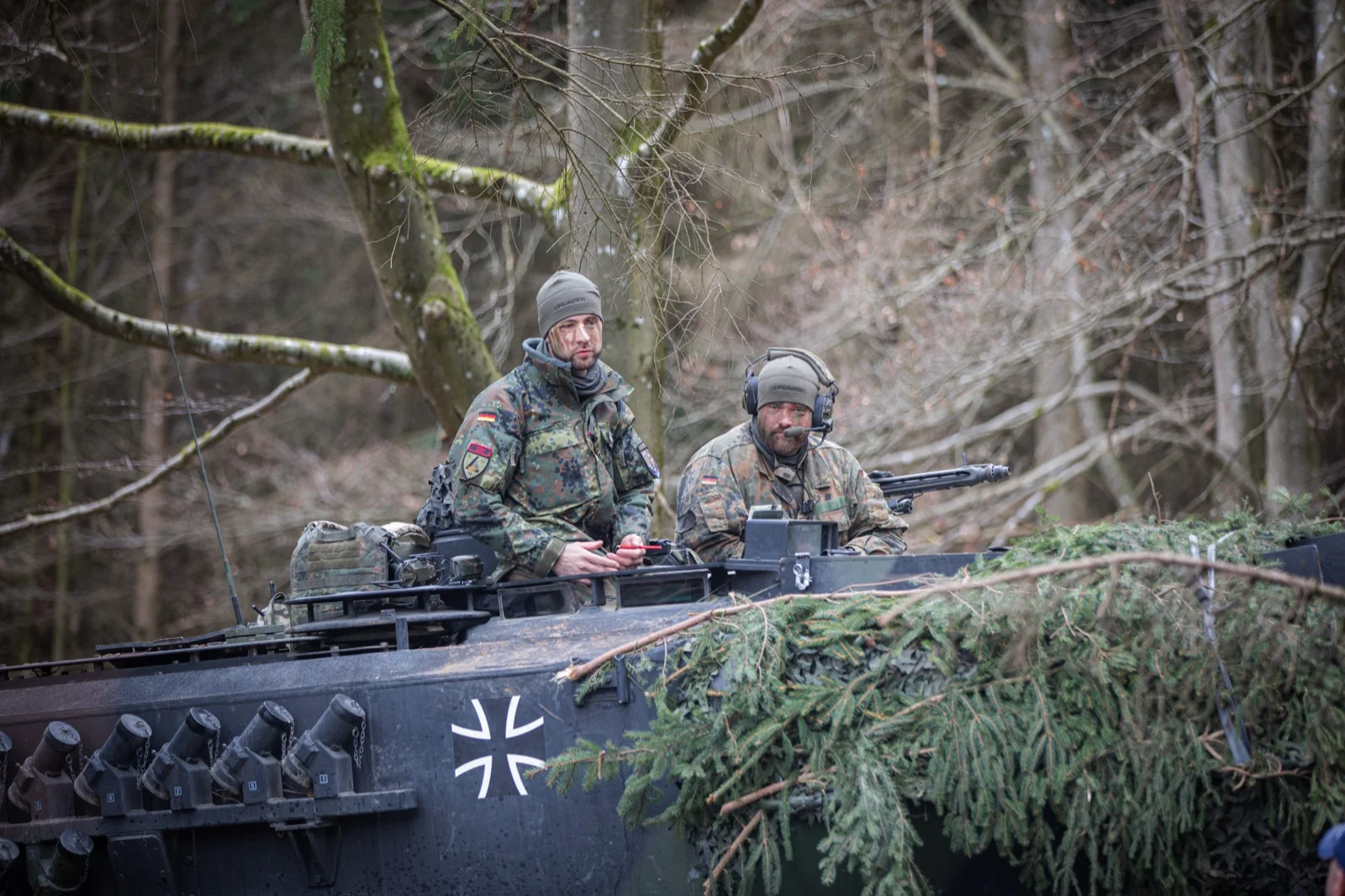
Germany, with a $127.4 billion budget, runs NATO’s second-highest defence spend after the United States. That figure directly reflects the impact of the €100 billion special defence fund (Sondervermögen) announced after Russia’s invasion of Ukraine.
184,324 active personnel looks strikingly small against the budget’s scale; that gap is the legacy of the Bundeswehr being systematically shrunk in the post-Cold War era and of conscription being suspended in 2011. Berlin has launched personnel-recruitment campaigns to close that gap.
Germany’s defence industry — Rheinmetall above all — has rapidly expanded production capacity in recent years; Leopard 2 tank production and munitions plants are both expanding through new investment. Berlin’s goal is to turn its budget size into matching inventory and personnel size — a process still incomplete.
Germany’s budget is 2.5 times Türkiye’s, yet its active personnel is less than a third of Türkiye’s.
| Capability | Total |
|---|---|
| Defence budget | $127.40 billion |
| Active personnel | 184,324 |
| Tanks | 296 |
| Total aircraft | 569 |
| Helicopters | 292 |
| Warships | 96 |
| Submarines | 6 |
At the top sits the only country outspending the combined total of the other nine on this list.
#1United States
Defence budget · Global scale
The US, with an $831.5 billion defence budget, runs both NATO’s and the world’s largest defence spend — a figure that exceeds even the combined total of the other nine countries on this list ($594.86 billion).
An inventory of 1,333,030 active personnel, 13,032 aircraft and 66 submarines gives Washington a global power-projection capacity no ally can match. American defence industry — Lockheed Martin, Boeing, Raytheon — is the world’s largest arms exporter, and the F-35 programme alone shapes the air forces of dozens of countries.
The scale of the US budget within NATO is one of the alliance’s most persistent points of tension; Washington has long pushed its European allies to shoulder a more equal share of the defence burden. Pressure from the Trump administration and Russia’s invasion of Ukraine have accelerated that demand into concrete budget increases in recent years.
The US budget exceeds the combined total of the other nine NATO members on this list.
| Capability | Total |
|---|---|
| Defence budget | $831.50 billion |
| Active personnel | 1,333,030 |
| Tanks | 4,666 |
| Total aircraft | 13,032 |
| Helicopters | 5,913 |
| Warships | 465 |
| Submarines | 66 |
What NATO’s budget balance tells us
This table lays out NATO’s most fundamental tension: the US alone covers more than half the alliance’s total defence spending. That imbalance is the core rationale behind Washington’s decades-long demand for “fair burden-sharing,” and Russia’s invasion of Ukraine became the most concrete pressure to finally move European members to act.
The second finding is that the disconnect between budget size and personnel count applies within NATO too. Germany spends $127.4 billion on 184,324 troops; Türkiye spends $51.4 billion on 481,000 — nearly three times the force on a third of the budget. That gap shows the decisive role conscription and domestic defence-industrial share play in budget efficiency.
A third trend is the pace of Eastern Europe’s budget growth. Poland has nearly doubled its budget in five years, making it the alliance’s fastest-growing member. That momentum shows threat perception among countries near the Russian border runs far higher than in Western Europe — and that perception translates directly into budgets.
Finally, Türkiye’s position offers a genuinely distinctive model within NATO: the only member able to sustain a large personnel base, a broad inventory and a high domestic-content ratio on a mid-tier budget. Programmes like KAAN, Altay, MILGEM and Hürjet are the structural pillars sustaining that efficiency. NATO’s next decade will see renewed debate over how both budget size and efficiency models like this contribute to the alliance’s overall deterrence.
NATO’s 10 biggest defence budgets: comparison table (2026)
| # | Country | Defence budget | Active personnel | Tanks | Total aircraft | Warships |
|---|---|---|---|---|---|---|
| 1 | United States | $831.50 billion | 1,333,030 | 4,666 | 13,032 | 465 |
| 2 | Germany | $127.40 billion | 184,324 | 296 | 569 | 96 |
| 3 | United Kingdom | $88.53 billion | 141,330 | 288 | 625 | 116 |
| 4 | France | $67.23 billion | 264,000 | 427 | 974 | 166 |
| 5 | Poland | $55.87 billion | 250,000 | 798 | 457 | 63 |
| 6 | Türkiye | $51.40 billion | 481,000 | 2,284 | 1,101 | 192 |
| 7 | Canada | $45.82 billion | 63,500 | 74 | 354 | 67 |
| 8 | Spain | $39.00 billion | 121,802 | 298 | 440 | 175 |
| 9 | Italy | $37.33 billion | 165,500 | 203 | 714 | 285 |
| 10 | Netherlands | $31.79 billion | 44,245 | 18 | 130 | 140 |
A new ranking tomorrow
Coming next: Asia’s largest standing armies, and the power balance across Sub-Saharan Africa.
Sıkça Sorulan Sorular
Which NATO member has the biggest defence budget?
The United States. Its $831.5 billion budget exceeds the combined total of the other nine countries on this list.
Where does Türkiye rank in NATO’s budget list?
Türkiye ranks sixth with $51.4 billion — but that budget sustains 481,000 active personnel, the alliance’s second-largest force after the United States.
Why does Türkiye field a far larger force than Germany on a similar budget?
Türkiye maintains conscription and carries out most of its defence-industrial production domestically. Germany shifted to a professional-force model and suspended conscription in 2011.
Why has Poland’s budget grown so fast?
Russia’s invasion of Ukraine put Poland on NATO’s eastern front line. Warsaw has nearly doubled its budget in five years, signing massive tank and howitzer deals with South Korea.
Does this ranking cover all 32 NATO members?
The calculation covers all 32 members, but this gallery lists only the top 10 by budget size.
Sources
- GlobalFirepower 2026 defence budget data and NATO members ranking
- Official NATO defence spending reports
- SIPRI Military Expenditure Database
- Official statements from the relevant ministries of defence
- Presidency of Defence Industries (SSB) project data
- Source: https://www.globalfirepower.com/