
Africa’s Top 10 Countries by Helicopter Fleet Size (2026): Egypt Leads, Algeria and Angola Follow

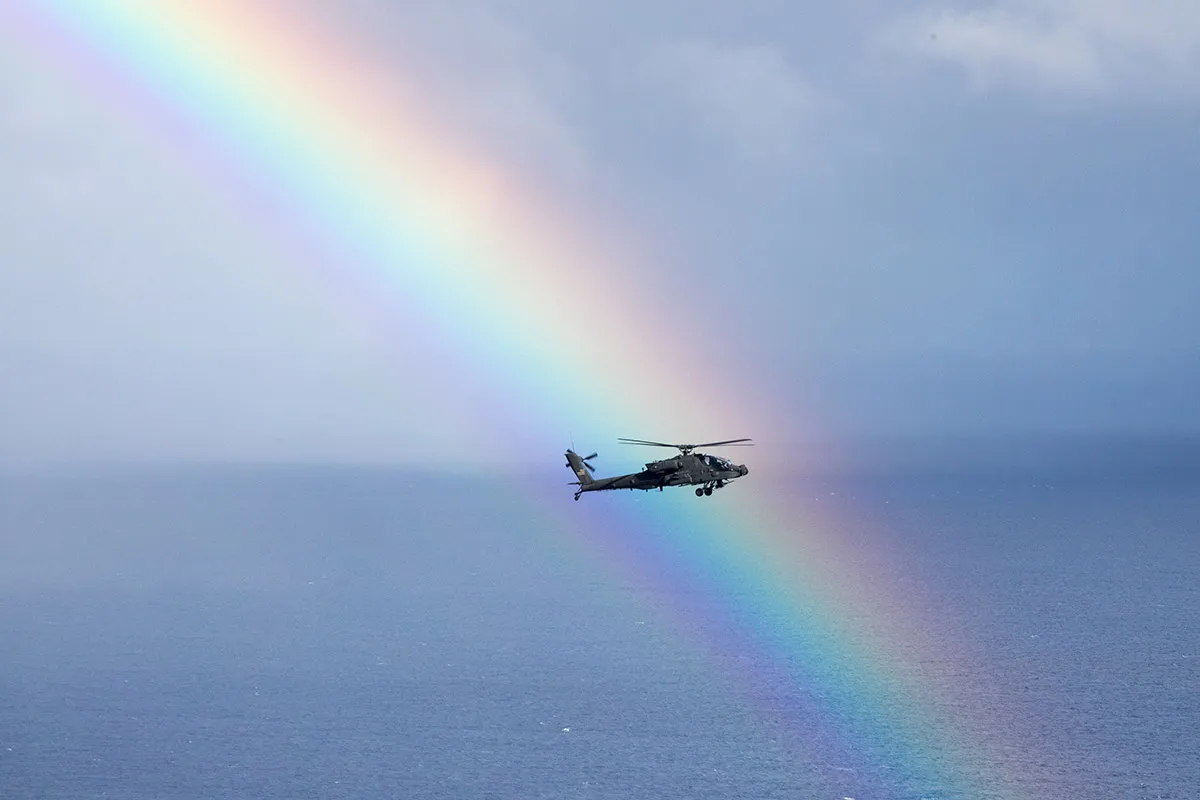
If you want to measure what an African army can actually do, count its helicopters rather than its tanks. On a continent where road networks are thin, distances are enormous and much of the terrain is closed to armoured formations, rotary-wing strength determines everything from troop movement and casualty evacuation to border patrol and close fire support.
According to Global Firepower’s 2026 data, ten African states hold the overwhelming majority of the continent’s helicopter inventory. The country at the top is the one most analysts would predict. The genuine surprise is the composition of the top five: a state of barely 12 million people outranks the country with Africa’s most advanced defence industry, while the continent’s second-largest army sits at the very bottom of the table.
This gallery counts Africa’s ten largest helicopter fleets down from #10 to #1, and for each country sets out the doctrine behind the number, where the airframes came from, which regional rivalry drives the requirement and what the fleet would actually deliver in a conflict. All figures are drawn from Global Firepower’s 2026 inventory data. As always, not every platform on an inventory list is flyable at any given moment.
For international readers there is a second layer here. Almost every fleet on this list is either up for recapitalisation or already contested between American, European, Russian and newer suppliers. What that competition looks like is covered in the assessment at the end of the gallery.
#10 · ETHIOPIA
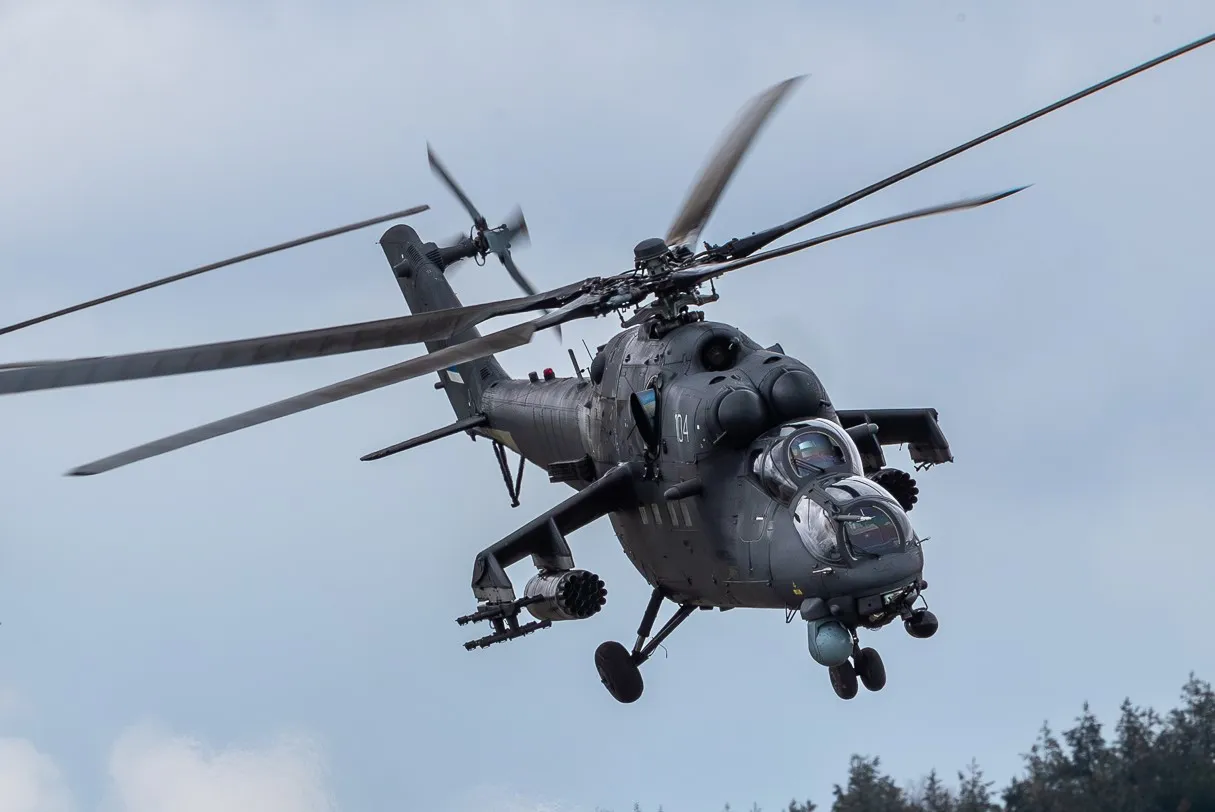
Ethiopia fields the second-largest standing army on the continent, yet it closes this ranking with just 33 rotorcraft. The disparity is the point. With roughly 503,000 active personnel and no navy at all, Addis Ababa built a land-heavy force in which the helicopter is a supporting enabler rather than a manoeuvre arm, and the rotary-wing fleet it does operate is almost entirely Soviet and Russian legacy hardware: Mi-8 and Mi-17 transports alongside Mi-24 and Mi-35 gunships.
That fleet was worn hard. The Tigray and Amhara campaigns consumed flight hours faster than the sustainment chain could replace them, and the gap between airframes on the inventory list and airframes actually able to fly is a chronic Ethiopian problem rather than an occasional one. Geography compounds it: on highlands above 2,000 metres, engine performance falls away sharply, and hot-and-high conditions force the same helicopter to lift a fraction of what it would carry at sea level.
For an exporter, Ethiopia reads as a replacement market that has not opened yet. Spares for the Mil family are constrained, Western financing is politically complicated, and Addis Ababa has spent its recent procurement budget on armed unmanned aircraft instead, buying reconnaissance and precision-strike coverage at a fraction of the cost per flight hour. Whoever eventually recapitalises this fleet will be selling into a hot-and-high requirement that only a narrow set of airframes can genuinely meet.
Despite fielding Africa’s second-largest army, Ethiopia operates roughly one third the number of helicopters that Tunisia does with a fraction of the manpower.
| Power Element | Value |
|---|---|
| Tanks | 338 |
| Total aircraft | 104 |
| Helicopters | 33 |
| Active personnel | 503,000 |
| Defense budget | $3.72 billion |
The next country on the list shows, more starkly than any other, what a civil war does to a rotary-wing inventory.
#9 · SUDAN
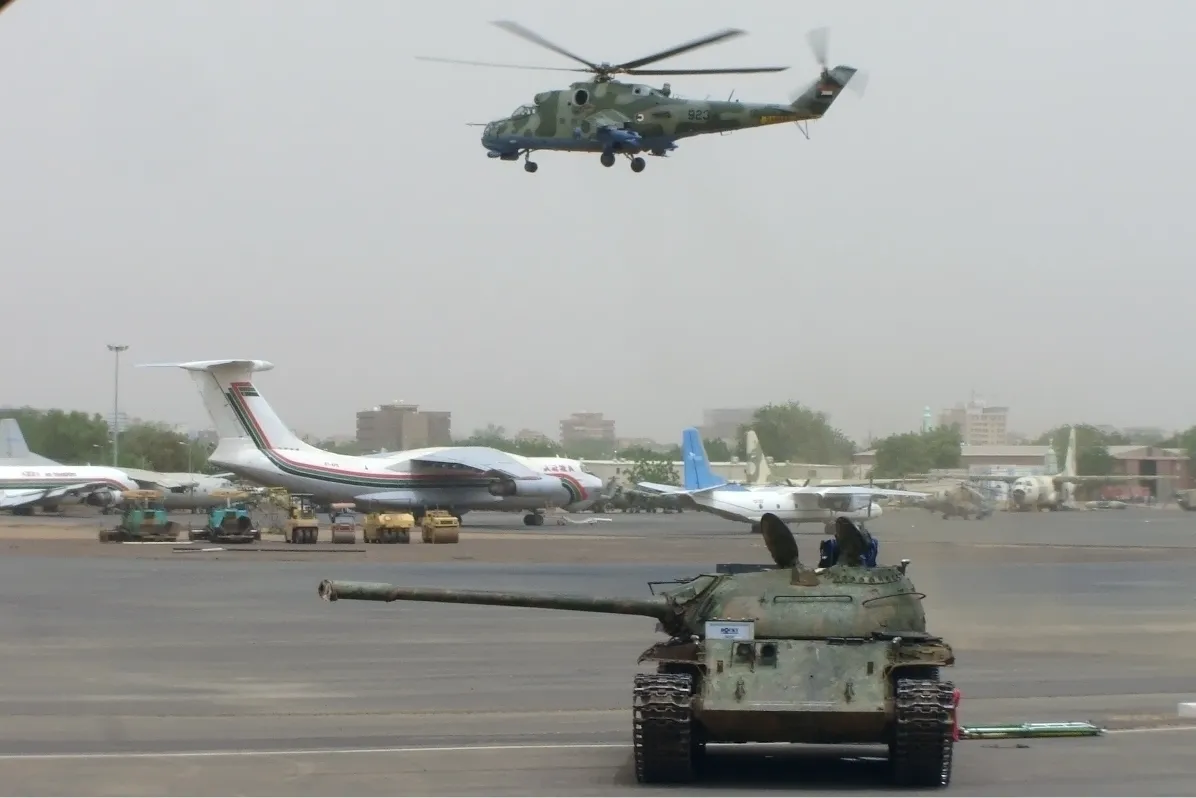
Sudan’s 64 helicopters sit above the African average, but the story behind that number resembles no other entry on this list. Since 2023 the fighting between the Sudanese Armed Forces and the Rapid Support Forces has made rotary-wing aviation both the most heavily used and the most heavily attrited part of the air arm. Air superiority over Khartoum has been contested largely with helicopters and light attack aircraft rather than fast jets.
The backbone remains the Mi-8 and Mi-17 transport family plus Mi-24 gunships, supplemented in recent years by Chinese and Emirati-sourced systems. Resupply of encircled garrisons, casualty evacuation and close fire support in urban fighting mean these airframes fly almost daily, which destroys any orderly maintenance cycle and pushes component lives well past their intended intervals.
The sustainment arithmetic is the weak point. Sudan pairs 300,000 active personnel and 1,055 tanks with a declared defence budget of just $394.7 million, the smallest on this list by a wide margin. Spares, engine overhauls and munitions all depend on outside support, and the export-control environment around an active civil conflict rules out most Western and NATO-aligned suppliers outright. This is a market closed to legitimate competition for as long as the war lasts.
Sudan fields more than a thousand tanks yet carries the smallest defence budget on this entire list, a gap that raises hard questions about how much of the inventory is genuinely serviceable.
| Power Element | Value |
|---|---|
| Tanks | 1,055 |
| Total aircraft | 183 |
| Helicopters | 64 |
| Active personnel | 300,000 |
| Defense budget | $394.7 million |
The next entry is one of Africa’s largest economies, and its rotary-wing strength falls well short of that economic weight.
#8 · NIGERIA
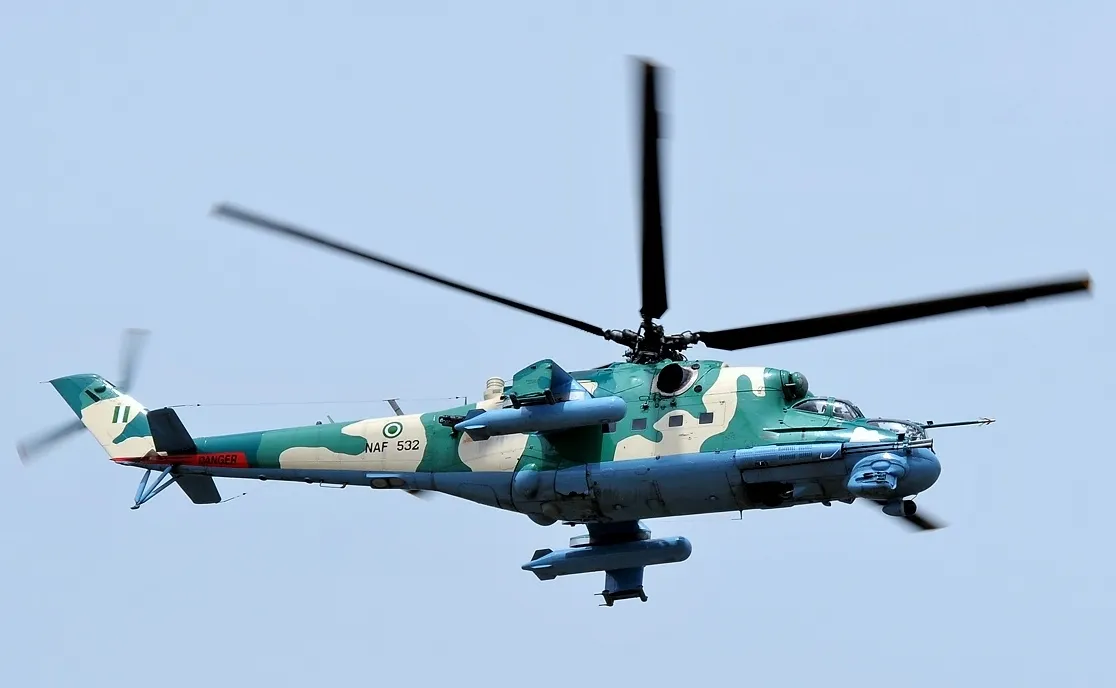
Nigeria is Africa’s most populous state and one of its largest economies, yet 69 helicopters is a modest figure for a country of that size. What the raw number hides is momentum: few air forces on this list have recapitalised as quickly over the past decade. The long counter-insurgency against Boko Haram and ISWAP left Abuja with no realistic alternative to sustained rotary-wing investment.
The Nigerian Air Force has broadened its inventory with AW109 light attack helicopters, Mi-171Sh transports and US-supplied Bell 412 variants, an unusually multi-vendor mix that reflects a deliberate strategy of not depending on any single capital. For Western exporters this is one of the more accessible procurement environments in West Africa, with an established US Foreign Military Sales relationship and European industrial ties already in place.
Nigeria also carries a maritime requirement most of this list does not. A naval inventory of 152 vessels, piracy in the Gulf of Guinea and offshore platform security all generate demand for shipborne and over-water rotorcraft. A $3.9 billion defence budget is the largest in West Africa, but it has to cover a vast land mass and a long coastline at the same time, which is why so much of Nigeria’s recent capability growth has come from unmanned systems rather than new helicopter orders.
Nigeria holds West Africa’s largest defence budget yet still trails Tunisia, a North African state with a fraction of its population, in helicopter numbers.
| Power Element | Value |
|---|---|
| Tanks | 330 |
| Total aircraft | 159 |
| Helicopters | 69 |
| Active personnel | 230,000 |
| Defense budget | $3.9 billion |
The next country runs one of the most modern and most Western-aligned procurement programmes on the continent.
#7 · MOROCCO
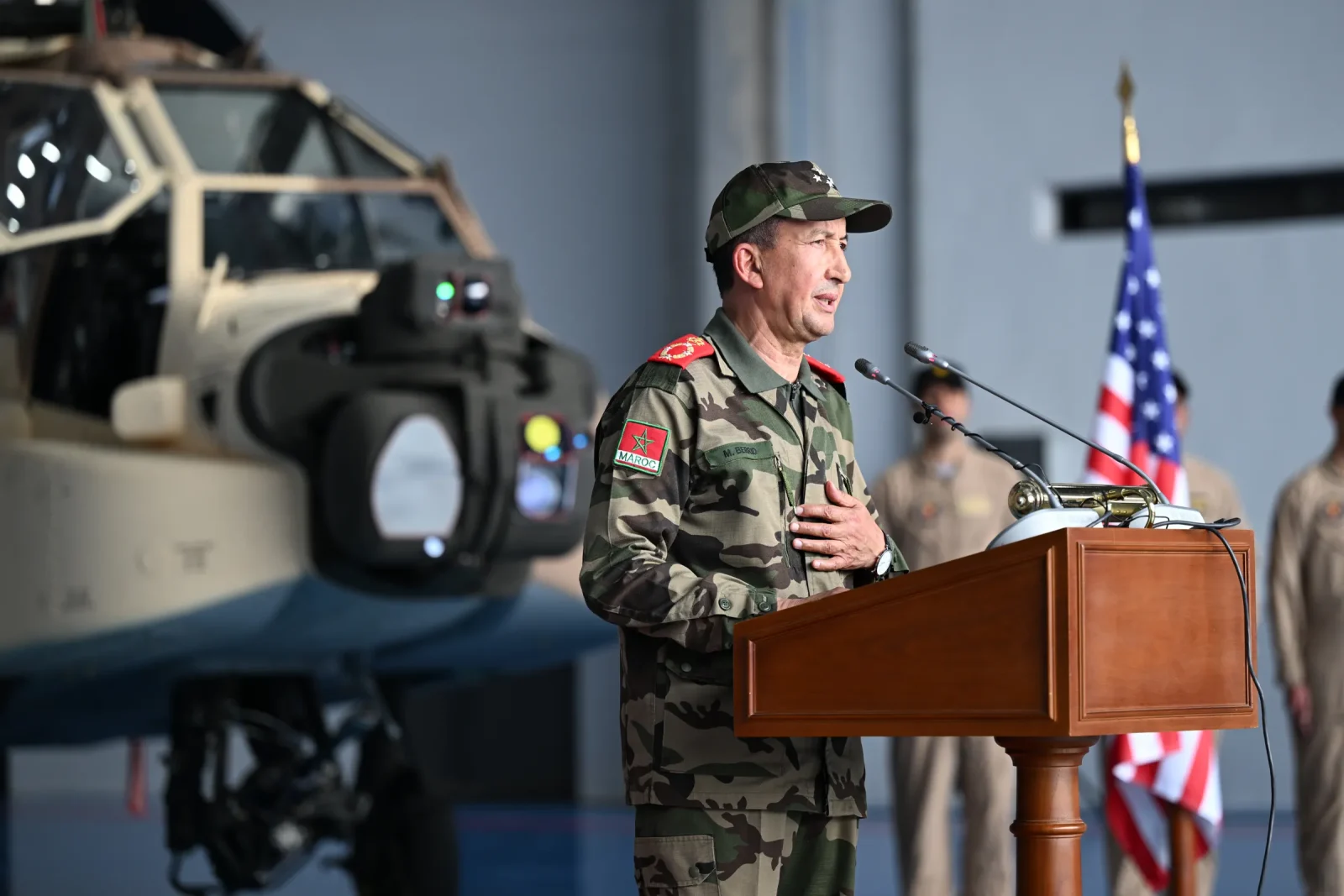
Morocco is among the fastest-rearming states in Africa, and a $16.1 billion defence budget places it in the continent’s top tier of spenders. A fleet of 73 helicopters looks modest against that figure until the composition is examined: Rabat has consistently bought quality over quantity, and its inventory is the most Western in character of any army on this list.
The Royal Moroccan Air Force is one of only a handful of African operators of the AH-64E Apache Guardian, alongside CH-47D Chinook heavy-lift, Gazelle light helicopters and the Bell 412 family. That mix was shaped by two very specific requirements: the defensive line in Western Sahara, and troop movement across the Atlas mountains. It also makes Morocco a reference customer for US industry in North Africa and a natural first stop for European offers.
Moroccan planning is organised around the long strategic competition with Algeria. With 1,346 tanks and 400,000 active personnel, Rabat carries genuine mass on the ground, but in rotary-wing terms it holds roughly a quarter of its neighbour’s fleet. It has chosen to close that gap asymmetrically, through Israeli and US systems and through unmanned aircraft, including Turkish-supplied Bayraktar TB2s. For exporters, Morocco is the clearest case on this list of a buyer willing to pay Western prices for Western capability.
Morocco spends roughly two thirds of what Algeria does on defence, yet fields only about a quarter as many helicopters as its regional rival.
| Power Element | Value |
|---|---|
| Tanks | 1,346 |
| Total aircraft | 271 |
| Helicopters | 73 |
| Active personnel | 400,000 |
| Defense budget | $16.1 billion |
The next entry is one of East Africa’s most operationally active armies, and it has grown its fleet quietly.
#6 · KENYA
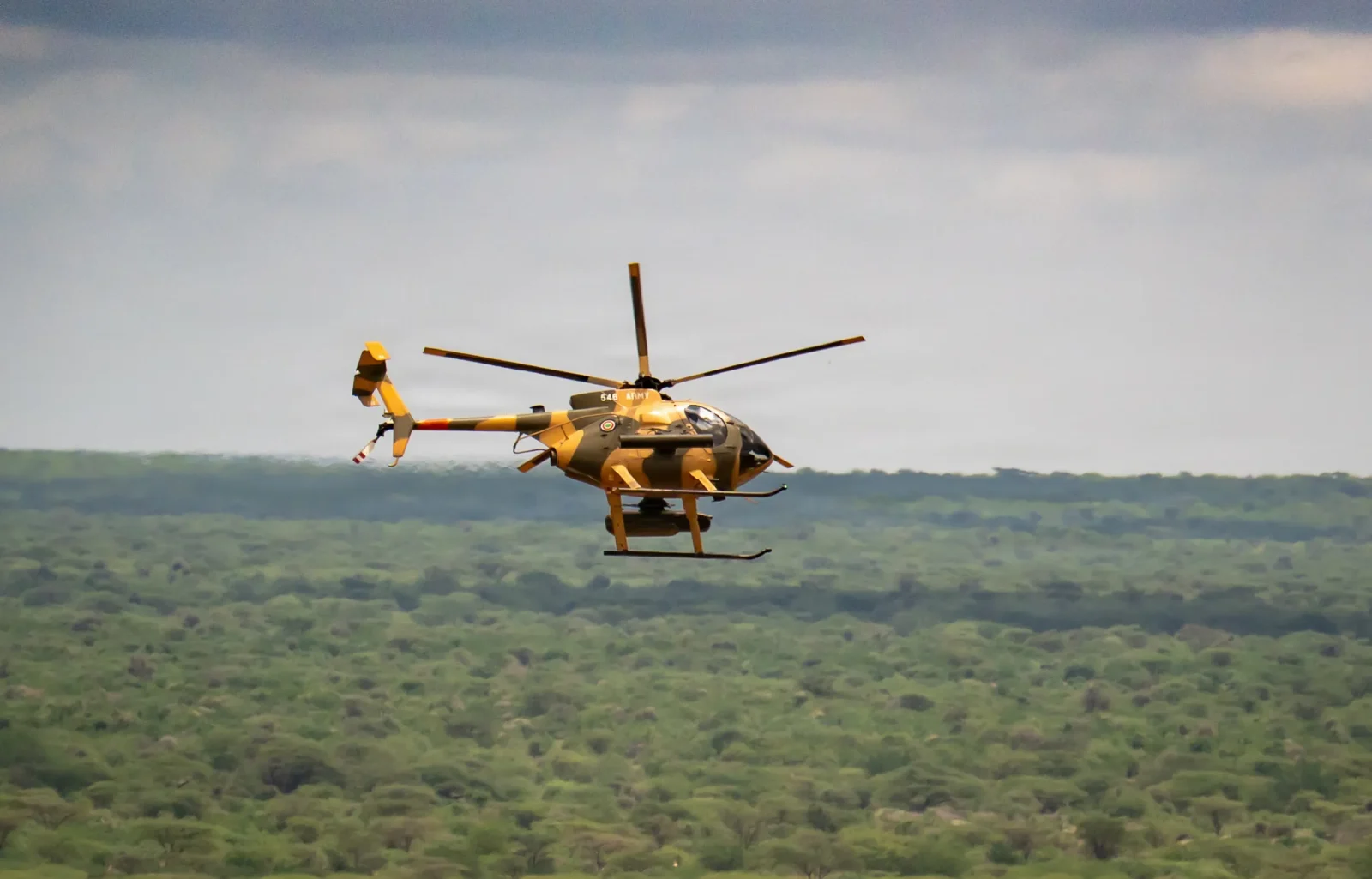
With 50,000 active personnel, Kenya has one of the smaller armies on this list and one of the busiest. Cross-border operations against al-Shabaab in Somalia keep the Kenya Defence Forces’ rotary-wing assets in the field more or less continuously, and the fleet of 84 helicopters is a direct consequence of that operational tempo rather than of budget headroom.
Kenyan procurement is deliberately multi-sourced. The inventory includes US-origin MD 500 series light attack and scout helicopters, Bell 412 transports, and Harbin Z-9 and Fennec variants of Chinese and European lineage. That variety complicates the supply chain, but it insulates Nairobi from any single supplier’s export policy, which matters in a region where embargo risk is real and where US security assistance carries conditions.
At $1.65 billion, Kenya’s defence budget is among the smallest here, and the fact that it still outranks Morocco and Nigeria on fleet size says a great deal about where the money went. Nairobi bought numbers of light and medium airframes instead of a small number of expensive heavy ones. It is exactly the buyer profile that mid-tier Western, Turkish and Asian manufacturers compete hardest for: cost-sensitive, high-utilisation and unwilling to be captured by one capital.
Kenya spends about a tenth of Morocco’s defence budget yet operates more helicopters than the Royal Moroccan Air Force.
| Power Element | Value |
|---|---|
| Tanks | 188 |
| Total aircraft | 154 |
| Helicopters | 84 |
| Active personnel | 50,000 |
| Defense budget | $1.65 billion |
The first country in the top five has Africa’s most advanced defence industry, and a smaller fleet than that suggests.
#5 · SOUTH AFRICA
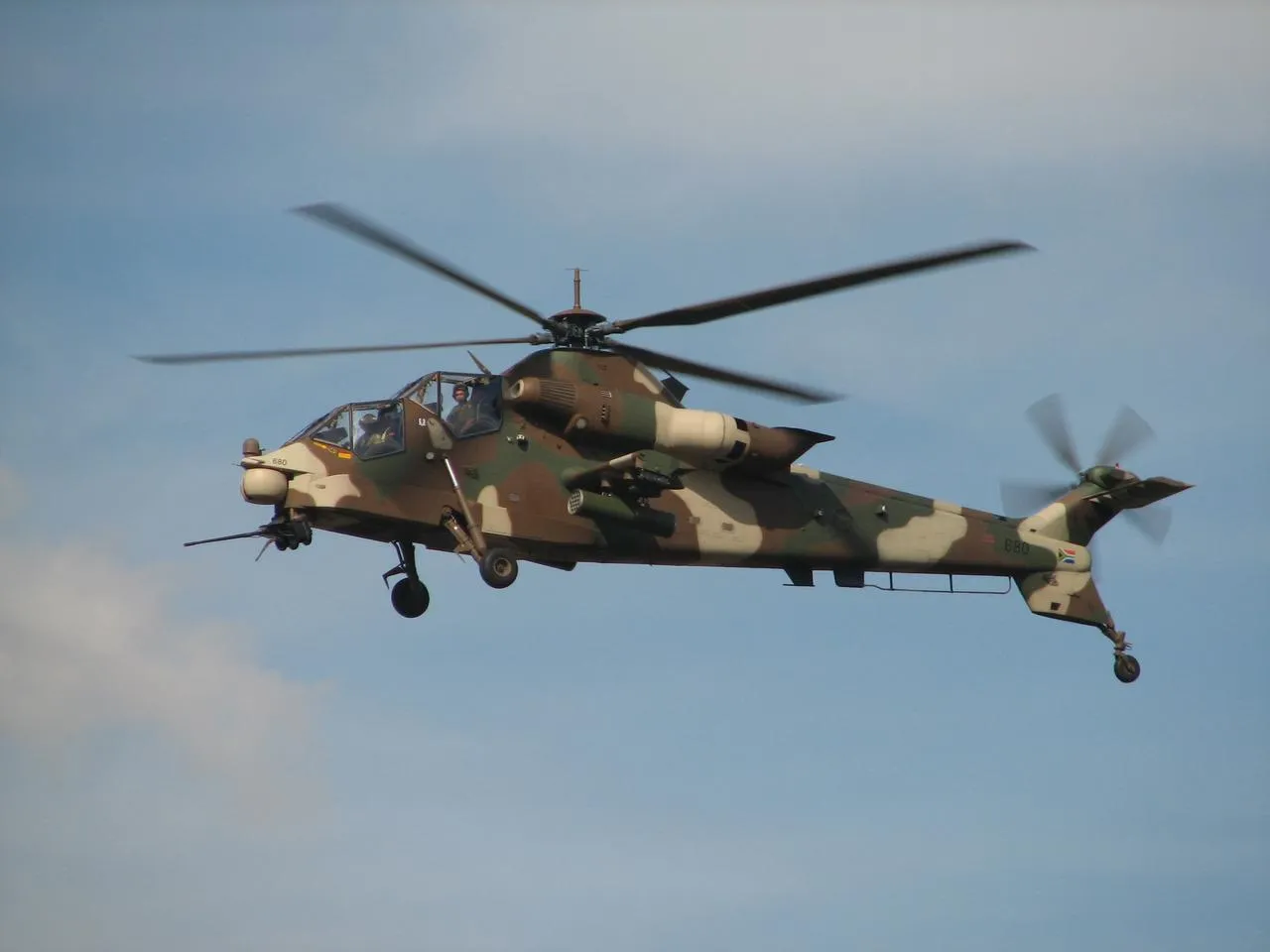
South Africa has the most capable defence-industrial base on the continent, spanning Denel, Paramount and Rheinmetall Denel Munitions, with production lines running from rotorcraft to armoured vehicles, munitions and electronic warfare. Against that backdrop, 87 helicopters is a modest fleet, and the constraint is fiscal rather than technical.
The most striking item in the inventory is the Denel Rooivalk, an indigenously designed and serially produced attack helicopter. No other African state has done that. Alongside it sit Oryx medium transports, a locally upgraded derivative of the Puma, A109 light helicopters and Lynx naval rotorcraft. Pretoria is a producer and an exporter in this market, not simply a customer, which makes it a competitor as well as a partner for European and US firms.
But a $2.88 billion defence budget and years of structural underfunding have pushed readiness rates down, and the limited availability of the Rooivalk fleet is regularly discussed in open sources. South Africa is the clearest illustration on this list that building your own platform is not sufficient. Without sustained sustainment funding, training and mid-life upgrade money, even a modern inventory degrades into hangar queens, a lesson that applies to every export campaign on the continent.
South Africa is the only African country to have designed and serially produced its own attack helicopter, yet it trails Tunisia, which produces nothing at all, on fleet size.
| Power Element | Value |
|---|---|
| Tanks | 248 |
| Total aircraft | 181 |
| Helicopters | 87 |
| Active personnel | 68,731 |
| Defense budget | $2.88 billion |
The country in fourth place operates the densest helicopter fleet in Africa relative to the size of its armed forces.
#4 · TUNISIA
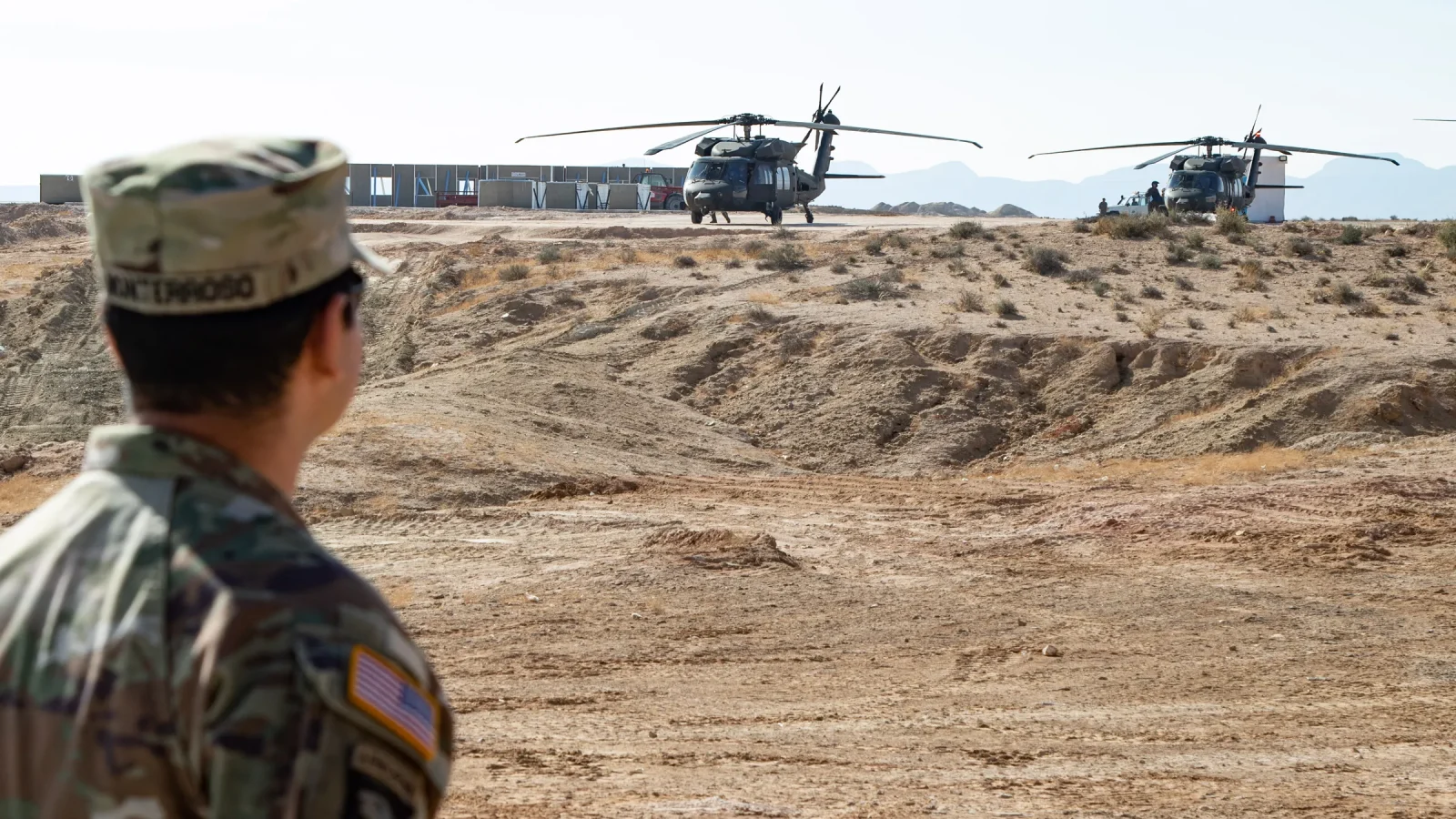
Tunisia has one of the smallest militaries in this ranking. With 89,800 active personnel and 145 tanks, it sits near the bottom on every conventional yardstick of mass. And yet 101 helicopters place it fourth in Africa for rotary-wing strength, one of the most striking disproportions on the continent.
The explanation lies in doctrine. Tunisia is not preparing for a conventional armoured campaign. Its operational focus is counter-terrorism, border security and internal stability along the mountainous frontiers with Algeria and Libya, and that mission set demands rapid air mobility rather than heavy divisions. Operations in the Chaambi mountains are the clearest demonstration of why rotary-wing capability is existential for Tunis.
The fleet is overwhelmingly American: UH-60M Black Hawks, OH-58 Kiowas and the Bell 205 and UH-1 family. US security assistance and Excess Defense Articles transfers are what allowed a country with a $2.17 billion defence budget to assemble a fleet of this size in the first place. That also defines its future. Tunisia is a sustainment market rather than a competitive procurement market, and its recapitalisation timeline is effectively set in Washington.
Tunisia works with roughly three quarters of South Africa’s defence budget and still fields a clearly larger rotary-wing fleet.
| Power Element | Value |
|---|---|
| Tanks | 145 |
| Total aircraft | 155 |
| Helicopters | 101 |
| Active personnel | 89,800 |
| Defense budget | $2.17 billion |
The final step on the podium belongs to a country that rebuilt its armed forces after a long civil war.
#3 · ANGOLA
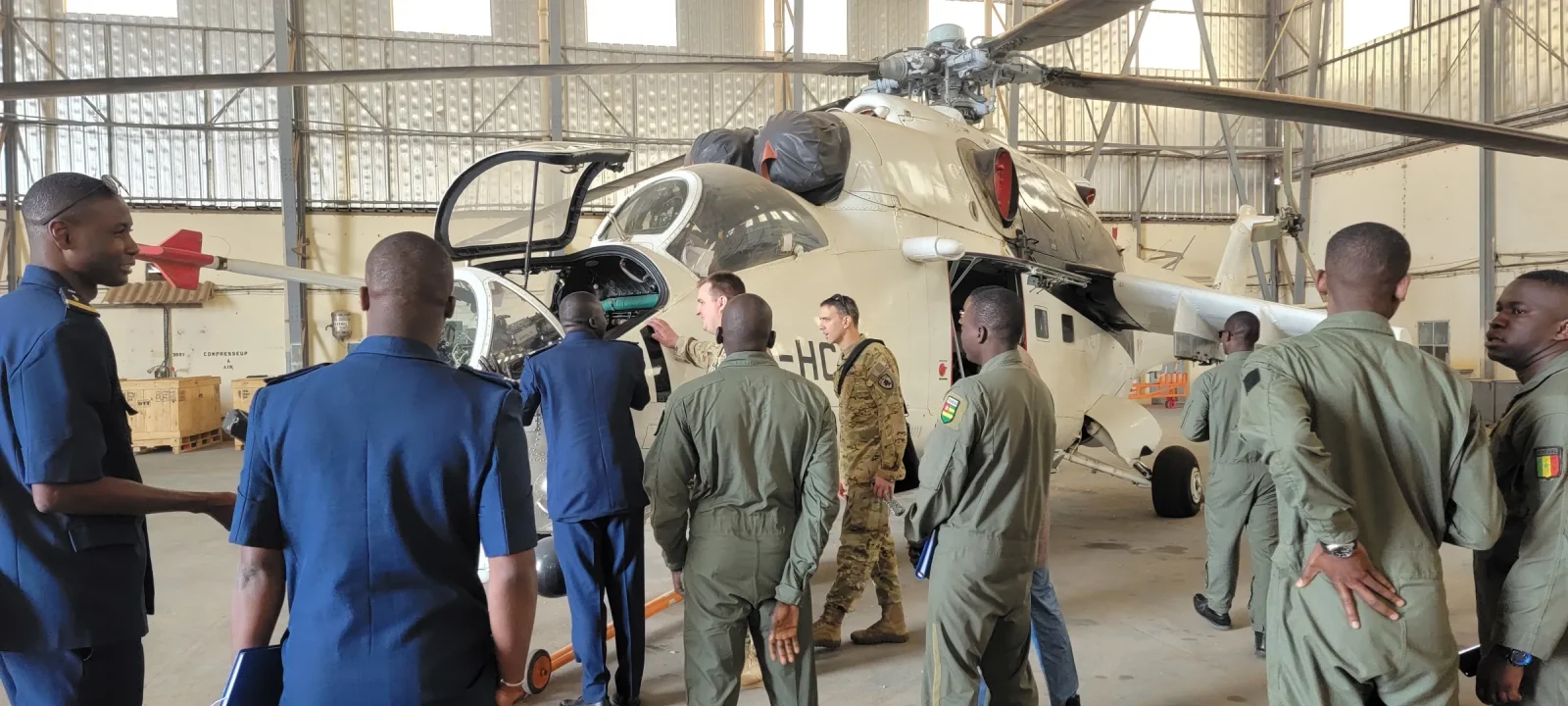
Angola rebuilt its armed forces on oil revenue after a civil war that lasted 27 years. Its 115 helicopters make up the largest rotary-wing fleet in sub-Saharan Africa and the most tangible expression of Luanda’s claim to regional weight. A defence budget of $31.2 billion, the highest figure on this list, underlines the ambition.
The inventory is Soviet and Russian at its core: Mi-8 and Mi-17 transports, Mi-24 and Mi-35 gunships and a small number of Ka-32 utility helicopters. Much of it arrived through Cuba and the Soviet Union during the civil war and was refreshed in the 2000s under modernisation contracts with Russia and Belarus. Angola has since tried to diversify through Brazilian and South African suppliers, and its legacy Russian fleet is the single largest recapitalisation opportunity in sub-Saharan Africa for any manufacturer able to offer financing and a credible sustainment package.
Strategically, Luanda is focused inward: internal stability, the security of oil infrastructure in Cabinda and uncertainty along the border with the Democratic Republic of the Congo. With 107,000 active personnel and 319 tanks, the force is scaled to that mission set. In a country this large with this little road infrastructure, the helicopter remains the only practical means of moving troops, which is why it stays at the top of Angola’s priority list.
Angola’s 115 helicopters make it the largest rotary-wing operator in sub-Saharan Africa, ahead of South Africa’s 87 and Kenya’s 84.
| Power Element | Value |
|---|---|
| Tanks | 319 |
| Total aircraft | 278 |
| Helicopters | 115 |
| Active personnel | 107,000 |
| Defense budget | $31.2 billion |
The gap between the two North African states at the top of this list is the largest jump in the entire ranking.
#2 · ALGERIA
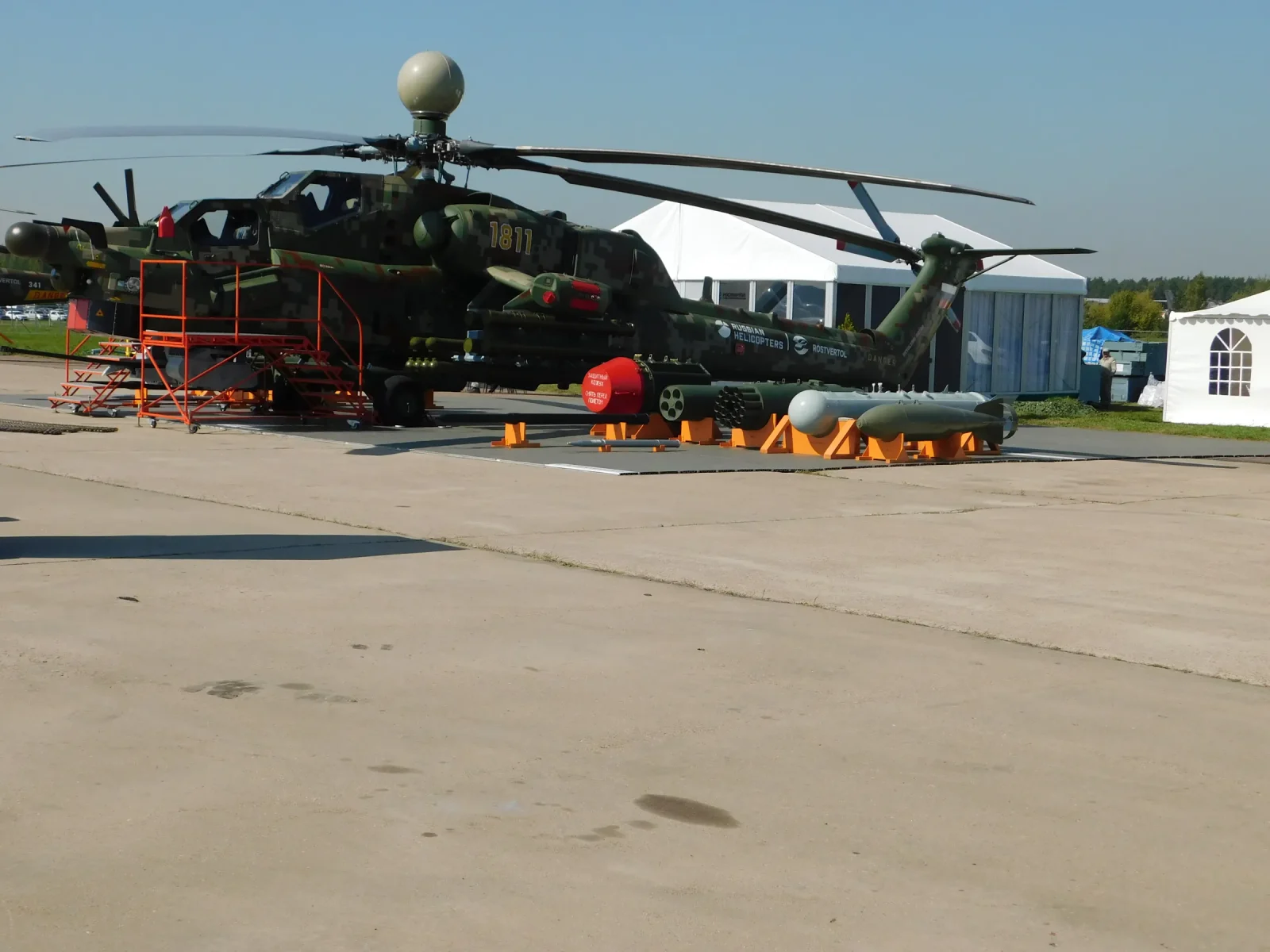
Algeria runs the most consistent rearmament programme in Africa on a $25 billion defence budget. Its 300 helicopters are exceeded only by Egypt and amount to more than the combined fleets of Angola, South Africa and Kenya, the three largest sub-Saharan operators. The fleet of the Algerian People’s National Army is the product of a decades-long procurement relationship with Moscow.
At its centre sit Mi-28NE Night Hunter attack helicopters, a platform with very few export customers anywhere. Around them are Mi-26 heavy-lift helicopters, the largest series-produced rotorcraft in the world, Mi-171Sh utility platforms, and a long-running discussion about Ka-52 acquisition. Algiers has also cracked the door to Western equipment: AW101 and Super Lynx naval helicopters are already in service, which matters because it establishes that the market is not structurally closed to European suppliers.
Doctrinally, Algeria is organised around border security across an enormous Saharan expanse, rapid response to instability spilling in from Libya and Mali, and the standing strategic competition with Morocco. With 1,485 tanks and 620 aircraft it fields the most balanced force structure in North Africa. The open question for exporters is durability: sanctions pressure on the Russian defence-industrial base and lengthening delivery timelines have made Algeria’s dependence on a single supplier a liability rather than an advantage.
Algeria alone accounts for nearly a quarter of every helicopter in this ranking and fields more than two and a half times Angola’s sub-Saharan-leading fleet.
| Power Element | Value |
|---|---|
| Tanks | 1,485 |
| Total aircraft | 620 |
| Helicopters | 300 |
| Active personnel | 130,000 |
| Defense budget | $25 billion |
And the country at the top operates one of the largest helicopter fleets not just in Africa but in the world.
#1 · EGYPT
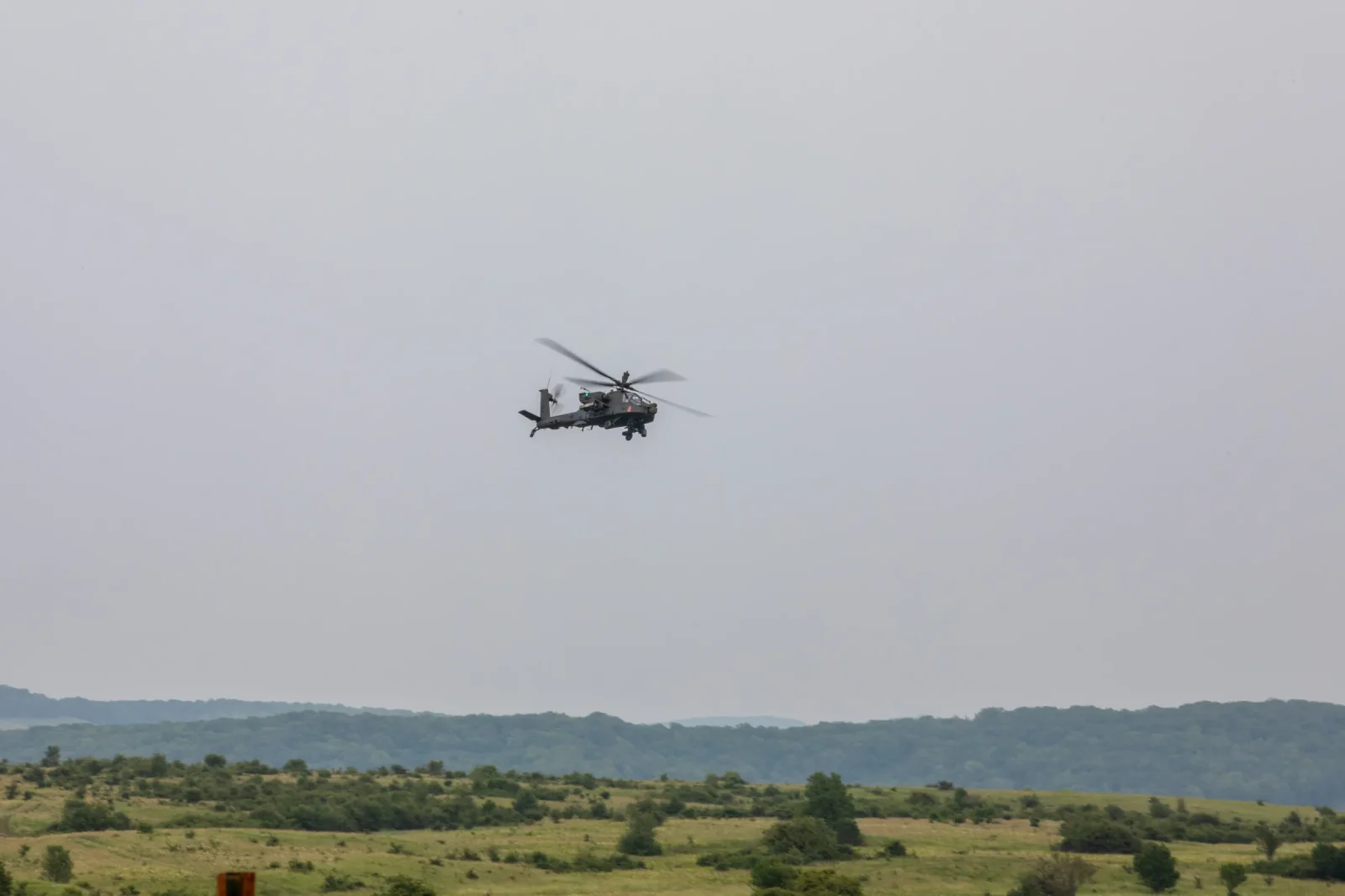
Africa’s largest helicopter fleet belongs to Egypt: 348 airframes. That figure places Cairo inside the global top eleven, which means Egyptian rotary-wing strength is significant on a world scale rather than merely a continental one. The Egyptian Armed Forces have deliberately fed the inventory from three separate sources, breaking any single supplier’s leverage.
The backbone is American: AH-64D and AH-64E Apache gunships, CH-47 Chinook heavy-lift and the UH-60 Black Hawk family. To that Cairo has added French-supplied naval helicopters operating from its Mistral-class amphibious ships, and Russian Ka-52 Alligator attack helicopters. Egypt is one of the very few operators anywhere to fly Russian Ka-52s and Western Apaches from the same inventory, and it is the most concrete military expression of Cairo’s balancing policy between Washington, Paris and Moscow.
Egyptian priorities run from counter-terrorism in Sinai to instability on the Libyan border, energy competition in the Eastern Mediterranean and the long-running dispute with Ethiopia over the Nile. Each of those demands a different class of rotorcraft, which is precisely why the fleet is as diverse as it is. With 438,500 active personnel, 3,620 tanks and 1,088 aircraft, Egypt remains the largest conventional force on the continent.
The vulnerability is money. A declared defence budget of $5.19 billion is remarkably low against an inventory of this size, and much of that inventory was acquired through US military assistance and external financing. Sustainment, munitions resupply and mid-life upgrades, not new acquisitions, will be Egypt’s real test over the coming decade, and they are also where the recurring revenue sits for the manufacturers already embedded there.
Egypt alone operates more helicopters than the five countries ranked sixth to tenth on this list put together.
| Power Element | Value |
|---|---|
| Tanks | 3,620 |
| Total aircraft | 1,088 |
| Helicopters | 348 |
| Active personnel | 438,500 |
| Defense budget | $5.19 billion |
So what does this picture mean for NATO and Western exporters, and for the manufacturers competing for these fleets? The assessment follows.
Why Is Egypt on Top?
- Multi-source procurement: Simultaneous supply from the United States (Apache, Chinook, Black Hawk), Russia (Ka-52) and France means no single embargo can ground the fleet.
- Mission diversity: Counter-terrorism in Sinai, deterrence on the Libyan border, maritime tasking in the Eastern Mediterranean and strategic pressure along the Nile each require a different class of platform.
- Amphibious reach: The Mistral-class landing helicopter docks give Egypt a sea-based rotary-wing platform that no other African state can match.
- Economies of scale: A ground force of 438,500 active personnel and 3,620 tanks makes a large rotary-wing fleet operationally coherent rather than merely impressive.
- External financing: Annual US military assistance allows Cairo to field high-cost platforms despite a comparatively small declared budget.
Why NATO and Western exporters should be reading this table closely
Roughly half of the airframes in this ranking are Soviet or Russian in origin, and most of them are approaching the end of any realistic service life. Sanctions on the Russian defence-industrial base, lengthening delivery schedules and constrained spares flows have turned what used to be the cheapest option in Africa into the least predictable one. That is the single biggest opening for Western manufacturers on the continent in thirty years, and it is concentrated in Algeria, Angola, Sudan and Ethiopia.
The US position is already strong but narrowly based. Egypt, Morocco and Tunisia between them account for 522 of the 1,274 helicopters in this ranking, and all three are structurally tied to American supply through Foreign Military Sales, security assistance and Excess Defense Articles transfers. That is durable business, though it is sustainment revenue more than new-build revenue, and it is exposed to the political conditionality that periodically attaches to US transfers.
European suppliers occupy the middle ground. Airbus Helicopters and Leonardo already have footholds through the AW109 in Nigeria, the AW101 and Super Lynx in Algeria and the Gazelle and Fennec families across North and East Africa, and European offers are competitive where a customer wants Western certification standards without a US end-use agreement. The obstacles are unit cost and export-licence timelines, both of which African procurement officials cite consistently.
Turkish industry has become the third force in this competition. Nigeria, Morocco, Kenya, Ethiopia and Tunisia have all taken Turkish-built unmanned aircraft into service over the past five years, which has already shifted reconnaissance and precision-strike tasks away from expensive attack helicopters and onto far cheaper platforms. Rotorcraft are the next step: TUSAS is advancing certification of the T625 GOKBEY utility helicopter with the indigenous TS1400 turboshaft, the T129 ATAK is an attack platform already sold abroad, and the T929 ATAK-2 sits in the heavy class. These have been tested in exactly the hot-and-high conditions that constrain African operators most.
For an African procurement decision-maker the trade-off is straightforward. Western platforms bring proven capability, certification credibility and deep support networks at high unit cost, long lead times and complex export-licence processes. Newer suppliers offer flexible configuration, faster delivery, bundled training and maintenance, openness to technology transfer and lower life-cycle cost. Which way that calculation falls over the next decade will decide what Africa’s rotary-wing map looks like in 2036.
Closing Assessment: What Africa’s Rotary-Wing Map Reveals
Africa’s helicopter table describes the continent’s military geography far more precisely than any composite power ranking. Egypt and Algeria alone account for 648 airframes, slightly more than half of the 1,274 helicopters in this entire ranking and more than the other eight countries combined. That concentration is not accidental. Both fund decades-long, stable procurement programmes from hydrocarbon revenue, and both face a specific regional rival: Ethiopia and Libya in Egypt’s case, Morocco in Algeria’s.
The North African advantage is not closing. Four of the top seven places, Egypt, Algeria, Tunisia and Morocco, are North African. Direct Mediterranean access to European and Russian supply lines, higher per-capita income and established security partnerships with Western capitals have produced a decisive rotary-wing lead. In sub-Saharan Africa only Angola, South Africa, Kenya and Nigeria reach three-figure fleets or come close.
Budget and inventory do not correlate. Angola outspends everyone here at $31.2 billion yet ranks third, while Egypt tops the table on a declared $5.19 billion. The reconciling factor is external military assistance and debt-financed acquisition. Tunisia’s $2.17 billion likewise beats South Africa, because much of the Tunisian fleet arrived through US Excess Defense Articles programmes. In Africa, fleet size is set by strategic partnerships far more than by economic strength, which is precisely why supplier relationships are the variable exporters should be tracking.
Unmanned systems are rewriting the equation. Nigeria, Morocco, Ethiopia, Kenya, Tunisia and many others acquired armed unmanned aircraft within the last five years. The cost per flight hour of an attack helicopter is a large multiple of a medium armed UAV, and for budget-constrained forces that difference is decisive. As reconnaissance, surveillance and precision-strike tasks migrate to unmanned platforms, helicopter fleets concentrate on lift, evacuation and heavy fire support. Static helicopter numbers in Africa do not mean static capability.
The readiness gap is the continent’s real problem. Sudan’s 64 helicopters are being ground down in a civil war, South Africa’s Rooivalk fleet flies at limited availability because of budget constraints, and Ethiopia’s Soviet-legacy airframes are short of spares. The countries that will matter in a decade are not those with the largest inventories but those that can build a sustainment, training and modernisation chain, which is also the part of the offer that separates serious exporters from opportunistic ones.
What changes over the next ten years? Egypt’s lead looks safe in the short term, though how sustainable Algeria’s Russian-sourced supply proves under the current sanctions environment is genuinely uncertain and represents the largest single opening on the continent. Morocco could reach the top five if its Apache and unmanned programmes continue. Nigeria and Kenya, both running high operational tempo on modest budgets, will keep expanding. And the arrival of new suppliers alongside the established American and European incumbents gives African buyers a far wider set of options than they had a decade ago. Africa’s rotary-wing map is no longer drawn by any one capital.
Comparison Table: Africa’s 10 Largest Helicopter Fleets (2026)
| # | Country | Helicopters | Tanks | Total aircraft | Active personnel | Defense budget |
|---|---|---|---|---|---|---|
| 1 | Egypt | 348 | 3,620 | 1,088 | 438,500 | $5.19 billion |
| 2 | Algeria | 300 | 1,485 | 620 | 130,000 | $25 billion |
| 3 | Angola | 115 | 319 | 278 | 107,000 | $31.2 billion |
| 4 | Tunisia | 101 | 145 | 155 | 89,800 | $2.17 billion |
| 5 | South Africa | 87 | 248 | 181 | 68,731 | $2.88 billion |
| 6 | Kenya | 84 | 188 | 154 | 50,000 | $1.65 billion |
| 7 | Morocco | 73 | 1,346 | 271 | 400,000 | $16.1 billion |
| 8 | Nigeria | 69 | 330 | 159 | 230,000 | $3.9 billion |
| 9 | Sudan | 64 | 1,055 | 183 | 300,000 | $394.7 million |
| 10 | Ethiopia | 33 | 338 | 104 | 503,000 | $3.72 billion |
Data: Global Firepower 2026 inventory rankings. Not every platform on an inventory list is necessarily flight-ready at the same time.
A new ranking gallery tomorrow
Coming up next: the Middle East’s largest defense budgets, Europe’s most powerful navies and Africa’s strongest naval forces.
Frequently Asked Questions
Which country has the largest helicopter fleet in Africa?
According to Global Firepower 2026 data, the largest helicopter fleet in Africa belongs to Egypt with 348 platforms. Egypt is followed by Algeria with 300 helicopters and Angola with 115.
How many helicopters does Turkiye have?
Turkiye’s total helicopter inventory stands at 509 platforms, which corresponds to seventh place in the world rankings. That figure is larger than the fleet of any single African country and approaches the combined total of Egypt and Algeria, the continent’s top two.
Which country has the largest rotary-wing fleet in sub-Saharan Africa?
The largest helicopter fleet in sub-Saharan Africa belongs to Angola with 115 platforms. Angola is followed by South Africa with 87 helicopters and Kenya with 84.
Does any African country produce its own attack helicopter?
Yes. South Africa is the only African country to have developed and serially produced its own attack helicopter, the Denel Rooivalk. Budget constraints, however, keep the fleet’s readiness rate limited.
Why do some countries have few helicopters despite large budgets?
In Africa the relationship between inventory size and defense budget is not linear. Countries such as Egypt and Tunisia acquired a significant share of their inventories through foreign military assistance and excess defense articles programmes, while countries such as Angola direct much of their large budgets to personnel and sustainment costs.
Are armed drones replacing helicopters?
Not entirely, but they are changing the division of labour. As reconnaissance, surveillance and precision-strike tasks pass to armed unmanned aircraft, helicopter fleets concentrate on troop movement, evacuation and heavy fire support. This delivers a significant cost advantage for budget-constrained African armed forces.
Sources and Related Content
- Global Firepower 2026 — total helicopter, tank, aircraft, personnel and defense budget rankings: https://www.globalfirepower.com/
- SIPRI Military Expenditure Database
- IISS The Military Balance
- Official statements from the defense ministries and air forces of the countries covered