Denmark Orders Rheinmetall MASS Countermeasure System for Its Frigates

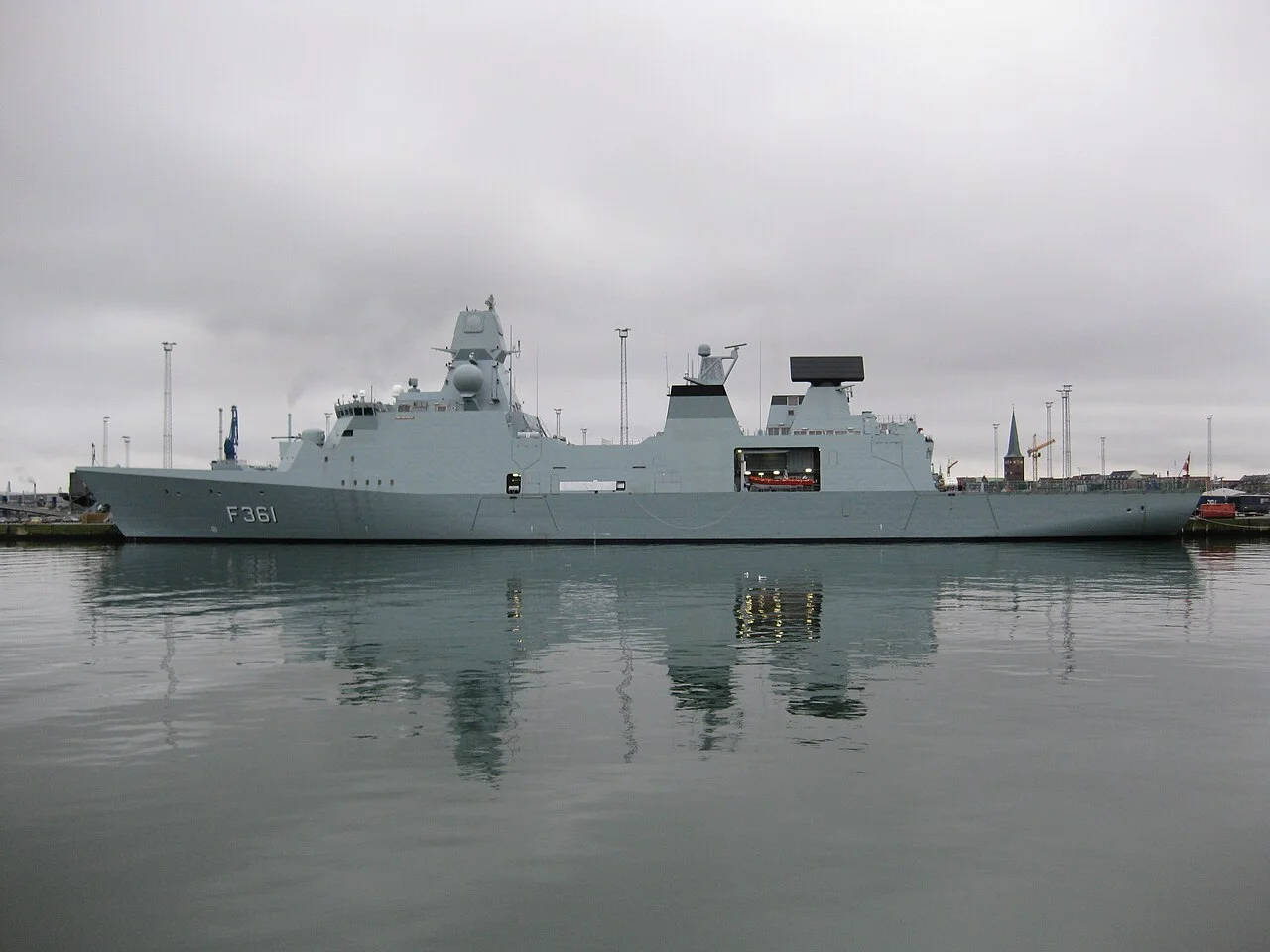
Denmark’s defense procurement agency has awarded Rheinmetall a contract worth roughly 745 million Danish kroner (about $116 million) to supply MASS (Multi Ammunition Softkill System) countermeasure systems for five frigates. Announced on August 12, 2026, the deal sits within a framework agreement that could grow to as much as 1.275 billion kroner (about $198 million).
At a Glance
- The contract covers five MASS decoy-launching systems for five ships: two Absalon-class anti-submarine warfare frigates and three Iver Huitfeldt-class air-defense frigates.
- The base contract runs seven years and can be extended, with options, to up to 20 years; the full framework value can reach 1.275 billion kroner (about $198 million).
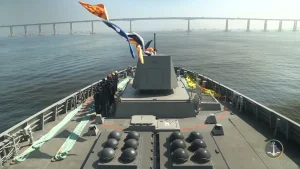
- MASS is a softkill countermeasure system that autonomously assesses wind conditions, ship navigation data, and incoming threat characteristics to deploy multispectral Omni Trap decoys against guided anti-ship missiles.
- Each launcher can carry up to 32 decoys, with configurations supporting up to six launchers per vessel depending on the ship class.
- Integration work will take place at Korsør and Frederikshavn in Denmark; the agreement also covers ammunition supply and maintenance services.
Background
MASS is one of the most widely deployed ship self-protection systems in NATO navies, already fielded well beyond Denmark. The system fires multispectral decoy rounds to divert radar-, infrared-, and electro-optically guided threats away from the ship they are targeting. Denmark’s Absalon and Iver Huitfeldt-class vessels form the backbone of the country’s NATO-assigned surface fleet and are routinely deployed on deterrence patrols in the Baltic and North Sea. Seen alongside Rheinmetall’s earlier MASS sale to Kuwait’s navy for its Al Dorra-class vessels, this contract reinforces the company’s position in the naval softkill countermeasure market.
What It Means for Türkiye
Türkiye is not a party to this contract, but it offers two useful reference points for the Turkish defense sector. First is the competitive landscape between ASELSAN’s own ship-borne decoy and electronic warfare systems (such as its AKS family) and widely fielded NATO systems like MASS — Denmark’s choice adds another reference sale to the track record MASS can point to when competing against ASELSAN’s offerings in third-country tenders. Second, given Rheinmetall’s deep partnership in Türkiye — the company contributes to Altay tank production and Leopard 2A4 modernization through its joint venture with BMC — a growing contract volume in Europe could indirectly shape how the company allocates resources and priorities across its programs. Finally, MASS’s presence in markets like Kuwait, where Turkish shipbuilders also compete for export business, underscores the need for Turkish ship self-protection systems to differentiate themselves in the same export markets.
FAQ
How much is the contract worth?
The initial award is worth about 745 million Danish kroner ($116 million); the full framework agreement, with options, can reach 1.275 billion kroner ($198 million).
Which ships will get MASS?
Five Royal Danish Navy vessels: two Absalon-class and three Iver Huitfeldt-class frigates.
What does MASS do?
It’s an autonomous softkill countermeasure system that fires multispectral decoys to divert guided anti-ship missiles and other sensor-guided threats away from the ship.
When will deliveries be complete?
No specific delivery timeline has been made public.