Israel vs Turkey: Which Military Is Stronger? (2026 Armed Forces Comparison)

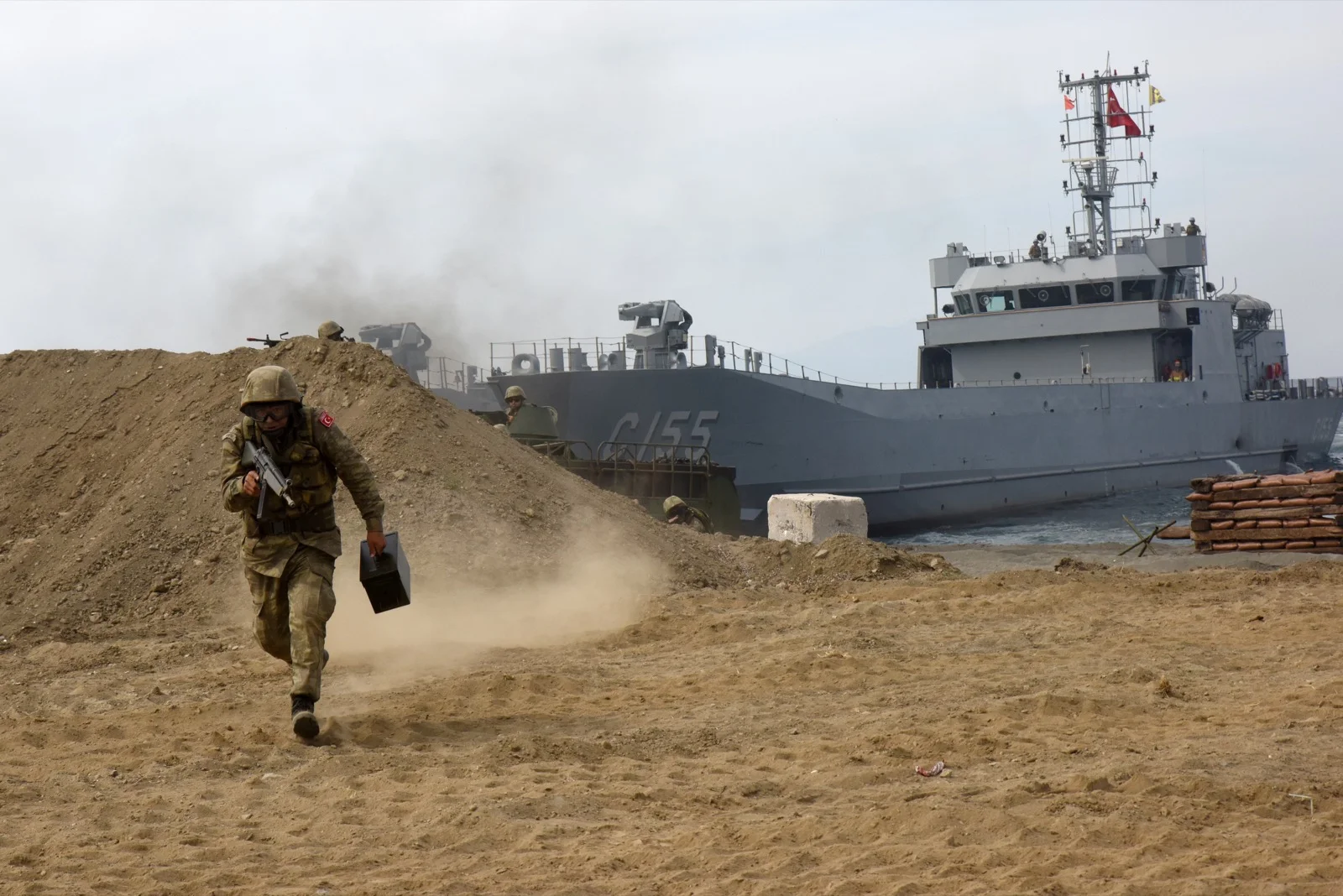
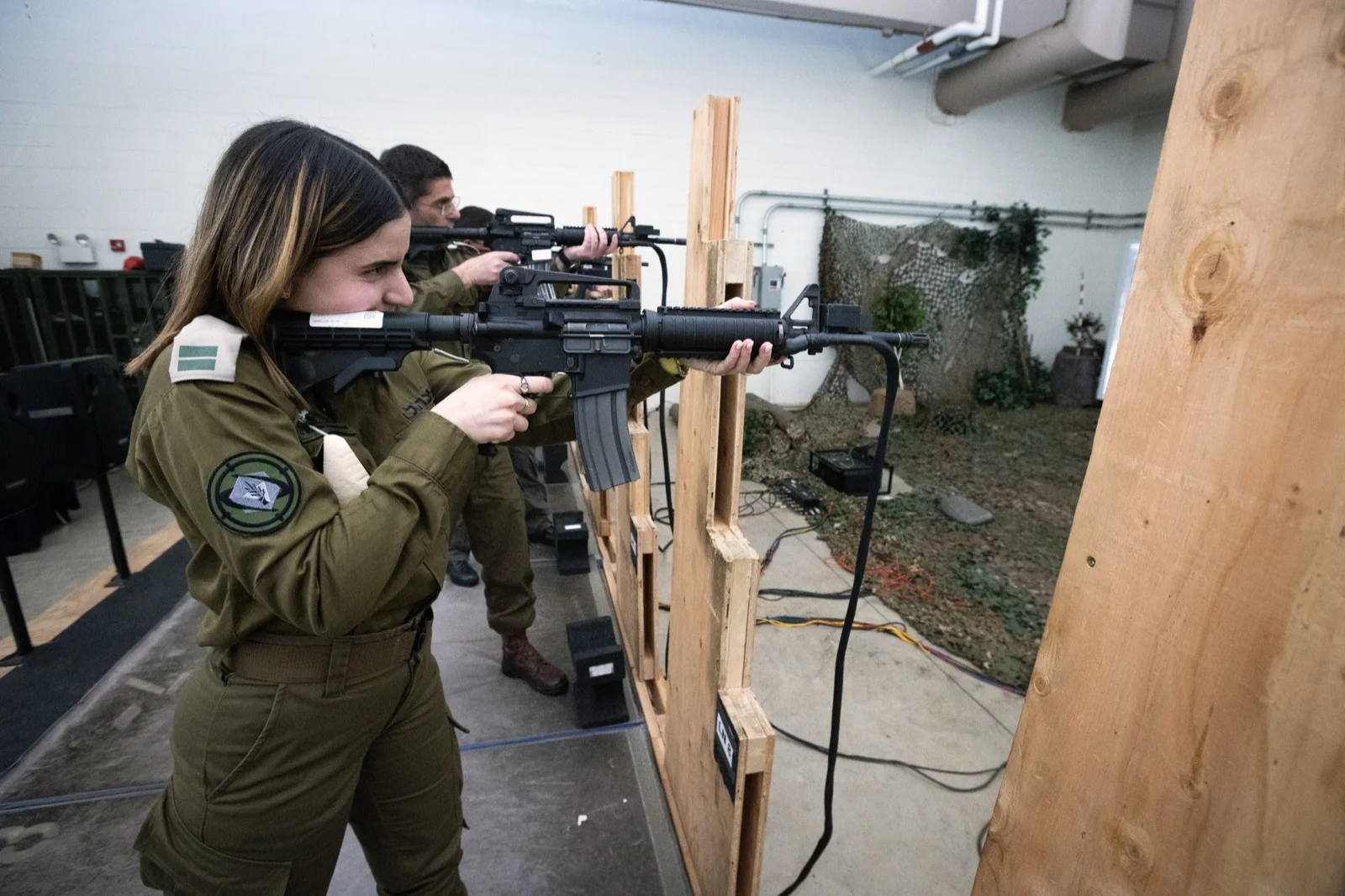
Two Military Powers, Two Different Doctrines
Two of the Middle East’s most-discussed armed forces stand face to face. One is Turkey — a nation of 85 million, NATO’s second-largest land army, and home to a domestic defense industry that has stunned the world in recent years. The other is Israel — small in population yet formidable in air power, missile defense, and an undeclared nuclear capability. So when the two militaries are compared item by item, which way does the scale tip?
According to GlobalFirepower 2026 data, Turkey ranks 9th in the world, while Israel sits at 15th. But that raw ranking tells only part of the story. The two countries are built on entirely different defense philosophies: Turkey bets on scale, inventory depth, and independent production; Israel bets on technological superiority, speed, and deterrence.
Below we examine the two forces across eight core categories. At the end, we answer the real question: as of 2026, which military is genuinely stronger?
CATEGORY 1 Overall Power & PwrIndx
In the GlobalFirepower index, a lower score means a stronger military. Turkey’s 0.1697 PwrIndx places it 9th worldwide; Israel’s 0.2596 puts it 15th. In raw index terms, that is a clear Turkish advantage. The index blends personnel, air-land-sea inventory, logistics, geography, and natural resources into a composite score.
Turkey’s edge stems largely from scale and inventory depth: a navy operating in two seas, a border stretching close to three thousand kilometers, and a large land army all lift the index. Israel, despite its small footprint and limited strategic depth, offsets this with quality and readiness. Crucially, the index does not factor in nuclear warheads — meaning Israel’s real deterrence exceeds what appears on paper.
| Indicator | Turkey | Israel |
|---|---|---|
| PwrIndx | 0.1697 | 0.2596 |
| World Rank | #9 | #15 |
Turkey leads on the overall index. But the real difference emerges once we drill into the inventory, item by item.
CATEGORY 2 Land Power & Tanks
Turkey’s 2,238 tanks and more than 65,000 armored vehicles put it clearly ahead here. Modernized Leopard 2A4s, M60T Sabras, and the entry into serial production of the indigenous ALTAY main battle tank strengthen its land force in both number and quality. Israel fields roughly 1,370 Merkava Mk4s — a smaller but exceptionally homogeneous, battle-tested armored force.
The Merkava series, with a design that prioritizes crew survivability and the Trophy active protection system, is considered one of the best-protected tanks in the world. Israel also fields the Namer armored fighting vehicle, derived from the Merkava hull, offering high survivability. Even so, when it comes to numerical depth and the capacity for large-scale, two-front operations, Turkey’s land army retains its scale advantage. Turkish armored units have also accumulated extensive combat experience in Syria and cross-border operations.
| Metric | Turkey | Israel |
|---|---|---|
| Tanks | 2,238 | ~1,370 |
| Armored Vehicles | 65,000+ | Namer + broad fleet |
Turkey leads decisively on land. But is it the same story in the skies?
CATEGORY 3 Air Power & Fighter Jets
This is the most contested category. Turkey fields 1,083 total aircraft and 205 fighter jets, a far larger air fleet built around modernized F-16s. But Israel’s ~340 fighters stand out on quality: roughly 50 F-35I “Adir”, plus F-15I and F-16I Sufa squadrons, form the region’s most advanced air arm. The F-35Is, moreover, are domestically modified with Israel’s own electronic warfare and weapons integration.
In fairness, the qualitative edge in air superiority currently belongs to Israel. Yet the equation is shifting fast: Turkey’s fifth-generation national fighter KAAN has completed its first flights, the unmanned combat aircraft KIZILELMA and the jet trainer/light-attack HÜRJET are advancing toward serial production. Add one of the world’s most heavily employed UAV fleets — TB2, Akıncı, and Aksungur — and Turkey’s air dimension is balanced by both quantity and future potential.
| Metric | Turkey | Israel |
|---|---|---|
| Total Aircraft | 1,083 | ~600 |
| Fighter Jets | 205 | ~340 (incl. F-35I) |
Turkey leads on quantity, Israel on quality. So how does the picture look for attack helicopters?
CATEGORY 4 Helicopters & Attack Aviation
Turkey’s 512 helicopters and 92 attack helicopters keep it numerically ahead here too. At the core of the Turkish inventory sits the indigenous T129 ATAK and the heavier-class ATAK-2 under development — a rare capability that breaks import dependency in attack rotorcraft. Israel operates a smaller but highly effective force of about 48 AH-64 Apaches.
The Apache fleet, with precision-guided munitions and advanced targeting systems, is proven in intense combat. But Turkey’s advantage in both numbers and domestic production makes a critical difference for sustainment and spare-parts independence in a prolonged conflict. ATAK’s export success further underscores Turkey’s maturity in this field.
| Metric | Turkey | Israel |
|---|---|---|
| Total Helicopters | 512 | ~130 |
| Attack Helicopters | 92 (ATAK) | ~48 (Apache) |
Turkey leads in rotary wing. And once we go to sea, the gap widens further.
CATEGORY 5 Naval Power
In the navy, the comparison is almost one-sided. Turkey fields a 156-ship fleet — 16 frigates, 10 corvettes, and blue-water capabilities — while Israel’s ~67-vessel navy is built around coastal defense and strategic submarine deterrence. Turkey’s showpiece is TCG Anadolu: as a landing helicopter dock (LHD) capable of operating UAVs, it grants the Turkish Navy a power-projection capability few in the world possess.
Israel’s navy is small but modern; its Sa’ar 6-class corvettes are focused on protecting maritime platforms and gas fields, heavily armed with missiles and missile-defense systems. By contrast, Turkey’s indigenous MİLGEM and İstif-class frigates offer both inventory breadth and shipyard independence, enabling simultaneous operations in two seas. In power projection and naval scale, the advantage lies clearly with Turkey.
| Metric | Turkey | Israel |
|---|---|---|
| Total Ships | 156 | ~67 |
| Frigates | 16 | 0 |
| Corvettes | 10 | Sa’ar 6 |
| Amphib/UAV Ship | TCG Anadolu (LHD) | None |
Turkey dominates on the surface. But beneath the waves, Israel holds a hidden card.
CATEGORY 6 Submarine Power
In numbers, Turkey leads: 12 submarines, more than double Israel’s 5-6 Dolphin-class boats. Turkey is also adding the new-generation Reis (Type 214TN) class, developed with Germany and equipped with air-independent propulsion (AIP) — a significant leap in stealth and submerged endurance.
Yet here, quantity is deceptive. Israel’s Dolphin-class submarines also carry AIP and — though never officially confirmed — are widely assessed as capable of launching nuclear-armed cruise missiles, giving Israel a second-strike (sea-based nuclear deterrence) capability. That is a strategic equation beyond mere numbers. Bottom line: Turkey leads on count, but in strategic deterrence Israel’s submarines play a unique role.
| Metric | Turkey | Israel |
|---|---|---|
| Submarines | 12 | 5-6 (Dolphin, AIP) |
| Strategic Role | Conventional | Alleged nuclear second-strike |
Turkey leads in numbers, Israel in strategic depth. So which side wins on manpower and money?
CATEGORY 7 Personnel & Defense Budget
In personnel, Turkey holds a scale advantage: 355,200 active and 378,700 reserve troops sustain NATO’s second-largest land army. A population of 85 million means a deep manpower pool for mobilization and sustainment in a prolonged conflict. Israel, with 169,500 active personnel, partly offsets this through its ability to mobilize 465,000 reservists at extraordinary speed — Israel’s mobilization system is regarded as one of the fastest in the world.
Budgets are closer. Turkey’s roughly $40 billion annual defense spending exceeds Israel’s $27-30 billion. However, Israel receives around $3.8 billion in U.S. military aid per year and its per-capita defense spending is far higher, enabling heavy investment in high-end systems. In short, Turkey leads on total budget and manpower, while Israel balances the ledger through intensity and external support.
| Metric | Turkey | Israel |
|---|---|---|
| Active Personnel | 355,200 | 169,500 |
| Reserve Personnel | 378,700 | 465,000 (rapid mobilization) |
| Defense Budget | ~$40B | ~$27-30B (+U.S. aid) |
Turkey leads on manpower and total budget. Now comes the category that truly balances the scale: the defense industry.
CATEGORY 8 Domestic Defense Industry
This is the category both nations take the most pride in — and perhaps the most decisive. Relative to its population, Israel boasts one of the world’s most advanced defense ecosystems: the layered missile defense of Iron Dome, David’s Sling, and Arrow 2/3 is a global benchmark; the Merkava tank, Heron and Eitan UAVs, domestic F-35I modification, and export giants like Elbit, IAI, and Rafael complete the picture. Israel also holds a unique deterrent through its undeclared nuclear capability (estimated at ~90 warheads).
Turkey, over the past two decades, has leapt from import dependency to near full-spectrum producer status. KAAN (fifth-generation fighter), KIZILELMA (unmanned combat aircraft), HÜRJET, the TB2/Akıncı/Aksungur UAV family, the ALTAY tank, MİLGEM/İstif ships, the SİPER/HİSAR air-defense systems, and ROKETSAN’s missile range — including the TAYFUN ballistic missile — form a broad and deep production base. ASELSAN’s electronic-warfare and sensor capability rounds out the picture. While Israel leads on quality and nuclear capacity, Turkey stands in a very strong position on production breadth and full-spectrum independence.
With KAAN, KIZILELMA, and HÜRJET in the air; ALTAY on land; MİLGEM and TCG Anadolu at sea; and SİPER, HİSAR, and TAYFUN providing layered air defense and ballistic deterrence — Turkey’s full-spectrum domestic industry is scaled to lift its inventory in quality as much as in quantity over the coming decade. It is a non-nuclear but deep, independent, and export-oriented deterrence model.
| Domain | Turkey | Israel |
|---|---|---|
| Air Defense | SİPER / HİSAR | Iron Dome / David’s Sling / Arrow |
| Indigenous Fighter | KAAN (5th gen) | F-35I local modification |
| Ballistic/Strategic | TAYFUN (conventional) | Undeclared nuclear (~90) |
We’ve covered all eight categories. Now it’s time to answer the real question.
Final Verdict: Which Military Is Stronger?
After eight categories, the picture sharpens — though the answer is not one-dimensional. In conventional scale, inventory depth, and power projection, Turkey is clearly ahead. Tank count, fleet size, amphibious capability via TCG Anadolu, total aircraft and helicopter inventory, personnel pool, and total defense budget all favor Turkey. GlobalFirepower placing Turkey 9th and Israel 15th reflects this reality of scale. NATO membership, geography opening onto two seas, and regional reach add strategic depth for Turkey.
Israel, by contrast, holds strong cards on quality and technology. The quality of its air power (the F-35I fleet), the world’s most advanced layered missile defense, and — above all — the strategic deterrence backed by its undeclared nuclear capability make Israel an actor beyond its paper ranking. The second-strike capability attributed to its submarines is an equation no regional rival can ignore.
One frequently cited Israeli advantage is recent combat experience. Here, however, one must be honest and balanced: since October 2023, Israel’s operations in Gaza have drawn heavy international criticism under international and humanitarian law due to a high civilian death toll — so this “experience” cannot be read as a purely military asset, as it carries serious humanitarian and legal costs.
A direct clash between the two is not a realistic scenario; they are not geographic neighbors and their regional equations differ. But on a purely military accounting: in a prolonged, multi-front conflict requiring sustainment, Turkey’s scale, inventory depth, and independent production base would provide decisive advantage. In a short, technology-intensive scenario driven by air superiority, Israel’s qualitative edge comes to the fore. And when the nuclear dimension is factored in, Israel holds a unique strategic deterrent — Turkey has no nuclear weapons, and that should be stated plainly.
Still, the decisive factor is the trend line: Turkey’s full-spectrum domestic industry — KAAN, KIZILELMA, ALTAY, MİLGEM, SİPER, and TAYFUN — is on a trajectory to add quality to its quantitative edge over the coming decade. While Israel’s qualitative leadership is durable and sustained by external support, Turkey has a deepening momentum that is closing the gap. Today: Turkey leads on conventional scale, Israel on strategic/nuclear deterrence. Tomorrow, Turkey’s industrial drive is steadily tilting the balance in its own favor.
Comparison Table
| Category | Turkey | Israel | Leads |
|---|---|---|---|
| PwrIndx (lower=stronger) | 0.1697 (#9) | 0.2596 (#15) | 🇹🇷 Turkey |
| Tanks | 2,238 | ~1,370 | 🇹🇷 Turkey |
| Fighter Jets | 205 | ~340 (F-35I) | 🇮🇱 Israel (quality) |
| Attack Helicopters | 92 | ~48 | 🇹🇷 Turkey |
| Navy (ships) | 156 | ~67 | 🇹🇷 Turkey |
| Submarines | 12 | 5-6 (nuclear alleged) | Count 🇹🇷 / Strategy 🇮🇱 |
| Active Personnel | 355,200 | 169,500 | 🇹🇷 Turkey |
| Defense Budget | ~$40B | ~$27-30B | 🇹🇷 Turkey |
| Defense Industry / Nuclear | Full-spectrum, no nuclear | Advanced industry + nuclear (~90) | Breadth 🇹🇷 / Nuclear 🇮🇱 |
Next Military Power Analysis
Coming up: The world’s strongest militaries — full ranking.
Frequently Asked Questions
According to GlobalFirepower 2026, is Turkey or Israel stronger?
In the GlobalFirepower 2026 index, Turkey ranks 9th worldwide with a 0.1697 PwrIndx, while Israel ranks 15th with 0.2596 (a lower score means a stronger military). On the raw index, Turkey leads — but the index does not account for nuclear capability.
Does Israel have nuclear weapons and Turkey does not?
Although Israel never officially confirms it, widely cited expert assessments estimate it holds around 90 nuclear warheads and is believed to possess a second-strike capability via its Dolphin submarines. Turkey has no nuclear weapons; it builds deterrence through conventional depth and indigenous ballistic missiles like TAYFUN.
Which country leads in air power?
Turkey leads on quantity (1,083 total aircraft, 205 fighters). Israel leads on quality, fielding roughly 50 F-35I “Adir” jets — the region’s most advanced fifth-generation fleet. Turkey aims to close this gap with KAAN, KIZILELMA, and HÜRJET.
How much bigger is Turkey’s navy than Israel’s?
Turkey fields 156 ships, 16 frigates, 10 corvettes, and the TCG Anadolu amphibious assault ship — significantly above Israel’s ~67-vessel navy. Israel’s navy is small but modern, with Sa’ar 6 corvettes focused on coastal defense and submarine deterrence.
Which country has the more advanced defense industry?
Israel has a highly advanced industry relative to its size (Iron Dome, David’s Sling, Arrow, Merkava, Elbit/IAI/Rafael). Turkey has leapt to full-spectrum producer status over two decades: KAAN, KIZILELMA, HÜRJET, ALTAY, MİLGEM, SİPER/HİSAR, and ROKETSAN missiles. Israel leads on quality and nuclear capacity; Turkey stands out on production breadth and independence.
Sources
- Source: GlobalFirepower — 2026 military strength index and comparative country data.
- SIPRI — Defense expenditure and nuclear warhead estimates.
- IISS Military Balance — Inventory and personnel data.
- NATO — Alliance force structure and member contributions.
- Republic of Turkey Ministry of National Defense and Presidency of Defense Industries (SSB) — indigenous program data.
- Israel Ministry of Defense — Israeli defense programs.