Africa’s 10 Strongest Militaries in 2026: Egypt, Algeria, Nigeria Lead

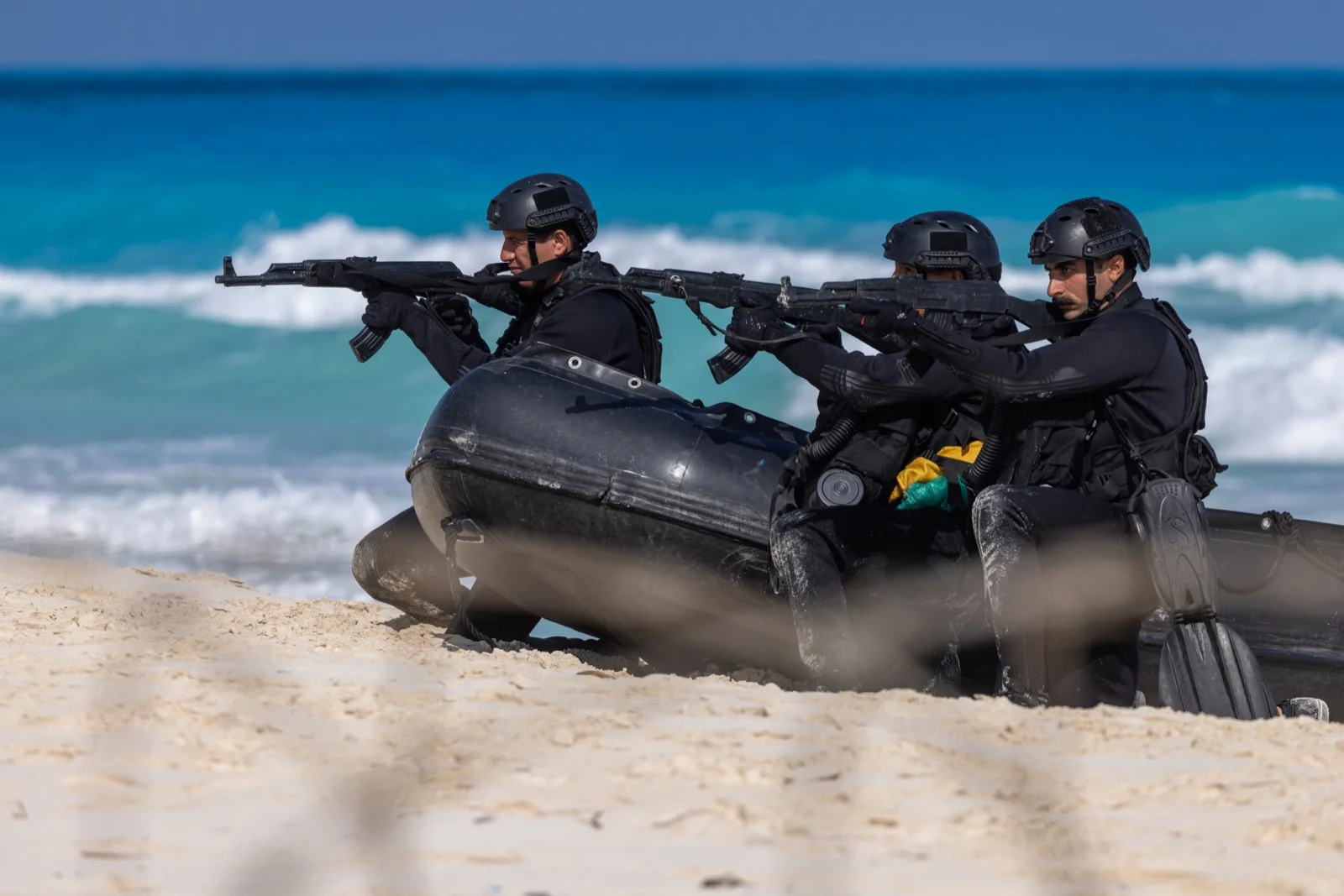
Egypt fields the world’s sixth-largest tank fleet. Algeria spends five times more on defence than the continent’s top-ranked army. Ethiopia has no navy at all and still lands in the top five. Africa’s strongest militaries, counted down from 10 to 1 with 2026 figures.
Global Firepower’s 2026 Power Index scores 145 countries across more than 60 indicators — personnel, equipment, financial resources, logistics, natural resources and geography — into a single number where lower is stronger. It is a useful, widely cited comparative snapshot, not an official military assessment: GFP is a private index, not a government or NATO/SIPRI dataset, and it weights raw quantity of equipment more heavily than readiness, training or serviceability. We use it here as the ranking backbone and supplement it with SIPRI, IISS and official budget figures where they diverge from GFP’s own numbers.
The result splits the continent cleanly into two tiers. Egypt, Algeria, Nigeria, South Africa, Ethiopia and Morocco form a top six with genuinely different force structures — from Egypt’s blue-water navy to Ethiopia’s landlocked, personnel-heavy army — while Angola, DR Congo, Sudan and Tunisia round out the top ten with smaller, more specialised forces shaped by internal conflict, resource wealth or geography rather than global power projection.
We count down from 10 to 1, with personnel, equipment and budget figures for each, plus where relevant a note on Turkish defence-industry ties — an increasingly visible thread across the continent’s procurement, from confirmed Bayraktar TB2 operators to a single naval-drone delivery. The full comparison table and FAQ are at the end.
Tunisia
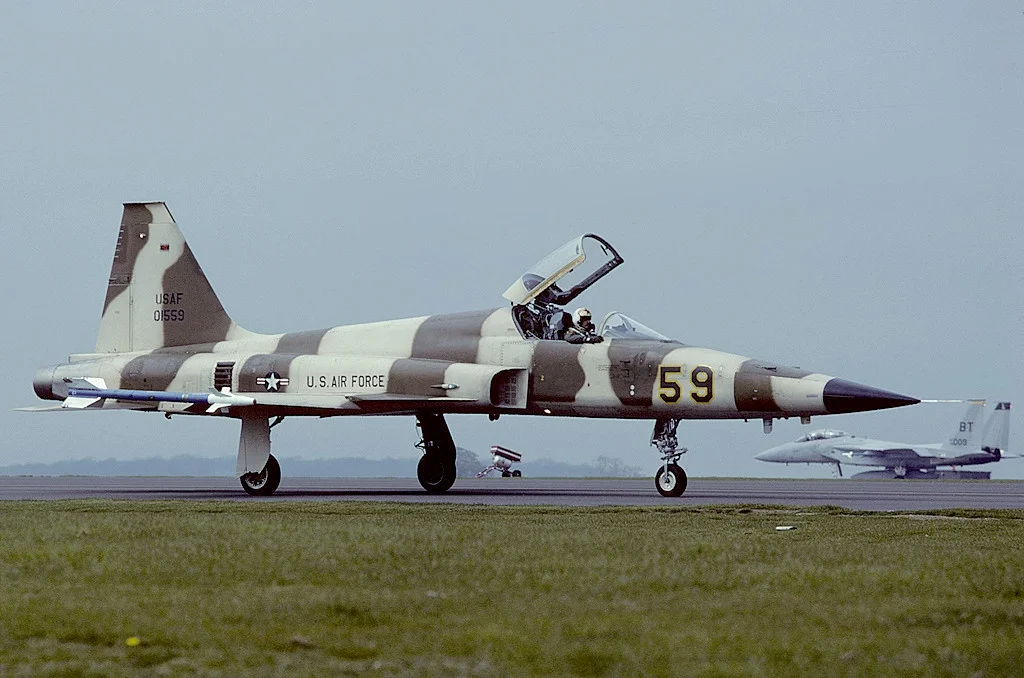
Tunisia closes out this list with the smallest force among Africa’s top ten, built around a compact, US- and French-equipped army and a fighter fleet still flying F-5E Tiger IIs delivered in the 1980s. Personnel numbers are modest by regional standards — 35,000 active troops — but the force has real operational experience from a decade of counter-terrorism operations along the Algerian and Libyan borders in the Chaambi mountains and Kasserine region.
Modernisation has been slow and budget-constrained: Tunisia’s $1.3 billion defence budget is small relative to Algeria’s next door, and most procurement in the last decade has focused on counter-terrorism enablers (surveillance drones, light armour, border sensors funded partly through US and European security assistance) rather than heavy conventional platforms. Tunisia has no submarines, no frigates and no confirmed Turkish defence contracts; its military relationship with Ankara remains limited to political and trade channels rather than arms transfers.
| Power Element | Figure |
|---|---|
| Active personnel | 35,000 active |
| Aircraft | 169 total (13 combat) |
| Tanks | ≈90 |
| Naval forces | Small coastal patrol force; no submarines or frigates |
| Defence budget | $1.3 billion |
Next up →
Sudan
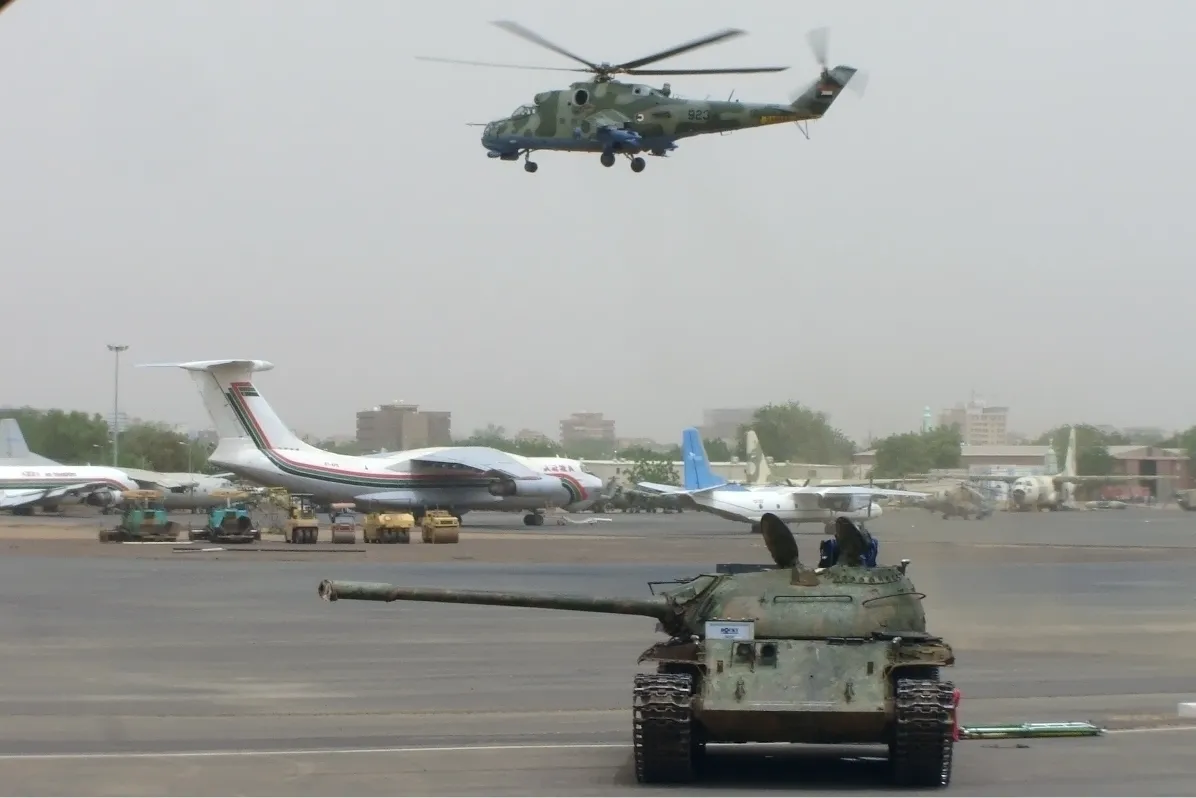
Sudan’s position is the most difficult to read on this list. The figures above describe the Sudanese Armed Forces’ nominal, pre-war inventory — 104,300 active personnel, roughly 224 tanks, 184 aircraft including 91 combat types. Since April 2023, however, the SAF has been fighting the paramilitary Rapid Support Forces (RSF) in a civil war that has fractured the country, destroyed equipment on both sides and pushed the officially declared $375 million defence budget far below what is actually being spent on the conflict.
Open-source reporting and satellite/wreckage imagery have documented Bayraktar TB2 drones in SAF service since 2023 — widely covered by independent OSINT trackers and international media as part of the air campaign against RSF positions — though Khartoum has not issued an official procurement announcement, so this is best described as documented operational use rather than a confirmed government-to-government contract. Sudan’s Global Firepower ranking reflects its formal, pre-war order of battle; the real balance of power on the ground today is being decided by a war GFP’s index was never built to capture.
| Power Element | Figure |
|---|---|
| Active personnel | 104,300 active (pre-war establishment) |
| Aircraft | 184 total (91 combat) |
| Tanks | ≈224 |
| Naval forces | Minimal riverine/coastal patrol force |
| Defence budget | $375 million (official, wartime distorted) |
Next up →
Democratic Republic of the Congo
The Democratic Republic of the Congo fields Africa’s eighth-strongest military by Global Firepower’s count, and the gap between headcount and hardware is the story here: 134,250 active personnel are backed by only 105 tanks and 57 aircraft, of which just six are combat types. FARDC has spent much of the last three decades engaged in low-intensity conflict against dozens of armed groups in the east, most recently the M23 offensive in North and South Kivu, which has strained an army built for territorial presence rather than conventional high-intensity warfare.
Congo has no confirmed Turkish defence contracts. Its $852 million defence budget is small relative to the scale of its internal security challenges, and most of its recent procurement — reported acquisitions of Chinese and Ukrainian light armour and Romanian ammunition — has gone toward sustaining counter-insurgency operations rather than building a conventional deterrent force.
| Power Element | Figure |
|---|---|
| Active personnel | 134,250 active |
| Aircraft | 57 total (6 combat) |
| Tanks | ≈105 |
| Naval forces | Small lake/riverine flotilla on Lake Tanganyika; no blue-water navy |
| Defence budget | $852 million |
Next up →
Angola
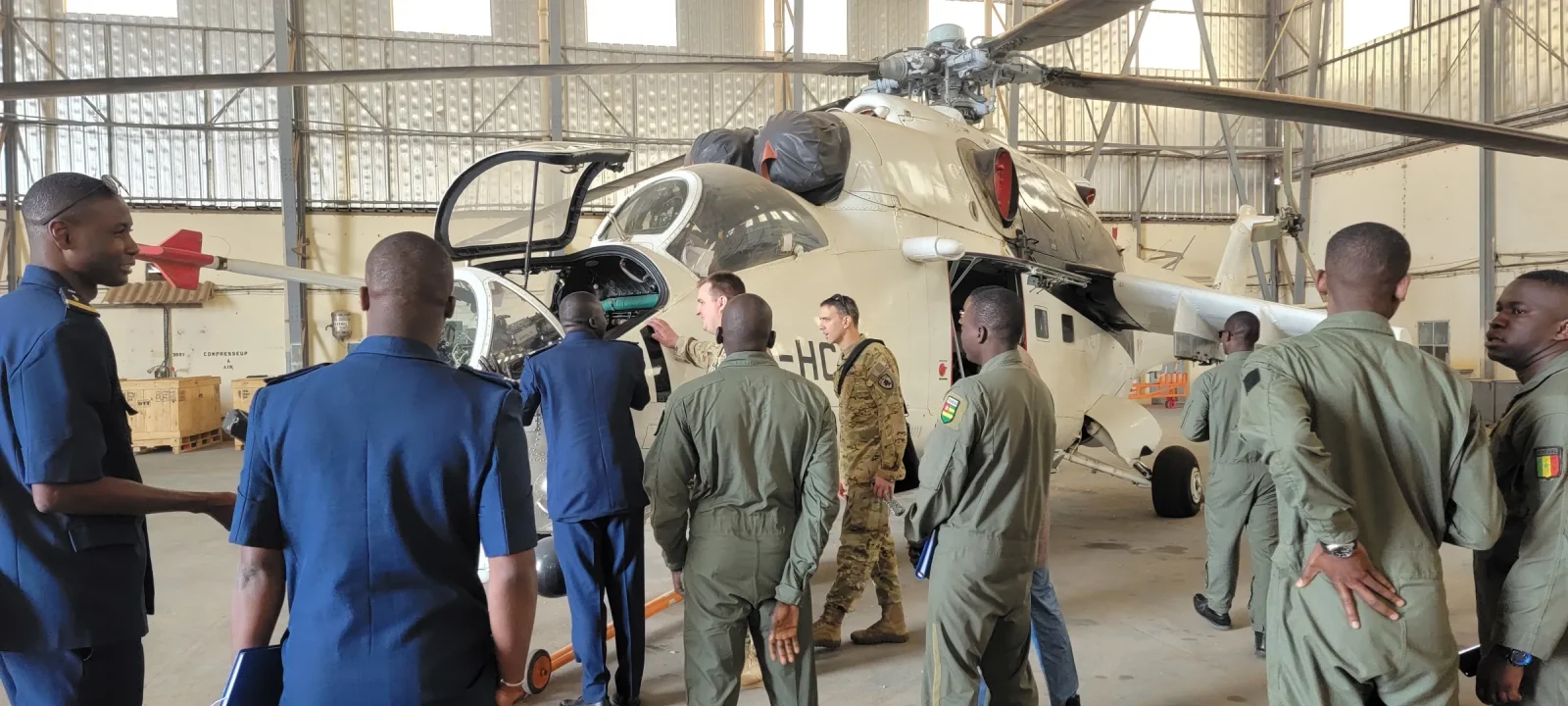
Angola ranks seventh in Africa on the strength of a large, Soviet-legacy inventory — 280 aircraft including 81 combat jets, and an armoured fleet still centred on T-72 and T-55 tanks acquired during and after the country’s long civil war. The Forças Armadas Angolanas remain heavily dependent on foreign advisors and imported platforms, with limited domestic production capacity.
The one confirmed Turkish connection is recent and specific: in September 2026 Angola’s navy took delivery of six ANAVIA HT-100 unmanned naval helicopters, integrated across its BR71 Mk II corvettes — a small but concrete data point in Turkey’s growing unmanned-systems export footprint on the continent, distinct from the Bayraktar TB2 fixed-wing drones associated with several other African operators on this list.
| Power Element | Figure |
|---|---|
| Active personnel | 107,000 active (Army ≈90,000) + 50,000 reserve |
| Aircraft | 280 total (81 combat) |
| Tanks | Legacy Soviet fleet: T-72 and T-55 main battle tanks |
| Naval forces | Small coastal force; ANAVIA HT-100 unmanned naval helicopters delivered 2026 |
| Defence budget | $1.0–1.5 billion |
Next up →
Morocco
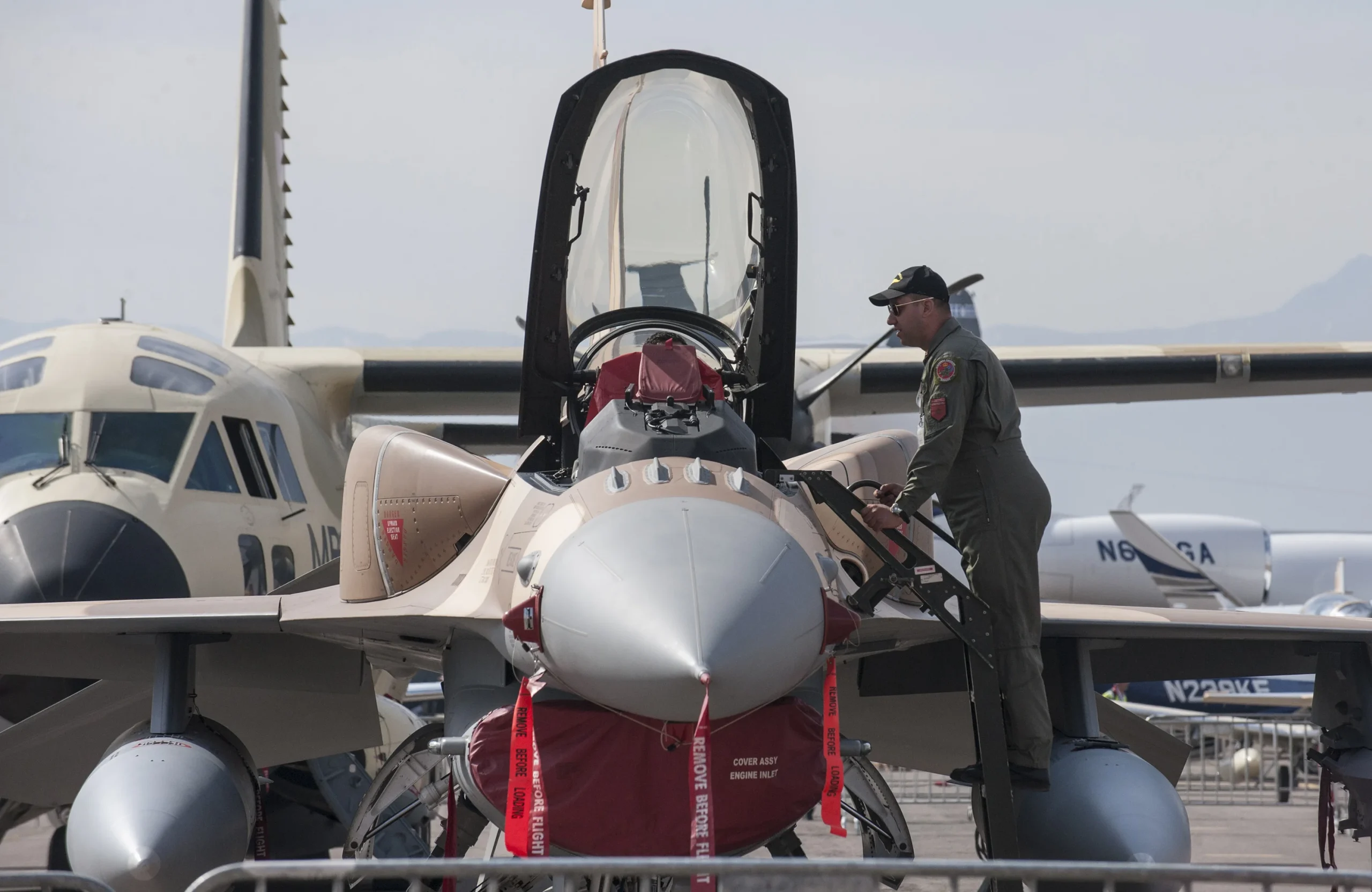
Morocco climbed a place in the 2026 Global Firepower index, driven largely by an accelerating US-backed modernisation programme. The centrepiece is the Royal Moroccan Air Force’s F-16 fleet: Washington cleared a package covering 25 new F-16 Block 72 jets plus the upgrade of Morocco’s existing 23 F-16C/D Block 52+ aircraft to the F-16V standard, a programme valued in the $4.7–4.9 billion range, alongside continued use of Mirage F1 and F-5 Tiger II airframes.
Morocco’s 2026 defence budget of roughly 73 billion dirhams (3.4–4% of GDP) reflects a country treating its air force and, separately, the Western Sahara ground campaign as parallel long-term investments. On the Turkish side, Morocco confirmed an order for Bayraktar TB2 drones in 2021, making it one of several African operators of the platform alongside Nigeria and Ethiopia — though Rabat’s core combat aircraft fleet remains built around American and French airframes rather than Turkish systems.
| Power Element | Figure |
|---|---|
| Active personnel | ≈400,000 active (of ≈700,000 total incl. reserve/gendarmerie) |
| Aircraft | 295 total (92 combat, 100 helicopters, 26 drones) |
| Tanks | ≈959 |
| Naval forces | Frigates and corvettes covering the Mediterranean and Atlantic approaches |
| Defence budget | ≈73 billion Moroccan dirhams (payment credits, 2026 budget) |
Next up →
Ethiopia
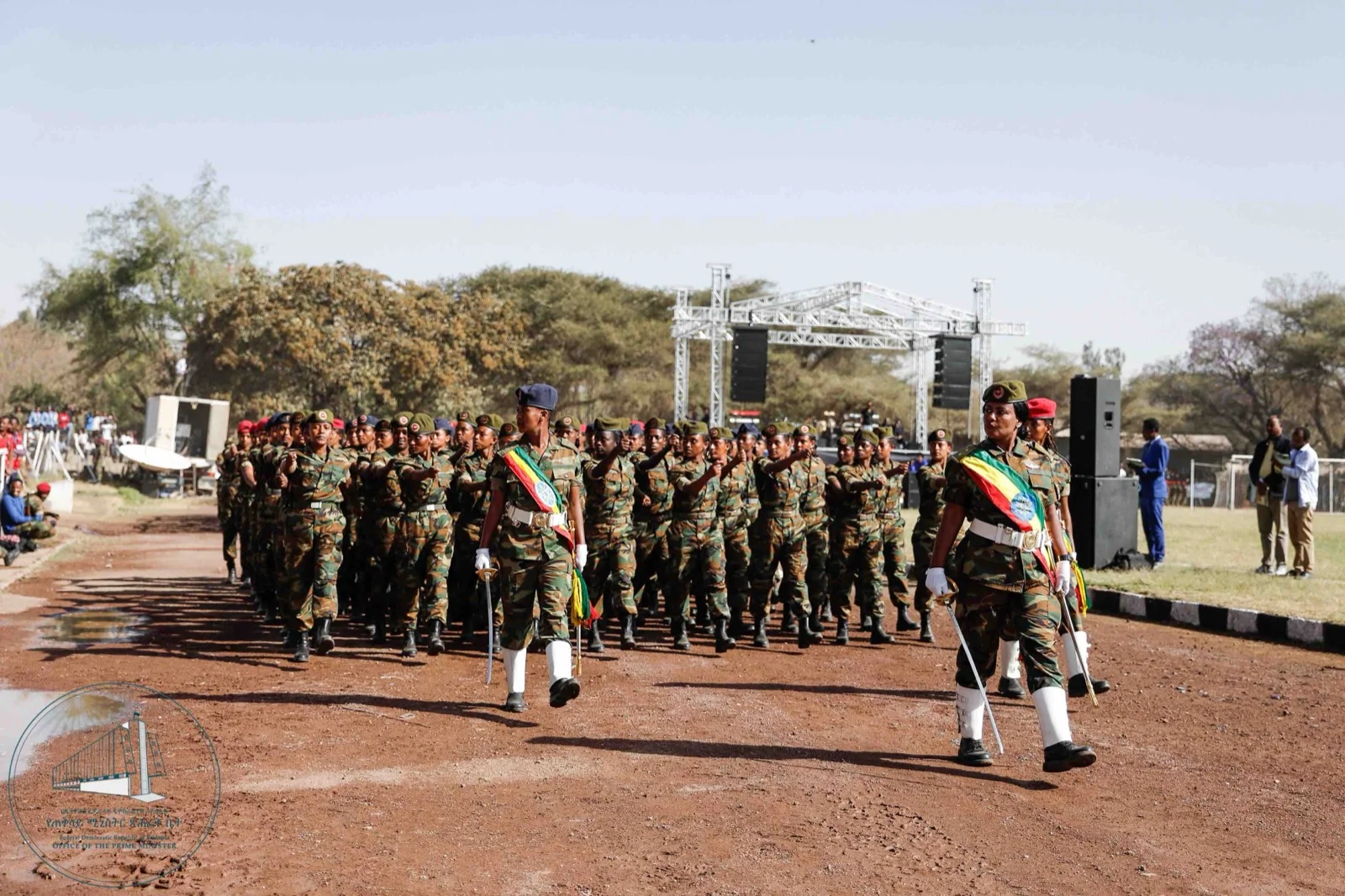
Ethiopia climbed to fifth in Africa for 2026, powered almost entirely by sheer manpower: 503,000 active personnel, the largest standing army on this list after Egypt, backed by 338 tanks and a modest but growing air force. Landlocked since Eritrean independence in 1993, Ethiopia has no navy and none of the naval-power calculations that shape Egypt, Algeria or South Africa’s rankings — its Global Firepower score is built on land power and population depth.
Ethiopia is a confirmed Bayraktar TB2 operator, one of the earliest and most extensively documented cases of the platform’s use in Africa, employed during the 2021–2022 phase of the Tigray conflict. The air force has continued to diversify its combat inventory since, taking delivery of its first Yak-130 light attack/trainer aircraft from Russia in January 2026, part of a reported order for up to ten airframes — evidence of a multi-supplier procurement approach rather than reliance on any single partner. For a full breakdown, see Ethiopia’s Military Strength 2026.
| Power Element | Figure |
|---|---|
| Active personnel | 503,000 active (no navy — landlocked) |
| Aircraft | 99 total (34 combat) |
| Tanks | ≈338 |
| Naval forces | None (landlocked since Eritrean independence, 1993) |
| Defence budget | ≈$1 billion (estimates range up to $3.7 billion) |
Next up →
South Africa
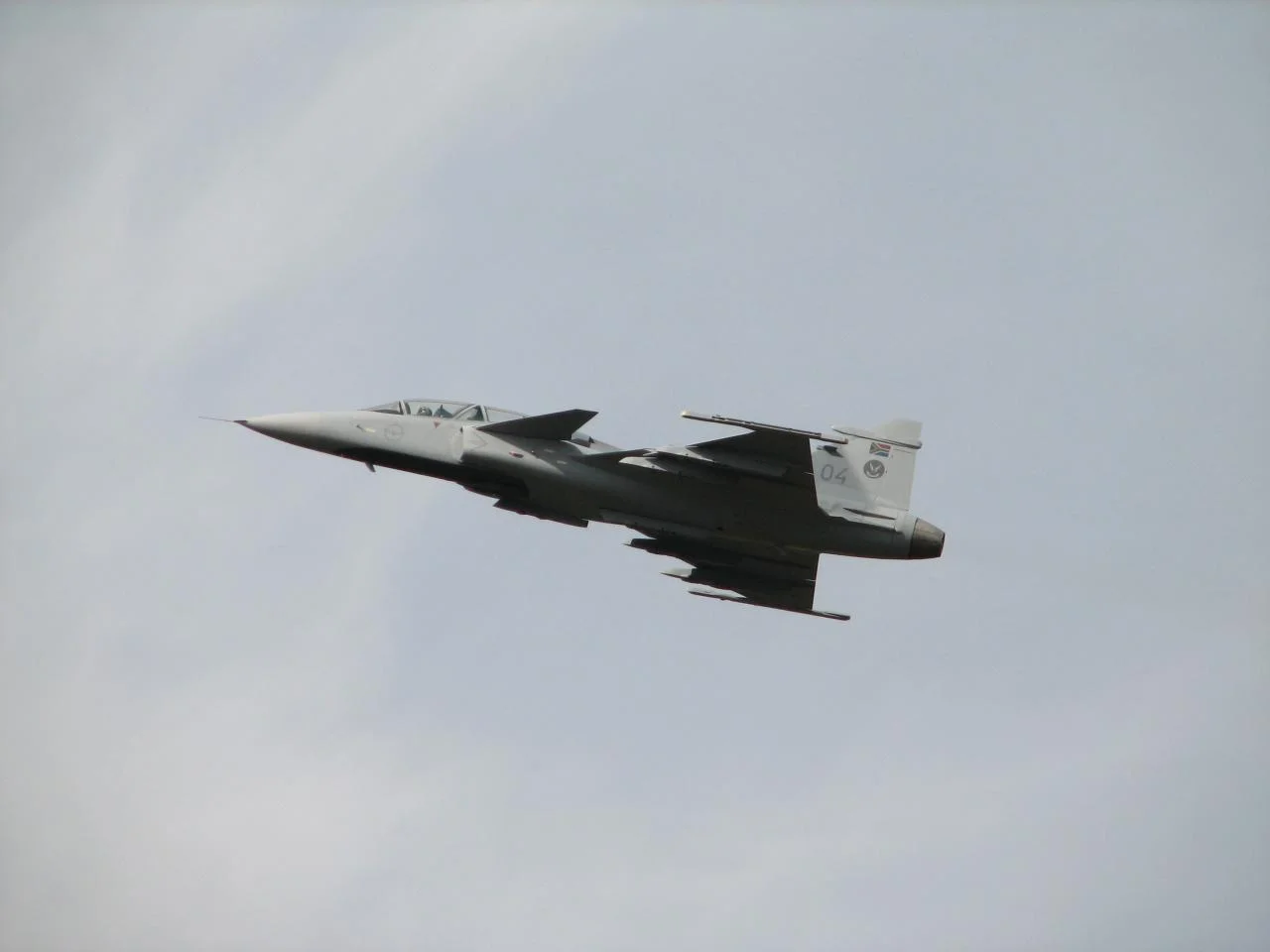
South Africa holds fourth place, but the 2026 assessment continues a multi-year decline — the country dropped seven spots in the broader global table even while retaining its regional position. The SANDF’s problem is not doctrine or training, both generally well regarded regionally, but sustainment: a large share of its Gripen and Hawk fixed-wing fleet has been grounded at various points due to maintenance backlogs and parts shortages, and the $3.60 billion budget (0.8% of GDP, low by regional standards) has not kept pace with the cost of operating a technologically sophisticated, domestically-supported force.
South Africa’s inventory is unusual on this list for being built almost entirely around domestic and European industry — Denel, Paramount and BAE/Saab platforms — rather than Turkish or Chinese hardware; there is no confirmed South African Turkish defence procurement to date. Its three Type 209 submarines and four Valour-class frigates remain the most capable conventional naval force in sub-Saharan Africa, covered in more depth in Africa’s 10 Most Powerful Navies in 2026.
| Power Element | Figure |
|---|---|
| Active personnel | 68,731 active + 29,350 reserve |
| Aircraft | 192 total (25 combat, 84 helicopters) |
| Tanks | 248 |
| Naval forces | 63 assets incl. 3 submarines, 4 frigates |
| Defence budget | $3.60 billion (≈0.8% of GDP) |
Next up →
Nigeria
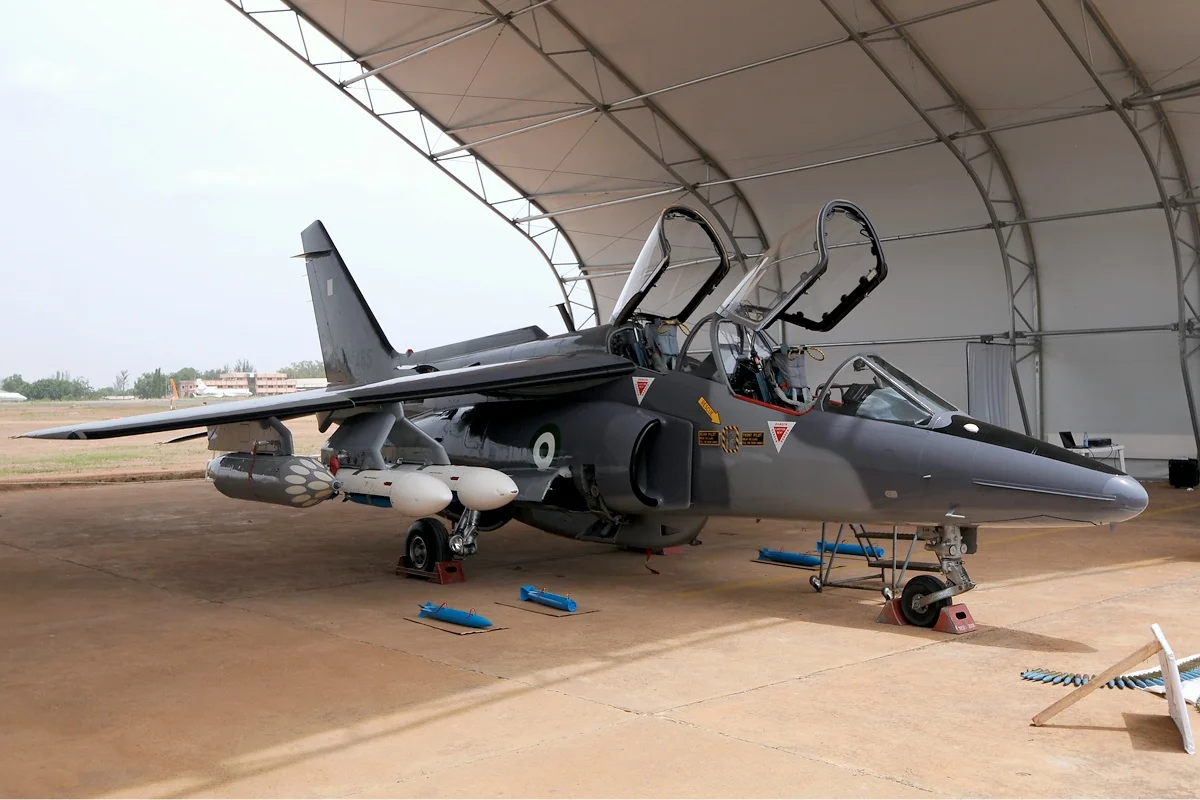
Nigeria holds third place on the strength of Africa’s largest naval hull count (covered in full in Africa’s 10 Most Powerful Navies) and a diversified, if aircraft-light, combat inventory of 164 aircraft, only 24 of them combat types. Budget reporting varies sharply depending on exchange-rate assumptions: Nigeria’s 2026 federal budget earmarks roughly ₦5.41 trillion for defence, translating to anywhere between $1.5 billion and $3.9 billion depending on the rate applied — a reminder that naira-denominated defence figures need converting with care rather than treated as fixed dollar amounts.
Nigeria is Africa’s most diversified Turkish-hardware operator: it is a confirmed Bayraktar TB2 user, has taken delivery of T129 ATAK attack helicopters, and operates FNSS Cobra II mine-resistant vehicles alongside legacy Chinese and Western platforms — a dual-sourcing pattern examined in Turkish vs. Chinese Drones in Africa. Full personnel, budget and equipment detail is in Nigeria’s Military Strength 2026.
| Power Element | Figure |
|---|---|
| Active personnel | 143,000 active + 35,000 reserve |
| Aircraft | 164 total (24 combat) |
| Tanks | ≈330 |
| Naval forces | 143 vessels — Gulf of Guinea patrol fleet |
| Defence budget | ≈$1.5–3.9 billion (methodology-dependent) |
Next up →
Algeria
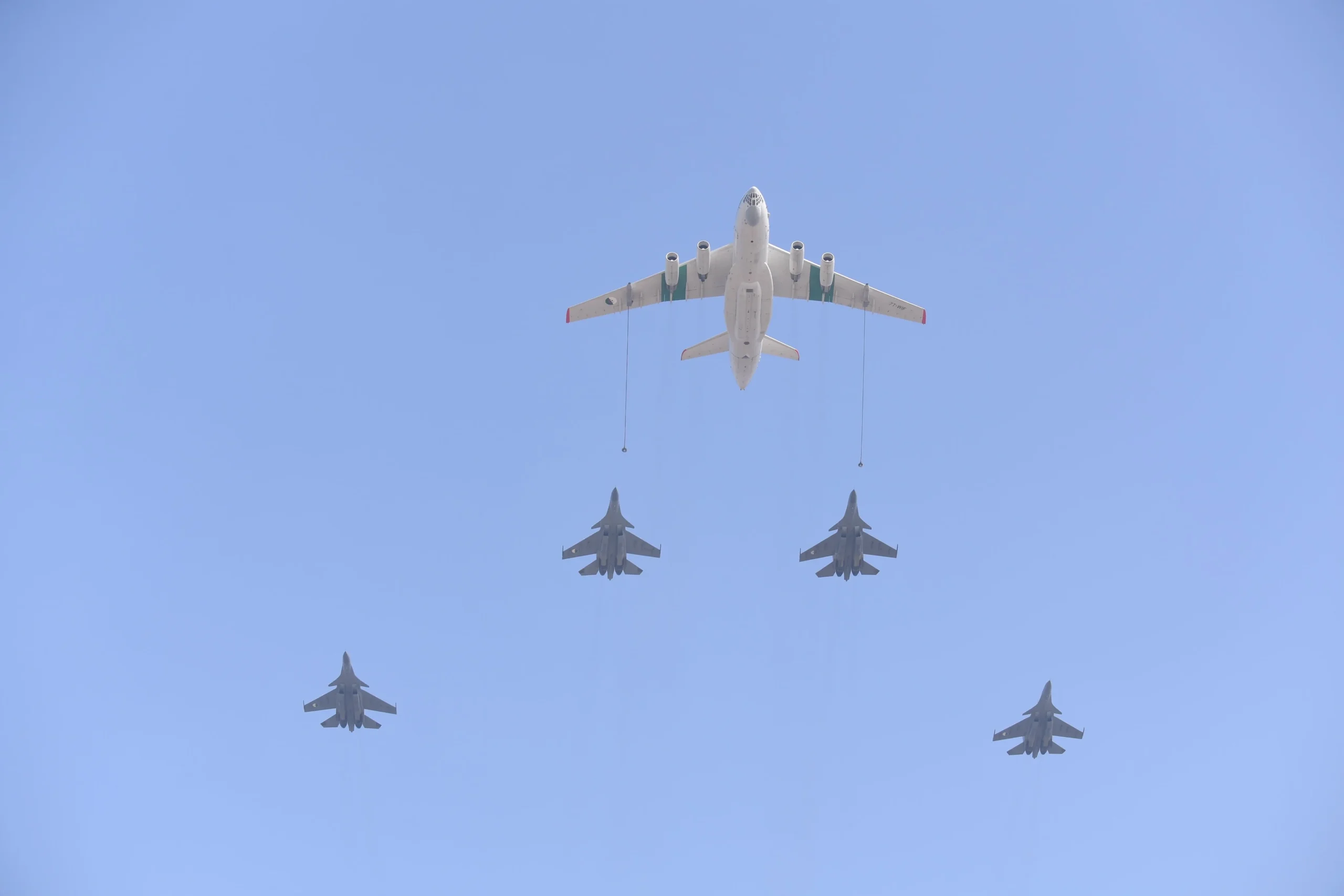
Algeria holds second place and by far the largest defence budget on the continent — $25 billion, roughly five times Egypt’s declared figure — funded by hydrocarbon revenue and directed almost entirely toward Russian-sourced hardware: Su-30 MKA Flankers, T-90 tanks within its 1,485-strong armoured fleet, and a navy of 111 vessels including six submarines and eight frigates, the second-largest submarine force in Africa after Egypt.
Algeria’s air force is ranked 16th globally by Global Firepower, and its resource base — a top-10 global natural gas producer with proven oil reserves ranked 15th worldwide — gives it a financial cushion few African militaries can match. There is no confirmed Turkish arms contract with Algeria; procurement remains concentrated with Russia, complemented by smaller Chinese and domestic contributions, distinguishing Algeria’s sourcing pattern from neighbouring Morocco, with which it maintains one of Africa’s most closely watched rivalries — compared directly in Morocco vs. Algeria Military Strength 2026.
| Power Element | Figure |
|---|---|
| Active personnel | 130,000 active (≈430,000 incl. reserve/paramilitary) |
| Aircraft | 620 total (403 operational; 111 fighters, 42 attack) |
| Tanks | 1,485 (965 operational) |
| Naval forces | 111 vessels incl. 6 submarines, 8 frigates, 8 corvettes |
| Defence budget | $25 billion |
Next up →
Egypt
Egypt tops the continent for a fourth consecutive Global Firepower cycle, and the margin over Algeria in second place is not close: 438,500 active personnel, the world’s sixth-largest tank fleet at 3,620 vehicles, 1,088 aircraft including 242 fighters, and a navy of 149 vessels — eight submarines, 13 frigates and two amphibious assault ships, the only such capability on the continent. GFP ranks Egypt 19th globally out of 145 nations assessed, a top-20 global military power by this index’s methodology.
Egypt’s declared $5.19 billion budget looks modest next to Algeria’s $25 billion, a gap that reflects reporting conventions as much as real capability — Egypt receives substantial US foreign military financing and Gulf-funded procurement that does not always appear in its own declared budget line. On the Turkish side, ties have warmed markedly since the 2023 diplomatic rapprochement: in September 2026, Turkey’s HAVELSAN and Egypt’s state-owned Arab Organization for Industrialization (AOI) signed a sales agreement for the HAMZA-1 VTOL drone, the most concrete sign yet of a defence-industrial relationship that was frozen for most of the previous decade. Egypt’s helicopter and aircraft holdings are broken down further in The Middle East’s Largest Helicopter Fleets in 2026 and Africa’s 10 Largest Helicopter Fleets in 2026, both of which place Egypt at the top of their respective tables.
| Power Element | Figure |
|---|---|
| Active personnel | 438,500 active |
| Aircraft | 1,088 total (707 operational; 242 fighters, 90 attack) |
| Tanks | 3,620 (6th-largest tank fleet worldwide) |
| Naval forces | 149 vessels incl. 8 submarines, 13 frigates |
| Defence budget | $5.19 billion (declared) |
The Verdict
Egypt’s lead over the rest of the continent is not close, and has not been for several GFP cycles: it is the only African military GFP places in the global top 20. Algeria is a clear second on raw firepower and budget, but its equipment base is almost entirely Russian, distinguishing its sourcing pattern sharply from Egypt’s mixed US/European/Gulf-funded model. Nigeria’s strength is naval hull count and geographic reach across the Gulf of Guinea rather than air power. South Africa is the clearest case of a force whose doctrine and training outpace its current serviceability — a budget problem, not a capability-gap problem. And Ethiopia’s fifth place, achieved with no navy at all, is the starkest reminder that Global Firepower rewards land-force mass more than any other single factor.
Turkish defence exports appear across roughly half of this list — Nigeria, Ethiopia and Morocco as confirmed Bayraktar TB2 operators, Angola as a naval-drone buyer, Egypt as a fresh HAVELSAN-AOI drone partner, and Sudan as a documented but unofficial user — but they are not the deciding factor in any single country’s rank. Budget, personnel depth and naval reach still do most of the work in this index.
Full Comparison Table
| Rank | Country | Active Personnel | Tanks | Aircraft | Defence Budget |
|---|---|---|---|---|---|
| 1 | Egypt | 438,500 | 3,620 | 1,088 | $5.19bn |
| 2 | Algeria | 130,000 | 1,485 | 620 | $25bn |
| 3 | Nigeria | 143,000 | ≈330 | 164 | ≈$1.5–3.9bn |
| 4 | South Africa | 68,731 | 248 | 192 | $3.60bn |
| 5 | Ethiopia | 503,000 | ≈338 | 99 | ≈$1bn |
| 6 | Morocco | ≈400,000 | ≈959 | 295 | ≈73bn MAD |
| 7 | Angola | 107,000 | n/a (legacy T-72/T-55) | 280 | $1.0–1.5bn |
| 8 | DR Congo | 134,250 | ≈105 | 57 | $852m |
| 9 | Sudan | 104,300 | ≈224 | 184 | $375m (official) |
| 10 | Tunisia | 35,000 | ≈90 | 169 | $1.3bn |
Figures are Global Firepower 2026 country-profile data unless otherwise noted; several defence-budget figures are approximate due to exchange-rate and reporting-methodology differences between local and dollar-denominated sources.
Frequently Asked Questions
Which country has Africa’s strongest military in 2026?
Egypt, according to Global Firepower’s 2026 Power Index — the only African military ranked in the global top 20 (19th of 145 nations), ahead of Algeria (27th) and Nigeria (33rd).
Is Global Firepower an official military ranking?
No. GFP is a privately compiled index, not a government, NATO or SIPRI dataset. It is a useful comparative tool but weights equipment quantity heavily and does not fully capture readiness, training quality or serviceability — South Africa’s ranking above is a clear example of that gap.
Why does Algeria outspend Egypt on defence but rank second?
Algeria’s $25 billion budget is roughly five times Egypt’s declared $5.19 billion, but GFP’s index weighs personnel depth, equipment diversity and logistics alongside spending — and Egypt’s true procurement, much of it financed through US and Gulf channels, is not fully reflected in its own declared budget line.
Which African countries use Turkish Bayraktar TB2 drones?
Nigeria, Ethiopia and Morocco are confirmed Bayraktar TB2 operators. Sudan’s use has been extensively documented in open-source reporting since the 2023 civil war but has not been the subject of an official government procurement announcement.
How can Ethiopia rank fifth in Africa with no navy?
Ethiopia’s 503,000 active personnel — the largest army on this list after Egypt — carry enough weight in GFP’s formula to offset having zero naval assets, since Ethiopia has been landlocked since Eritrean independence in 1993.
Where does this data come from?
Rankings and country-level figures are drawn from Global Firepower’s 2026 dataset. Budget cross-checks, procurement details and Turkish-hardware notes are sourced separately from SIPRI, IISS The Military Balance, official government/defence-ministry statements, and envantermedya’s own prior reporting on each country.
Sources
- Global Firepower 2026 — African Military Strength Rankings and individual country profiles
- SIPRI Military Expenditure Database
- IISS, The Military Balance
- Nigeria Federal Ministry of Finance, 2026 Budget documents
- Morocco Ministry of Economy and Finance, 2026 Budget; US State Department F-16 sale notification
- Official statements from the defence ministries and armed forces concerned
- envantermedya reporting: Nigeria, Ethiopia, Morocco vs. Algeria, Africa’s Navies and Helicopter Fleets, Angola-ANAVIA, HAVELSAN-AOI
Last updated: September 12, 2026.