
Morocco vs Algeria Military Strength 2026: Full Comparison

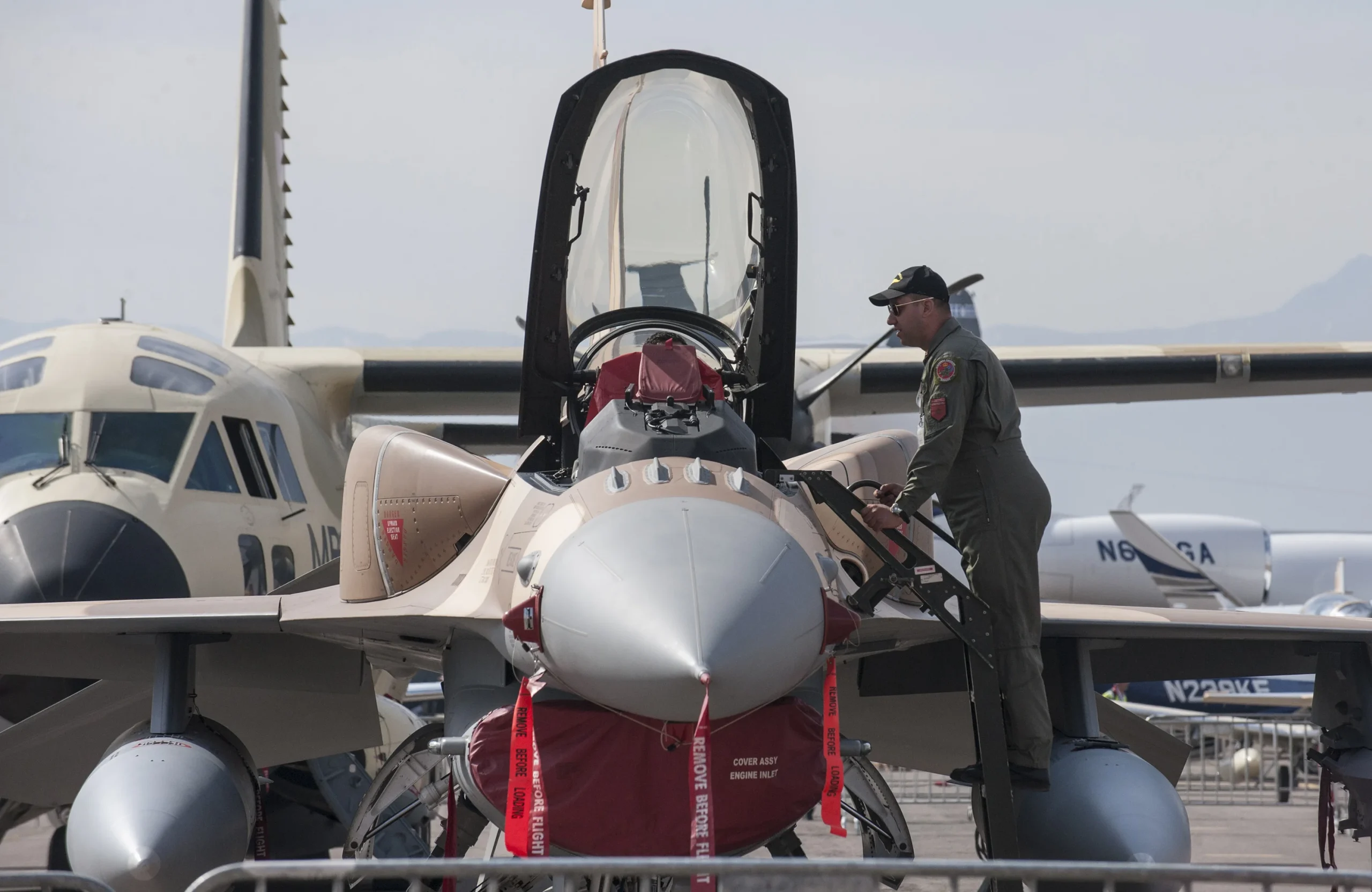
Algeria fields the larger, heavier-armed military on paper: 620 aircraft against Morocco’s 271, six submarines against none, and a defense budget of roughly $25 billion against Morocco’s $16.1 billion, according to the 2026 Global Firepower index. Morocco compensates with a bigger active-duty force (400,000 versus 130,000), a newer F-16 Block 72 order, and the only Bayraktar TB2/Akıncı drone fleet either country operates. Neither figure settles a hypothetical conflict — this guide compares documented capability, not outcomes.
Table of Contents
- Quick Answer: Side-by-Side Snapshot
- Personnel and Defense Budget
- Air Power: F-16 Block 72 vs. Su-30MKA and Su-57E
- Land Forces: Tanks, Armor and Artillery
- Naval Forces
- Air Defense: Algeria’s Layered Russian Network
- The Turkish Angle: Why Only Morocco Flies Bayraktar
- Defense Industry and Alliances
- Methodology: What These Numbers Don’t Tell You
- FAQ
- Sources
Quick Answer: Side-by-Side Snapshot
Both figures come from the 2026 Global Firepower (GFP) index, an open-source aggregator that weights over 60 factors. GFP is not an official government data source for either country — treat every figure below as a public estimate, not a classified inventory count.
| Metric | Algeria | Morocco |
|---|---|---|
| GFP world rank (of 145) | 27th | 56th |
| Power Index (lower = stronger) | 0.4849 | 1.0368 |
| Active personnel | 130,000 | 400,000 |
| Reserve personnel | 150,000 | 250,000 |
| Defense budget (2026, USD) | ~$25 billion | ~$16.1 billion |
| Total aircraft | 620 | 271 |
| Fighter aircraft | 111 | 84 |
| Attack helicopters | 74 | 6 |
| Tanks | 1,485 | 1,346 |
| Armored vehicles | 24,920 | 17,594 |
| Naval fleet (total hulls) | 111 | 100 |
| Submarines | 6 | 0 |
| Long-range SAM systems | S-400, S-300PMU-2 | Not publicly disclosed at this tier |
| Loyal-wingman-class UCAV | Not confirmed | Bayraktar Akıncı (confirmed operator) |
Personnel and Defense Budget
Morocco’s 400,000 active personnel figure (plus 250,000 reserves and 50,000 paramilitary, per GFP) makes it one of Africa’s largest standing forces by headcount, built around a long-running conscription and volunteer system and sustained troop commitments in Western Sahara. Algeria runs a leaner active force of 130,000 with a similarly sized 150,000-strong reserve and a further 150,000 in paramilitary gendarmerie units.
The budget gap runs the other way. Algeria’s roughly $25 billion defense budget is funded largely by hydrocarbon export revenue and has financed a wave of high-end Russian hardware over the past three years. Morocco’s $16.1 billion budget is smaller in absolute terms but stretches across a broader, multi-vendor shopping list — American, French and Turkish — rather than a single primary supplier.
Air Power: F-16 Block 72 vs. Su-30MKA and Su-57E
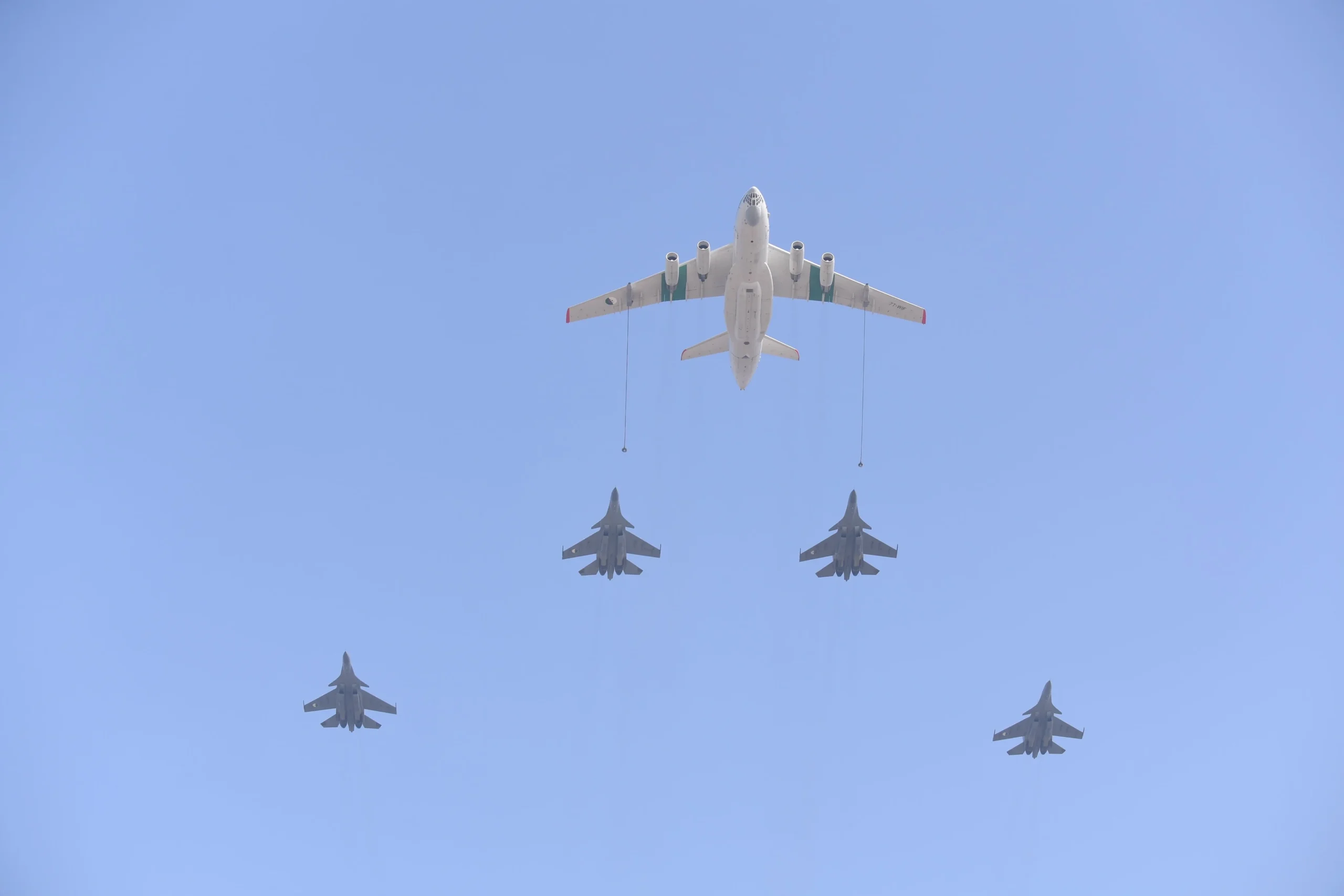
Algeria’s 111 fighters lean heavily on Russian-built Su-30MKA Flankers, a proven multirole platform Algeria has operated since 2007 in a fleet reported at roughly 60 airframes. In late 2025, Algeria began receiving the Sukhoi Su-57E, becoming the first confirmed export customer and the first African air force to field a fifth-generation fighter; open-source flight-tracking and Algerian state media placed the first aircraft in-country by February 2026, with deliveries reportedly continuing into 2027 under a contract said to cover 14 airframes. As with most Algerian defense contracts, Algiers has not published exact unit pricing.
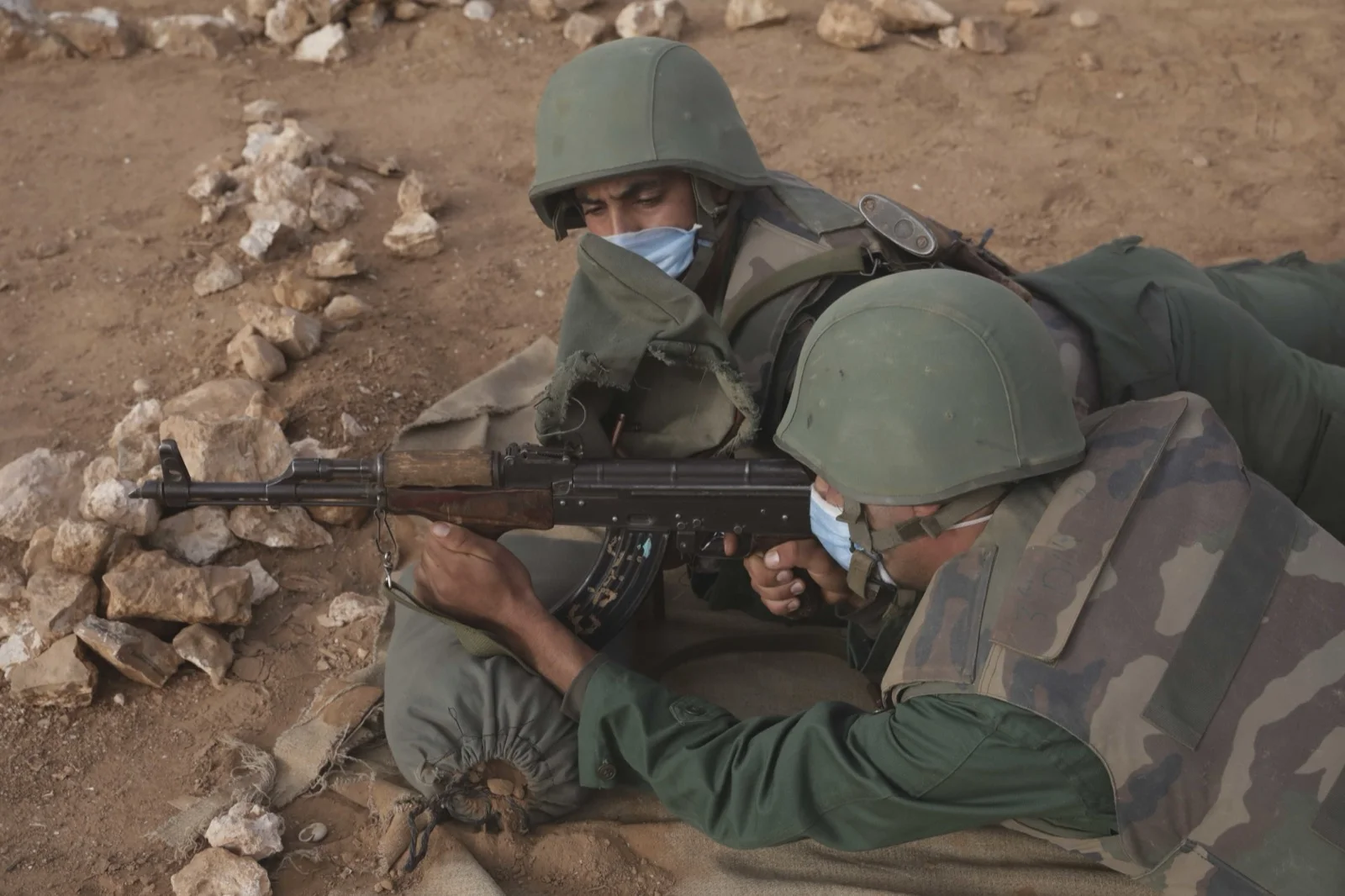
Morocco’s 84 fighters are built around an aging Mirage F1 and F-5 mix alongside its core F-16 fleet. In 2024 the U.S. State Department cleared a package covering 25 new F-16 Block 72 aircraft plus an upgrade of Morocco’s existing 23 F-16C/D Block 52+ jets to F-16V standard, a program valued in the $4.7–4.9 billion range that, if completed in full, would roughly double the Royal Moroccan Air Force’s F-16 fleet. Delivery and integration were reported as underway through 2025–2026; Morocco has not disclosed a fifth-generation fighter program, confirmed or reported, as of this writing.
Algeria’s attack-helicopter count (74, versus Morocco’s 6) reflects a much larger dedicated rotary-wing strike arm, built mainly around Mi-24/Mi-28 types, that Morocco has not matched.
Land Forces: Tanks, Armor and Artillery
The tank and armored-vehicle gap is narrower than the air and naval gaps. Algeria’s 1,485 tanks (a mix of Russian T-90SA and older T-72 variants) edge out Morocco’s 1,346 (largely U.S.-supplied M1A1/M1A2 Abrams and older M60 types), and Algeria’s 24,920 armored vehicles outnumber Morocco’s 17,594. Artillery splits the difference: Morocco fields more self-propelled artillery (544 vs. 224), while Algeria holds the edge in towed artillery (483 vs. 188). Neither GFP nor open manufacturer data discloses precise ammunition stockpiles for either force, so magazine depth in a sustained conflict is not publicly verifiable from these figures.
Naval Forces
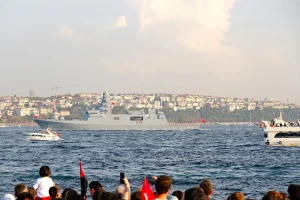
Algeria’s navy is built around a submarine arm Morocco does not have at all: six Kilo-class diesel-electric submarines, acquired from Russia, give Algeria an underwater strike and area-denial capability unmatched on the Maghreb coast. Algeria also holds a narrow edge in principal surface combatants, with 8 frigates and 8 corvettes against Morocco’s 6 frigates and 1 corvette.
Morocco’s fleet leans toward coastal and patrol capability instead, with 84 patrol vessels to Algeria’s 75, reflecting a navy oriented more toward Atlantic and Mediterranean coastal security, fisheries protection and counter-migration patrol than blue-water power projection.
Air Defense: Algeria’s Layered Russian Network
Algeria operates one of the most layered integrated air-defense networks in Africa: long-range S-300PMU-2 batteries acquired in the 2008–2011 period (Algeria was only the second export customer after China), reinforced since 2024 by at least two S-400 Triumf regiments demonstrated in live-fire exercises through 2025, with short-range point defense provided by Pantsir-S1 and Tor-M2 systems. Morocco has not published a comparable long-range, high-altitude SAM acquisition at the S-300/S-400 tier; its ground-based air defense is oriented toward shorter-range and point-defense systems tied primarily to its NATO and U.S. procurement relationships. This is a real, sourced capability gap in this one category — it does not by itself describe either country’s overall air-defense posture, which also depends on radar coverage, command-and-control integration and the fighter interceptors discussed above.
The Turkish Angle: Why Only Morocco Flies Bayraktar
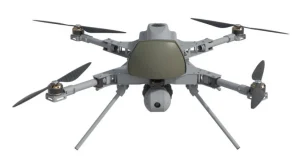
Morocco is a confirmed Bayraktar operator on both counts that matter: it took delivery of an initial batch of roughly 13 Bayraktar TB2 tactical UAVs starting in October 2021 (a deal reported at around $70 million), later expanding to more than 20 airframes, and in February 2025 received its first Bayraktar Akıncı high-altitude, long-endurance combat drones under a 2023 agreement with Baykar. The Akıncı deal also includes a local production and assembly component with Moroccan partner Atlas, aimed at eventually building airframes domestically rather than importing every unit — the kind of technology-transfer arrangement that has become a recurring feature of Baykar’s export deals across African TB2 operators more broadly.
Algeria has no confirmed Bayraktar or other Turkish combat-drone acquisition on the public record. Algeria’s unmanned-systems inventory is built instead around Chinese CH-4 and domestically-assembled types; this is a documented difference in supplier choice, not evidence that one country’s drone program is more advanced than the other’s — the two air forces are simply sourced from different ecosystems, matching the broader pattern covered in our Turkish vs. Chinese drones comparison for the Sahel.
Defense Industry and Alliances
The two countries’ procurement patterns reflect different alliance structures. Morocco is a major non-NATO ally of the United States and maintains close defense-industrial ties with France and, increasingly, Turkey — the F-16 Block 72 program sits alongside the Bayraktar TB2/Akıncı deals and earlier French-sourced VAB armored vehicles and FREMM-derived frigate cooperation. Algeria’s principal defense-industrial relationship is with Russia, which supplies the bulk of its fighters, tanks, submarines and air-defense systems, supplemented by Chinese-sourced drones and some domestic assembly under license.
Both countries’ military postures are shaped in part by the unresolved status of Western Sahara, a point of long-running diplomatic and military tension between Rabat and Algiers; this guide covers documented hardware and personnel figures only and does not take a position on that dispute or attempt to model how it would affect any specific engagement.
Methodology: What These Numbers Don’t Tell You
Global Firepower’s Power Index is a composite score, not a battlefield prediction tool, and it does not fully account for training quality, maintenance readiness, logistics, doctrine, geography or alliance support — factors that historically matter as much as raw inventory counts. Where this guide cites a specific contract value or delivery date, it is attributed to a named outlet (Army Recognition, The Aviationist, TWZ, Défense Post, Military Africa) rather than estimated. Neither country has published a full, itemized public defense budget breakdown, so the USD figures above should be read as informed estimates, not audited government accounts. This guide does not simulate or predict a conflict outcome between the two countries.
FAQ
Which country has the stronger military, Algeria or Morocco?
By the 2026 Global Firepower index, Algeria ranks higher (27th globally vs. Morocco’s 56th) based on a composite score that weighs equipment quantity, personnel and budget. Composite rankings are not a prediction of outcome in any specific scenario.
Does Morocco have a bigger army than Algeria?
By active personnel, yes — GFP lists Morocco at 400,000 active troops against Algeria’s 130,000. Algeria’s force is smaller but more heavily invested in high-end aircraft, submarines and air defense per soldier.
Does Algeria operate the Su-57 stealth fighter?
Yes, as of early 2026 Algeria is the first confirmed export customer for the Su-57E and the first African air force to field a fifth-generation fighter, under a contract reported at up to 14 aircraft delivered in phases through 2027.
Does Algeria use Turkish military equipment?
No confirmed Turkish combat-system acquisition by Algeria appears on the public record. Morocco is the confirmed regional operator of Turkish Bayraktar TB2 and Akıncı drones.
Is Global Firepower an official military data source?
No. GFP is an independent open-source aggregator. It is a useful comparison tool but is not equivalent to SIPRI, IISS Military Balance or either government’s own disclosed figures, and this guide flags it as such throughout.
Sources
- Global Firepower — “Comparison of Algeria and Morocco Military Strengths (2026)”
- Global Firepower — Algeria and Morocco country detail pages (2026)
- Army Recognition — “Algeria becomes first African nation to operate stealth fighter following Su-57E testing”
- The Aviationist — “Algeria’s First Su-57E Reportedly Captured in Flight”
- Air Data News / Atalayar — Algeria Su-57 purchase confirmation reporting
- The War Zone (TWZ) — “Here’s What’s In Morocco’s Deal To Buy 25 Advanced F-16s And Upgrade Its Existing Fleet”
- The Defense Post / Military Africa — “Morocco Receives First Turkish Bayraktar Akinci Drones”
- Army Recognition — “Morocco Selects Türkiye’s Bayraktar Akinci Drone to Modernize Its Fleet”
- MilitaryWatch Magazine — Algerian S-400/S-300 live-fire exercise reporting
Last updated: September 7, 2026.