KARGU-2 vs Switchblade 300: How Do They Compare?

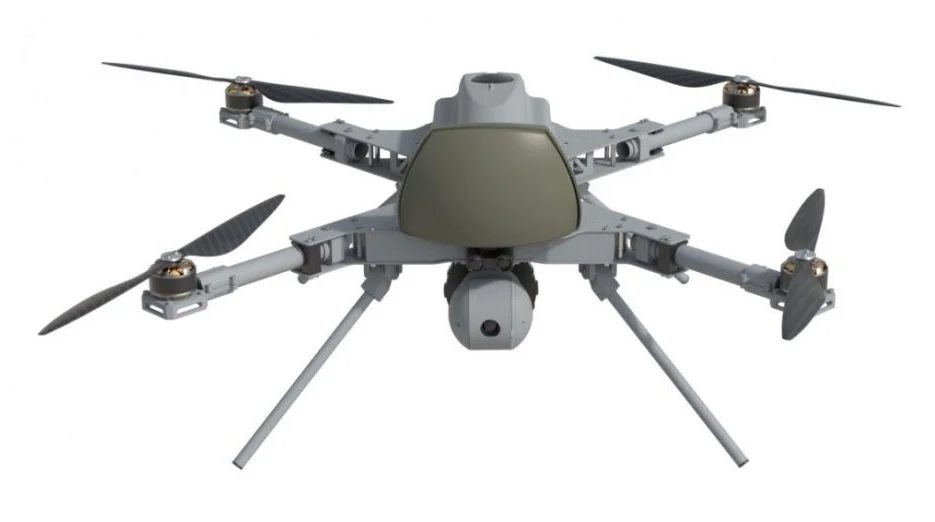
Two Systems, One Category — Different Engineering Priorities
Loitering munitions — sometimes called kamikaze drones or one-way attack UAVs — have become a defining feature of modern tactical warfare. Among the most discussed systems in this category are Türkiye’s STM KARGU-2 and the US-made AeroVironment Switchblade 300. Both self-destruct on target impact, but their design philosophies, deployment concepts, and operator profiles diverge in instructive ways.
This analysis examines the two systems across technical specifications, mission concept, operational record, and strategic context — with the goal of informing rather than declaring a winner.
System Profiles
KARGU-2
STM KARGU-2 is a rotary-wing loitering munition developed by Türkiye’s defence technology company STM (Savunma Teknolojileri Mühendislik). Its quadrotor frame enables VTOL launch from varied surfaces — including vehicle rooftops — without requiring a runway or catapult. According to STM’s official product page, the system can be operated by a single person and reaches an operational altitude of 2,800 metres. AI-powered image processing allows it to track moving targets without continuous operator commands. KARGU-2 entered Turkish Armed Forces service in 2018 and has been used in Syria and Libya.
Switchblade 300
AeroVironment Switchblade 300 is a fixed-wing, tube-launched loitering munition developed by US-based AeroVironment, a long-standing supplier to the US Army. Its folding-wing design keeps the all-up weight — launch tube included — at roughly 3.27 kg, making it a genuine man-portable asset. According to AeroVironment’s Switchblade 300 Block 20 page, the system reaches a range of up to 30 km with the extended-range antenna. Since 2022 it has seen extensive use in the Russia-Ukraine conflict, the most documented combat deployment for the system to date.
Mission Concept Comparison
KARGU-2’s VTOL capability allows deployment from constrained environments — urban rooftops, forested clearings, mountain ridgelines — that would rule out tube-launch systems. STM’s documented swarm potential adds a multi-vector attack dimension that no single operator could replicate with a conventional tube-launch munition. The system is optimised for shorter engagements at tactical depth.
Switchblade 300 is built around the concept of a standardised, logistics-friendly last-mile strike tool. One infantryman can carry several rounds in a standard pack. Its longer range (20–30 km) and higher cruise speed make it suitable for engagements beyond the forward line of troops. The fixed-wing airframe is, however, more sensitive to wind conditions than a quadrotor.
Technical Comparison
| Criterion | KARGU-2 | Switchblade 300 |
|---|---|---|
| Manufacturer | STM (Türkiye) | AeroVironment (USA) |
| Airframe type | Rotary-wing quadrotor (VTOL) | Fixed-wing, tube-launched |
| System weight | ≈ 7.06 kg | ≈ 3.27 kg (launch tube included) |
| Max speed | 72 km/h | 160 km/h (dive); 100 km/h cruise |
| Range | 10 km | 20 km (std); 30 km (ext. antenna) |
| Loiter endurance | ≈ 30 min | ≈ 20 min (Block 20) |
| Warhead | 1.3 kg (fragmentation / thermobaric) | 1.8 kg (fragmentation / EFP) |
| Service ceiling | 2,800 m operational | 4,500 m+ |
| Launch method | VTOL (hand-held or vehicle-mounted) | Tube launch (dismounted or vehicle) |
| Autonomous targeting | AI-based, swarm potential tested | Semi-autonomous, operator-in-loop |
| Target type | Anti-personnel / light vehicle | Anti-personnel / light vehicle (+EFP) |
| Combat record | Syria, Libya (2019–2020) | Ukraine (2022–present) |
| Key operators | Turkish Armed Forces, 15 countries | US Army, Ukraine, Greece, UK, Romania |
| Export controls | Turkish regulations | ITAR (US export control) |
Sources: STM official product page; AeroVironment Switchblade 300 Block 20; Army Recognition
Operators and Combat Record
KARGU-2 first appeared in open-source operational reporting through the UN Security Council Panel of Experts’ Libya report (March 2021), which referenced engagements in 2019-2020. This made it one of the first loitering munitions cited in a UN document in connection with autonomous targeting behaviour. STM’s 2026 data places the system in 15 countries across four continents; the January 2026 delivery to a European NATO/EU state marks its first confirmed European deployment.
Switchblade 300’s operational profile expanded dramatically from 2022 onward. Over 700 Switchblade systems were transferred to Ukraine under US security assistance, providing the most extensive public data set on the system’s real-world performance. Greece, the UK, Romania and Lithuania have also been cited as users. AeroVironment’s Block 20 upgrade directly incorporated lessons from Ukrainian operations.
Advantages by Scenario
Where KARGU-2 has an edge
- Short-range operations in urban or mountainous terrain (VTOL advantage)
- Rapid single-operator deployment with minimal infrastructure
- Vehicle-integrated swarm operations (tested potential)
- Independent procurement outside ITAR constraints
Where Switchblade 300 has an edge
- Longer-range reconnaissance-strike integration (20–30 km)
- Man-portable, standardised logistics within NATO supply chains
- Interoperability with NATO allies and joint training infrastructure
- EFP warhead option (Block 20) for harder targets
Limitations
KARGU-2 limitations: The quadrotor airframe trades speed and range for VTOL flexibility — 10 km range and 72 km/h maximum speed are modest by fixed-wing standards. The extent of swarm integration in operational (rather than test) conditions is not fully documented in open sources.
Switchblade 300 limitations: The fixed wing increases wind sensitivity. The 1.8 kg fragmentation warhead offers limited effect against armoured vehicles in standard configuration. Reports from Ukraine document susceptibility to Russian electronic warfare environments, which contributed to the Block 20 upgrade programme.
Strategic Context for Türkiye
KARGU-2 is a tangible output of Türkiye’s defence indigenisation drive: it is domestically designed, manufactured, and — increasingly — exported. The January 2026 NATO/EU European contract signals that the system has cleared the interoperability bar in at least one allied procurement process. Switchblade 300, subject to ITAR, is not a direct procurement option for Turkey; however, the comparative analysis illustrates where the Turkish industry sits within the global loitering munition competition.
Assessment
KARGU-2 and Switchblade 300 solve the same tactical problem through different engineering philosophies. The rotary-wing design gives KARGU-2 deployment flexibility that a tube-launch system cannot match, at the cost of range and speed.
Switchblade 300’s man-portable form factor and longer range suit it to NATO logistics norms and deep-fire scenarios. The Block 20 upgrade reflects genuine lessons from the most documented loitering munition combat deployment to date.
According to open sources, the two systems serve different mission concepts. A meaningful comparison requires specifying the operational environment, target set, and logistical constraints — not a single universal ranking.
Sources
- STM — KARGU Product Page — Official technical specifications
- AeroVironment — Switchblade 300 Block 20 — Official technical data sheet
- STM — KARGU and ALPAGU Head to Europe — January 2026 export announcement
- Janes — STM European Export — Export confirmation
- Army Recognition — Switchblade 300 — Technical comparison data
- Breaking Defense — AV Switchblade Variants — Block 20 and new developments
- Wikipedia — STM Kargu — General reference
Explore more comparisons
Envanter Medya’s defence comparison series analyses key systems side by side — technical facts, no propaganda.
Are KARGU-2 and Switchblade 300 in the same weapon category?
Yes. Both are classified as loitering munitions — one-way attack UAVs that orbit a target area and strike on command or upon autonomous detection. However, their airframe designs diverge sharply: KARGU-2 is a rotary-wing quadrotor capable of vertical take-off and landing (VTOL), while Switchblade 300 is a fixed-wing, tube-launched system. This difference shapes everything from how they are deployed to the terrain types where each performs best.
What does KARGU-2’s autonomous capability actually mean?
According to STM’s official product page, KARGU-2 uses image-based AI algorithms to identify and track targets without continuous operator input. The system has demonstrated potential for swarm operations. A UN Security Council Panel of Experts report on Libya (March 2021) referenced KARGU-type platforms in the 2019-2020 conflict. The full legal and doctrinal implications of autonomous engagement remain actively debated in international forums.
Which countries use Switchblade 300?
The US Army has been the primary operator since the system entered service. Following Russia’s full-scale invasion of Ukraine in February 2022, over 700 Switchblade systems (both 300 and 600 variants combined) were committed to Ukraine under US security assistance packages. AeroVironment has also reported orders or deliveries to Greece, the United Kingdom, Romania, and Lithuania.
How many countries have received KARGU-2?
STM stated in 2026 that its tactical UAV family — which includes KARGU — has reached 15 countries across four continents. In January 2026, STM announced the first European export of KARGU and ALPAGU to a NATO and EU member state; the customer country has not been publicly named.
Did Switchblade 300 prove effective in Ukraine?
Public reporting is mixed. The system has been used in anti-personnel roles, but several analyses noted limitations against Russian electronic warfare and counter-drone measures. AeroVironment developed the Switchblade 300 Block 20 — featuring an extended-range antenna (30 km), an improved warhead including an Explosively Formed Penetrator option, and updated electronics — partly in response to Ukraine operational feedback.