KIZILELMA vs XQ-58A Valkyrie: Two Continents, Two Unmanned Combat Doctrines
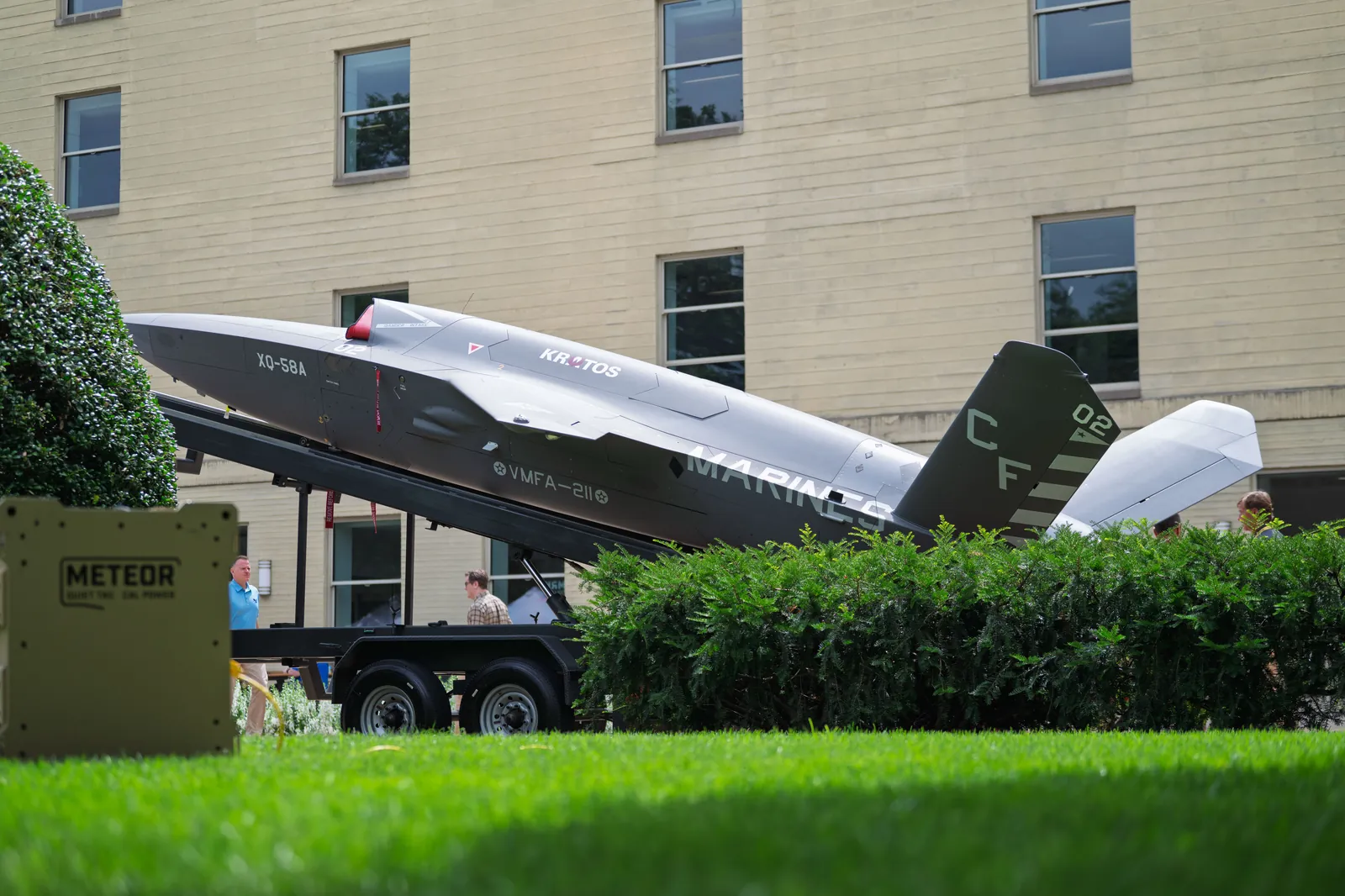
The Bayraktar KIZILELMA and the Kratos XQ-58A Valkyrie are two different answers to the same question: how should a jet-powered unmanned combat aerial vehicle fly alongside crewed fighters — and, when needed, alone? Türkiye’s answer is a larger airframe, a heavier payload, and shipborne operation. America’s answer is a smaller airframe, an “attritable” low unit price, and runway-independent launch. This comparison lays out what is publicly verifiable about both aircraft as of 2026, side by side. It is not a scorecard — it is a map of two doctrines.
At a glance
| Attribute | Bayraktar KIZILELMA | Kratos XQ-58A Valkyrie |
|---|---|---|
| Manufacturer / Country | Baykar / Türkiye | Kratos / United States |
| First flight | 14 December 2022 | 5 March 2019 |
| Length × Wingspan | ≈ 14.5 m × 10 m | ≈ 9.1 m × 8.2 m |
| MTOW | ≈ 8.5 t | ≈ 2.7 t |
| Payload | ≈ 1,500 kg (internal + external) | ≈ 272 kg internal + ≈ 500 kg external |
| Cruise / Max speed | Mach 0.6 / Mach 0.9 (high subsonic) | ≈ Mach 0.72 / Mach 0.85 |
| Combat radius / Range | ≈ 500 nmi (≈ 926 km) | ≈ 3,000 nmi ferry range (≈ 5,560 km); mission radius depends on profile |
| Service ceiling | ≈ 45,000 ft | ≈ 45,000 ft |
| Take-off / Landing | Short runway + LHD ski-jump deck (TCG Anadolu) | Rocket-assisted launch; parachute recovery. USMC MQ-58 variant adds landing gear. |
| Weapons | MAM-L/T, TEBER, Gökdoğan (BVR AAM), Bozdoğan (WVR AAM); SOM-J planned | GBU-39 SDB in internal bay; additional external stations |
| Doctrine | Standalone combat UCAV + future KAAN teaming | Loyal wingman / CCA for F-35 (and future 6th-gen) |
| Status (2026) | Serial production; first TAF delivery Q1 2026 | MUX TACAIR awarded to Kratos–Northrop Grumman (Jan 2026); first USMC delivery targeted 2029 |
Dimension by dimension
Design philosophy: a heavy fighter or an attritable teammate?
KIZILELMA is publicly framed by Baykar as “a UCAV capable of taking off from a ship’s deck, performing air-to-air and air-to-surface missions, and operating independently.” At 8.5 t MTOW and 1.5 t payload it looks less like a typical loyal wingman and more like the unmanned sibling of a light multirole fighter. XQ-58A is faithful to Kratos’s “attritable” philosophy: losing one hurts far less than losing an F-35; unit cost is kept low; it is rocket-launched and needs no runway; and it is meant to be produced in real numbers. In January 2026 the US Marine Corps awarded the MUX TACAIR CCA program to a Kratos–Northrop Grumman team, formalising Valkyrie’s loyal-wingman role.
Size, performance and range
KIZILELMA is roughly three times heavier at MTOW than XQ-58A — that buys more fuel and more weapons but also a larger radar cross-section. Valkyrie’s often-cited 3,000 nautical-mile range is a ferry figure that reflects fuel efficiency; combat radius depends on mission profile. Both aircraft operate near 45,000 ft, at the threshold of modern integrated air defence. Both are high-subsonic; neither is supersonic. Baykar has announced a twin-engine, supersonic KIZILELMA-B variant for beyond 2026.
Sensors, weapons and mission fit
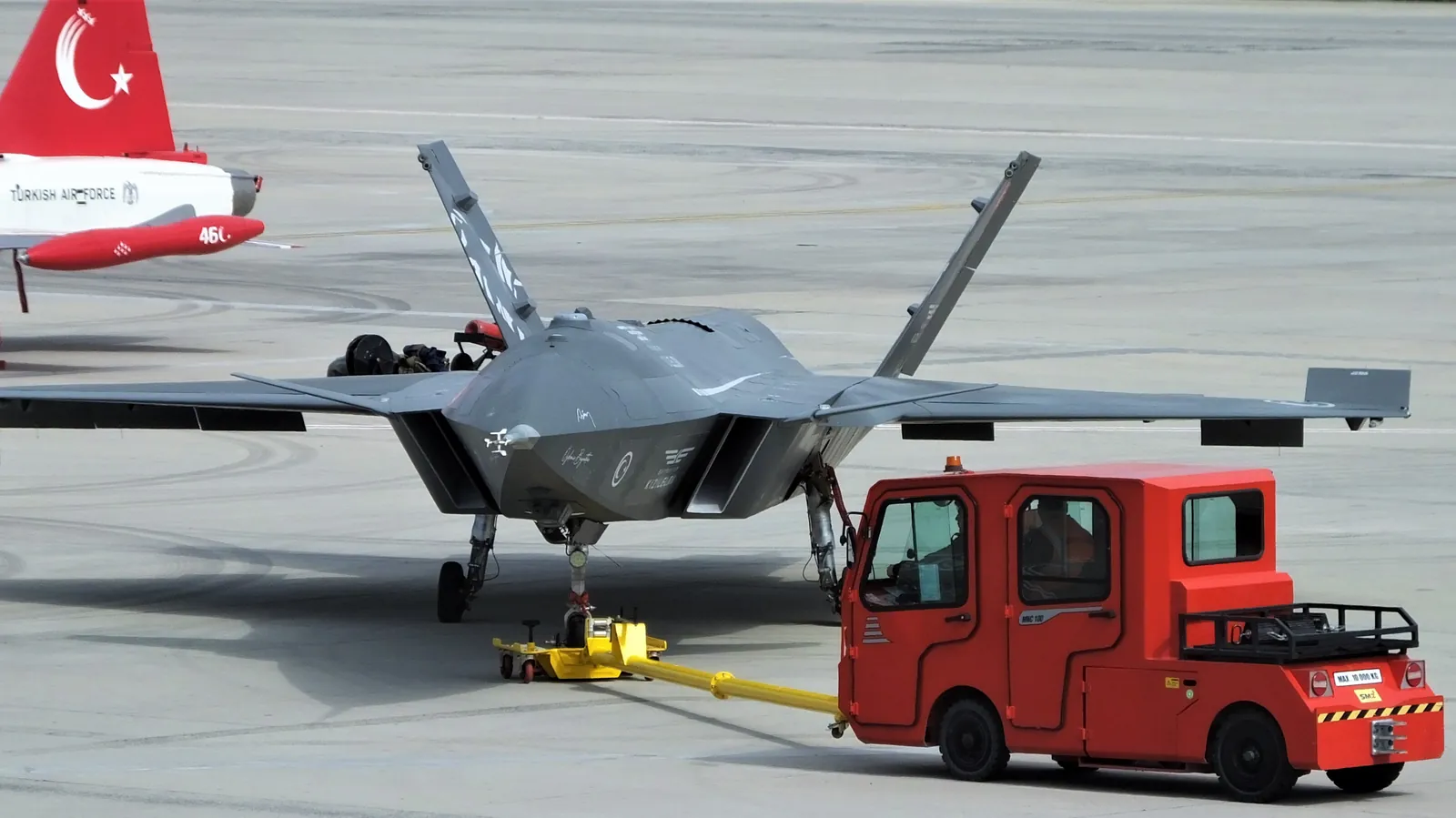
KIZILELMA’s signature feature is its indigenous AESA radar (announced as an adaptation of the Aselsan MURAD family). Its planned air-to-air fit is TÜBİTAK SAGE’s Bozdoğan (WVR) and Gökdoğan (BVR); air-to-surface starts with MAM-family PGMs and TEBER, with SOM-J to follow. XQ-58A’s internal bay is sized for the GBU-39 SDB, with external hardpoints for additional stores. In the loyal-wingman role, Valkyrie is also being explored for electronic warfare, ISR, and communications relay.
Take-off and landing: runway, rocket or ship?
This is the clearest doctrinal difference. KIZILELMA operates from short runways and ski-jump-equipped LHDs such as TCG Anadolu, with conventional landing gear. That gives the Turkish Navy something valuable: fixed-wing power projection without a full carrier. XQ-58A launches from a rocket-assisted sled and recovers by parachute, needing no runway at all — ideal for agile combat employment across dispersed sites. The USMC MQ-58 variant adds landing gear so it can pair rocket-launch flexibility with a conventional recovery.
Cost, production and program timeline
Kratos has historically targeted a serial unit price of roughly USD 4–5 million for XQ-58A; the USMC MQ-58 variant with landing gear and mission systems will run higher. KIZILELMA unit price has not been formally disclosed. Baykar states, as of 2026, that five prototypes and two serial-production aircraft have been built, with the first Turkish Armed Forces delivery in Q1 2026. USMC lists first MQ-58 turnover in 2029, with initial capability planned across the 2026–2030 window. That means KIZILELMA is entering operational service in Türkiye during the same period Valkyrie is still walking into US service.
Doctrine: standalone UCAV or loyal wing?
KIZILELMA was framed first as a standalone combat UCAV — an unmanned way to do part of what an F-16, an F-4, or eventually KAAN would do. It can fly as a loyal wingman when paired with KAAN, but Baykar treats that as a follow-on role. Valkyrie was born a collaborative combat aircraft: it is what USAF’s Skyborg program and USMC’s MUX TACAIR built up to. The two aircraft embody two different warfighting concepts: an “unmanned fighter” versus a “crewed fighter’s autonomous wingman.”
Which fits which scenario?
- Long endurance + heavy payload: KIZILELMA (1,500 kg payload, ~926 km combat radius).
- Runway-independent, dispersed operations: XQ-58A (rocket launch, parachute recovery).
- Sea-based launch: KIZILELMA (TCG Anadolu operational concept).
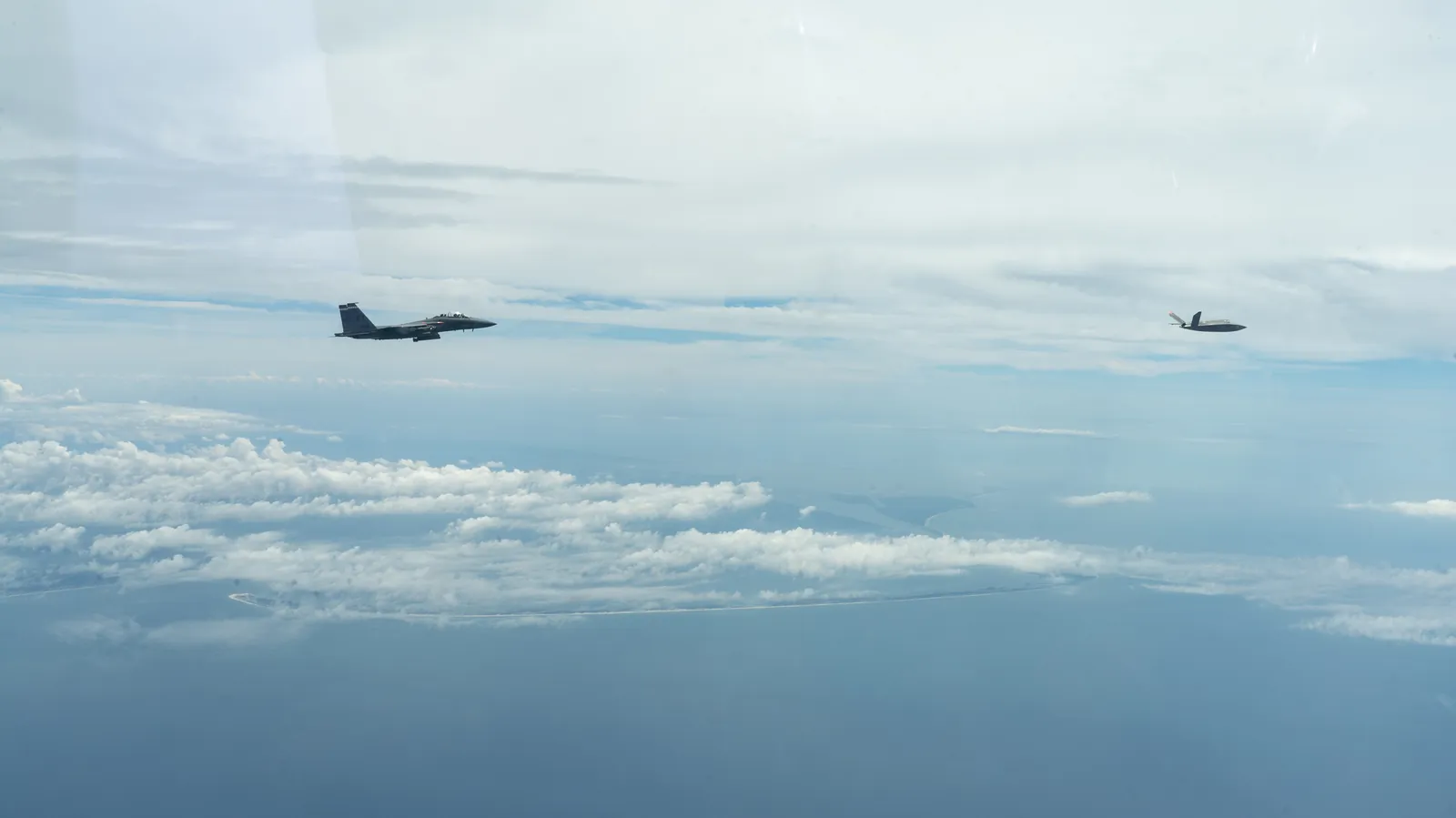
- F-35 teaming today: XQ-58A (existing AFRL/USMC integration testing).
- Sovereign system, export-flexible: KIZILELMA (Baykar’s ITAR-independent posture).
- Very low unit cost, high production volume: XQ-58A (Kratos “attritable” philosophy).
Timeline
- March 2019 — XQ-58A demonstrator first flight (Yuma range).
- December 2022 — Bayraktar KIZILELMA completed its first flight (Çorlu).
- November 2023 — Second KIZILELMA prototype (PT-2) first flight.
- 2024 — XQ-58A paired with F-35B in USMC test flights.
- Q1 2026 — First serial KIZILELMA delivery to the Turkish Armed Forces.
- January 2026 — USMC awards MUX TACAIR CCA to Kratos–Northrop Grumman team.
- 2029 (planned) — First USMC MQ-58 Valkyrie turnover.
FAQ
Is KIZILELMA supersonic?
The base KIZILELMA-A is high-subsonic (~Mach 0.9 max). Baykar has announced a twin-engine, supersonic KIZILELMA-B variant, with supersonic operational testing beyond 2026.
Does the XQ-58A really fly unmanned?
Yes. XQ-58A is a fully uncrewed platform. In 2023–2024 AFRL used Valkyrie to flight-test AI-driven autonomy algorithms; the aircraft has been flown under an “AI-pilot”.
Will KIZILELMA really launch from a ship?
Yes — it is designed for TCG Anadolu. Operating from a ski-jump-equipped LHD is central to Baykar’s public messaging; actual deck operations are the program’s key milestones.
What are the unit prices?
XQ-58A has long carried a target serial price of roughly USD 4–5 million; the USMC MQ-58 variant will cost more. KIZILELMA’s official unit price has not been disclosed.
What weapons does KIZILELMA carry?
MAM-L, MAM-T, TEBER, Bozdoğan (WVR AAM), Gökdoğan (BVR AAM), with SOM-J planned. The integration package leans heavily on Türkiye’s domestic supply chain.
Are external stations on XQ-58A?
The internal bay is sized for the GBU-39 SDB; additional external hardpoints extend weapons choice. The USMC weapons fit is not yet finalised.
Is KIZILELMA on offer for export?
Yes. Baykar markets KIZILELMA to both domestic and international customers; the Turkish Armed Forces are first operator, export talks are ongoing.
Why did the USMC pick Valkyrie?
The Marine Corps’ dispersed, island-basing operational concept (agile combat employment) rewards runway independence and low unit cost. The Kratos–Northrop Grumman team was assessed as the best fit.
Will KAAN and KIZILELMA fly together?
Yes — manned-unmanned teaming with 5th-generation KAAN is a stated goal, with KIZILELMA in a loyal-wingman role.
Are they direct competitors?
Commercially they can overlap in mid-budget export campaigns, but doctrinally KIZILELMA is an “unmanned fighter” and XQ-58A is a “loyal wingman.” Different problems, different answers.