





ASELSAN Scores Four Direct Hits With LGK and GÖZDE Kits

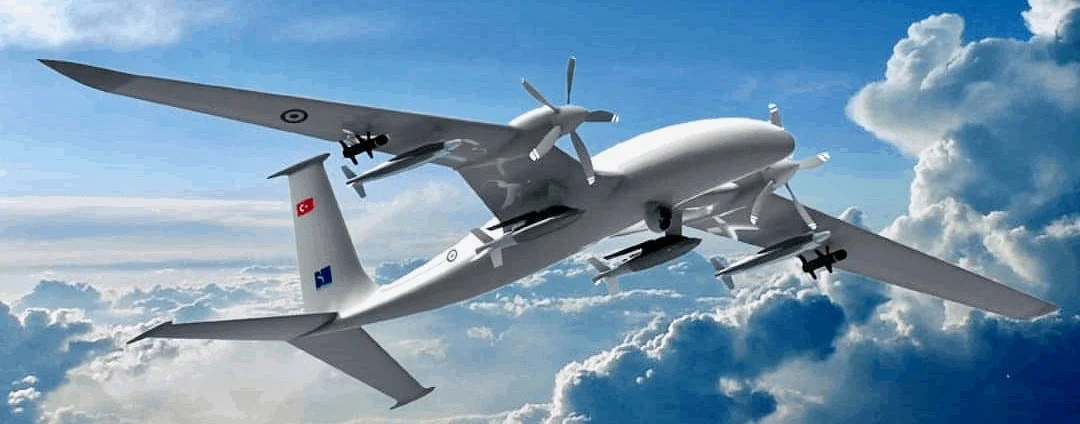
ASELSAN put its guided munition kits in front of an international audience at the Karapınar range in Konya, and the results were unambiguous: four releases, four direct hits, delivered from both an F-16 and a Bayraktar AKINCI. Delegations from fifteen countries watched the demonstration.
What was shown
The demonstration paired two product families. The LGK series — laser guidance kits fitted to conventional Mk-82 and Mk-84 class general purpose bombs — and GÖZDE, ASELSAN’s guidance kit developed to convert unguided bombs into precision weapons using inertial and satellite navigation.
Releasing from an F-16 and from AKINCI in the same event was a deliberate choice. It demonstrates that the same munition inventory serves both a manned fast jet and a high-altitude long-endurance unmanned platform, without separate integration programmes for each. For export customers operating mixed fleets, that single point does more selling than any brochure figure.
Why kits, not new bombs
A guidance kit is an economic argument before it is a technical one. Air forces around the world hold large stocks of unguided general purpose bombs bought over decades. Replacing them with purpose-built precision weapons is prohibitively expensive. Fitting a nose and tail kit converts existing inventory instead, at a fraction of the cost of a new-build guided munition.
The LGK family uses semi-active laser guidance, homing on energy reflected from a target designated either by the launch aircraft or by a ground party. That makes it effective against moving targets — vehicles, small boats, relocating equipment — where satellite guidance struggles.
GÖZDE takes the complementary path, using inertial navigation corrected by satellite positioning to strike fixed coordinates. It works through cloud and at night, does not require anyone to hold a laser on the target, and permits release from standoff distances. Together the two families cover the two halves of the precision strike problem.
The AKINCI factor
The AKINCI matters here for a specific reason: payload. Earlier Turkish armed UAVs were limited to light munitions in the tens of kilograms. AKINCI carries class-standard bombs, which means the kits demonstrated at Karapınar are the same weapons a fighter would drop.
That closes a gap that shaped a decade of drone warfare. An unmanned platform loitering for many hours, carrying munitions previously reserved for manned aircraft, changes both the economics and the tempo of air-to-ground strike.
The export dimension
Fifteen national delegations at a live-fire demonstration is a marketing event as much as a technical one. Turkish precision munitions have moved from domestic-only production to a genuine export line over the past several years, carried in part by the visibility of the platforms that deliver them.
The competitive field is crowded. The American JDAM and Paveway families define the category, with the French AASM Hammer, the South African Umbani and several Asian kits contesting the same customers. Turkish industry competes on price, on delivery timelines and on the absence of end-use restrictions that complicate some Western sales — and increasingly on the package effect of selling the aircraft and the munition together.
What to watch
The Karapınar event does not by itself produce contracts. But demonstrations of this kind are how munitions programmes enter foreign procurement pipelines, and the countries represented will be visible in ASELSAN’s export figures over the coming years if the pitch lands.
Sources
- ASELSAN corporate statements
- Baykar platform documentation
- Analysis by Defence Industry Europe