KAAN vs F-35 Lightning II: Full Technical Comparison of Fifth-Generation Fighters
Summary Not Found.
Turkey’s TAI KAAN, which flew for the first time in February 2024, represents Ankara’s bid to field an indigenous twin-engine fifth-generation fighter after its removal from the F-35 programme. Across the table sits the Lockheed Martin F-35A Lightning II, the most widely fielded fifth-generation aircraft in the world, with more than 1,000 jets delivered to over twenty NATO and allied operators. From an alliance and export standpoint, this comparison weighs a mature, combat-tested stealth fighter against an ambitious newcomer still moving from prototype flights toward serial production.
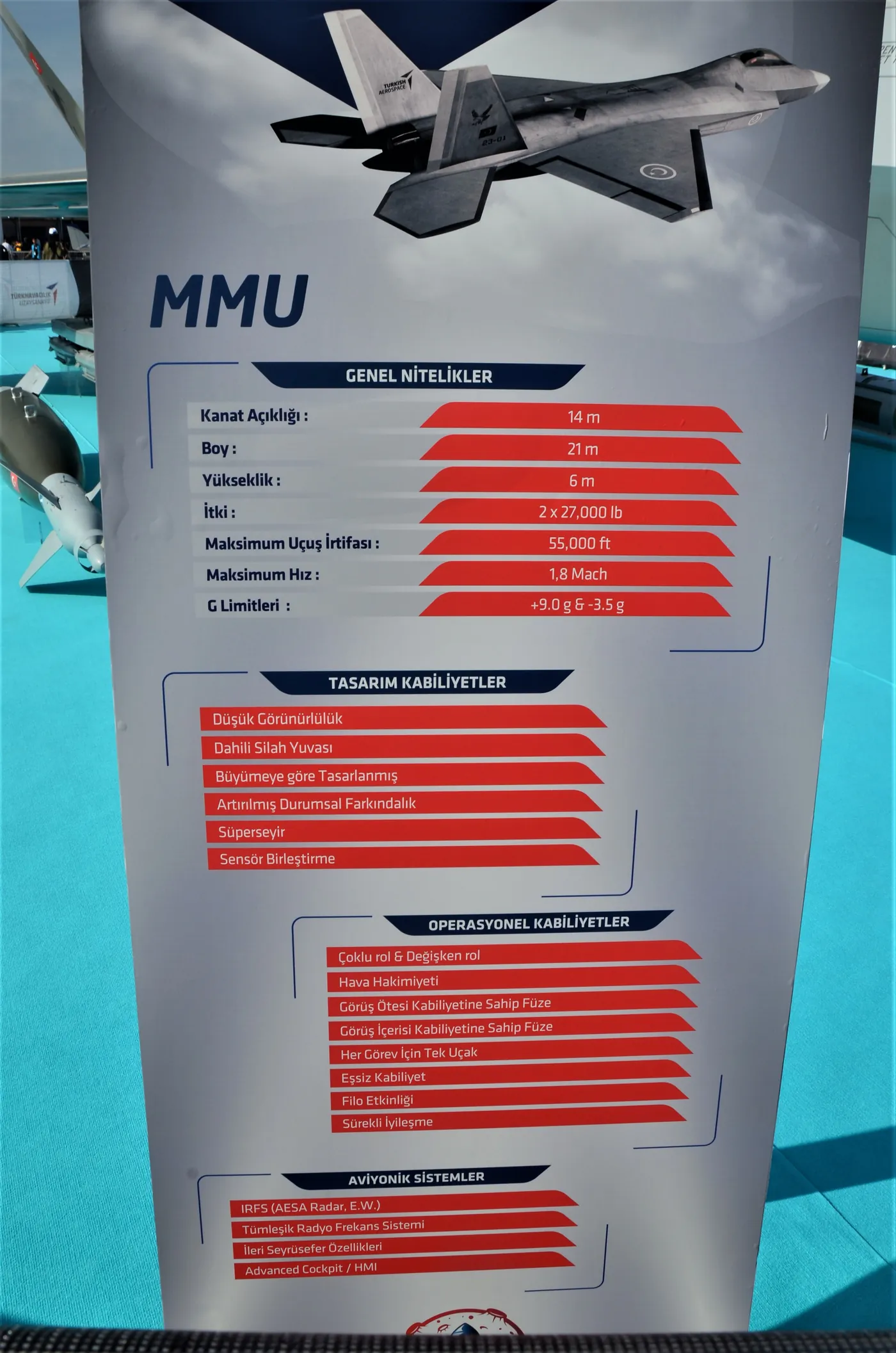
Twin-engine 5th-gen air-superiority stealth fighter (in development)
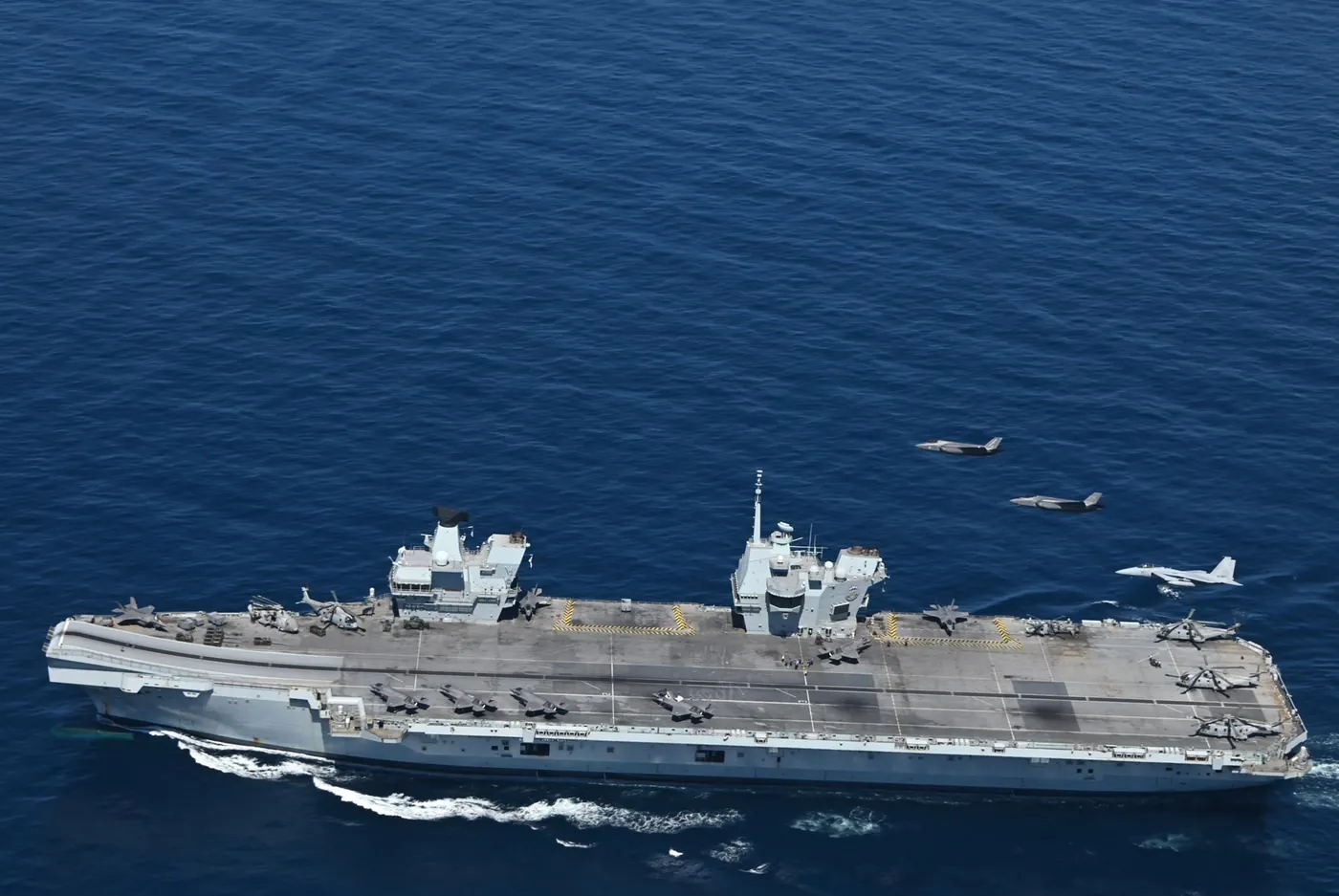
Single-engine 5th-gen multirole stealth fighter (in service)
Engine
2 × General Electric F110-GE-129 (~29,000 lbf AB each); indigenous TF35000 (~35,000 lbf) planned
1 × Pratt & Whitney F135-PW-100 (~43,000 lbf AB)
Max takeoff weight
~34,750 kg
~31,800 kg (70,000 lb)
Combat radius
Design target in the 1,000+ km class (unconfirmed)
Over 1,240 km (670+ nmi) on internal fuel
Radar / sensors
ASELSAN MURAD AESA + KARAT IRST + TOYGUN EOTS (national)
AN/APG-81 AESA + EOTS + DAS sensor fusion (mature)
Internal weapons
Internal bays for GÖKDOĞAN / BOZDOĞAN AAMs (integration ongoing)
Internal bays; up to ~22,000 lb total across 10 stations
First flight / status
First flight 21 Feb 2024; prototype flight testing; serial production targeted 2028-2030
In service since 2015; 1,000+ delivered, 20+ operators
Stealth and Airframe
KAAN — CC BY-SA 4.0F-35 Lightning II — CC BY 4.0
The F-35A is the product of decades of low-observable engineering, with a carefully managed radar cross-section, internal weapons carriage, embedded antennas and a maintainable stealth coating refined across more than a thousand airframes. Its signature management is backed by an exhaustive electronic intelligence library and operational data gathered in real combat, making it the benchmark for survivable penetration of contested airspace. For NATO planners, the F-35’s stealth is a known, validated quantity that integrates seamlessly into allied strike packages.
KAAN is designed from the outset as a stealth platform, with an internal weapons bay, chined fuselage and angular planform aimed at a reduced frontal signature. As a twin-engine design it is physically larger than the F-35 and emphasizes air superiority, with the airframe still in early flight testing. Its clean-sheet design lets Turkey embed contemporary lessons in signature management, but the actual radar cross-section remains unproven and the low-observable maintenance ecosystem is yet to mature. On demonstrated stealth performance the F-35 retains a decisive edge.
Sensors and Avionics
The F-35’s sensor fusion is arguably its defining strength: the AN/APG-81 AESA radar, Electro-Optical Targeting System and the 360-degree Distributed Aperture System feed a single fused picture to the pilot, while Multifunction Advanced Data Link sharing turns every jet into a node of a networked kill web. This fusion, hardened across operational deployments, lets the F-35 act as a sensor and battle manager for legacy fleets, a capability NATO air forces increasingly build their doctrine around.
KAAN centers its avionics on a fully indigenous suite: ASELSAN’s MURAD AESA radar, the KARAT infrared search-and-track and the TOYGUN electro-optical targeting system, with a roadmap toward manned-unmanned teaming controlling ANKA-III and KIZILELMA. A sovereign architecture allows rapid, license-free software updates and customer-specific tailoring. However, this sensor-fusion ecosystem is at an early integration stage and has not been validated in operations. KAAN offers a fresh, sovereign foundation; the F-35 wins on proven, deeply fused combat avionics.
Propulsion and Performance
KAAN is currently flying on two General Electric F110-GE-129 engines, the same class powering F-15s and F-16s, giving the twin-engine fighter substantial installed thrust and a measure of redundancy that single-engine designs lack. The strategic objective is the indigenous TF35000 afterburning turbofan, targeted at roughly 35,000 lbf, which would free the programme from foreign engine controls. Twin-engine architecture and a high max takeoff weight position KAAN as a large, kinematically capable air-superiority airframe, though its definitive engine is still in development.
The F-35A relies on a single Pratt & Whitney F135 delivering around 43,000 lbf in afterburner, the most powerful fighter engine in widespread service, enabling Mach 1.6 and a combat radius beyond 1,240 km on internal fuel. Its propulsion is mature, mass-produced and globally supported, albeit subject to U.S. export controls and with an upgrade path through the Engine Core Upgrade. KAAN’s twin-engine layout offers redundancy and growth, but the F-35’s single F135 is a fully proven, sustained-production powerplant; on validated propulsion the F-35 leads.
Cost, Export and NATO Context
The F-35 is a NATO and allied standard, operated by the United States, United Kingdom, Italy, Netherlands, Australia, Norway, Denmark, Canada, Belgium, Poland, Finland, Israel, Japan, South Korea and others, with well over a thousand aircraft fielded. That scale delivers economies of production, a vast spares and training pipeline, and guaranteed coalition interoperability. Its drawbacks are a high through-life cost and the political conditionality of U.S. release, which is precisely the gap Turkey is moving to fill.
KAAN has secured no export deliveries yet, but interest has been signalled at international shows, and Ankara targets initial operational capability and the first Block-10 jets toward 2028-2030. Its appeal lies in offering a fifth-generation alternative without Washington’s transfer restrictions, with the prospect of technology transfer and co-production for partners shut out of the F-35. For export customers seeking strategic autonomy, KAAN is a compelling proposition, but on maturity, fielded numbers, interoperability and proven export success the F-35 dominates by a wide margin; KAAN competes on sovereignty and future potential.
Operating Nations
System
Operators
KAAN
Turkey (in development; serial production targeted 2028-2030); export interest signalled in the Gulf and Europe
F-35A Lightning II
United States and 20+ allies, including the UK, Italy, Netherlands, Australia, Norway, Denmark, Canada, Belgium, Poland, Finland, Israel, Japan and South Korea
Verdict
The F-35A Lightning II is the overwhelming leader in this matchup (90/100), with proven stealth, deeply fused combat avionics, a mature high-thrust engine and an unrivalled NATO and allied operator base of over a thousand jets. KAAN (48/100) is an ambitious indigenous twin-engine air-superiority fighter with a sovereign sensor suite and strong future potential, but it is still in prototype flight testing with no combat record or exports; its standing will rise as serial production, the TF35000 engine and weapons integration mature.
Frequently Asked Questions
Which is better, the KAAN or the F-35 Lightning II?
On today’s maturity the F-35A is clearly superior: it is in service with more than twenty operators, has proven stealth and combat-tested sensor fusion, and is backed by global production and support. KAAN is a promising indigenous fifth-generation fighter with a sovereign avionics suite, but it is still in prototype flight testing, has no operational record and no export deliveries yet.
Does the KAAN use a Turkish engine?
Not yet. The prototypes fly on General Electric F110-GE-129 engines, the same class used by F-16s and F-15s. Turkey is developing the indigenous TF35000 afterburning turbofan, targeted at around 35,000 lbf, to power production aircraft and remove dependence on foreign engines.
When will the KAAN enter service?
KAAN made its first flight on 21 February 2024 and remains in prototype flight testing. Turkey targets initial operational capability around 2028 and aims to deliver the first batch of roughly twenty Block-10 jets between 2028 and 2030, subject to test and engine milestones.
How does KAAN’s stealth compare to the F-35?
KAAN is designed as a stealth platform with an internal weapons bay and a low-observable planform, but its radar cross-section is unproven and its stealth-maintenance ecosystem is immature. The F-35’s signature management is validated across more than a thousand airframes and in real operations, so it retains a decisive edge for now.
Why would a country choose KAAN over the F-35?
Mainly for strategic autonomy: KAAN offers a fifth-generation option without U.S. export restrictions, with the prospect of technology transfer and co-production. It is attractive to states excluded from the F-35 or seeking sovereign industrial capacity, in exchange for accepting lower maturity and a support network that is only beginning to form.