What Is Mortar Ammunition and How Does It Work?

Last updated: 31 July 2026
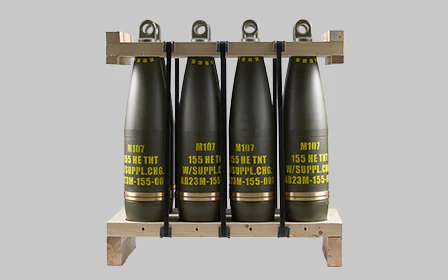
What is mortar ammunition and how does it work? A mortar round is an artillery projectile fired on a high, arcing trajectory. That steep descent lets it reach targets behind trenches and hills. Light and portable, the mortar is infantry’s closest fire-support tool.

What is mortar ammunition?
The mortar is infantry’s closest indirect-fire support weapon. A mortar round is the projectile it fires, following a steep, arcing path to the target. That steep trajectory is what makes mortars special: the round descends almost vertically, striking targets behind a hill or trench.
How a mortar works
In conventional mortars, the round is dropped down the muzzle. When it reaches the base, a fixed firing pin trips the primer, which ignites the propellant and launches the round at a high angle. That is the general principle — this page includes no practical setup, filling or firing instructions.
| Part | Function (general) | Purpose |
|---|---|---|
| Warhead | Body + filler | Effect on target |
| Propulsion | Primer + increments | Thrust and range |
| Tail / fins | Stabiliser | Flight stability |
| Fuze | Timing mechanism | Moment of detonation |
What determines range?
Range depends on calibre (60/81/120 mm), propellant charge (number of increment rings), firing angle and the round’s aerodynamics. As a rule, larger calibre and more propellant mean longer range, though high-angle fire is more range-limited than flat-trajectory artillery.
ARCA and mortar ammunition
ARCA lists 60, 81 and 120 mm mortar rounds in its official catalogue — the world’s most common mortar standards, serving a broad user base.
Frequently asked questions
What is mortar ammunition?
A mortar round is an artillery projectile fired from a mortar on a high, arcing trajectory. It usually carries a high-explosive warhead and provides short-to-medium-range fire support.
How does a mortar work?
The round is dropped down the muzzle; a fixed firing pin at the base ignites the primer, which lights the propellant and launches the round at a high angle. This steep trajectory reaches targets behind cover.
What parts make up a mortar round?
Generally a warhead (body and filler), a propulsion system (primer and increment charges), tail fins (stabilisation) and a fuze (detonation timing). Detailed internal structure is not provided here.
What determines a mortar’s range?
Range depends on calibre, propellant charge, firing angle and projectile design. More increment charges and larger calibre generally mean longer range.
What’s the difference between a mortar and artillery?
A mortar is light, portable and fires at a high angle; conventional artillery (howitzers) is heavier, longer-ranged and can fire flatter trajectories. Both provide indirect fire.
Sources
- General military references on mortar systems.
- ARCA Defense official website — Products (July 2026).
Related: ARCA mortar ammunition