Protector USV: Israel’s Armed Unmanned Surface Vessel — Technical Analysis and Turkish ULAQ Comparison

Protector is an armed unmanned surface vehicle (USV) jointly developed by Israel’s Rafael Advanced Defense Systems and Elbit Systems, and the world’s most operationally tested armed naval drone. At 11 metres on an aluminium hull, capable of 15–25 knots, and equipped with the Mini-Typhoon remote weapon station, Protector has been in continuous Israeli Navy operational service since 2002 for coastal patrol, maritime interdiction, and threat identification in the Mediterranean and Gaza coastal corridor — accumulating two decades of real-world combat-adjacent operational data that no other USV programme has replicated.
Technical Specifications
| Parameter | Value |
|---|---|
| Developers | Rafael + Elbit Systems (Israel) |
| Type | Armed unmanned surface vehicle (USV) |
| Hull | 11 m aluminium |
| Displacement | ~4 tonnes |
| Speed | 15–25 knots |
| Range / endurance | 100+ nautical miles (fuel-dependent) |
| Control mode | Remote control (operator station); semi-autonomous option |
| EO/IR sensors | Electro-optical/IR camera; laser rangefinder |
| Weapon integration | Mini-Typhoon RCWS (12.7 mm / 7.62 mm); Spike LR optional |
| Payload modules | Sonar, mine detection, radar, intelligence package (modular) |
| Crew | Zero (fully unmanned; remote-controlled) |
| Operators | Israel, Singapore, USA (test), Mexico |
Mini-Typhoon Weapon Station
Protector’s standard armament is Rafael’s Mini-Typhoon Remote-Controlled Weapon Station (RCWS). Configurable with a 12.7 mm heavy machine gun or 7.62 mm machine gun, the station integrates EO/IR targeting and laser rangefinder. The operator fires from a remote station while viewing real-time imagery from the vessel. Optional Spike LR integration gives Protector precision long-range engagement capability against surface and coastal infrastructure targets.
Operational Record: Israeli Navy
- Gaza maritime interdiction: Protector vessels approached and intercepted boats near the Gaza coastal zone without requiring manned crews in potential confrontation situations.
- Naval base perimeter security: Automated patrol cycles around Israeli naval facilities.
- Threat identification: Close-pass identification of suspicious surface contacts without exposing manned boat crews.
This 20+ year operational record is Protector’s most significant competitive differentiator: no other armed USV programme has accumulated comparable real-world performance data in active naval operations.
Turkish Counterpart: ULAQ
| Attribute | Protector | ULAQ |
|---|---|---|
| Length | 11 m | ~11 m |
| Speed | 15–25 knots | ~35 knots |
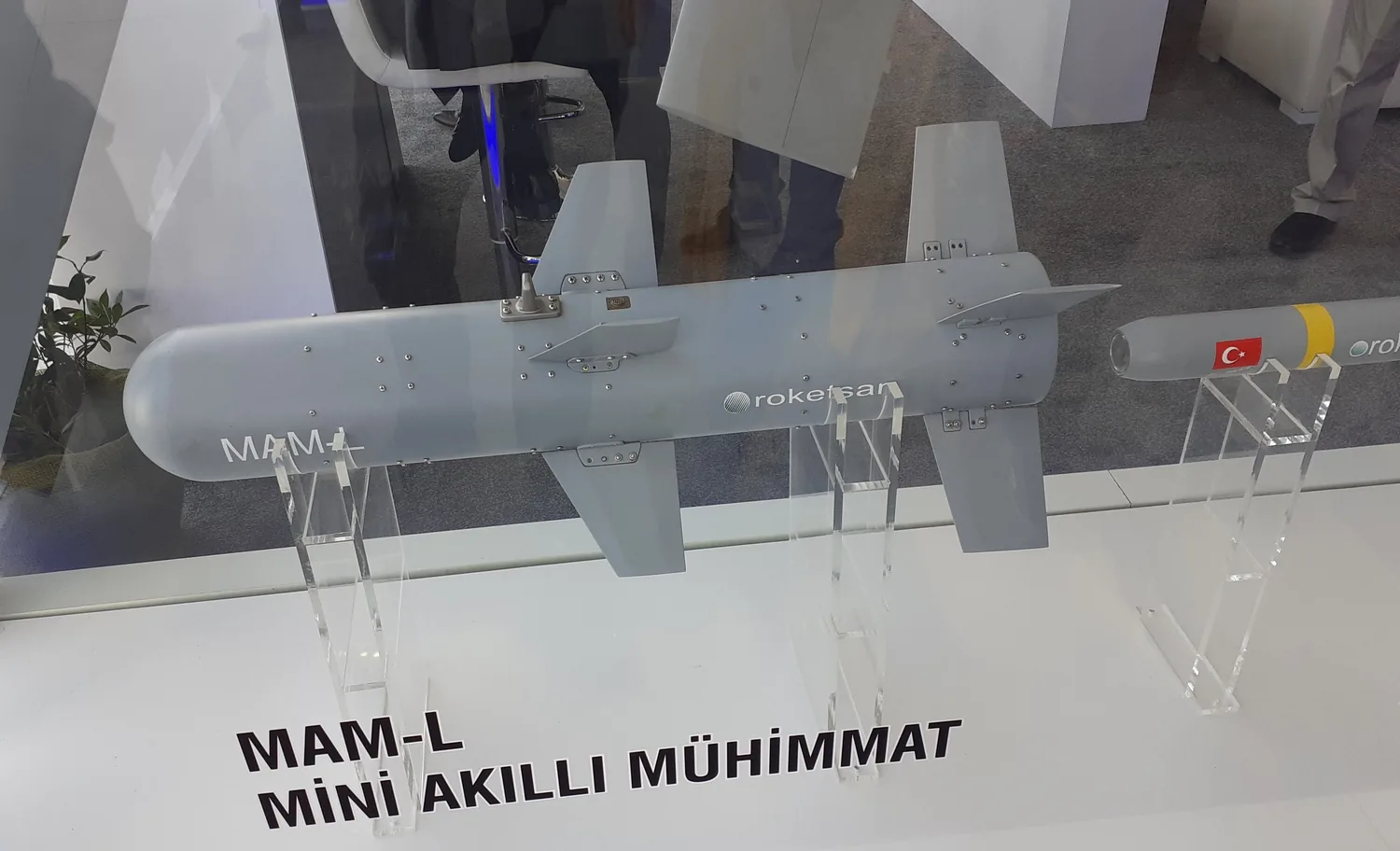
| Weapons | Mini-Typhoon 12.7mm + Spike LR option | Cirit LGR, MAM-L, L-UMTAS, Sungur MANPADS options |
| EO/IR | Yes; laser rangefinder | Yes |
| Combat data | Active operations since 2002 | |
| Operator | Israeli Navy, Singapore, Mexico | Turkish Navy (planned) |
ULAQ’s speed advantage and integration with Turkey’s domestic munitions ecosystem (Cirit, MAM-L, L-UMTAS) make it technically competitive. The gap is operational validation: Protector’s 20 years of real operational data cannot be replicated without operational deployment. ULAQ is in the right product category at the right time for Turkey’s Aegean and Eastern Mediterranean patrol requirements — how quickly it accumulates operational data is the next question.
Global USV Competition
| System | Country | Length | Key Difference |
|---|---|---|---|
| Protector | Israel / Rafael-Elbit | 11 m | Combat-proven; modular weapon integration; longest operational record |
| Mantas T-12 | USA | 3.6 m | Small; recon-focused; high speed |
| Saildrone | USA | ~7 m | Long endurance; wind/solar; unarmed ISR |
| SEA-FOX | Germany / Atlas | ~4 m | Mine-countermeasure focused |
| ULAQ | Turkey / Ares-Roketsan | 11 m | Armed; 35 knot; Turkish munitions ecosystem; no combat data yet |
Operators
| Country | Mission | Status |
|---|---|---|
| Israel | Coastal patrol, interdiction, base protection | Operational since 2002 |
| Singapore | Littoral patrol; Republic of Singapore Navy | Operational |
| USA | Testing / evaluation programmes | Evaluation; various programmes |
| Mexico | Naval patrol | Operational (reports) |
Envanter Medya Analysis
Protector’s significance in the USV market is less about its technical specifications and more about what it proved: that an armed, remotely-operated surface vessel could sustain continuous naval patrol operations in an active operational environment for years without major incident. When Israel deployed Protector in the early 2000s, the category was theoretical. By 2010, it was a reference system. By 2025, dozens of national programmes cite it as the benchmark.
For Turkey: ULAQ’s weapons integration profile is arguably more capable than Protector’s baseline — integrating Cirit, MAM-L, and L-UMTAS gives the platform a precision-strike depth that Protector’s Mini-Typhoon + Spike LR doesn’t match in diversity. The Aegean and Eastern Mediterranean operational environment — dense with civilian maritime traffic, asymmetric threats, and sovereignty-sensitive patrol requirements — is precisely the environment where Protector’s patrol-and-interdiction model has the most direct analogy. Deploying ULAQ to operational service, accumulating data, and iterating from that data is the path that closes the 20-year experience gap. There is no shortcut.