MAM Series Compared: MAM-C vs MAM-L vs MAM-T vs Rivals

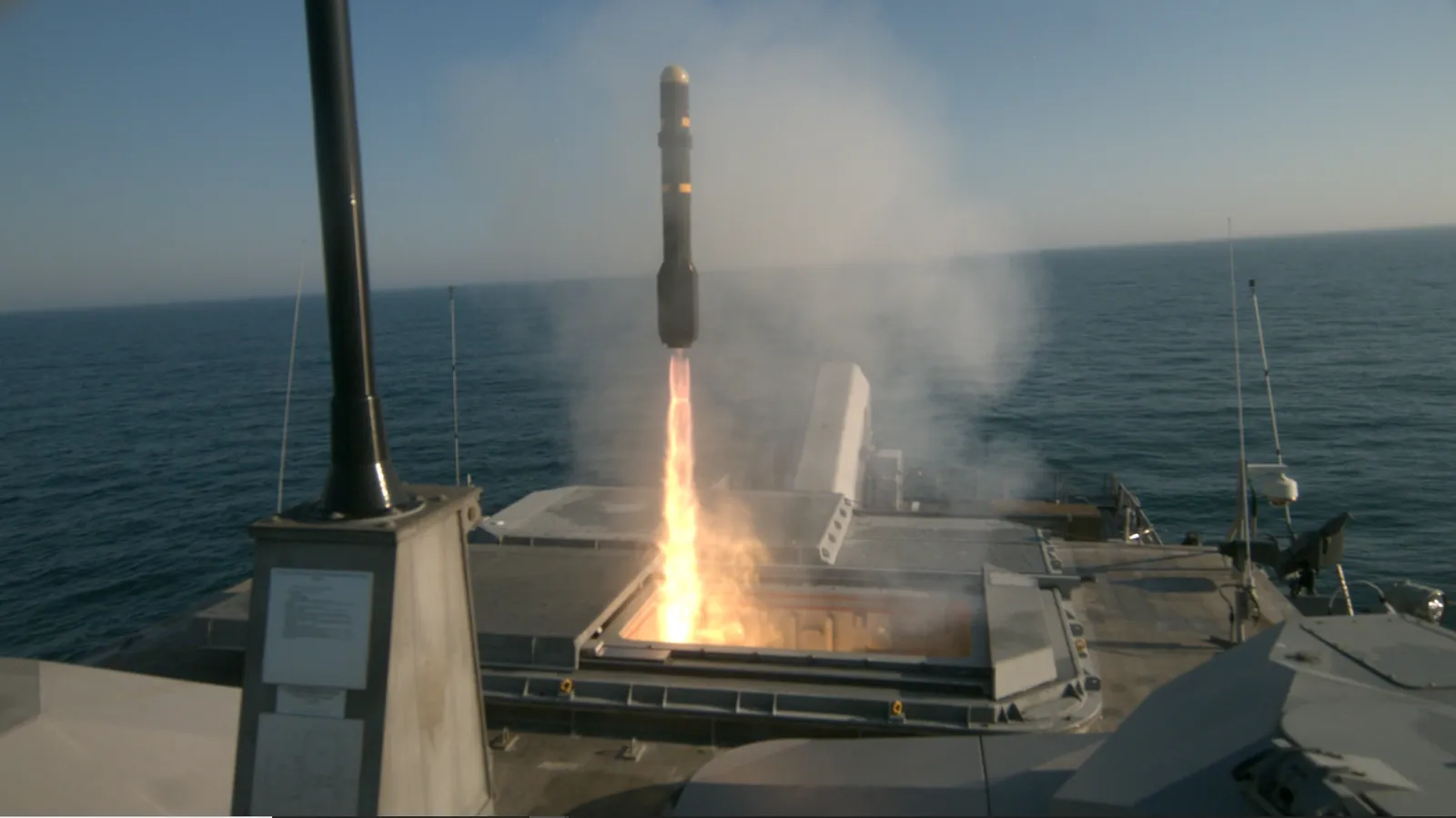
Roketsan’s MAM family of smart micro munitions comes in three tiers: the 6.5 kg MAM-C (8 km), the 22 kg MAM-L (15 km, 25+ km in the IIR variant) and the 95 kg MAM-T (30+ km from a UAV). Its closest Western counterparts are Brimstone and Hellfire — but those are rocket-powered missiles, while every MAM is an unpowered glide munition. This article compares the family internally and against its class rivals, in tables.
| MAM Comparison — At a Glance | |
|---|---|
| Scope | Internal MAM comparison + class comparison |
| Family members | MAM-C, MAM-L, MAM-T |
| Developer | Roketsan (Türkiye) |
| Class | Unpowered precision glide munition |
| Rivals compared | Brimstone (UK), Hellfire (US) |
| Key difference | MAM is unpowered; Brimstone and Hellfire are rocket-powered |
| Main platforms | Bayraktar TB2, Akıncı, Anka, Aksungur |
| Warhead weights | Not officially disclosed |
MAM-C vs MAM-L vs MAM-T: what separates them
All three MAM members share one concept: a precision-guided munition with no motor of its own, released from a UAV and gliding to the target on pop-out fins. What separates them is size and mission tier.
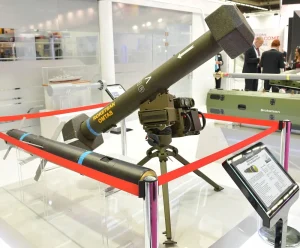
MAM-C is the lightest member at 6.5 kg, 970 mm long and 70 mm in diameter. With a range of about 8 km, it is the only option small tactical UAVs can carry, and it pairs a multi-purpose/high-explosive warhead with soft and lightly protected targets.
MAM-L is the workhorse: 22 kg (23 kg for IIR), roughly 1 m long and 160 mm in diameter. The baseline semi-active laser version is credited with 15 km; the imaging-infrared (IIR) variant extends that beyond 25 km. Warhead options include armour-piercing high-explosive and thermobaric fills, and it is by far the most widely used weapon of the Bayraktar TB2.
MAM-T is the heaviest and longest-legged member, officially 95 kg, with a 230 mm diameter. ROKETSAN’s current official figure is 30+ km from a UAV; older sources cited 60–80 km from manned aircraft. ROKETSAN also lists an optional proximity-sensor/GPS configuration for MAM-T, allowing release against coordinates.
Which MAM for which mission?
The tiered structure creates a clean division of labour. MAM-C is the cheap, light option for high-tempo strikes against unhardened targets, and it turns small UAVs into armed platforms. MAM-L carries the bulk of real-world missions against armoured vehicles, positions and buildings; a TB2 can carry it on all four stations, allowing several engagements per sortie. MAM-T exists for the scenario where air defences keep the platform at arm’s length: a release distance beyond 30 km can hold the launching aircraft outside the envelope of short- and medium-range air defence systems.
One caveat applies to every figure in this article: for an unpowered glide munition, range is not a fixed property. Real-world reach depends directly on release altitude and platform speed, so official range figures represent upper values for specific release profiles.
For the class comparison, MAM-L is the natural baseline — it is the family’s most fielded member, and Brimstone and Hellfire address the same mission set. The fundamental divide is propulsion: Brimstone and Hellfire are missiles with their own rocket motors, whereas the MAM-L glides unpowered. That makes the Turkish munition lighter and cheaper to produce, but its range depends on release altitude, and it lacks the terminal energy of a powered missile. The table below is compiled from open sources; several rival figures vary by variant.
Unpowered glide vs powered missile: what the difference really means
Propulsion is the single factor that most defines the character of these three weapons. Powered missiles such as Brimstone and Hellfire deliver their range largely independent of release altitude, can be fired from low level and arrive at high terminal speed — which shortens reaction time against moving targets. The price is weight and cost: the motor makes the round heavier and considerably more expensive.
The unpowered MAM answers the same mission with a lighter and cheaper round. A mid-size UAV like the TB2 can carry roughly twice as many MAM-Ls as it could Hellfire-class missiles, multiplying the number of targets engaged per sortie. The trade-off is altitude-dependent range and a lower terminal speed than a powered weapon. Neither approach is universally superior: for persistent surveillance-strike patrols, magazine depth and cost favour the MAM; against heavily defended or fast-moving targets, the flexibility of a powered missile earns its premium.
On cost, no manufacturer publishes official unit prices, but open-source assessments consistently place the motor-less, domestically produced MAM-L in a distinctly lower cost class than Brimstone or Hellfire. For Türkiye there is a second advantage: MAM exports are not subject to US ITAR rules or UK approval, which has repeatedly proven decisive in export campaigns.
The ecosystem effect: bundled with TB2 and Akıncı
Arguably the most important differentiator is commercial rather than technical. Brimstone and Hellfire require the buyer to arrange platform and integration separately; the MAM travels as a natural part of Bayraktar TB2 and Akıncı export packages. Munition-level evidence is public for only a few of them: Türkiye operates it, Poland’s 2021 TB2 contract covers MAM-L and MAM-C, and use has been reported in Azerbaijan, Libya and Ukraine. Owning a TB2 does not by itself prove a country operates MAM.
This bundling model turns munition exports into a multiplier of UAV exports: every new TB2 or Akıncı customer is also a long-term MAM customer. It mirrors Hellfire’s position within the MQ-1/MQ-9 ecosystem, giving Roketsan steady production volume and the buyer single-source logistics. Beyond the datasheet numbers, the MAM family’s real position is that of the combat-proven munition layer of the Turkish UAV ecosystem — and one of the quiet engines of its export success.
Warhead weights for the MAM series have not been officially disclosed by Roketsan; the ~10 kg figure often cited for MAM-L comes from an independent source (Janes). ROKETSAN gives MAM-T’s total weight as 95 kg (96 kg for the IIR variant). Range, weight and warhead figures for Brimstone and Hellfire are compiled from open sources and vary by variant; the cost comparison is class-level only, as no official unit prices are published. For unpowered glide munitions, range depends on release altitude and platform speed.
Frequently Asked Questions
What is the main difference between MAM-C, MAM-L and MAM-T?
Size and range tier. MAM-C is the lightest at 6.5 kg with an 8 km range; MAM-L weighs 22 kg (23 kg for IIR) and reaches 15 km (25+ km in the IIR variant); MAM-T weighs 95 kg and reaches 30+ km from a UAV.
Is the MAM-L better than Hellfire?
It depends on the mission. Hellfire is a powered missile with high terminal speed and low-altitude launch capability. The MAM-L weighs about half as much and sits in a lower cost class, so the same platform carries twice the rounds. Magazine depth and cost favour MAM-L on persistent UAV patrols; a powered missile’s flexibility matters more against defended targets.
How does MAM differ from Brimstone?
In propulsion and guidance architecture. Brimstone is a rocket-powered missile with dual-mode mmW radar and laser guidance; the MAM glides unpowered and uses semi-active laser guidance in its baseline form. Brimstone is more capable but markedly heavier and more expensive.
Why does MAM range change with the platform?
Because the MAM has no motor — after release it glides. Range scales with release altitude and platform speed, which is why older sources quoted 60–80 km for MAM-T from manned aircraft, while ROKETSAN’s current figure is 30+ km from a UAV.
Are MAM warhead weights known?
They are not officially disclosed. Independent sources cite ~10 kg for the MAM-L (Janes), but this is not a confirmed official figure. Rival warhead figures in this article are likewise open-source data.
Does Roketsan make a powered equivalent of MAM?
Yes. The UMTAS and laser-guided L-UMTAS anti-tank missiles are Roketsan’s powered solutions, usable from the same UAV platforms but with their own rocket motors.
Sources
- Roketsan official — roketsan.com.tr
- Janes — MAM family and air-to-ground munition data
- MBDA official — Brimstone product page
- Lockheed Martin / US Army — AGM-114 Hellfire open data
- Wikipedia (English/Turkish) — MAM, Brimstone, AGM-114 Hellfire
- Defence industry press (2020-2026)