





What Are Karel Military Switching Systems? DS200T PBX, AG101/AG102 Gateways and TAG102 Radio-IP Bridge

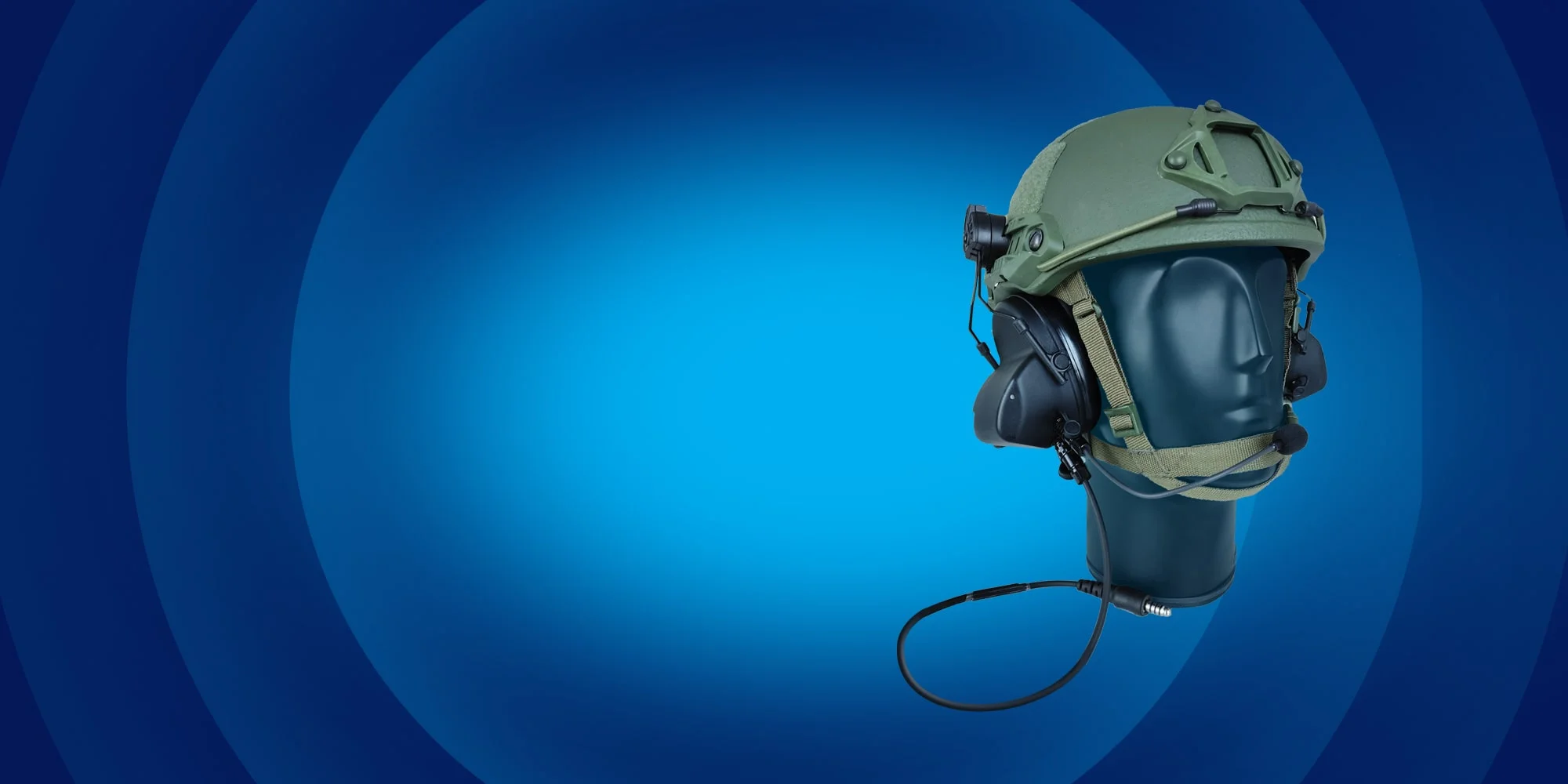
The most critical link in a battlefield communications chain is rarely the radio. It is the switch — the device that decides which call gets through to the commander when a dozen simultaneous requests arrive at once, that translates between the analogue field telephone and the IP network, and that keeps the radio operator talking to headquarters when the digital trunk goes down. Karel’s military switching product line — the DS200T tactical PBX, the AG101/AG102 gateways, and the TAG102 radio-to-IP gateway — addresses exactly that layer of the tactical communications stack.
Why military switching systems exist as a distinct category
Commercial PBX equipment is engineered for office environments: stable power, benign temperature, no electromagnetic interference, no requirement to survive vibration or dust ingress. Military switching systems are a different discipline entirely. They must:
- operate across the full military temperature range and in high-vibration vehicular installations;
- support priority-call pre-emption — ensuring the battalion commander’s call is never queued behind a logistics inquiry;
- bridge heterogeneous line types (analogue, ISDN, VoIP, radio) in a single device;
- accept encrypted voice streams without requiring the switch itself to perform encryption (that function sits in the terminal or COMSEC device);
- run indefinitely on vehicle or generator power with redundant supply rails.
DS200T — Tactical IP PBX
The DS200T is the military adaptation of Karel’s proven DS200 platform, re-engineered for tactical deployment. As an IP-based (VoIP) military exchange, it bridges legacy analogue and ISDN infrastructure with modern IP networks — the critical interoperability requirement for any force operating mixed-generation equipment.
Key capabilities:
- Simultaneous support for analogue, digital, and IP terminals — backwards compatibility with existing garrison and field wiring;
- Priority call management and pre-emption;
- Modular card architecture allowing capacity scaling in the field;
- Redundant power supply rails for uninterrupted operation;
- Form factor suited to command-vehicle or shelter rack installation.
AG101 and AG102 — Media gateways
Where the DS200T manages call switching, the AG101 and AG102 handle protocol translation. They function as the “interpreter” between different signalling and media worlds — converting analogue or ISDN voice into IP streams and vice versa. The AG102 is the higher-density variant for large headquarters with greater simultaneous-channel demands.
Practical scenarios:
- Bridging a deployed unit’s field telephone infrastructure to a headquarters IP network without replacing existing cable plant;
- Connecting NATO-standard IP trunks to local ISDN exchanges at a host-nation facility;
- Enabling a phased transition to all-IP voice without a hard cut-over.
TAG102 — Radio-to-IP gateway
The TAG102 is arguably the most tactically significant product in the suite. It creates a bridge between conventional VHF/UHF radios and IP networks: inbound audio from the radio is packetised and injected into the IP network; inbound IP packets are demodulated and transmitted over the radio frequency. The result is that a soldier using a legacy radio in a forward observation post can reach the headquarters IP network without any change to his equipment.
Operational implications:
- Forward-deployed elements with radio-only connectivity can access IP-based command and control services;
- Units operating on different frequency bands can share a common communications infrastructure;
- The communications officer gains centralised network management regardless of the mix of radio and wired terminals.
Radio-to-IP integration at the hardware layer complements software-defined radio (SDR) approaches and is well suited to force structures that will field mixed SDR and legacy radio generations for the foreseeable future.
System integration
The three product families are designed to operate as an integrated tactical communications infrastructure rather than standalone products. In a typical deployment:
- The DS200T PBX anchors the headquarters, manages all voice routing, and enforces priority rules;
- The AG101/AG102 gateways connect the headquarters to external PSTN or ISDN lines and to adjacent unit networks;
- The TAG102 gateway extends IP connectivity to forward elements using their existing radios.
Together they deliver a single managed voice fabric across wired, radio, and IP segments — without requiring a complete equipment replacement at any tier of the force.
Karel’s position in Turkish defence communications
Karel has established a consistent presence across the switching and transport layers of Turkish military communications. Its SRC-GB tactical radio link provides the transport layer; the MOBAT Başlık provides rugged field connectivity; the switching suite provides voice management above those layers. The combination positions Karel as one of the few domestic vendors able to supply a coherent, multi-layer tactical communications stack to the Turkish Armed Forces.
Fielded quantities and specific unit allocations are not disclosed in open-source reporting, which is standard practice for Turkish defence procurement. Karel’s participation in IDEF 2025 highlighted these products as part of its “integrated defence technologies” strategic positioning.
Capability comparison
| Product | Function | Interfaces | Typical location |
|---|---|---|---|
| DS200T | Tactical IP PBX | Analogue / ISDN / IP | HQ shelter or command vehicle |
| AG101 | Media gateway (low density) | Analogue/ISDN ↔ IP | Intermediate node |
| AG102 | Media gateway (high density) | Analogue/ISDN ↔ IP | Large HQ |
| TAG102 | Radio-to-IP gateway | VHF/UHF radio ↔ IP | Forward command post |
Assessment
Military switching sits in the unglamorous middle of the communications architecture — below the headline radio and satellite systems, above the copper and fibre. Yet when that layer fails, the command-and-control chain breaks. Karel’s DS200T, AG101/102, and TAG102 represent a coherent domestic answer to this requirement: interoperable with legacy infrastructure, scalable in the field, and designed to operate under the environmental conditions that tactical deployments actually impose.
Sources
- Karel Defence — Military Switching Systems: karel.com.tr
- Karel Defence Technologies: karel.com.tr/savunma-teknolojileri
- Karel — IDEF 2025: karel.com.tr
- SSB (Presidency of Defence Industries): ssb.gov.tr