
Africa’s 10 Largest Helicopter Fleets in 2026: Egypt Leads, Algeria Follows, Tunisia Surprises

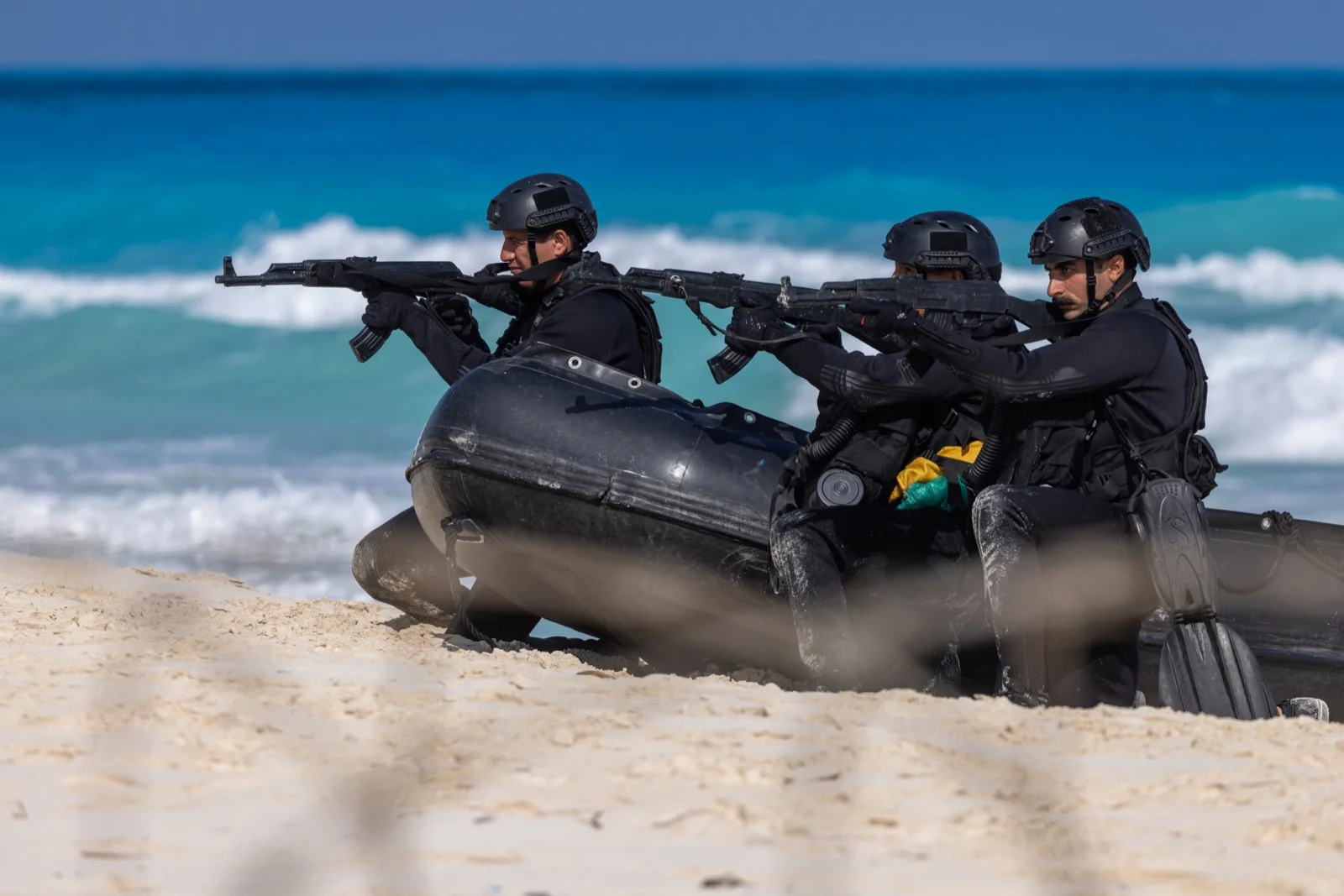
If you want to measure how far an African army can actually move, count helicopters rather than tanks. Across a continent of long distances, thin road networks and terrain that closes to armour for months at a time, rotary aviation determines nearly everything: how fast a battalion reaches a border, whether a casualty survives, how quickly fire support arrives.
Global Firepower’s 2026 dataset shows ten countries holding the overwhelming majority of Africa’s helicopter inventory. The name at the top will surprise nobody. The composition of the top five is another matter — a country of fewer than 12 million people outranks the continent’s most advanced defence industrial power, while Africa’s second-largest army sits at the bottom of the list.
This gallery counts down from tenth to first, and for each country it sets out the doctrine behind the number, where the airframes came from, which regional rivalry shapes procurement, and what the fleet actually delivers in a shooting war. All figures are drawn from Global Firepower’s 2026 inventory rankings — with the standing caveat that airframes on the books are not the same as airframes in the air.
The countdown starts at number ten.
#10 · ETHIOPIA
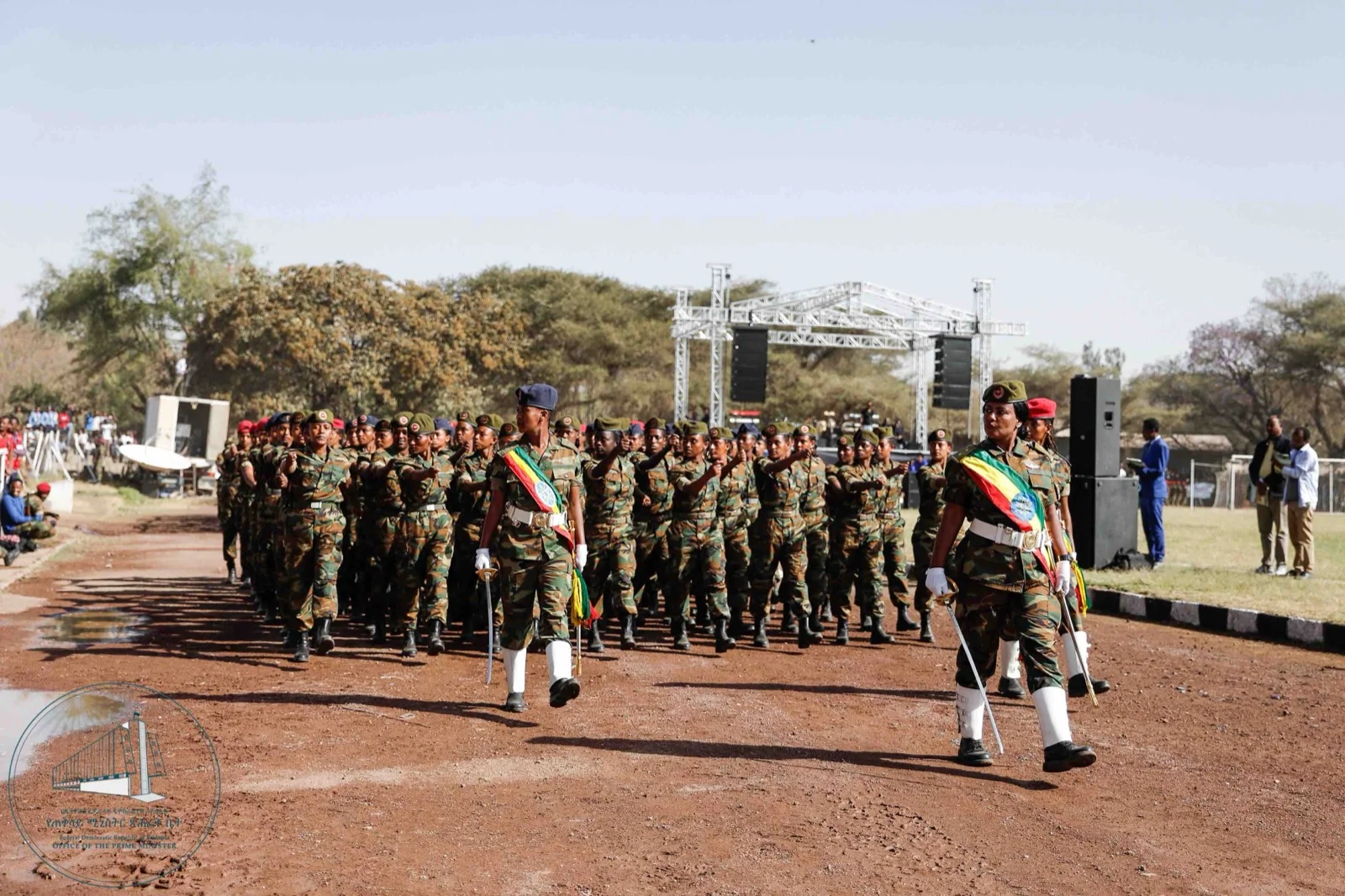
Ethiopia fields the second-largest standing army on the continent — roughly 503,000 active personnel — yet it closes this list with just 33 helicopters. The gap between manpower and airlift is the defining feature of Addis Ababa’s force structure, and it is not new.
The rotary fleet was built around Soviet and Russian inheritance: Mi-8/Mi-17 transports and Mi-24/Mi-35 gunships. Years of high-tempo operations in Tigray and Amhara ground that inventory down, and the distance between airframes on the books and airframes actually flyable has become a chronic problem. Spare parts, engine overhauls and trained maintainers are all constrained.
Terrain compounds the arithmetic. Much of Ethiopia sits above 2,000 metres, where thinner air cuts engine performance sharply. A helicopter that lifts a full load at sea level carries a fraction of it over the highlands — so 33 airframes translate into even less usable capability than the raw number suggests.
Addis Ababa has responded by leaning into unmanned systems rather than replacing the gunships one-for-one. Armed drones now absorb much of the reconnaissance and precision-strike workload, leaving helicopters to move troops and evacuate casualties. For a landlocked country with no navy and an infantry-heavy doctrine, that trade-off makes budgetary sense even if it caps the ceiling of what the air arm can do.
Despite commanding Africa’s second-largest army, Ethiopia operates roughly a third of the helicopters fielded by Tunisia — a country with a fraction of its population.
| Force component | Figure |
|---|---|
| Tanks | 338 |
| Total aircraft | 104 |
| Helicopters | 33 |
| Active personnel | 503,000 |
| Defence budget | $3.72bn |
The next entry shows what sustained civil war does to a rotary fleet.
#9 · SUDAN

Sudan’s 64 helicopters sit above the African average, but the context behind that number is unlike anything else on this list. Since 2023 the fighting between the Sudanese Armed Forces and the Rapid Support Forces has made rotary aviation both the most heavily used and the most heavily attrited part of the inventory.
In an urban war with no clear front line, helicopters do the work that road convoys cannot: resupplying besieged garrisons, lifting out casualties, and delivering fire support over built-up terrain. The backbone remains the Mi-8/Mi-17 transport family and Mi-24 gunships, supplemented in recent years by Chinese and Gulf-sourced airframes.
On paper Sudan looks formidable — 1,055 tanks and 300,000 active personnel place it among Africa’s larger conventional forces. But a defence budget of $394.7 million, the lowest on this list by a wide margin, cannot sustain that inventory. Khartoum depends on external supply lines for ammunition, spares and engine work, and those lines are politically contingent.
The result is a force that can still generate combat sorties but cannot regenerate itself. Sudan is the clearest illustration on this list that inventory size and operational readiness are different measurements.
Sudan ranks third in Africa for tank numbers yet does not make the continent’s top ten for defence spending — a mismatch that raises hard questions about how much of the fleet actually flies.
| Force component | Figure |
|---|---|
| Tanks | 1,055 |
| Total aircraft | 183 |
| Helicopters | 64 |
| Active personnel | 300,000 |
| Defence budget | $394.7m |
The next country is one of Africa’s largest economies — and its rotary fleet is smaller than you would expect.
#8 · NIGERIA
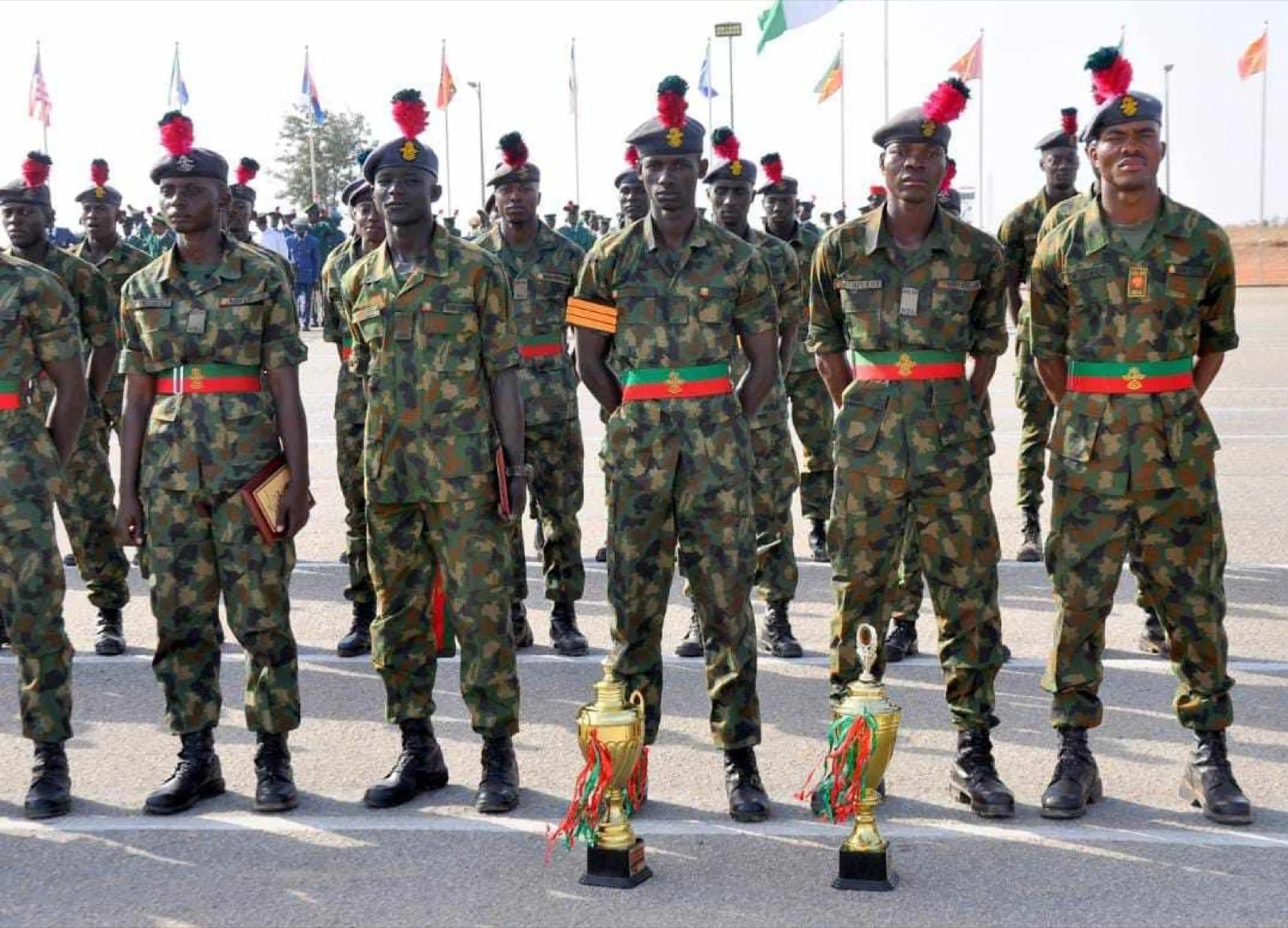
Nigeria is Africa’s most populous country and one of its largest economies, yet it operates only 69 helicopters. What the raw figure hides is the pace of change: few African air forces have modernised their rotary fleet as quickly over the past five years.
The long campaign against Boko Haram and ISWAP forced the issue. The Nigerian Air Force has taken delivery of AW109 light attack helicopters, Mi-171Sh transports and refurbished Bell 412 variants, while also standing up dedicated special operations aviation. Crew training, not airframe availability, is now the binding constraint.
The bigger shift has been unmanned. Turkish-built Bayraktar TB2 and Akinci systems entered service and rewired Nigeria’s find-fix-finish cycle, taking over surveillance and precision strike at a fraction of the cost per flight hour of an attack helicopter. Rotary assets have been freed up for insertion, extraction and casualty evacuation.
Nigeria also fields 152 naval vessels — among the largest counts in Africa — driven by piracy and offshore energy security in the Gulf of Guinea. Covering a vast interior and a long coastline simultaneously on a $3.9 billion budget remains Abuja’s central planning problem.
Nigeria commands West Africa’s largest defence budget, yet fields fewer helicopters than Tunisia, whose military spends barely half as much.
| Force component | Figure |
|---|---|
| Tanks | 330 |
| Total aircraft | 159 |
| Helicopters | 69 |
| Active personnel | 230,000 |
| Defence budget | $3.9bn |
Next comes a kingdom running one of the continent’s most ambitious procurement programmes.
#7 · MOROCCO
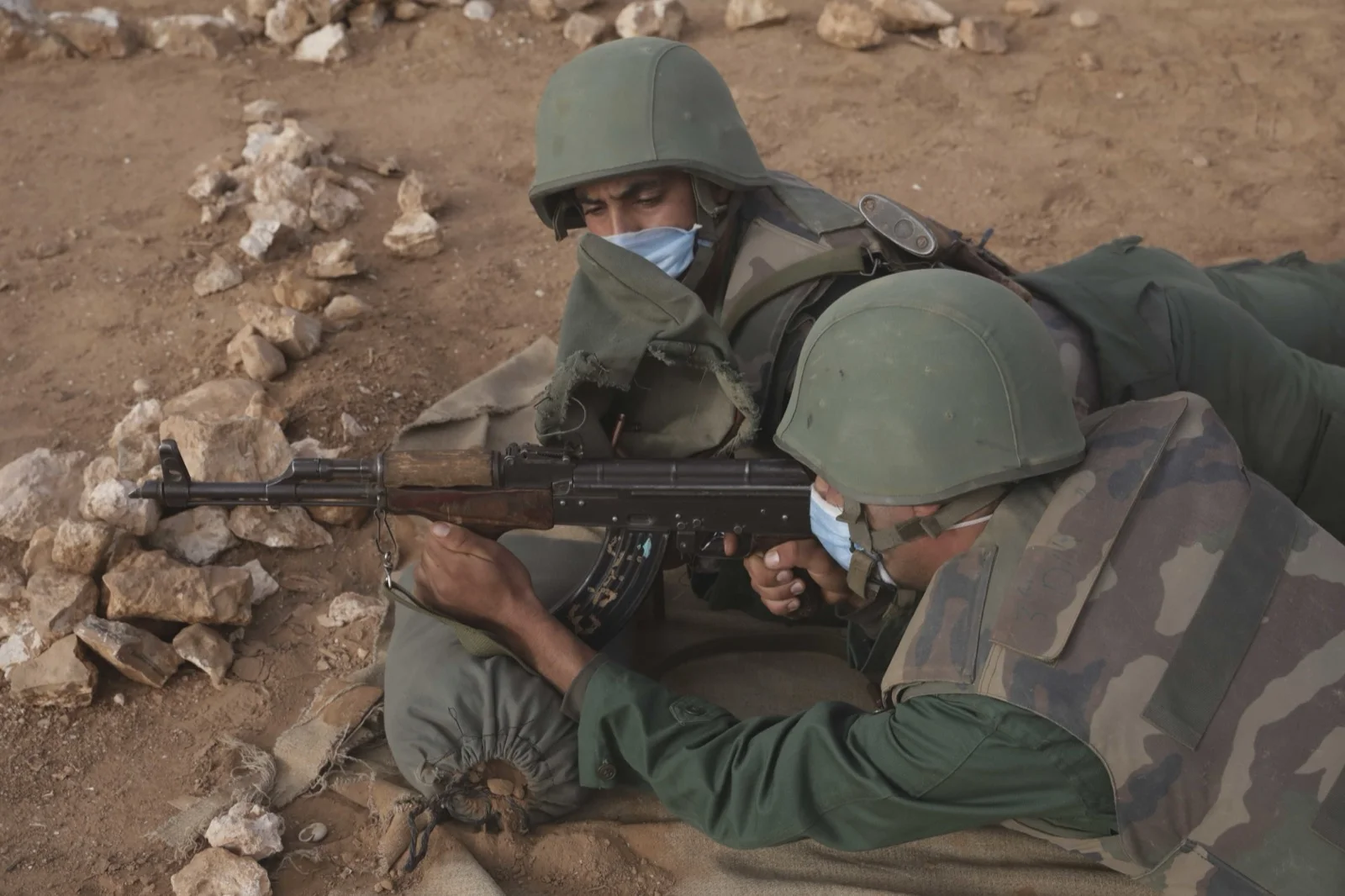
Morocco spends $16.1 billion on defence — among the highest figures in Africa — but fields only 73 helicopters. The explanation lies in what Rabat buys rather than how much: the Royal Moroccan Air Force has consistently chosen quality over quantity.
Morocco is one of a very small group of African states operating the AH-64E Apache Guardian. Alongside it sit CH-47D Chinook heavy-lift helicopters, Gazelle light platforms and the Bell 412 family. That mix is shaped by two demanding environments: the defensive berm in Western Sahara and the mountainous Atlas terrain, both of which reward lift capacity and precision fires over fleet size.
Rabat’s planning is inseparable from its rivalry with Algeria. Morocco fields 1,346 tanks and 400,000 active personnel, giving it real mass on the ground — but in rotary aviation it operates roughly a quarter of Algeria’s fleet. To narrow that gap without matching it airframe for airframe, Morocco has invested heavily in Israeli and American systems and in unmanned aviation, including Turkish-supplied Bayraktar TB2s.
The result is an air arm designed for precision and interoperability rather than mass — a bet that networked, well-equipped platforms deliver more per dollar than a larger but older fleet.
Morocco’s defence budget is roughly two-thirds of Algeria’s, but its helicopter fleet is only a quarter the size of its neighbour’s.
| Force component | Figure |
|---|---|
| Tanks | 1,346 |
| Total aircraft | 271 |
| Helicopters | 73 |
| Active personnel | 400,000 |
| Defence budget | $16.1bn |
The next entry runs one of East Africa’s busiest air arms on one of its smallest budgets.
#6 · KENYA
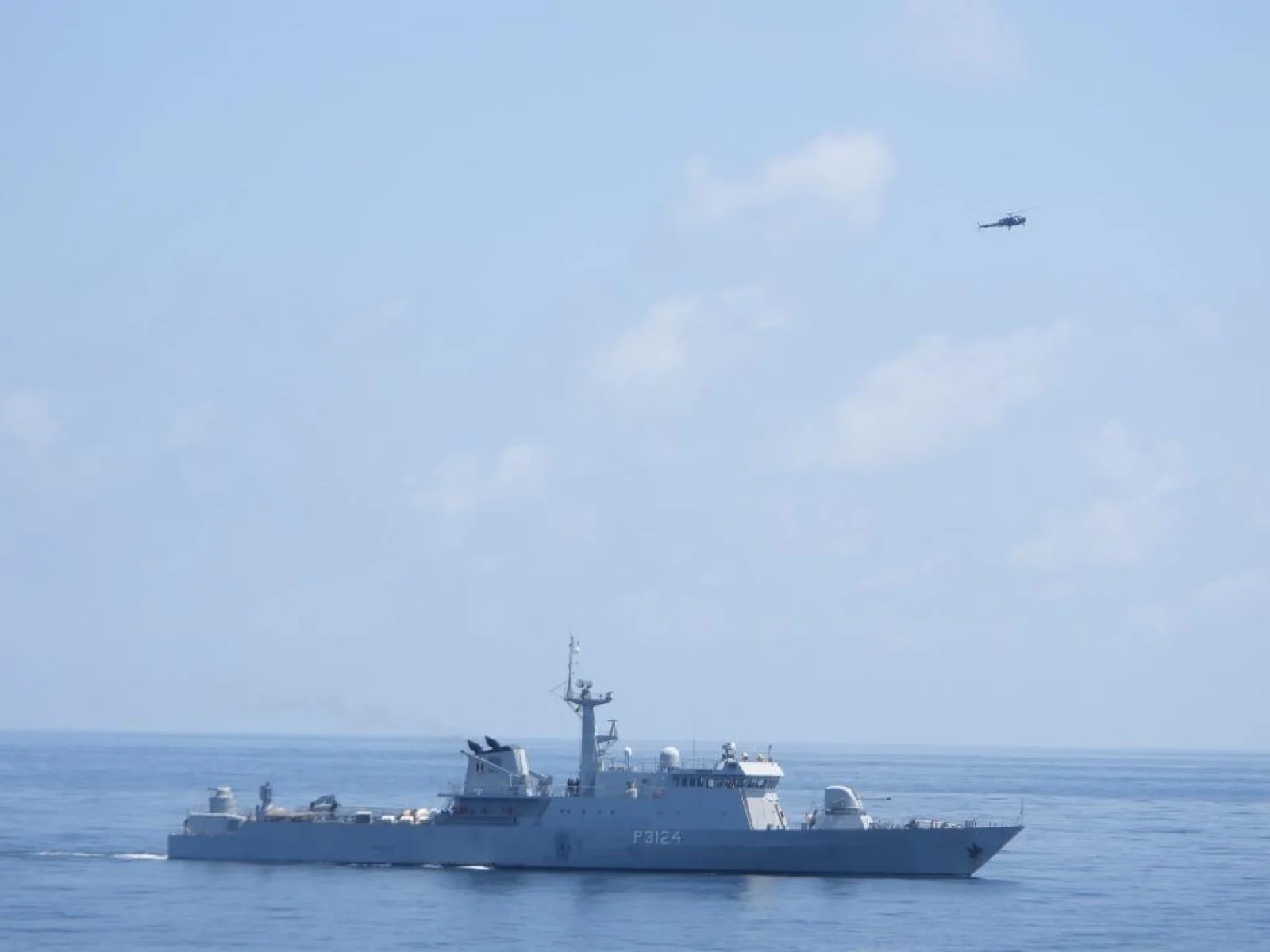
With 50,000 active personnel, Kenya operates one of Africa’s smaller armies — and one of its most heavily committed. Cross-border operations against al-Shabaab in Somalia have kept Kenyan rotary aviation in near-continuous use, and the 84-strong fleet is a direct consequence of that operational tempo.
Nairobi has deliberately diversified its supply base. The inventory blends American MD 500 light attack and scout helicopters, Bell 412 transports, Chinese-built Harbin Z-9s and European Fennec variants. Managing four supply chains is expensive, but it insulates Kenya from any single supplier’s export restrictions — a meaningful hedge in a region where political conditions on arms transfers change quickly.
Kenya’s $1.65 billion defence budget is among the smallest on this list, yet it still outranks Morocco and Nigeria on fleet size. That tells you where the money goes: Nairobi has consistently bought numbers of light and medium helicopters rather than a handful of expensive heavy platforms.
Turkish-supplied unmanned aircraft have since taken over much of the surveillance workload, letting the rotary fleet concentrate on troop movement, medical evacuation and close support — a pattern now repeating across the continent.
Kenya’s defence budget is less than a tenth of Morocco’s, yet it fields more helicopters than Rabat.
| Force component | Figure |
|---|---|
| Tanks | 188 |
| Total aircraft | 154 |
| Helicopters | 84 |
| Active personnel | 50,000 |
| Defence budget | $1.65bn |
The first entry in the top five has Africa’s most advanced defence industry — and a fleet smaller than its industrial base suggests.
#5 · SOUTH AFRICA
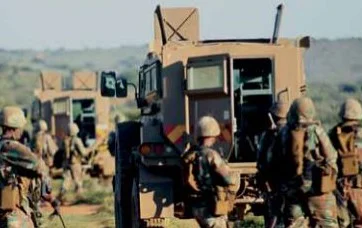
South Africa hosts the most capable defence industrial base on the continent. Denel, Paramount and Rheinmetall Denel Munitions between them cover helicopters, armoured vehicles, munitions and electronic warfare. Against that backdrop, an 87-helicopter fleet looks modest — and the reason is fiscal rather than technical.
The standout asset is the Denel Rooivalk, the only attack helicopter ever designed and serially produced in Africa. It flies alongside the Oryx medium transport — a locally rebuilt and re-engined Puma — plus A109 light utility helicopters and Lynx maritime platforms. Pretoria is a manufacturer, not merely a customer.
But a $2.88 billion defence budget, squeezed for more than a decade, has pushed readiness rates down. Open reporting has repeatedly flagged that only a portion of the Rooivalk fleet is available at any given time, and the same pressure affects transport and maritime aviation.
South Africa is the cautionary case on this list. Designing and building your own platform is not sufficient on its own; without sustained funding for spares, overhauls and aircrew hours, even an advanced indigenous fleet can be grounded by its own budget.
The only African state that builds its own attack helicopter still fields a smaller rotary fleet than Tunisia, which manufactures none.
| Force component | Figure |
|---|---|
| Tanks | 248 |
| Total aircraft | 181 |
| Helicopters | 87 |
| Active personnel | 68,731 |
| Defence budget | $2.88bn |
Fourth place goes to a country with the most disproportionate rotary fleet on the continent.
#4 · TUNISIA
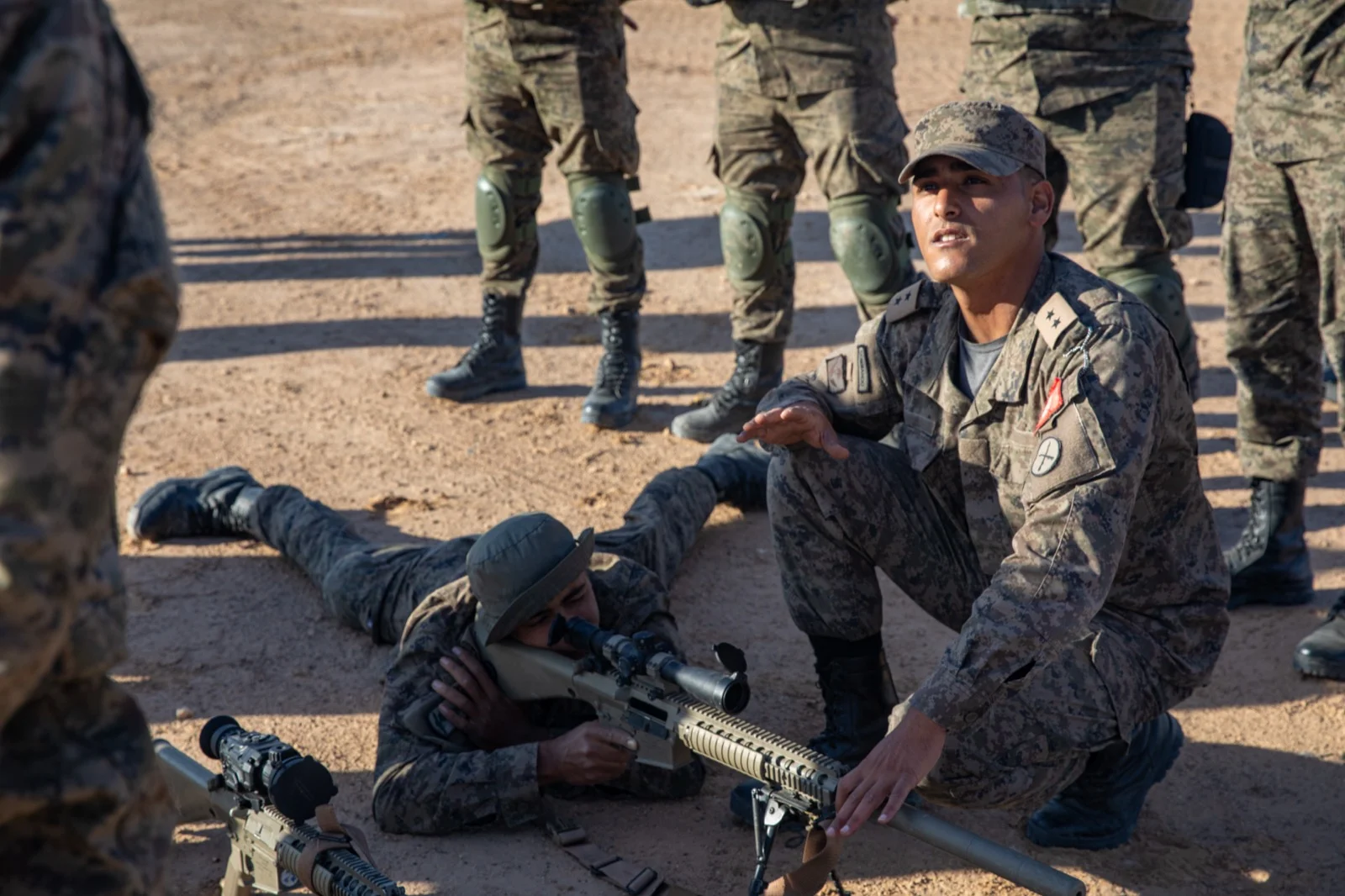
By conventional metrics Tunisia is a small military power: 89,800 active personnel and 145 tanks place it well down most African rankings. Yet 101 helicopters put it fourth on the continent for rotary strength — the sharpest disproportion on this list.
The explanation is doctrinal. Tunisia does not plan for armoured warfare. Its operational problem is counter-terrorism and border security in the mountainous zones along the Algerian and Libyan frontiers, where the Chaambi Mountains campaign made helicopter mobility a survival requirement rather than a luxury. Rapid insertion, aerial observation and medical evacuation matter far more than tank divisions.
The fleet is overwhelmingly American in origin: UH-60M Black Hawks, OH-58 Kiowas and the Bell 205/UH-1 family. US security assistance and Excess Defense Articles transfers made this possible on a budget that would otherwise never support it.
That dependence is also the vulnerability. A $2.17 billion defence budget has to sustain more than a hundred airframes, and the sustainment bill grows as the fleet ages. Tunisia’s rotary strength is real, but it rests on a partnership rather than a domestic industrial base.
Tunisia operates on roughly three-quarters of South Africa’s defence budget yet fields a clearly larger helicopter fleet.
| Force component | Figure |
|---|---|
| Tanks | 145 |
| Total aircraft | 155 |
| Helicopters | 101 |
| Active personnel | 89,800 |
| Defence budget | $2.17bn |
Third place belongs to a country that rebuilt its military from the ruins of a 27-year civil war.
#3 · ANGOLA
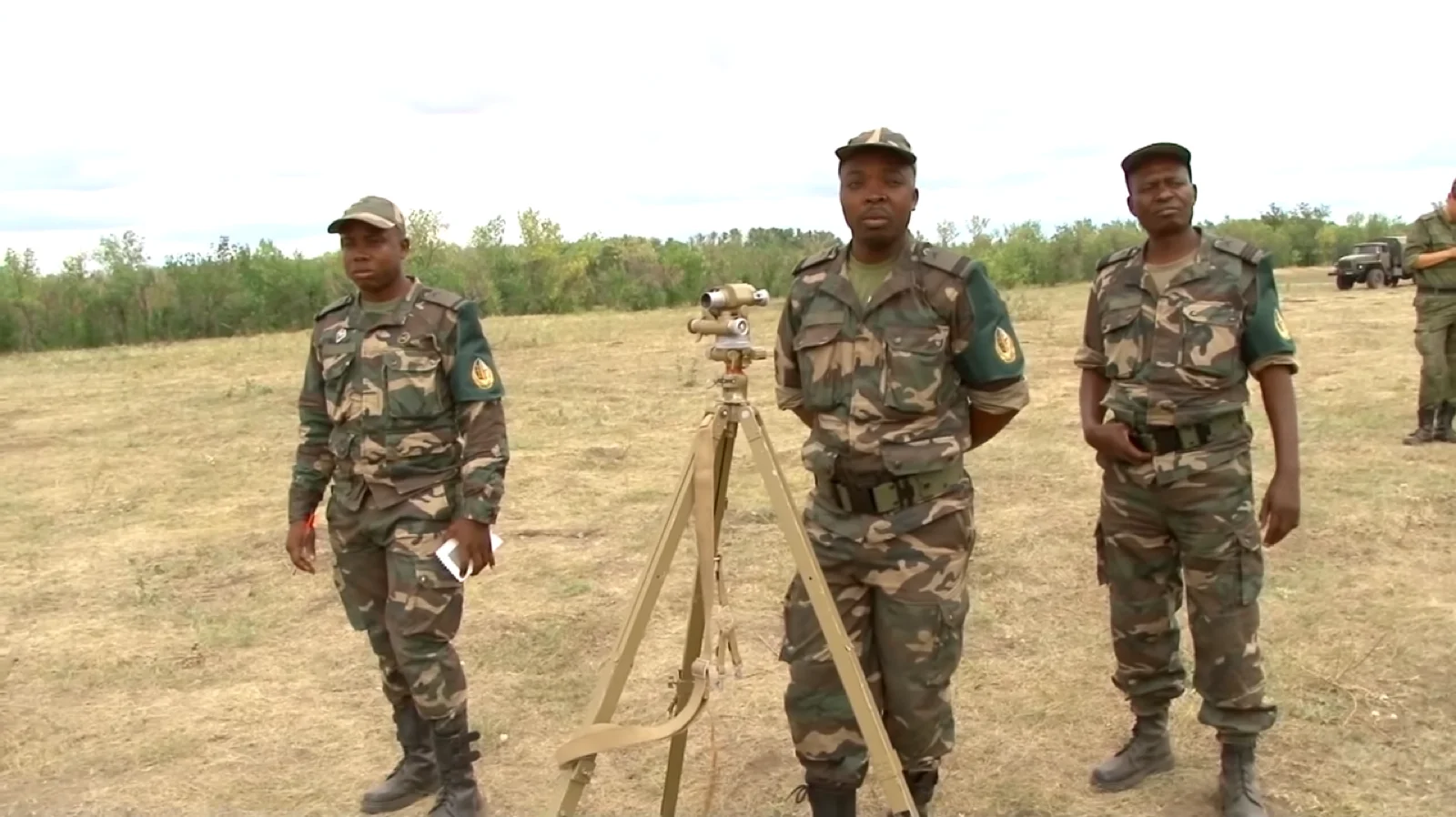
Angola rebuilt its armed forces on oil revenue after a civil war that lasted 27 years. The result is 115 helicopters — the largest rotary fleet in sub-Saharan Africa — backed by a $31.2 billion defence budget that makes Luanda one of the continent’s biggest spenders.
The inventory is predominantly Soviet and Russian: Mi-8/Mi-17 transports, Mi-24/Mi-35 gunships and a small number of Ka-32 multirole airframes. Much of it arrived via Cuba and the USSR during the war years, then was refreshed through modernisation contracts signed with Russia and Belarus in the 2000s. Luanda has since looked to Brazil and South Africa to widen its options.
Angola’s strategic calculus centres on internal stability, protection of the Cabinda oil enclave and uncertainty along the border with the Democratic Republic of the Congo. Its 107,000 active personnel and 319 tanks are scaled to that mission set rather than to expeditionary ambition.
In a country this large with this little road infrastructure, helicopters are not a supporting arm — they are the only practical way to move a battalion. That is why rotary aviation keeps its budget priority in Luanda even as other line items fluctuate with oil prices.
Angola’s rotary fleet is the largest in sub-Saharan Africa, approaching the combined totals of Nigeria and South Africa.
| Force component | Figure |
|---|---|
| Tanks | 319 |
| Total aircraft | 278 |
| Helicopters | 115 |
| Active personnel | 107,000 |
| Defence budget | $31.2bn |
The gap between the top two North African states is the widest jump on this list.
#2 · ALGERIA
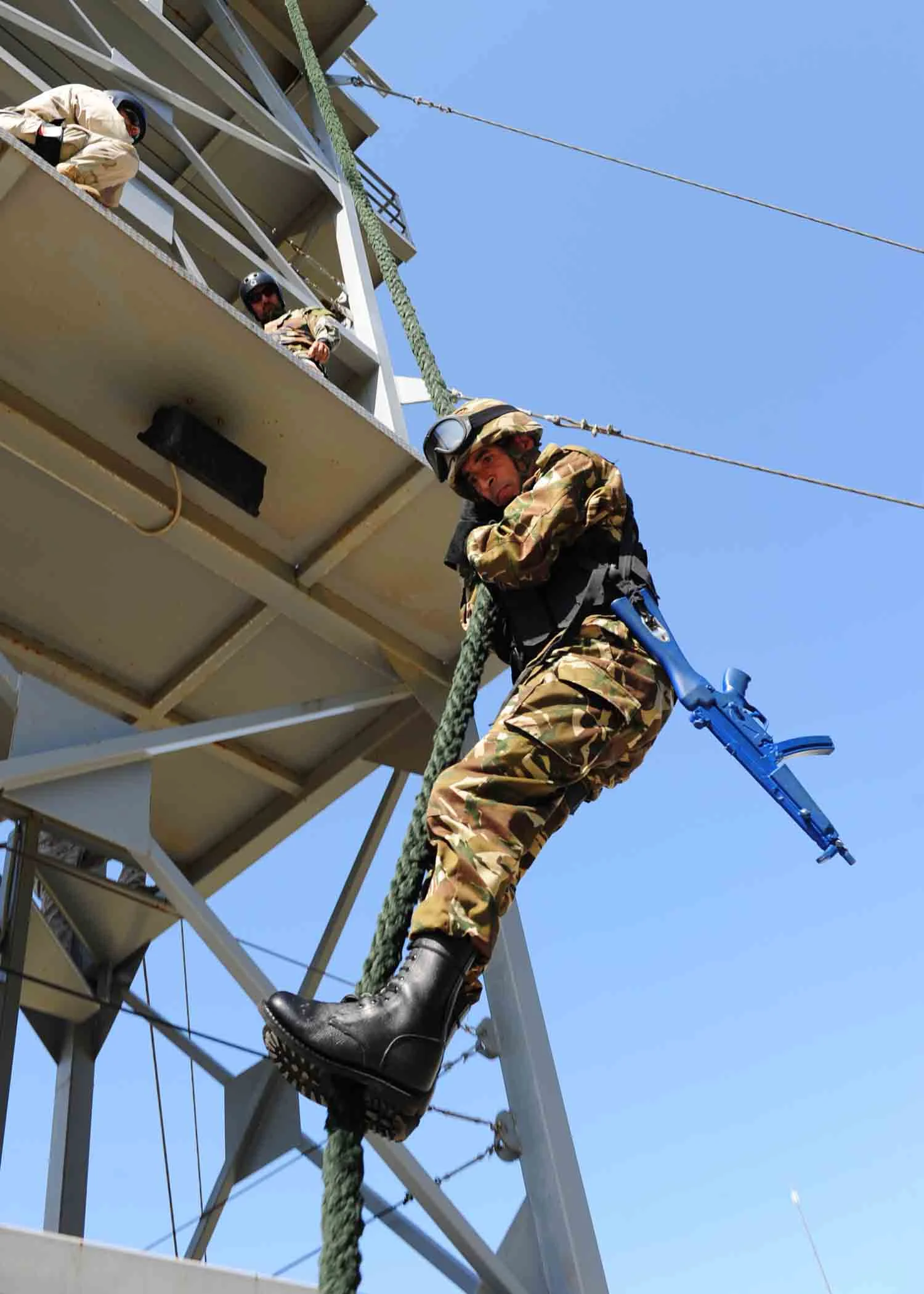
Algeria runs the most consistent rearmament programme in Africa, funded by a $25 billion defence budget. Its 300 helicopters are surpassed only by Egypt, and the fleet is close in size to the combined total of every sub-Saharan state on this list.
At its core sit Mi-28NE Night Hunter attack helicopters — Algeria is one of very few export operators of the type. Around them are Mi-26 heavy-lift helicopters, the largest series-production helicopter in the world, plus Mi-171Sh multirole platforms and long-running discussions over Ka-52 procurement. Algiers has also opened the door to Western equipment, operating AW101 and Super Lynx maritime helicopters.
Doctrine is built around three demands: securing an enormous Saharan frontier, responding rapidly to instability spilling over from Libya and Mali, and maintaining strategic parity with Morocco. Heavy lift and long endurance matter more than raw speed in that environment.
With 1,485 tanks and 620 aircraft, Algeria fields North Africa’s most balanced force structure. Rotary aviation is its fastest-growing component — and the one most exposed to the sustainability of its Russian supply relationship under the current sanctions environment.
Algeria’s 300 helicopters exceed the combined fleets of the eight countries ranked third through tenth on this list.
| Force component | Figure |
|---|---|
| Tanks | 1,485 |
| Total aircraft | 620 |
| Helicopters | 300 |
| Active personnel | 130,000 |
| Defence budget | $25bn |
And the country at the top does not just lead Africa — it ranks among the largest helicopter operators in the world.
#1 · EGYPT
Africa’s largest helicopter fleet belongs to Egypt: 348 airframes. That figure also places Cairo inside the global top eleven, which means Egyptian rotary aviation is significant on a world scale, not merely a regional one.
The fleet is deliberately multi-sourced. American AH-64D/E Apache gunships, CH-47 Chinook heavy-lift helicopters and the UH-60 Black Hawk family form the backbone. France supplied the Mistral-class amphibious assault ships and associated naval aviation, while Russia provided Ka-52 Alligator attack helicopters — making Egypt one of the very few operators worldwide to fly Russian and American attack helicopters from the same inventory. That is Cairo’s balancing policy expressed in hardware.
The mission set explains the diversity. Counter-terrorism in Sinai, instability on the Libyan border, energy competition in the Eastern Mediterranean and the long-running dispute with Ethiopia over Nile waters each demand a different class of airframe. With 438,500 active personnel, 3,620 tanks and 1,088 aircraft, Egypt remains Africa’s largest conventional force by some distance.
The open question is sustainment. Egypt’s official defence budget of $5.19 billion is strikingly low relative to the inventory it supports, because much of that inventory was acquired through American military assistance and external financing. Keeping 348 helicopters serviceable, upgraded and crewed will be Cairo’s real test over the coming decade.
Egypt alone operates more helicopters than the eight countries ranked third through tenth on this list combined.
| Force component | Figure |
|---|---|
| Tanks | 3,620 |
| Total aircraft | 1,088 |
| Helicopters | 348 |
| Active personnel | 438,500 |
| Defence budget | $5.19bn |
So what does this map mean for the suppliers competing across the continent? The assessment follows.
Why Egypt Leads
- Multi-sourced procurement: Simultaneous supply from the United States, Russia and France means no single embargo can ground the fleet.
- Diverse mission set: Sinai counter-terrorism, deterrence on the Libyan border, maritime tasking in the Eastern Mediterranean and strategic pressure along the Nile each require a different class of airframe.
- Amphibious reach: Mistral-class assault ships give Egypt a helicopter-carrying capability no other African navy possesses.
- Scale: 438,500 active personnel and 3,620 tanks make a fleet of this size operationally coherent rather than merely large.
- External financing: Sustained American military assistance has funded high-cost platforms that Egypt’s official budget alone could not support.
Half this list is now a customer of the Turkish defence industry
Türkiye operates 509 helicopters and ranks seventh worldwide — a rotary force approaching the combined fleets of Egypt and Algeria. But Ankara’s real influence in Africa is not measured in its own inventory. It is measured in supply relationships.
Nigeria, Morocco, Kenya, Ethiopia and Tunisia have all added Turkish-built unmanned aircraft over the past five years. Those systems absorb the reconnaissance and precision-strike tasks that previously required attack helicopters, at a fraction of the cost per flight hour. For air forces working with constrained budgets, that shift does not shrink the mission — it re-allocates it.
Rotorcraft are the next step. TUSAŞ’s T625 GÖKBEY utility helicopter is progressing through certification with the indigenous TS1400 turboshaft; the T129 ATAK is already an exported attack platform; and the heavier T929 ATAK-2 is in flight test. All three have been developed against hot-and-high performance requirements — precisely the conditions that erode fleet availability across the Ethiopian highlands, the Atlas range and the Sahel.
For an African procurement authority the calculus is straightforward. Western equivalents arrive with high unit costs, long delivery timelines and complex export-licence conditions. Turkish offers tend to come with flexible configuration, faster delivery, bundled training and maintenance packages, openness to technology transfer and lower through-life cost. Which of those propositions wins will do more to reshape Africa’s rotary map over the next decade than any single procurement decision on this list.
Assessment: What Africa’s Rotary Map Actually Shows
Africa’s helicopter distribution describes the continent’s military geography more precisely than any composite power ranking. Egypt and Algeria together field 648 airframes — more than double the combined total of the other eight countries here. That concentration is not accidental. Both fund procurement from hydrocarbon revenue, both have run stable acquisition programmes across decades, and both face a defined regional rival: Ethiopia and Libya for Cairo, Morocco for Algiers.
The North African–sub-Saharan gap is not closing. Four of the top seven — Egypt, Algeria, Tunisia, Morocco — sit on the Mediterranean rim, with direct access to European and Russian supply lines, higher per-capita income and established security partnerships. South of the Sahara, only Angola, South Africa, Kenya and Nigeria reach three figures or approach them.
Budget is a poor predictor of inventory here. Angola spends $31.2 billion, more than anyone else on the list, and ranks third. Egypt spends $5.19 billion and ranks first. Tunisia, on $2.17 billion, outranks South Africa. The variables that actually explain the ordering are external military assistance, surplus-equipment transfers and the share of the budget consumed by personnel costs — not headline spending.
Unmanned systems are rewriting the equation. Nigeria, Morocco, Ethiopia, Kenya and Tunisia have all fielded armed drones in recent years. An attack helicopter’s cost per flight hour dwarfs that of a medium armed UAV, and for budget-constrained air forces that difference is decisive. As surveillance and precision strike migrate to unmanned platforms, rotary fleets concentrate on lift, evacuation and heavy fire support. A flat helicopter count no longer implies flat capability.
The readiness gap is the continent’s real constraint. Sudan’s fleet is being consumed by civil war. South Africa’s Rooivalk force flies at reduced availability because of funding pressure. Ethiopia’s Soviet-legacy airframes are short of spares. The countries that will matter in a decade are not the ones with the largest inventories today, but the ones that can build sustainment, training and modernisation chains around them.
What changes next? Egypt’s lead looks secure in the near term. Algeria’s position depends heavily on whether its Russian supply relationship remains viable under tightening sanctions. Morocco could move into the top five if its Apache and unmanned investments continue. Nigeria and Kenya will keep expanding, running high operational tempo on modest budgets. And the entry of new suppliers — Türkiye foremost among them, alongside China, South Korea and Brazil — gives African air forces a far wider set of options than they had ten years ago. The continent’s rotary map is no longer drawn by a single vendor.
Comparison Table: Africa’s Ten Largest Helicopter Fleets (2026)
| # | Country | Helicopters | Tanks | Total aircraft | Active personnel | Defence budget |
|---|---|---|---|---|---|---|
| 1 | Egypt | 348 | 3,620 | 1,088 | 438,500 | $5.19bn |
| 2 | Algeria | 300 | 1,485 | 620 | 130,000 | $25bn |
| 3 | Angola | 115 | 319 | 278 | 107,000 | $31.2bn |
| 4 | Tunisia | 101 | 145 | 155 | 89,800 | $2.17bn |
| 5 | South Africa | 87 | 248 | 181 | 68,731 | $2.88bn |
| 6 | Kenya | 84 | 188 | 154 | 50,000 | $1.65bn |
| 7 | Morocco | 73 | 1,346 | 271 | 400,000 | $16.1bn |
| 8 | Nigeria | 69 | 330 | 159 | 230,000 | $3.9bn |
| 9 | Sudan | 64 | 1,055 | 183 | 300,000 | $394.7m |
| 10 | Ethiopia | 33 | 338 | 104 | 503,000 | $3.72bn |
Source: Global Firepower 2026 inventory rankings. Airframes listed are not necessarily all mission-capable at any one time.
More rankings coming
Next up: the Middle East’s biggest defence budgets, Europe’s most powerful navies and Africa’s most powerful navies.
Frequently Asked Questions
Which African country has the most helicopters?
According to Global Firepower’s 2026 data, Egypt leads Africa with 348 helicopters, followed by Algeria with 300 and Angola with 115.
How many helicopters does Türkiye operate?
Türkiye fields 509 helicopters, ranking seventh worldwide. That is close to the combined fleets of Egypt and Algeria, Africa’s two largest rotary operators.
Which sub-Saharan country has the largest helicopter fleet?
Angola, with 115 helicopters, operates the largest rotary fleet in sub-Saharan Africa, ahead of South Africa (87) and Kenya (84).
Does any African country build its own attack helicopter?
Yes. South Africa developed and serially produced the Denel Rooivalk, the only indigenous African attack helicopter. Budget constraints, however, have limited fleet availability.
Why do some high-spending countries field so few helicopters?
Defence spending and inventory size correlate weakly in Africa. Countries such as Egypt and Tunisia built much of their fleet through external military assistance and surplus-equipment transfers, while high-budget states like Angola direct a large share of spending to personnel and sustainment.
Are armed drones replacing helicopters in Africa?
Not replacing them, but reallocating their tasks. As reconnaissance and precision strike migrate to unmanned platforms with far lower operating costs, rotary fleets increasingly concentrate on troop lift, medical evacuation and heavy fire support.
Sources and Related Coverage
- Global Firepower 2026 — helicopter, tank, aircraft, personnel and defence budget rankings: https://www.globalfirepower.com/
- SIPRI Military Expenditure Database
- IISS The Military Balance
- National defence ministry and air force statements