The Middle East’s Largest Helicopter Fleets in 2026: Turkiye Leads, Egypt Second

The helicopter is the most used and least discussed class in modern militaries. Fighters make headlines and tanks fill parades, but what usually sets a force’s daily operational tempo is its rotary fleet.
Using Global Firepower’s 2026 dataset, we ranked the ten largest helicopter inventories in the Middle East. Note that Global Firepower places both Turkiye and Egypt in its Middle East grouping; what follows is the top ten of a 15-country list.
We start at tenth and work up. Read to the end for why the region’s biggest defence spender does not top the table, and how the inventory at number one has been localised over the past decade.
Kuwait closes the list with 68 helicopters. For a force of 78,000 personnel on a $7.99 billion budget, the inventory says a great deal about national priorities.
The attack element is built on AH-64E Apache Guardians, ordered under a 2016 agreement, which renewed the army’s fire support outright. Transport and search-and-rescue tasks fall to French Caracals and American UH-60 derivatives.
Kuwaiti planning is a direct legacy of the 1990-91 occupation. Since then the country has built a force designed less for standalone defence than for rapid reinforcement within a coalition. The helicopter fleet’s core roles are border surveillance, rapid movement and combined operations with allies.
With 367 tanks and 123 naval vessels, the overall structure remains modest. Defence spending per capita, however, is among the region’s highest – Kuwait has focused on renewal and integration rather than expansion.
For scale: Kuwait’s defence budget is about two-thirds of Qatar’s, and it trails Qatar on helicopters too.
| Capability | Figure |
|---|---|
| Helicopters | 68 |
| Total aircraft | 133 |
| Fighter jets | 47 |
| Tanks | 367 |
| Active personnel | 78,000 |
| Defence budget | $7.99 billion |
Ninth place fields one of the most expensive militaries in the world relative to population.
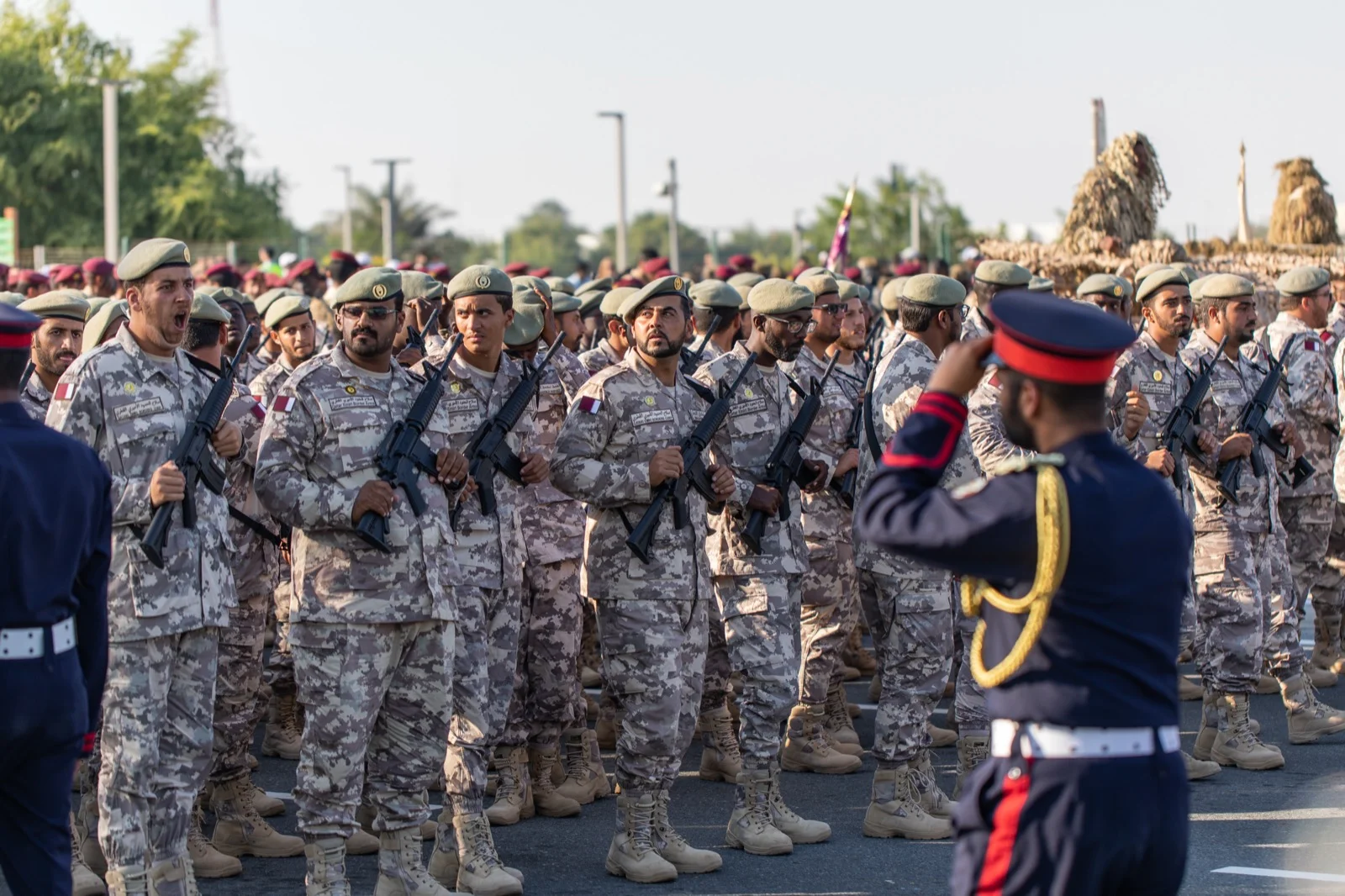
Qatar is ninth with 85 helicopters. With 26,550 active personnel it fields one of the region’s smallest forces, yet its $11.95 billion budget puts it among the highest per-capita spenders anywhere.
Doha’s strategy is built on quality rather than mass. The fleet mixes Italian NH90 transport and naval helicopters, American AH-64E Apaches and systems procured from Turkiye – Qatar being one of Turkish industry’s closest Gulf partners.
Military cooperation goes beyond procurement. The Turkish-Qatari joint force command, established around the 2017 Gulf crisis, has become a permanent arrangement, adding an external balancing element to Doha’s security equation.
The rest of the inventory follows the same logic: 115 combat aircraft across three types (Rafale, Typhoon and F-15QA), 125 naval platforms and just 62 tanks. Qatar has deliberately chosen an air- and sea-weighted structure over a land-heavy one.
For scale: Qatar’s 115 combat aircraft approach the UAE’s 99, on less than half the active personnel.
| Capability | Figure |
|---|---|
| Helicopters | 85 |
| Total aircraft | 263 |
| Fighter jets | 115 |
| Tanks | 62 |
| Active personnel | 26,550 |
| Defence budget | $11.95 billion |
Eighth place uses its helicopters under a doctrine unlike any other in the region.
Israel is eighth with 127 helicopters. Ranked 15th worldwide in the 2026 index, its inventory stands out for intensity of use rather than size.
AH-64 Apaches provide the attack element, while CH-53 Yasur heavy transports have served for decades. CH-53K replacements are on order and deliveries have begun. UH-60 Black Hawk derivatives handle search-and-rescue and combat movement.
Israeli rotary doctrine is shaped by short-range, high-tempo operations. With limited geographic depth, helicopters are configured for rapid response and evacuation rather than long-range movement.
The wider inventory includes 239 combat aircraft, 1,300 tanks and 82 warships on a $34.6 billion budget, the region’s third largest. Firms such as Elbit and IAI export avionics and electronic warfare systems – but on helicopter airframes, Israel remains entirely dependent on imports.
For scale: Israel fields fewer helicopters than Jordan while spending thirteen times as much on defence.
| Capability | Figure |
|---|---|
| Helicopters | 127 |
| Total aircraft | 597 |
| Fighter jets | 239 |
| Tanks | 1,300 |
| Active personnel | 169,500 |
| Defence budget | $34.6 billion |
Seventh place operates the longest-embargoed inventory in the world.
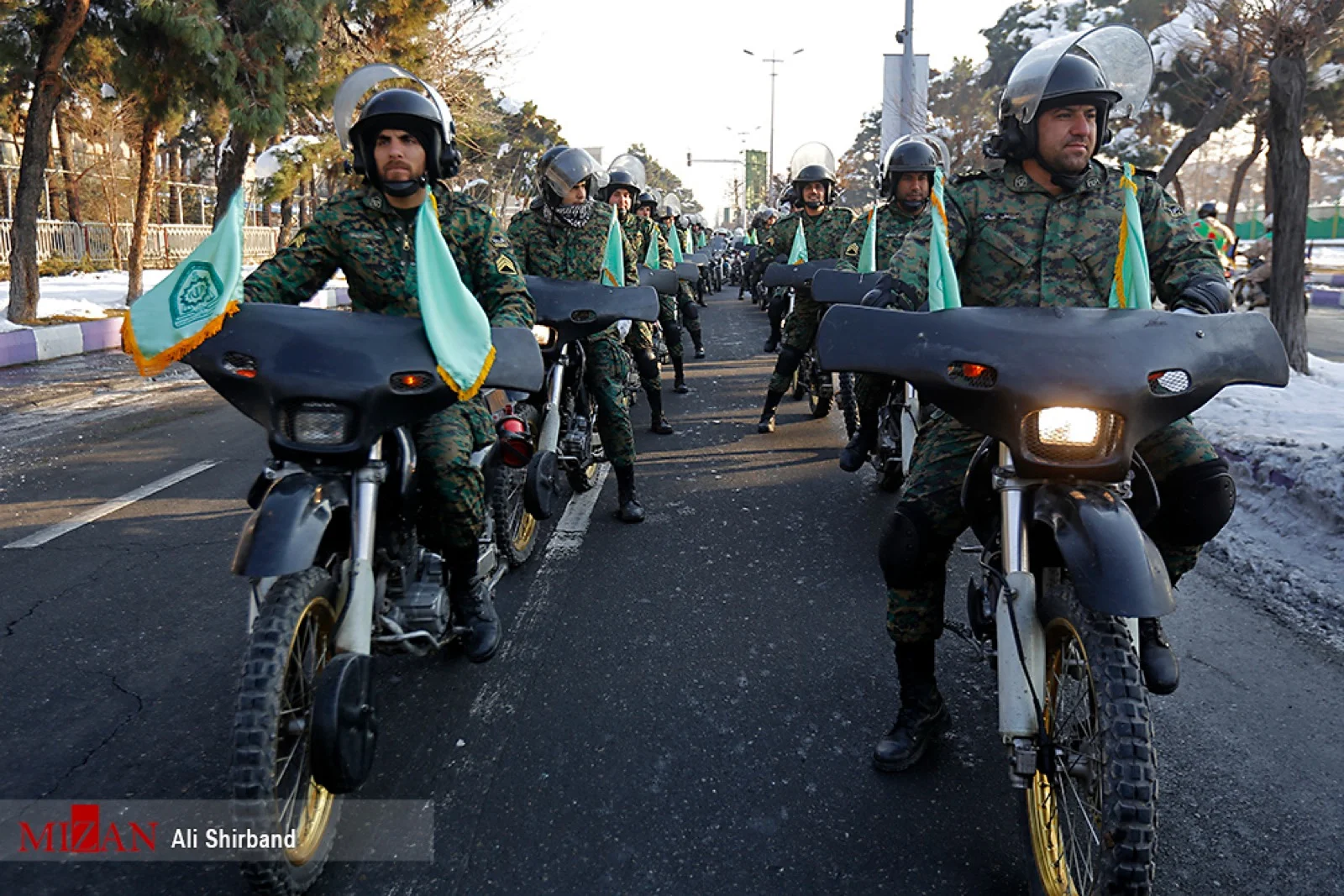
Iran is seventh with 129 helicopters, an inventory defined above all by its age: a large share dates from purchases made before 1979.
AH-1J Cobra attack helicopters and CH-47 Chinook heavy transports have been operated under a spare-parts embargo for more than four decades. Tehran has attempted to work around it through reverse engineering and domestic production – the Toufan and Shahed series – but modernisation has largely stopped at avionics and munitions, with airframe and engine technology continuing to age.
That constraint pushed Iran elsewhere. Rather than rotary aviation, Tehran invested in missile and uncrewed aircraft lines, and its regional reach today derives from those two areas rather than its helicopter force.
The wider structure remains land-heavy, with 2,675 tanks and 610,000 active personnel. Its 25 submarines make up the region’s largest undersea force, though most are midget boats. At $9.23 billion, the defence budget is low relative to inventory size.
For scale: Iran fields fewer helicopters than Iraq, but more than twice Iraq’s tank inventory.
| Capability | Figure |
|---|---|
| Helicopters | 129 |
| Total aircraft | 551 |
| Fighter jets | 188 |
| Tanks | 2,675 |
| Active personnel | 610,000 |
| Defence budget | $9.23 billion |
Sixth place built its helicopter fleet around a single mission set.
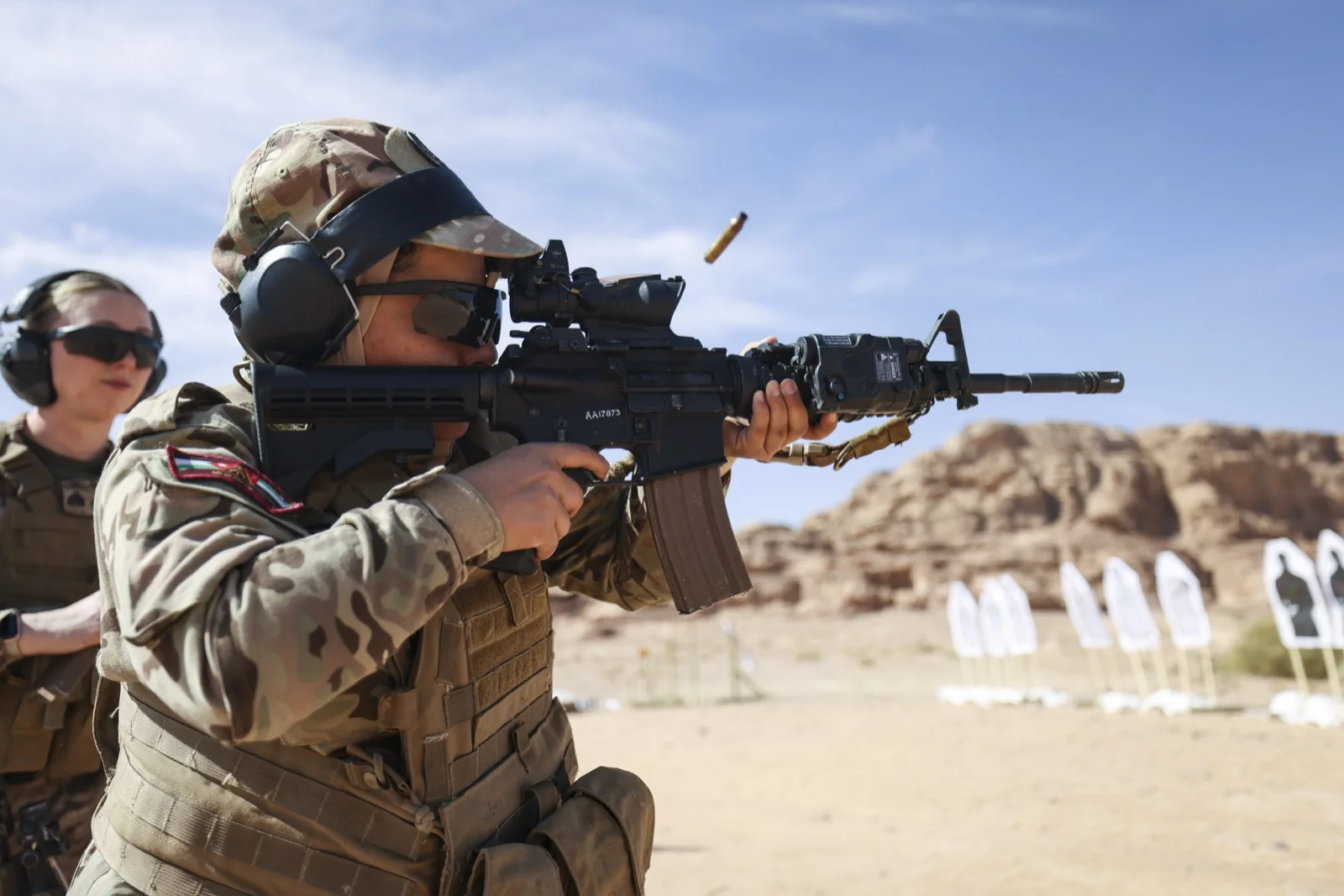
Jordan takes sixth with 159 helicopters. On a $2.67 billion budget – among the smallest on this list – it operates more rotary aircraft than either Israel or Iran.
Doctrine explains it. The Jordanian Armed Forces must patrol long, difficult desert borders with Syria, Iraq and Saudi Arabia, a task better served by light, fast, air-mobile forces than by heavy armour. The fleet includes UH-60 Black Hawks, AH-6 light attack helicopters and a large number of light transports.
Jordan is also a regional hub for special forces training. The King Abdullah II Special Operations Training Centre in Amman hosts units from many countries, and the helicopter fleet is an integral part of that infrastructure.
The 1,508-tank inventory is surprisingly large, though much of it consists of upgraded Challenger 1 (Al-Hussein) and older platforms. The defence model relies heavily on US and Gulf-backed financing.
For scale: Jordan operates more helicopters than Israel on one-thirteenth of the budget.
| Capability | Figure |
|---|---|
| Helicopters | 159 |
| Total aircraft | 279 |
| Fighter jets | 44 |
| Tanks | 1,508 |
| Active personnel | 114,500 |
| Defence budget | $2.67 billion |
Fifth place rebuilt its fleet after two wars dissolved its army entirely.
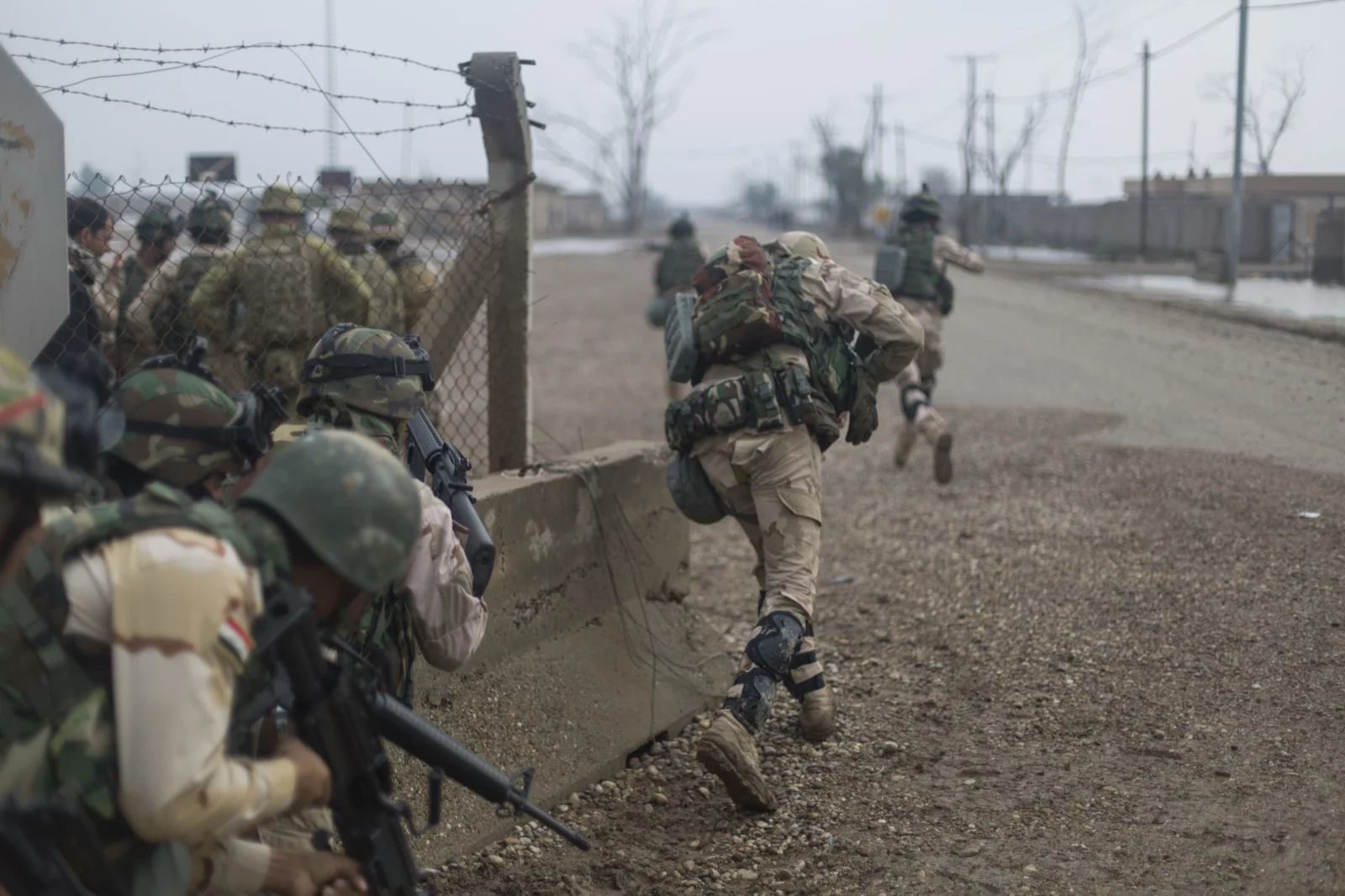
Iraq is fifth with 183 helicopters – the result of rebuilding an army that collapsed completely twice in twenty years.
The fleet is mixed: American Bell 407s and UH-1 derivatives alongside Russian Mi-17 transports and Mi-28/Mi-35 attack helicopters. That diversity buys operational flexibility at a heavy cost in maintenance and training.
Helicopters matter disproportionately here. With just 26 combat aircraft, most of Iraq’s close air support burden falls on attack helicopters and, increasingly, uncrewed aircraft. During the campaign against Daesh, this fleet was the ground forces’ primary source of fire support.
With 1,188 tanks and 193,000 active personnel, Iraq is a mid-sized regional force. Its $8 billion budget fluctuates with oil revenue. Defence industry contacts with Turkiye have widened in recent years, particularly in armoured vehicles and uncrewed systems.
For scale: Iraq operates seven helicopters for every combat aircraft – a ratio no other country in the region comes close to.
| Capability | Figure |
|---|---|
| Helicopters | 183 |
| Total aircraft | 360 |
| Fighter jets | 26 |
| Tanks | 1,188 |
| Active personnel | 193,000 |
| Defence budget | $8 billion |
Fourth place has turned its rotary fleet into one of the most modern in the region.
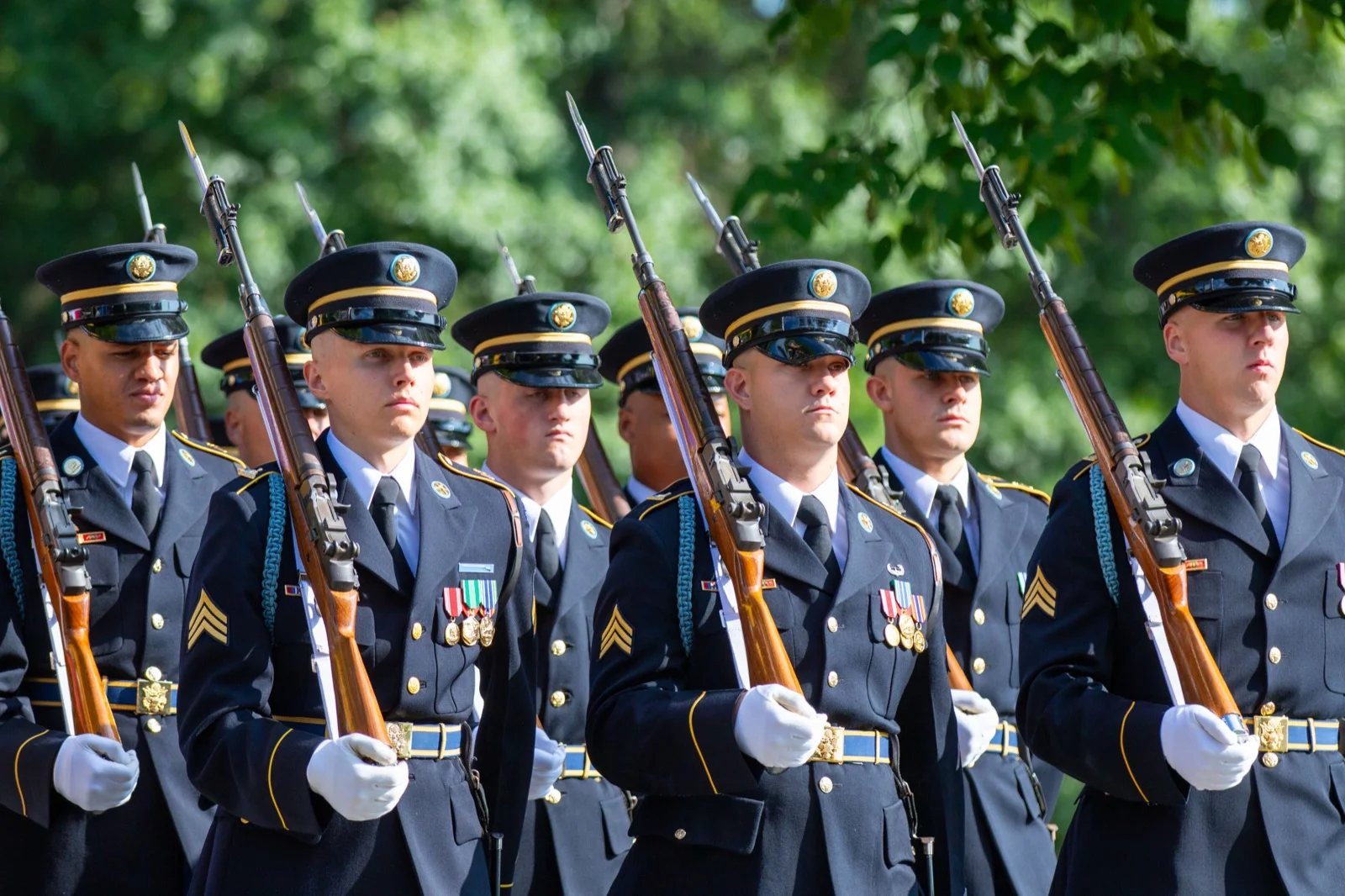
The UAE is fourth with 250 helicopters. For a force of 65,000 personnel, that is the region’s highest rotary-to-personnel ratio by some margin.
AH-64E Apaches and CH-47F Chinooks form the backbone, supplemented by Russian Ka-226s and French Caracal derivatives. The fleet is configured not only for ground support but for expeditionary operations and special forces movement.
Abu Dhabi’s real distinction is industrial. Companies consolidated under EDGE Group produce uncrewed aircraft, munitions and electronic warfare systems, making the UAE a regional supplier rather than purely a buyer. Calidus’s B-250 light attack aircraft symbolises that shift.
With a $23.48 billion budget, 99 combat aircraft and 84 warships, the UAE sustains a force capable of regional deployment despite a small population. Its ties with Turkish defence industry have also widened in recent years.
For scale: the UAE fields more helicopters than Iraq, which has four times its active personnel.
| Capability | Figure |
|---|---|
| Helicopters | 250 |
| Total aircraft | 581 |
| Fighter jets | 99 |
| Tanks | 354 |
| Active personnel | 65,000 |
| Defence budget | $23.48 billion |
Third place manages the largest defence budget in the region.
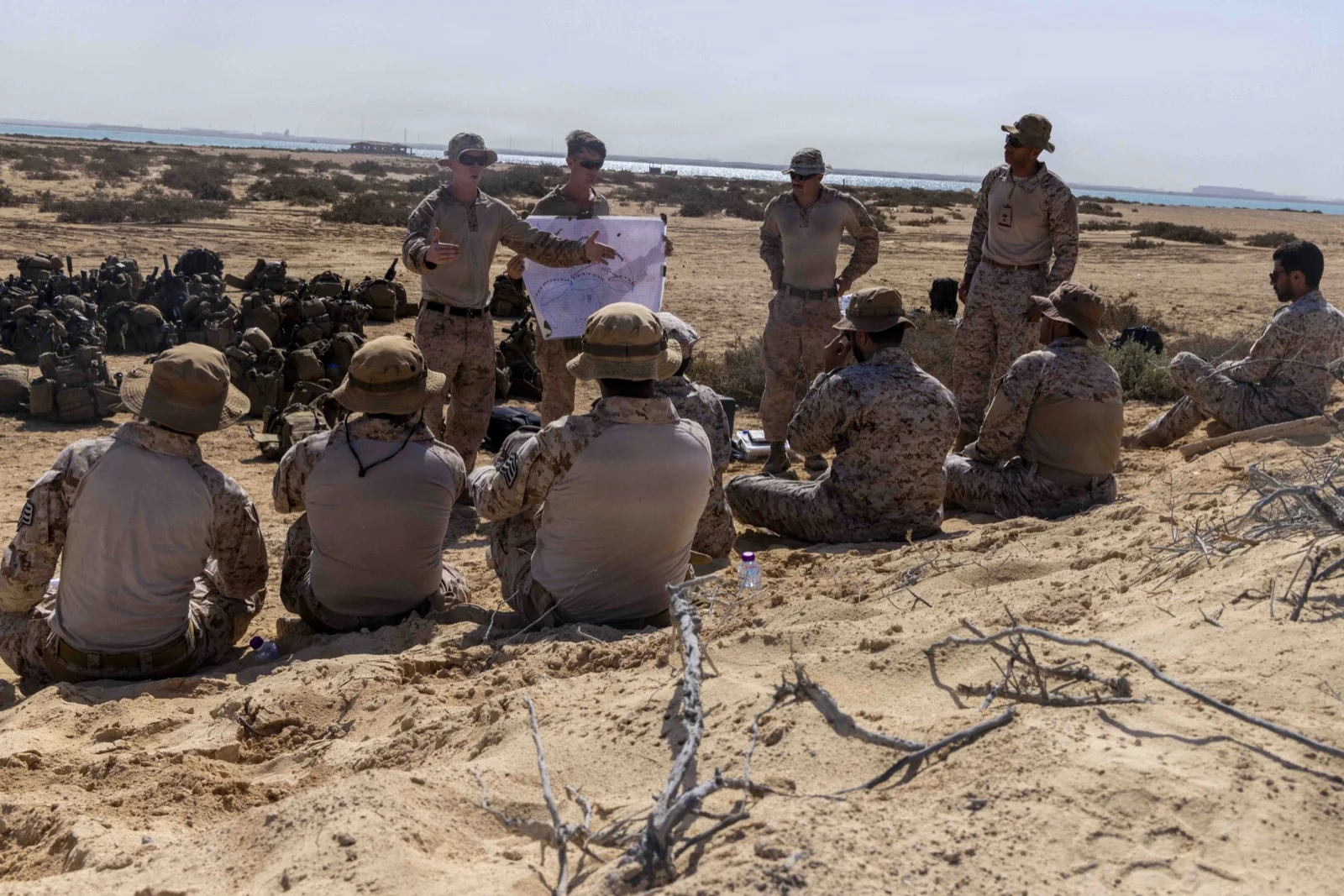
Saudi Arabia is third with 264 helicopters. At $63.99 billion, it is the region’s largest defence spender, and its rotary inventory is built to that scale.
The fleet spans a wide range: AH-64 Apache attack helicopters, UH-60 Black Hawk and S-70 derivatives, CH-47 Chinooks for heavy lift and MH-60Rs for naval tasks, alongside hundreds of light and training aircraft.
Riyadh’s major recent move is industrialisation. Vision 2030 targets localising half of all defence spending, with SAMI (Saudi Arabian Military Industries) as the vehicle – including helicopter maintenance lines and domestic assembly agreements. Turkish industry features in that transition too: uncrewed aircraft agreements between Baykar and Saudi institutions rank among the largest Turkish export deals of recent years.
With 1,085 tanks, 283 combat aircraft and 247,000 active personnel, Saudi Arabia holds one of the region’s most balanced air-land structures. At sea it is thinner, with 32 platforms and no submarines.
For scale: Saudi Arabia outspends every other country on this list, yet trails both Turkiye and Egypt on helicopters.
| Capability | Figure |
|---|---|
| Helicopters | 264 |
| Total aircraft | 917 |
| Fighter jets | 283 |
| Tanks | 1,085 |
| Active personnel | 247,000 |
| Defence budget | $63.99 billion |
Second place fields one of the region’s largest inventories on one of its smallest budgets.
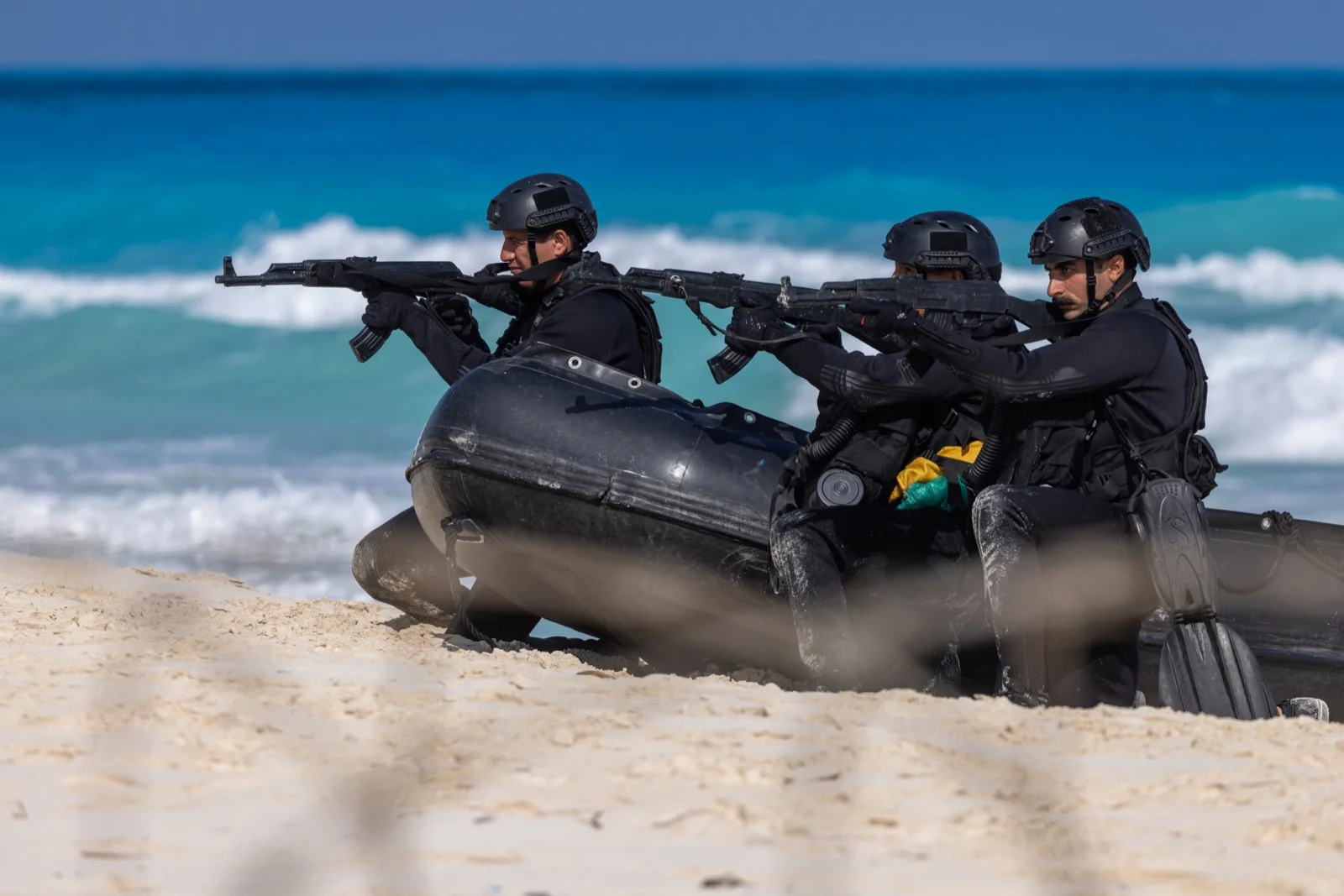
Egypt is second with 348 helicopters. Its $5.19 billion budget is among the lowest here, yet its inventory sits near the top of the region – the product of a long-running diversified procurement policy.
The fleet is among the most mixed anywhere: American AH-64 Apaches and CH-47 Chinooks, Russian Ka-52 attack helicopters and French naval helicopters in one inventory. Egypt equipped its two French-built Mistral-class amphibious assault ships with these aircraft, giving it expeditionary reach in the Mediterranean and Red Sea.
Cairo’s strategy is to avoid dependence on any single supplier. The same military operates American, Russian, French and Chinese systems – politically flexible, but enormously complex to maintain, train for and arm.
With 3,620 tanks it holds the region’s largest armoured inventory, plus 149 warships and 8 submarines. At 438,500 active personnel, Egypt ranks 19th worldwide in Global Firepower’s 2026 index.
For scale: Egypt operates 30 percent more helicopters than Saudi Arabia on one-twelfth of the budget.
| Capability | Figure |
|---|---|
| Helicopters | 348 |
| Total aircraft | 1,088 |
| Fighter jets | 242 |
| Tanks | 3,620 |
| Active personnel | 438,500 |
| Defence budget | $5.19 billion |
The inventory at the top is 45 percent larger than second place – and increasingly built at home.
Turkiye operates the Middle East’s largest rotary-wing inventory with 509 helicopters – 45 percent more than second-placed Egypt and nearly double third-placed Saudi Arabia. The country ranks 9th worldwide in Global Firepower’s 2026 index.
What sets the inventory apart is not its size but its rising domestic content. The T129 ATAK attack helicopter is built by TUSAS and has been exported to the Philippines and Nigeria, placing Turkiye among the few countries exporting attack helicopters. In the heavy class, the T929 ATAK-2 continues flight testing with a domestic engine.
In the transport and utility category, T70 fleets – the Turkish-built version of the S-70i Black Hawk – are entering service. GOKBEY (T625), a wholly indigenous utility design, is progressing through certification powered by TEI’s TS1400 engine, putting Turkiye among the small group of countries producing their own helicopter engines.
The fleet serves far more than the army: anti-submarine helicopters with the navy, internal security aircraft with the gendarmerie and police, and joint civil-military use in wildfire response. With 481,000 active personnel, 1,101 aircraft, 2,284 tanks and 192 warships, Turkiye is the only regional force with no empty column.
For scale: Turkiye operates more helicopters than the bottom five countries on this list combined.
| Capability | Figure |
|---|---|
| Helicopters | 509 |
| Total aircraft | 1,101 |
| Fighter jets | 201 |
| Tanks | 2,284 |
| Warships | 192 |
| Active personnel | 481,000 |
| Defence budget | $51.4 billion |
Second, domestic production: the T129 ATAK is an exported attack helicopter; the T929 ATAK-2 is in testing in the heavy class; the T70 utility fleet is built in Turkiye; and GOKBEY (T625) is advancing to certification as a wholly indigenous design.
Third, and most decisive, the engine: TEI’s TS1400 turboshaft powers GOKBEY. Plenty of countries can build a helicopter airframe; very few can build its engine. That single line item places Turkiye where none of the other nine countries here currently stand.
The verdict: what the region’s rotary balance reveals
The clearest finding is how little helicopter inventories track defence budgets. Saudi Arabia spends $63.99 billion, the region’s largest, and ranks third. Egypt spends $5.19 billion – one twelfth as much – and ranks second. Jordan, on $2.67 billion, outranks Israel.
Mission set explains most of it. The helicopter is the most efficient platform for patrolling long borders, moving troops across desert and mountain terrain and providing fire support in low-intensity conflict. Jordan’s desert frontiers, Iraq’s internal security operations and Turkiye’s mountainous terrain are what inflate these inventories. A country with limited geographic depth, such as Israel, can cover the same tasks with a smaller fleet.
The second finding concerns supplier diversity. Egypt’s fleet mixes American, Russian and French platforms – politically flexible, but multiplying the maintenance and munitions burden. Iran illustrates the opposite failure mode: unable to renew under four decades of embargo, it sustains 1970s platforms through reverse engineering. In both cases, fleet size does not translate cleanly into usable capability.
The third and decisive finding is industrial. Of the ten countries here, exactly one designs, serially produces and exports its own attack helicopter: Turkiye. T129 ATAK sales to the Philippines and Nigeria show Turkish industry exporting at platform level. More significant still is GOKBEY flying on TEI’s TS1400 turboshaft – more than twenty countries can build a helicopter airframe; the number that can also build its engine barely reaches a handful.
Saudi Arabia and the UAE are moving in that direction. Companies under SAMI and EDGE Group are working from maintenance lines towards domestic production, and both have widened cooperation with Turkish industry along the way. But platform design and engine technology take decades to accumulate.
In short: in the region’s rotary balance, Turkiye stands apart not only on numbers but on supply independence. That a growing share of a 509-aircraft inventory is now built and supported domestically is the strongest indication that the lead will hold.
The Middle East’s largest helicopter fleets: comparison table
| # | Country | GFP world | Helicopters | Total aircraft | Fighters | Tanks | Personnel | Budget |
|---|---|---|---|---|---|---|---|---|
| 1 | Turkiye | #9 | 509 | 1,101 | 201 | 2,284 | 481,000 | $51.4 billion |
| 2 | Egypt | #19 | 348 | 1,088 | 242 | 3,620 | 438,500 | $5.19 billion |
| 3 | Saudi Arabia | #25 | 264 | 917 | 283 | 1,085 | 247,000 | $63.99 billion |
| 4 | United Arab Emirates | #54 | 250 | 581 | 99 | 354 | 65,000 | $23.48 billion |
| 5 | Iraq | #44 | 183 | 360 | 26 | 1,188 | 193,000 | $8 billion |
| 6 | Jordan | #74 | 159 | 279 | 44 | 1,508 | 114,500 | $2.67 billion |
| 7 | Iran | #16 | 129 | 551 | 188 | 2,675 | 610,000 | $9.23 billion |
| 8 | Israel | #15 | 127 | 597 | 239 | 1,300 | 169,500 | $34.6 billion |
| 9 | Qatar | #71 | 85 | 263 | 115 | 62 | 26,550 | $11.95 billion |
| 10 | Kuwait | #76 | 68 | 133 | 47 | 367 | 78,000 | $7.99 billion |
Next in the series
Asia’s biggest defence budgets, Europe’s largest fighter fleets and the Black Sea military balance.
Frequently Asked Questions
Which Middle Eastern country has the most helicopters?
Turkiye, with 509 in Global Firepower’s 2026 data, ahead of Egypt (348) and Saudi Arabia (264).
Which helicopters does Turkiye build itself?
The T129 ATAK attack helicopter is in serial production and exported. The T929 ATAK-2 heavy attack helicopter is in testing, the T70 utility helicopter is built in Turkiye, and GOKBEY (T625) is a wholly indigenous design in certification.
Why doesn’t Saudi Arabia lead despite the largest budget?
Its $63.99 billion is spread across a very broad capability set – 283 combat aircraft, air defence systems, infrastructure and personnel costs. Rotary aviation is one line item among many rather than a prioritised one.
Why is Egypt’s helicopter fleet so large?
Cairo has pursued a deliberately multi-sourced procurement policy for decades, operating American AH-64s, Russian Ka-52s and French naval helicopters side by side. Its Mistral-class amphibious ships also make that fleet usable expeditionarily.
Why does the TS1400 engine matter?
The TS1400 is TEI’s indigenous turboshaft and powers the GOKBEY. More than twenty countries can build a helicopter airframe; far fewer can build the engine. It is a defining threshold for supply independence.
Sources
- Global Firepower 2026 Middle East regional listing and country profiles
- Official TUSAS and TEI programme statements
- SIPRI Military Expenditure Database
- IISS The Military Balance
- Source: https://www.globalfirepower.com/