
Nigeria’s Military Strength 2026: Personnel, Budget and Turkish Hardware

Nigeria’s Military Strength 2026: Personnel, Budget and Confirmed Turkish Hardware
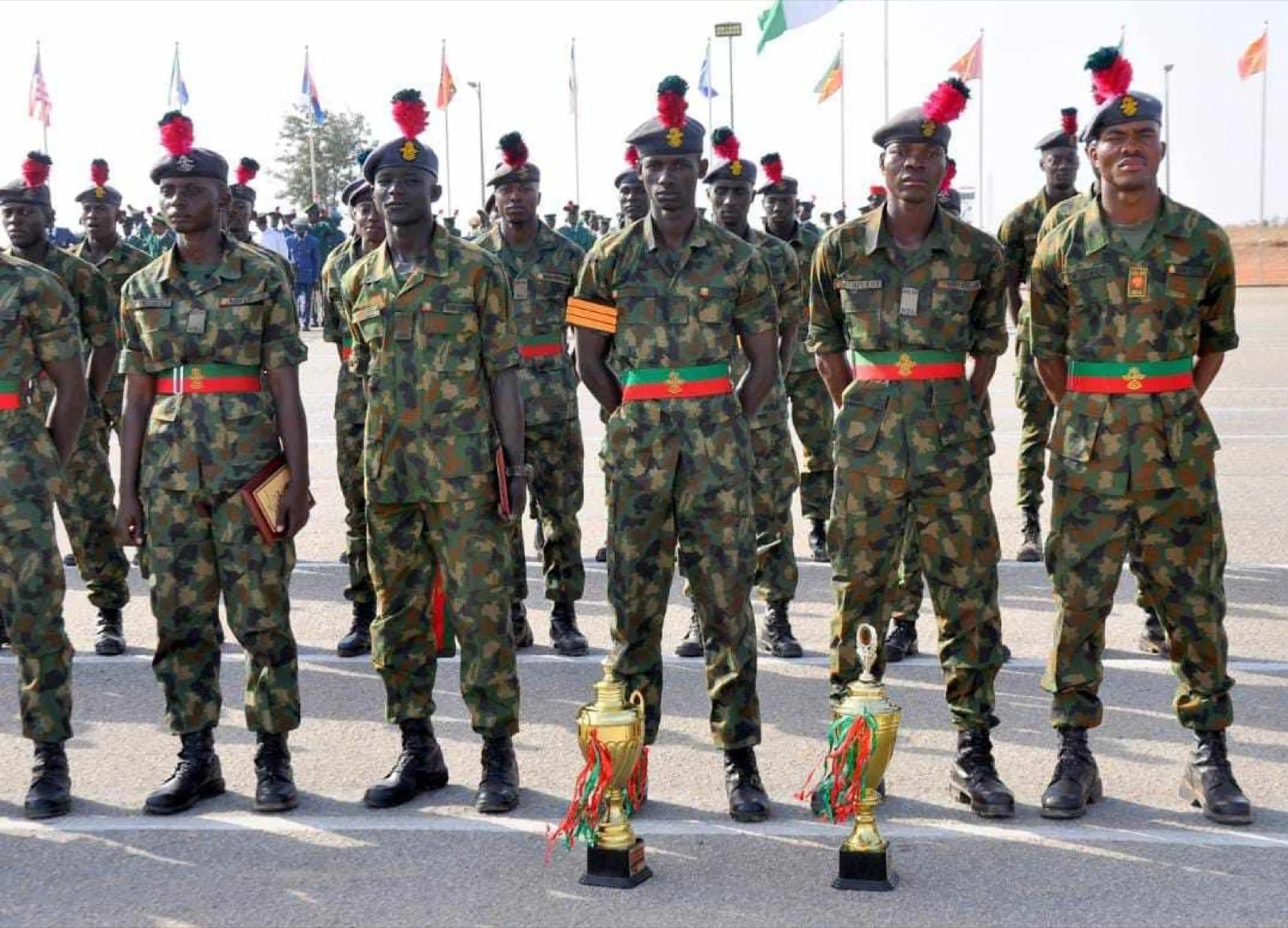
Nigeria fields Africa’s largest active-duty military by most counts — open-source trackers put the figure at roughly 200,000–230,000 personnel across the Army, Navy and Air Force — backed by a 2026 federal defense allocation of about ₦5.41 trillion (roughly $3.9 billion at the budget’s own exchange-rate assumption). Global Firepower ranks Nigeria 3rd in Africa behind Egypt and Algeria. On hardware, Nigeria is also the continent’s most established Turkish-equipment operator: 43 Bayraktar TB2 drones under the Nigerian Army’s “Project Guardian,” ASISGUARD Songar armed quadcopters, Otokar Cobra armored vehicles, and a June 2025 contract with Turkey’s DEARSAN Shipyard to refit the Navy’s flagship.
Nigerian Armed Forces: structure and personnel
The Armed Forces of Nigeria (AFN) sit under a single Chief of Defence Staff, with the Ministry of Defence and service headquarters based in Abuja. The three services are organized primarily around two long-running internal fights — the counter-insurgency campaign against Boko Haram and its ISWAP offshoot in the northeast, and a widening set of operations against banditry, kidnapping and pipeline sabotage in the northwest and Niger Delta:
- Nigerian Army — by far the largest service, organized into multiple divisions plus dedicated Special Forces and counter-terrorism commands built up over more than a decade of sustained operations against Boko Haram/ISWAP.
- Nigerian Navy — Africa’s largest naval force by hull count, tasked with anti-piracy patrols in the Gulf of Guinea, protection of offshore oil and gas infrastructure, and riverine operations in the Niger Delta.
- Nigerian Air Force — operates a mixed fixed-wing and rotary fleet built around close air support and ISR for the ground campaign, rather than a conventional air-superiority mission.
Where Nigeria ranks: GFP, and what the numbers mean
Global Firepower’s 2025/2026 index places Nigeria 3rd in Africa (behind Egypt and Algeria) and roughly 31st worldwide. GFP is a widely cited comparative snapshot, not an official military assessment or a SIPRI/IISS-grade dataset — it applies a fixed weighted formula to dozens of inputs and does not capture readiness, morale, logistics sustainment or the toll of 15+ years of continuous counter-insurgency fighting, all of which matter for Nigeria specifically. Personnel figures illustrate the spread: GFP-linked trackers cite active strength anywhere from roughly 143,000 to 230,000, with total force (including reserves and paramilitary elements such as the Nigeria Police Mobile Force) sometimes quoted near 280,000. Treat any single number as an estimate and cross-check specific claims against Nigerian Ministry of Defence statements where possible. For continental context, see our full ranking of Africa’s strongest militaries and Africa’s most powerful navies, where Nigeria’s fleet size puts it at or near the top.
The 2026 defense budget
Nigeria’s 2026 federal budget allocates roughly ₦5.41 trillion to national security and defense (about $3.9 billion at the budget’s own exchange-rate assumption; Nigeria’s naira has floated and depreciated sharply since 2023, so dollar conversions of any Nigerian budget figure should be read as approximate and tied to the date they were calculated). The allocation continues a multi-year pattern of prioritizing the sector amid the Boko Haram/ISWAP campaign, banditry in the northwest, and Niger Delta security. As in most African militaries, personnel costs — salaries, allowances and welfare — absorb a large share of the total, which is one reason Nigeria has leaned on financing-friendly, technology-transfer-oriented suppliers like Turkey for new equipment rather than relying solely on direct cash purchases from Western OEMs.
Current equipment: Army, Navy, Air Force
Nigeria’s inventory is one of the most diversified in Africa, blending Soviet-era and Russian equipment, Chinese and Pakistani platforms, Western trainers and transports, and a fast-growing Turkish component.
| Branch | Key platforms | Origin |
|---|---|---|
| Army | T-72 series main battle tanks (refurbished from 2014–15 deliveries), Vickers Mk 3 tanks, Otokar Cobra armored personnel carriers | Czech Republic/Hungary/Ukraine (T-72), UK (Vickers), Türkiye (Cobra) |
| Navy | NNS Aradu (MEKO 360 frigate, flagship), Sea Eagle-class and Chamsuri-class patrol vessels delivered 2025, dozens of smaller patrol and coastal craft | Germany (Aradu, built 1980s), Singapore, South Korea |
| Air Force | ~13–14 operational Alpha Jet light attack/trainers, 15 Mi-35 attack helicopters, JF-17 Thunder (largely grounded over structural/engine issues), 24 Leonardo M-346FA jets on order as a replacement/complement | Franco-German (Alpha Jet), Russia (Mi-35), China/Pakistan (JF-17), Italy (M-346FA) |
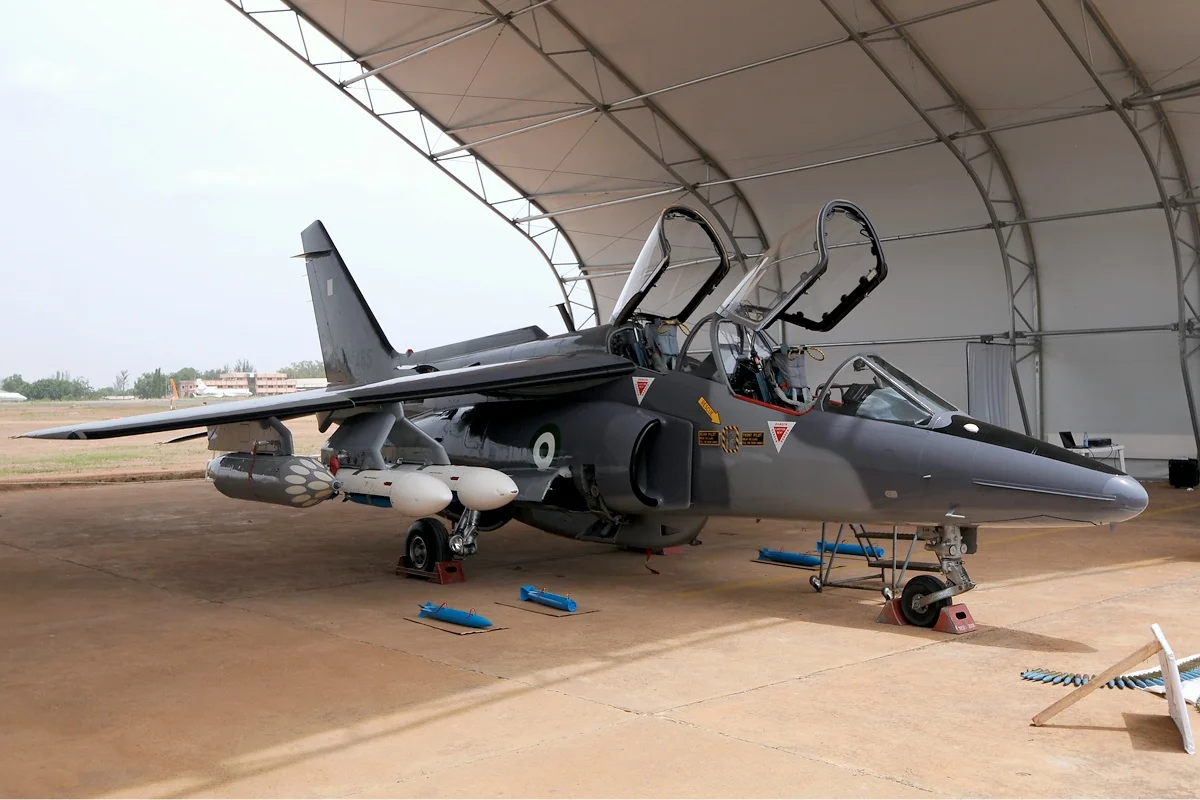
The JF-17 episode is a useful caution against treating any single platform as a settled part of the inventory: Nigeria took delivery from 2021 but grounded much of the fleet over structural flaws and engine problems, and is now acquiring the Italian M-346FA instead. Equipment lists change fast in an active counter-insurgency campaign, and open-source fleet counts (Alpha Jet, Mi-35, patrol craft) shift year to year as airframes are lost, repaired or newly delivered.
Confirmed Turkish equipment in Nigerian service
Nigeria is Africa’s most established Turkish-hardware customer, and unlike many “reported interest” stories elsewhere on the continent, its main programs are publicly confirmed by the Nigerian Army and Turkish suppliers:
- Bayraktar TB2 — Confirmed operator. An initial order was placed in 2022 with first deliveries in 2023; the Nigerian Army announced a 43-airframe fleet in December 2024 under the codename “Project Guardian,” with dozens of officers and soldiers trained on operation and maintenance. TB2s have flown in the counter-insurgency campaign in the northeast. See our dedicated look at which African countries operate the Bayraktar TB2 and what other defense systems Nigeria buys from Türkiye.
- Bayraktar AKINCI — Not confirmed. There is no public record of Nigeria operating AKINCI; confirmed African AKINCI operators are Somalia, Sudan and Libya’s GNU. Any claim of a Nigerian AKINCI fleet should be treated as unverified until confirmed by Nigeria’s Ministry of Defence or Baykar. See our AKINCI Africa operators tracker.
- ASISGUARD Songar — Confirmed. Armed quadcopter systems are in Nigerian Army service.
- Otokar Cobra — Confirmed. Wheeled armored personnel carriers are part of the Army’s vehicle fleet (see equipment table above).
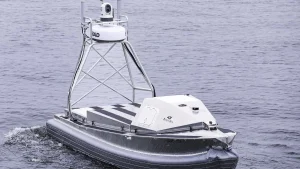
- DEARSAN Shipyard — Confirmed. In June 2025, the Turkish shipbuilder signed a contract with the Nigerian Navy to overhaul the MEKO 360-class flagship NNS Aradu and to deliver a new 57m Tuzla-class patrol vessel — the clearest sign yet that the Turkish relationship now extends beyond drones and into naval shipbuilding. Read more in our DEARSAN Shipyard profile.
- ASELSAN — ASELSAN maintains an Africa presence with a Nigeria office; see our ASELSAN in Africa overview for specific confirmed programs.
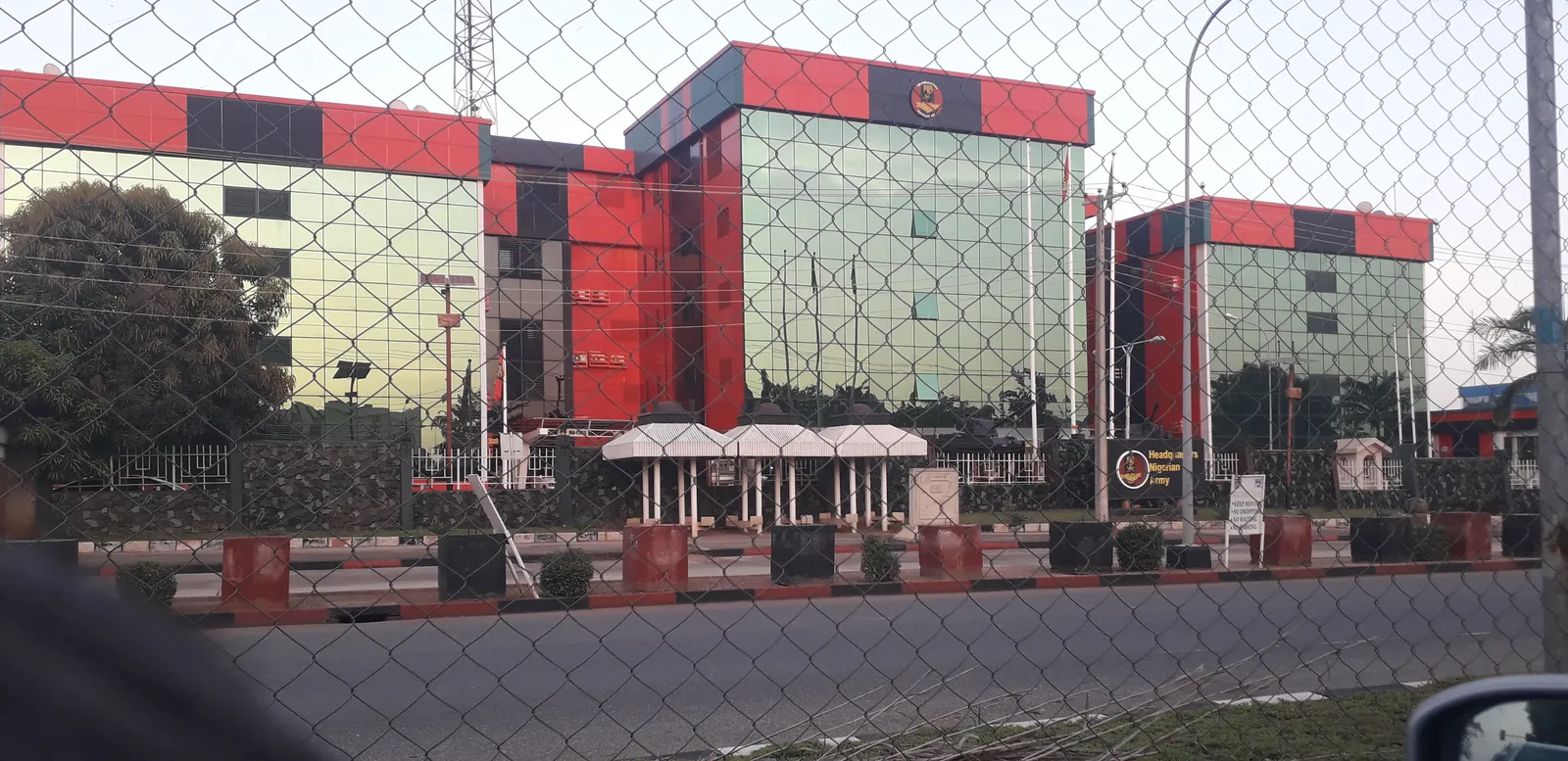
What makes Nigeria distinct from most other African cases in this dossier is that the relationship has moved from single-item drone purchases (2022–2024) to a broader supplier role covering ground vehicles, naval refit work and armed UAS — a pattern closer to Türkiye’s Gulf export relationships than to the “one drone order” stage most West African militaries are still at.
Who else supplies Nigeria
Nigeria’s supplier base remains genuinely mixed rather than concentrated on any one country: Russia (Mi-35 helicopters, legacy Army equipment), China and Pakistan (JF-17, before its grounding), Germany (the Aradu frigate, built in the 1980s), Singapore and South Korea (2025 patrol vessel deliveries), Italy (the M-346FA order), and the United States and United Kingdom (training, ISR support and smaller equipment transfers tied to the counter-insurgency campaign). Türkiye has grown from a niche supplier into one of the more visible names in that mix over the past three years, but it operates alongside — not in place of — these longer-standing relationships.
FAQ
How many active personnel does the Nigerian military have?
Open-source estimates vary widely, from roughly 143,000 to 230,000 active personnel depending on the source and methodology; Global Firepower’s headline figure for 2026 is around 223,000. Nigeria does not publish a detailed official order of battle, so treat any single number as an estimate.
What is Nigeria’s 2026 defense budget?
Roughly ₦5.41 trillion, about $3.9 billion at the budget’s own exchange-rate assumption.
Does Nigeria operate Bayraktar TB2 drones?
Yes, confirmed. The Nigerian Army operates a fleet of 43 TB2s under “Project Guardian,” ordered in 2022 and expanded through a December 2024 announcement.
Does Nigeria operate the Bayraktar AKINCI?
No confirmed evidence supports this. Confirmed African AKINCI operators are Somalia, Sudan and Libya’s GNU, not Nigeria.
Is the Nigerian Air Force’s JF-17 fleet still active?
Largely grounded due to reported structural and engine problems. Nigeria is acquiring 24 Italian Leonardo M-346FA jets as a replacement/complement.
Is the Nigerian Navy the largest in Africa?
By hull count it is among the largest, with roughly 150 vessels of various types according to Global Firepower’s 2026 index, though most are patrol and coastal craft rather than major surface combatants; the MEKO 360-class NNS Aradu remains its only true frigate.
Sources
- Global Firepower, 2026 Nigeria Military Strength (comparative index, not an official source)
- Nigerian Army, “Project Guardian” Bayraktar TB2 fleet announcement (December 2024, as reported)
- Africa Defense Forum, “Nigeria Adds Combat Aircraft to Fleet” (January 2025)
- Africa Defense Forum, “Nigerian Navy Adds to Fleet” (February 2026)
- Military Africa, “Nigeria operationalize additional Alpha jets” (April 2025)
- Shephard Media, “Turkish shipyard to refit Nigerian Navy’s flagship” (2025)
- News Agency of Nigeria / PRNigeria, Nigerian Navy 69th anniversary ship commissioning coverage (May 2025)
- Federal Government of Nigeria, 2026 Budget documents (as reported in Nigerian and Turkish trade press)
Last updated: September 2026.