Destinus Unveils Vorexon Interceptor: Mach 2+ Speed, 20 km Range Against Drones and Cruise Missiles

European defence firm Destinus, known until now primarily for its long-range strike systems, has unveiled a new air-defence missile called Vorexon at the Farnborough International Airshow. According to company figures, the interceptor exceeds Mach 2, reaches beyond 20 kilometres and carries an 8-kilogram warhead. Its target set covers drones, cruise missiles and rockets.
Guidance combines radio-command midcourse updates with an active radar seeker in the terminal phase; a short-range variant will rely solely on the onboard active seeker. Flight testing is expected to begin in 2027, with serial production planned for 2028.
An architecture, not a single launcher
Destinus positions Vorexon within a networked air-defence architecture that integrates sensors, command-and-control nodes and multiple interceptor types, rather than tying the missile to one bespoke system. At Farnborough the company also announced a cooperation agreement with France’s Thales covering air-defence systems.
Ukraine as the proving ground
Destinus already supplies systems to Ukraine and validates its technologies under real combat conditions — a track record that makes eventual Ukrainian deployment of Vorexon a realistic prospect. The hunt for affordable interceptors against cheap drones and cruise missiles has become one of the fastest-growing segments of the European defence market, drawing in startups and primes alike.
Sources
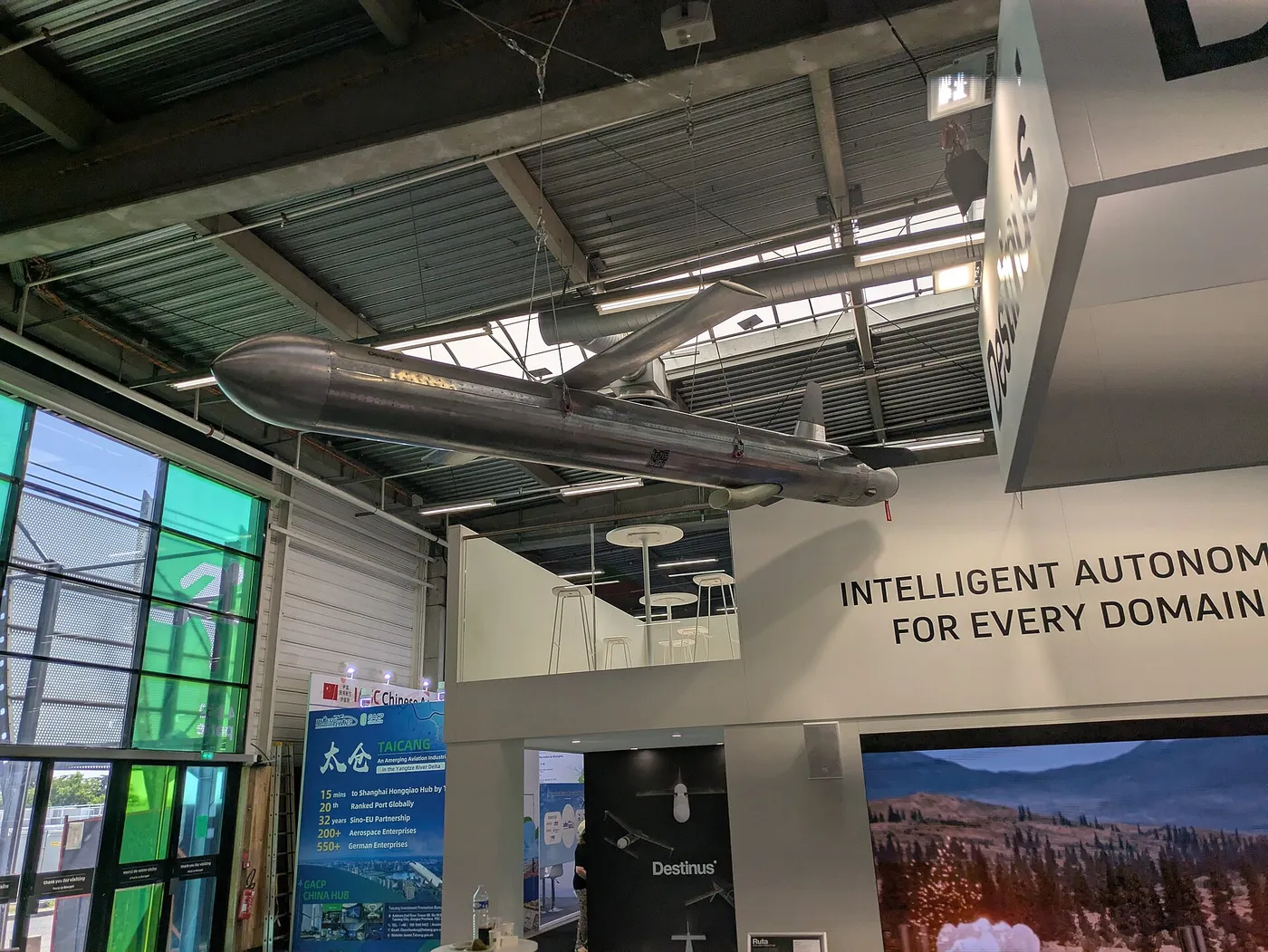
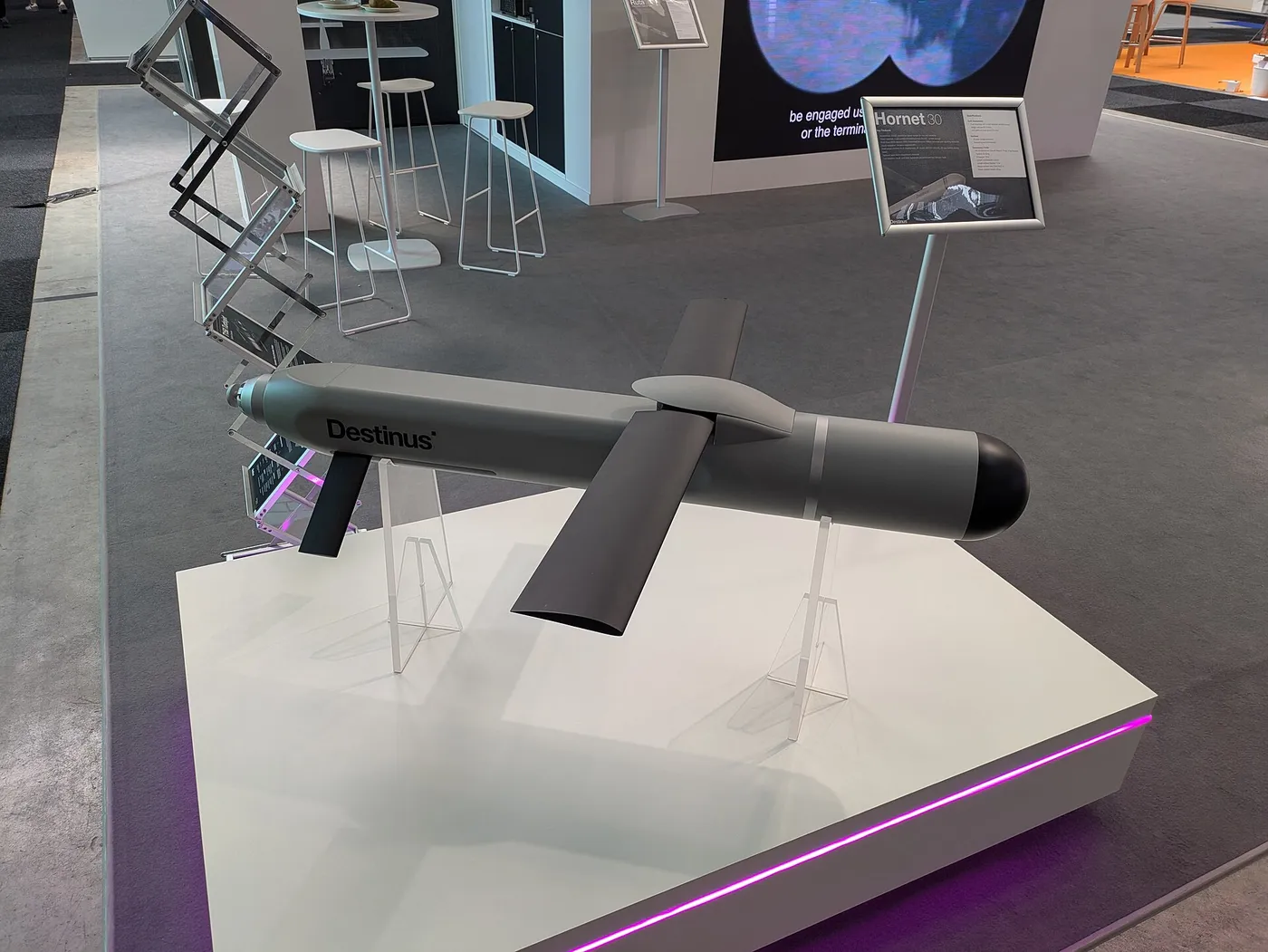
Destinus’ Ruta missile at the company’s Paris Air Show 2025 stand (representative image; no public photo of Vorexon has been released yet). Photo: Wikimedia Commons, CC BY 4.0.