MBDA CAMM-ER: Poland, Italy and the 45 km Air Defence Layer NATO Needed

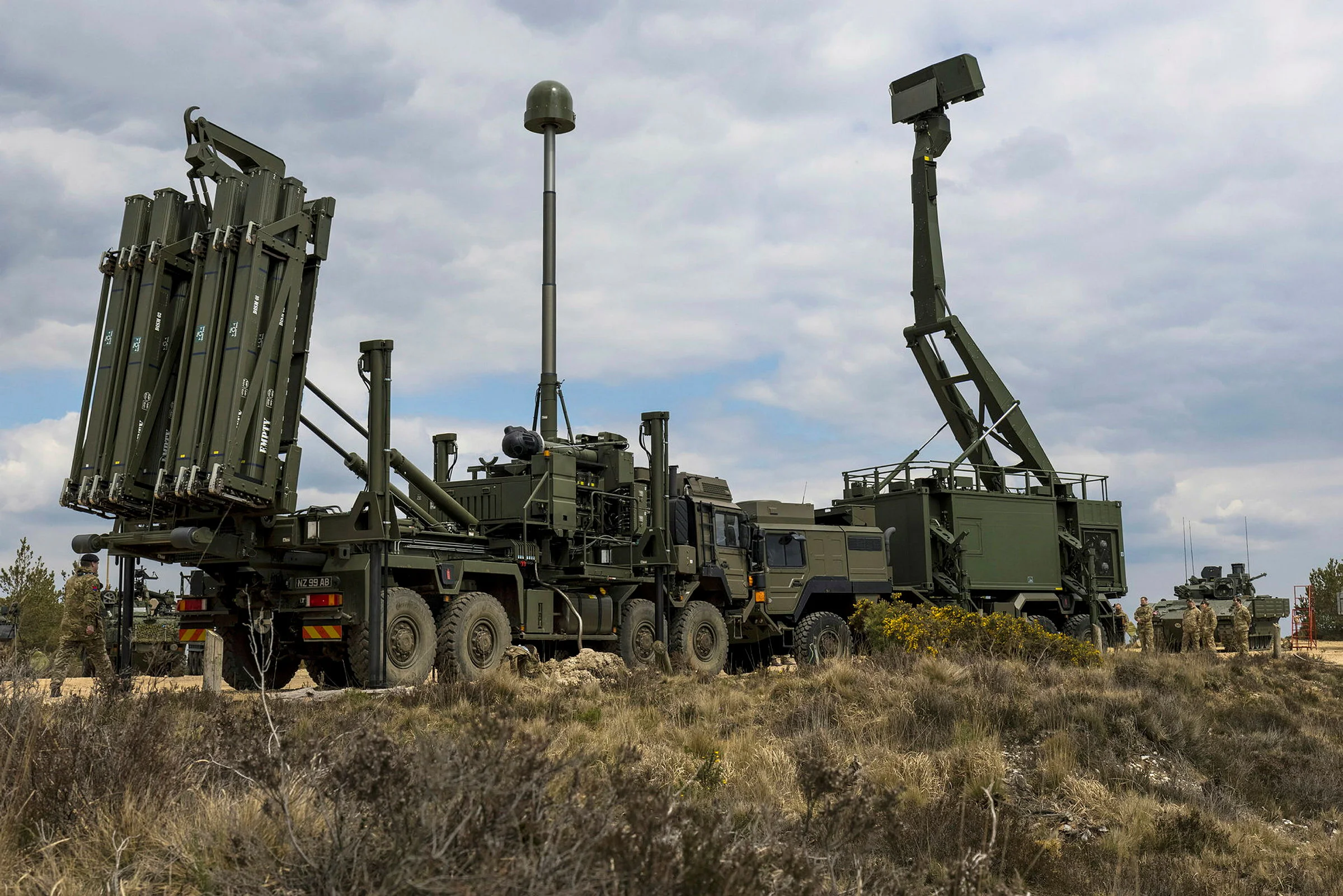
When Poland signed the Narew programme contract for CAMM-ER, it completed a remarkable arc: a missile co-developed by the UK and Italy was chosen by an eastern NATO flank nation to fill the same medium-range gap that the UK addressed with Sky Sabre and the Falklands deployment. CAMM-ER‘s 45 km range, cold-launch vertical architecture and TVM guidance place it firmly in the upper tier of available SHORAD/MRAD solutions — a credible answer to the growing density and complexity of the threat environment over European skies.
1. Technical Specifications
| Specification | CAMM | CAMM-ER |
|---|---|---|
| Length | 3.2 m | 3.5 m |
| Diameter | 166 mm | 190 mm |
| Launch weight | ~99 kg | ~160 kg |
| Speed | Mach 3+ | Mach 3+ |
| Range | ~25 km | ~45 km |
| Altitude ceiling | ~10 km | ~15 km |
| Guidance | INS + active radar + TVM | INS + active radar + TVM |
| Launch mode | Cold vertical launch | Cold vertical launch |
| Engagement | Omnidirectional 360° | Omnidirectional 360° |
2. TVM Guidance: Why It Matters
Track Via Missile (TVM) is a hybrid guidance architecture that differentiates CAMM-ER from both pure command-guidance and pure active-radar seekers:
- INS phase: The missile navigates independently after launch, preserving engagement geometry without continuous radar illumination
- Active seeker acquisition: At terminal phase, the onboard radar acquires the target autonomously — fire-and-forget, not requiring the battery radar to stay locked
- TVM datalink: The missile sends target data back to the battery; corrections can flow back if needed. This two-way channel improves ECM resistance significantly compared to one-way active seekers
The practical result: CAMM-ER can simultaneously engage multiple targets, maintain guidance under heavy jamming, and operate with reduced radar emission — a meaningful advantage in a contested electromagnetic environment.
3. Cold Vertical Launch Architecture
Cold launch ejects the missile from its canister via gas pressure before the motor ignites. The advantages compound across platform types:
- Reduced thermal and blast loading on launch cells — lighter vehicles and smaller naval deck footprints
- No exhaust gas deflection required — lower cost ground support infrastructure
- Smaller launch signature — harder to detect the moment of engagement commencement
- Compatibility with small and large platforms from the same canister format
4. Sky Sabre and Falklands
Sky Sabre is the UK Army’s CAMM-based air defence battery system, replacing the Rapier system that defended the Falklands in 1982. The deployment of Sky Sabre to the Falkland Islands in 2022 — to the same islands its predecessor protected 40 years earlier — was both operationally meaningful and symbolically significant. The Falklands deployment requirements (high reliability, minimal logistics footprint, resilient against fast low-altitude jets and missiles) shaped Sky Sabre’s design criteria in ways that benefit all CAMM-ER operators.
5. Poland’s Narew Programme
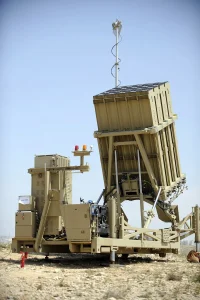
Poland’s selection of CAMM-ER for the Narew short-to-medium range air defence programme is the largest export contract in the CAMM family’s history. The Narew requirement called for a system capable of replacing Soviet-era Newa/SA-6 derivatives while providing a 45 km coverage footprint compatible with Polish NATO integration. CAMM-ER beat competitors including the Israeli Iron Dome and American NASAMS proposals for this contract — a significant competitive win for MBDA in a strategically sensitive market.
6. NATO Integration
CAMM-ER’s design incorporates NATO interoperability requirements from the ground up — the same design principle that produced the “Common” in CAMM. Current and confirmed operators:
- UK: Sky Sabre (CAMM) — operational, including Falklands
- Italy: CAMM-ER — co-developer, land and naval variants
- Poland: CAMM-ER (Narew) — contracted
- Finland: CAMM — ordered
The overlap between Italy (southern flank) and Poland (eastern flank) creates a geographic arc across NATO’s most contested approaches — a de facto alliance-level air defence layer in the CAMM-ER range band.
7. Assessment
CAMM-ER occupies a gap that is strategic rather than marginal: the space between SHORAD (sub-25 km, Mistral/Stinger) and long-range systems (Patriot, SAMP-T, S-300+). The historical absence of a credible, deployable, fire-and-forget platform in this band was a known NATO weakness — Russia’s missile and drone proliferation made that weakness acute. CAMM-ER, with its 45 km reach, omnidirectional engagement and cold-launch mobility, is the first European answer that genuinely closes it without requiring the infrastructure footprint of Patriot.