Castelion Raises $1 Billion at a $13 Billion Valuation to Mass-Produce the Blackbeard Hypersonic Missile
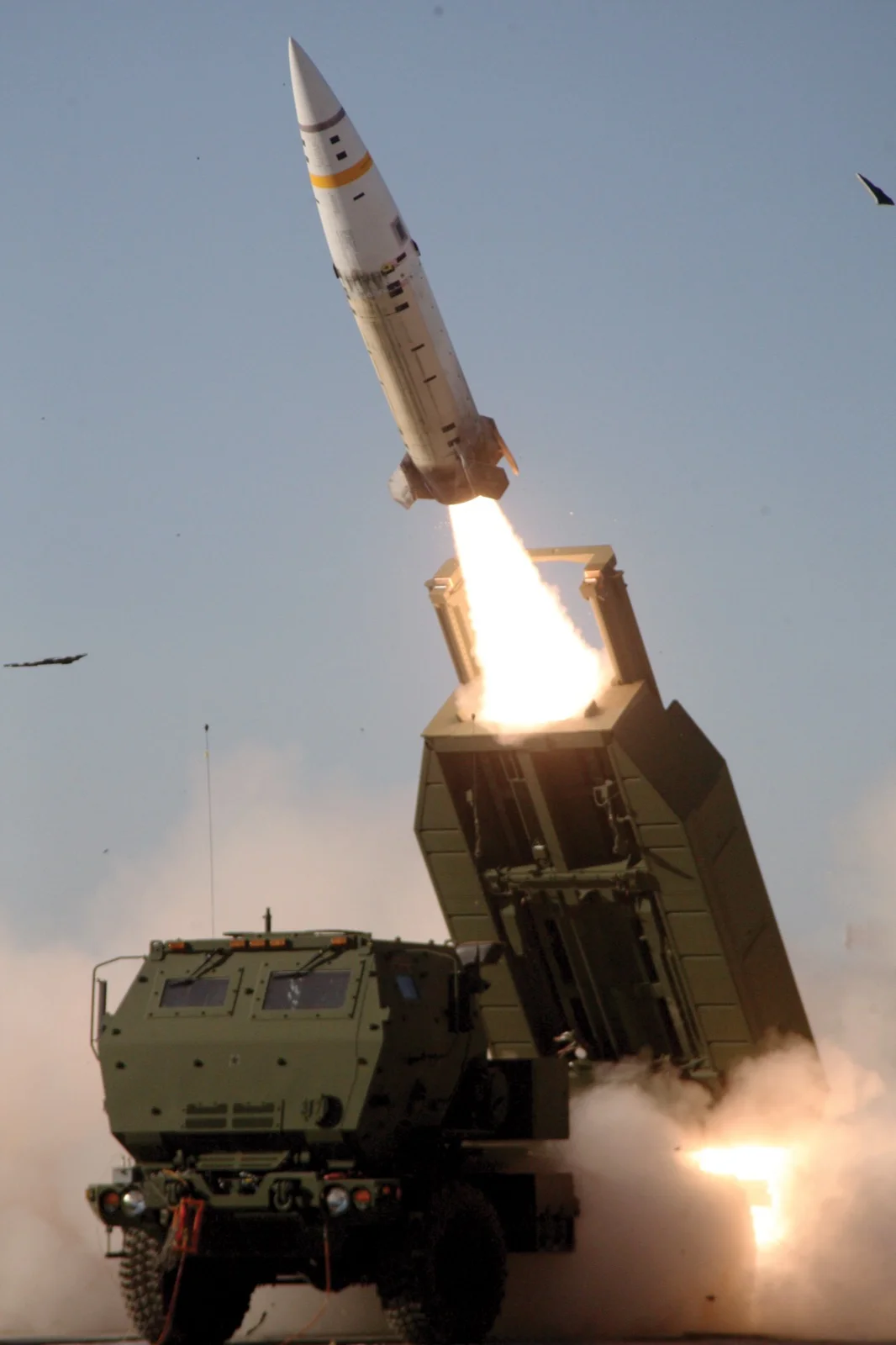
Castelion, the US defence technology company building low-cost hypersonic strike weapons, announced on 19 August 2026 that it had closed a $1 billion Series C round to scale production of Blackbeard, its first mass-producible hypersonic missile. The round values the company at $13 billion.
How the round is structured
The financing splits into $800 million of equity and a $250 million committed revolving credit facility. The equity portion was co-led by JPMorganChase’s Strategic Investment Group, Andreessen Horowitz and funds managed by Carlyle. Lightspeed Venture Partners, Lavrock Ventures, Altimeter, General Catalyst, Interlagos and — as a new investor — T. Rowe Price Associates also participated.
The credit facility is the more revealing half. Munitions manufacturing runs on a punishing cash cycle: propulsion sections, energetics and long-lead castings must be bought months ahead of a delivery that only gets paid for once it ships. A revolver lets a company bridge that gap without diluting equity every time it wants to buy inventory. Including one inside a venture round signals that Castelion expects to be buying at scale rather than building prototypes.
What Blackbeard actually is
Blackbeard is a ground-launched hypersonic precision strike missile sized to fire from launchers the US Army already owns — the M142 HIMARS and the tracked M270 family. The ground-launched variant, known as Blackbeard GL, moved into development in the Army’s fiscal 2026 budget under Project HX3.
The programme’s selling point is not range. It is unit cost. Hypersonic weapons have so far been systems that cost millions of dollars apiece and are built a few dozen at a time. Castelion’s founding team, drawn heavily from SpaceX, is applying a familiar logic from the launch industry: instead of an exquisite weapon produced in small numbers, design something merely good enough that can be produced by the thousand.
Officials have described the ground-launched variant as aiming for roughly 80 per cent of the capability expected from the future PrSM Increment 4, which points to a realistic range in the region of 800 kilometres.
Where it will be built
Castelion will expand manufacturing at and beyond Project Ranger, its site in Sandoval County, New Mexico, which the company describes as the largest facility in the United States dedicated to hypersonic missile manufacturing. The campus covers roughly 1,000 acres, and the company says it has already put more than $250 million of private capital into infrastructure there. Design work continues in California.
Castelion has won more than $500 million in US military contracts over the past 18 months, and Blackbeard is slated for fielding in 2027.
Why “cheap hypersonics” became the argument
Hypersonic weapons fly above Mach 5 and manoeuvre, which compresses the decision window that air and missile defence architectures depend on. A ballistic trajectory can be computed early; a manoeuvring glide body cannot.
But the binding constraint of the past three years has been industrial rather than technical. The war in Ukraine and the 2026 Iran conflict both demonstrated that advanced munitions stockpiles can be drawn down in months. That has shifted defence ministries from asking which missile is most capable to asking which sufficiently capable missile can actually be built at volume. Castelion’s valuation is a bet on that shift holding.
The launcher decision matters
Designing Blackbeard around launchers already in service is the programme’s most consequential engineering choice. HIMARS is fielded across NATO, crews are trained on it and the logistics tail exists. A country that already operates HIMARS could, in principle, extend its reach without buying a new launcher fleet — the round changes, the vehicle does not.
That approach is not unique to the United States. Turkey has pursued a comparable path with its own rocket artillery and tactical missile families, expanding capability by fielding new munitions through existing launcher architectures rather than starting from a clean sheet each time.
Regional implications
A hypersonic round in the 800-kilometre class matters most where distances are short and target density is high. Across the Black Sea, the Eastern Mediterranean and the Gulf, that range band brings air defence batteries, radar sites and command nodes inside reach without putting an aircraft over defended airspace.
The defensive response is already visible in two trends: pushing sensor networks toward passive and distributed architectures, and driving down the cost of interceptors. The US Missile Defense Agency’s recent awards for low-cost interceptor development are the concrete expression of that second trend.
What the investor list says
The composition of the round reflects a shift in how munitions get financed. Ordnance production was traditionally funded through long-dated government contracts and largely avoided by venture capital: capital-intensive, heavily regulated, with an uncertain exit. A strategic investment arm of a major bank, a large private equity house and a technology-focused venture fund appearing in the same round suggests that calculation has changed.
The participation of a public-market investor such as T. Rowe Price is a separate signal, since such funds typically enter close to a listing. Even so, a $13 billion valuation prices in far more than the $500 million of contracts disclosed to date. Investors are buying the expectation that Blackbeard becomes a programme of record in 2027 and draws orders in the thousands per year. Whether that materialises rests on the next two years of flight testing.
Sources
- Castelion corporate statement and PR Newswire release, 19 August 2026
- Carlyle Group press release, 19 August 2026
- US Army fiscal year 2026 budget documents (Project HX3)