Mali’s Military Strength 2026: Personnel, Budget and Turkey’s Drone Role

Mali’s Military Strength 2026: Personnel, Budget and Turkey’s Drone Role
Mali’s armed forces (FAMa) field an estimated 40,000+ active personnel across the Army, Air Force, National Guard and Gendarmerie, backed by a defense budget in the roughly $950 million–$1.2 billion range depending on the tracker used. Mali is a confirmed operator of both the Bayraktar TB2 (17+ airframes, one of Africa’s largest fleets) and the heavier Bayraktar AKINCI, delivered by Turkey since 2023–2024. The force is fighting an escalating war against JNIM and Tuareg-led FLA insurgents — a conflict that killed Defense Minister Sadio Camara in an April 2026 attack and has choked Bamako under a JNIM fuel blockade — while relying on Russia’s Africa Corps for close air and ground support alongside its own Turkish- and Chinese-sourced hardware.
FAMa: structure, personnel and leadership
The Malian Armed Forces (Forces Armées Maliennes, FAMa) operate under the Ministry of Defense in Bamako. The central command structure includes the General Staff of the Armed Forces (EMGA), the Army General Staff (EMAT), the Air Force General Staff (EMAA), the General Staff of the National Guard (GNM) and the General Directorate of the National Gendarmerie (DGGN).
- Malian Army — the bulk of the force, organized into regional commands and increasingly built around counter-insurgency operations across the north and center of the country.
- Malian Air Force (Force Aérienne Malienne) — operates a mixed fleet of combat, transport and rotary-wing aircraft, and hosts Mali’s Bayraktar TB2 and AKINCI drone units.
- National Guard and Gendarmerie — roughly 20,000 personnel combined, handling internal security, border control and gendarmerie duties alongside the regular military.
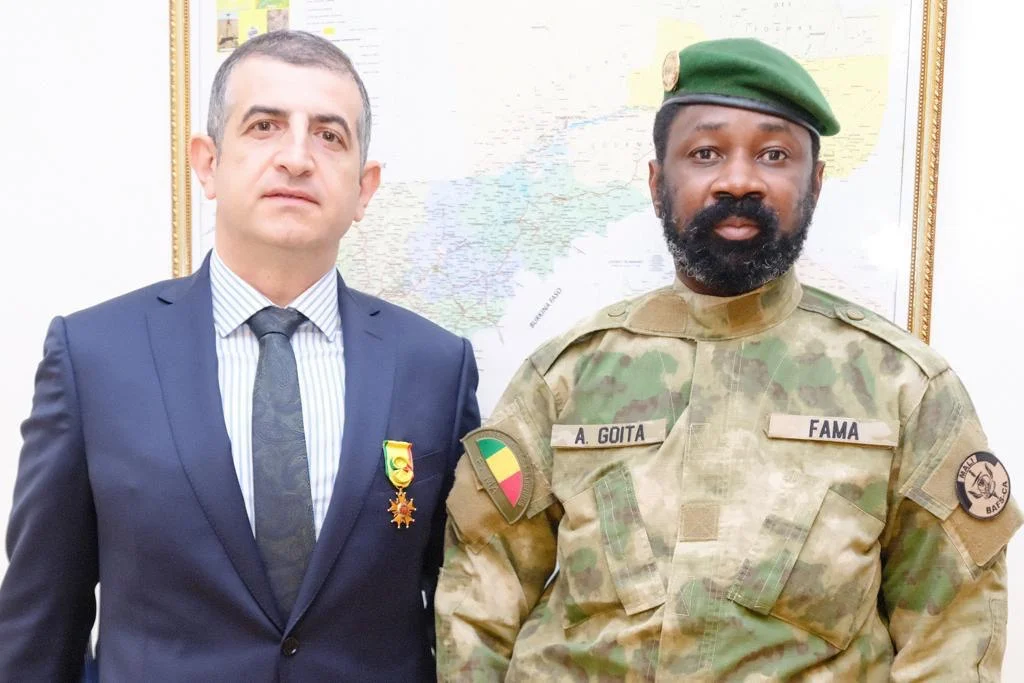
President Assimi Goïta serves as commander-in-chief and, since 4 May 2026, also holds the Defense and Veterans Affairs portfolio directly — a role he took on after Defense Minister Sadio Camara was killed in the 25 April 2026 attacks (see below). General Oumar Diarra serves as Chief of the General Staff.
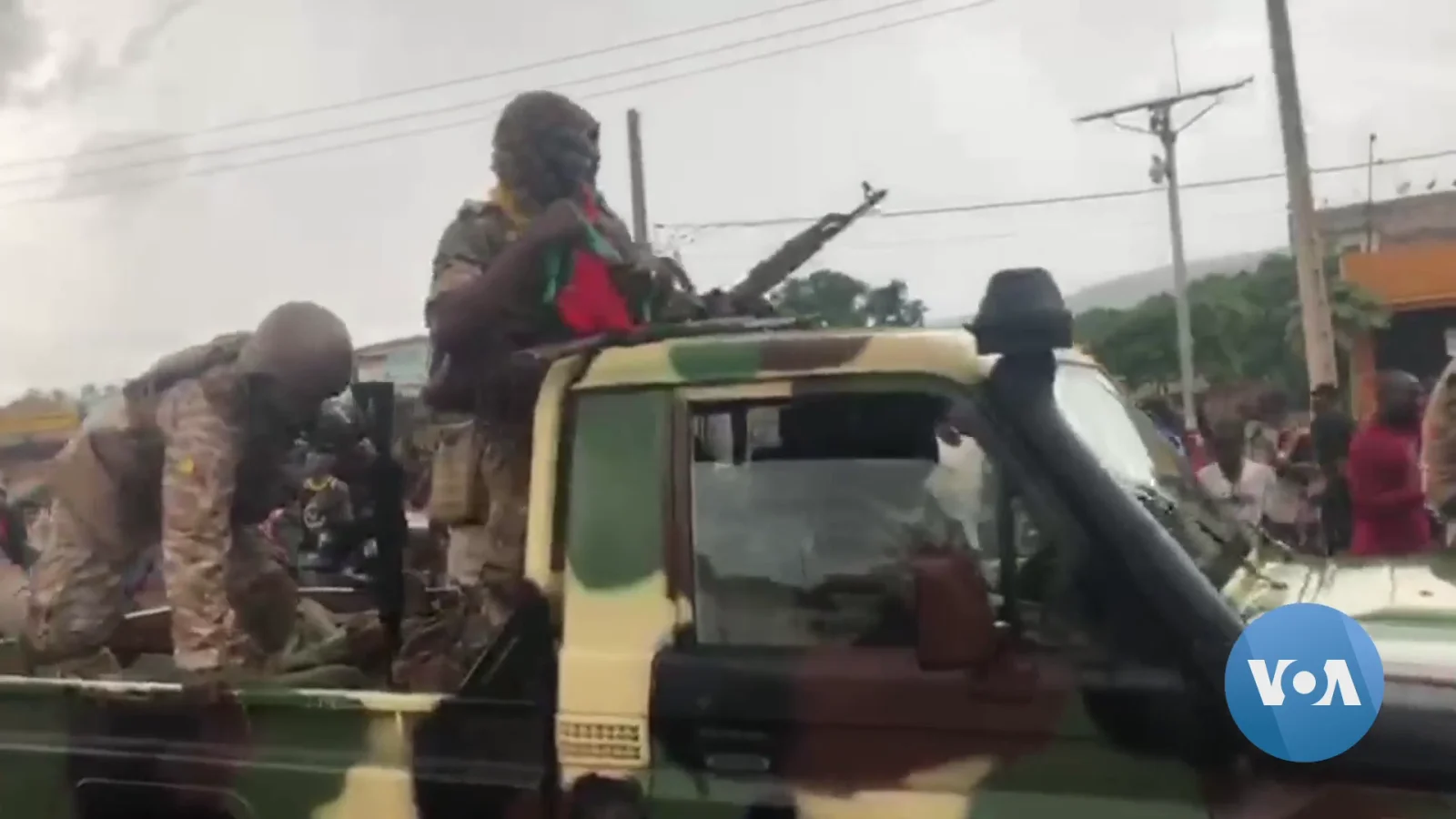
Personnel figures vary widely by source. Global Firepower-derived trackers cite as few as 13,000 active troops, while other open-source estimates put active FAMa personnel above 40,000, plus roughly 20,000 paramilitary (gendarmerie and National Guard). Mali does not publish a detailed official order of battle, so treat any single number as an approximation. A 2025–2026 government security action plan calls for recruiting an additional 15,000 military personnel and 9,000 security agents, reflecting the pressure of the ongoing insurgency rather than a settled baseline.
Where Mali ranks, and the limits of the data
Global Firepower (GFP) placed Mali around 98th–104th out of roughly 145 countries assessed in its 2026 index, depending on which GFP-derived tracker is consulted — the spread itself illustrates why GFP should be read as a privately compiled comparative index, not an official military register. GFP’s methodology weighs equipment counts and personnel heavily, which can understate a force like FAMa whose real strategic weight in 2026 comes from an active counter-insurgency campaign and drone fleet rather than raw inventory size. For context on how Mali compares with its Sahel and West African neighbors, see our Strongest Army in Africa 2026 ranking and Africa’s 10 Biggest Defence Budgets in 2026; cross-check against SIPRI or IISS’s The Military Balance where precision matters.
The 2026 defense budget
Mali does not publish a fully itemized, publicly disclosed defense budget separate from its consolidated state finances. Independent aggregators using SIPRI-consistent methodology (Trading Economics) put Mali’s military expenditure at roughly $953 million in 2025, up from about $933 million in 2024, with defense spending estimated at around 4–4.3% of GDP — a high share reflecting the ongoing war footing. Other trackers place total 2026 defense-related spending closer to $1.2 billion once paramilitary and security-plan recruitment costs are included. As with personnel data, treat these as approximate, source-dependent figures rather than an official Malian government line item.
The security crisis: JNIM’s fuel blockade and the April 2026 attacks
Mali’s military posture in 2026 cannot be separated from an escalating war against Jama’at Nusrat al-Islam wal-Muslimin (JNIM), an al-Qaeda-linked coalition, and the Tuareg-led Azawad Liberation Front (FLA/FLA). Two developments define the year:
- The fuel blockade — JNIM launched a campaign in September 2025 targeting fuel convoys supplying Bamako, reportedly destroying more than 300 tankers by mid-2026 and severely restricting fuel access in the capital, with knock-on effects for transport, electricity generation and military logistics.
- The 25 April 2026 coordinated attacks — JNIM and the FLA carried out the largest coordinated offensive of the Mali conflict since the 2012 rebellion, striking Kati (FAMa’s main garrison town), Bamako, Modibo Keïta/Sénou International Airport, Gao, Kidal, Sévaré and Mopti in a single day. A suicide vehicle attack on Defense Minister Sadio Camara’s residence killed him along with family members; intelligence chief Modibo Koné was injured in a separate strike. President Goïta assumed the defense portfolio himself on 4 May 2026 in the aftermath.
In response, Russia’s Africa Corps — the state-controlled successor to the Wagner Group, contracted to support FAMa since 2021 — has reportedly consolidated its remaining personnel around Bamako after pulling back from parts of the north, leaving FAMa as the primary ground force contesting northern Mali. JNIM has also released footage of drone strikes on Africa Corps personnel and equipment, underscoring that low-cost drones are now used by all sides of the conflict, not just by the state.
Current equipment: Army and Air Force
Mali’s inventory reflects a multi-supplier procurement strategy accelerated by the security crisis. Figures are compiled from open-source military reporting (DefenceWeb, Army Recognition, GlobalSecurity) and should be read as approximate, since Mali does not publish a full official order of battle.
| Category | Equipment | Notes |
|---|---|---|
| Combat aircraft | Su-25 Frogfoot, L-39 Albatros (light attack) | Roughly a dozen fixed-wing combat aircraft across the fleet |
| Attack/strike drones | Bayraktar TB2, Bayraktar AKINCI (Turkey) | 17+ TB2 airframes (serials to at least TZ-17D); AKINCI in service since 2024 |
| Helicopters | Mi-24/Mi-35 Hind, Mi-8/Mi-17 Hip | Russian-origin, used for both attack and transport roles |
| Infantry fighting vehicles | BMP-3 (Russia, 2025 delivery), VN22 (China, 2025 delivery) | Not publicly disclosed in full |
| Armored personnel carriers / MRAPs | BTR-82A (Russia, 2025), CS/VP14 MRAP (China, 2025) | Recent deliveries reported alongside older Soviet-era stock |
| Navy | None — Mali is landlocked | 0 |
Turkish equipment in Malian service: TB2 and AKINCI
Turkey is now one of Mali’s most visible arms suppliers alongside Russia and China. Mali is a confirmed operator of the Bayraktar TB2, having received its first drones in January and March 2023, with further batches arriving in January 2024; FAMa imagery has shown serials running from TZ-01D to at least TZ-17D, making Mali’s TB2 fleet one of the largest confirmed in Africa. FAMa has used the TB2 for both airstrikes against JNIM- and ISGS-linked groups and for reconnaissance over contested northern territory.
In December 2024, reporting identified Mali as the fourth confirmed African operator of the heavier Bayraktar AKINCI, joining a short list of states operating Baykar’s larger, longer-range unmanned combat aircraft — see our Bayraktar AKINCI in Africa: Confirmed Operators guide for the full list. Mali also fits a wider regional pattern: it is one of at least ten confirmed African TB2 operators, alongside its Alliance of Sahel States partners Niger and Burkina Faso — see our region-by-region Bayraktar TB2 operator guide for how Mali compares with Nigeria, Ethiopia and other confirmed users.
Who supplies Mali: Russia, China and Turkey compared
Since the 2022 withdrawal of French forces and the end of the EU training mission, Mali has rebuilt its procurement around three main partners, each filling a different role:
| Supplier | Main role | Key platforms | Since | Price / delivery |
|---|---|---|---|---|
| Russia | Ground combat support (Africa Corps), heavy armor, rotary-wing aircraft | Su-25, Mi-24/Mi-35, Mi-8/17, BMP-3, BTR-82A | 2021 (Wagner), continued as Africa Corps | Not publicly disclosed; state-to-state and contractor arrangement |
| China | Armored vehicles and MRAPs | VN22 IFV, CS/VP14 MRAP | 2025 deliveries reported | Not publicly disclosed |
| Turkey | Armed and reconnaissance drones | Bayraktar TB2, Bayraktar AKINCI | January 2023 (TB2); 2024 (AKINCI) | Not publicly disclosed for Mali specifically; TB2 unit prices reported elsewhere in the $1–5 million range depending on configuration |
Turkey’s advantage in this mix has been speed and independence from Western export conditions: TB2 deliveries arrived within months of Mali’s break with France, at a price point and logistics footprint FAMa could sustain without a large foreign training mission. That does not make Russian or Chinese equipment inferior for their respective roles — Africa Corps fills a ground-combat gap Turkey does not offer, and Chinese armor has plugged fleet-renewal needs at short notice. For how this plays out elsewhere on the continent, see Turkish vs. Chinese Drones in Africa: Why Some Countries Buy Both and Turkish Armored Vehicles in Africa.
Mali and the Alliance of Sahel States
Mali is a founding member of the Alliance of Sahel States (AES), formed with Burkina Faso and Niger under the September 2023 Liptako-Gourma Charter after all three states broke with ECOWAS and, in Mali’s case, with France. The AES reached fuller operational status through a series of summits in 2025–2026 and now functions as the three juntas’ primary regional security framework, including a mutual-defense clause and joint counter-terrorism coordination. Notably, all three AES members — Mali, Burkina Faso and Niger — are confirmed Bayraktar TB2 operators, making the drone one of the few pieces of hardware common to all three militaries even as their broader equipment bases (Russian, Chinese, Turkish and legacy Western stock) diverge. For comparison, see our profiles of Nigeria, Ethiopia and Uganda in our military-strength series.
FAQ
How many active personnel does the Malian Armed Forces have?
Estimates vary widely: Global Firepower-derived trackers cite around 13,000, while other open-source estimates put active FAMa personnel above 40,000, plus roughly 20,000 paramilitary. Mali does not publish an official detailed order of battle.
Does Mali operate the Bayraktar TB2?
Yes, confirmed. Mali received its first TB2s in January and March 2023, with further deliveries in January 2024, and has since become one of Africa’s largest confirmed TB2 operators with 17 or more airframes.
Does Mali also operate the Bayraktar AKINCI?
Yes. Reporting from December 2024 identified Mali as the fourth confirmed African operator of the AKINCI, Baykar’s heavier, longer-range unmanned combat aircraft.
What is Mali’s defense budget?
Mali does not publish a detailed, separate defense budget. Independent SIPRI-consistent trackers estimate military expenditure at roughly $950 million to $1.2 billion for 2025–2026, or around 4–4.3% of GDP.
What happened to Mali’s defense minister in 2026?
Defense Minister Sadio Camara was killed on 25 April 2026 when a suicide vehicle attack struck his residence during coordinated JNIM and FLA assaults on multiple Malian cities. President Assimi Goïta took over the defense portfolio directly on 4 May 2026.
Does Russia’s Africa Corps fight alongside FAMa?
Yes. Africa Corps, the Russian state-controlled successor to the Wagner Group, has supported Malian forces since 2021 and remains active, though it has reportedly consolidated around Bamako after pulling back from parts of northern Mali in 2026.
Sources
- Al Jazeera, “Mali’s Defence Minister Sadio Camara killed during coordinated attacks” (26 April 2026)
- NPR, “Mali reeling after coordinated attacks hit multiple cities” (25 April 2026)
- Africa Center for Strategic Studies, “Attacks in Mali Mark Long Trajectory of Worsening Security” (2026)
- Africa Defense Forum, “Africa Corps Shifts Tactics in Mali” (June 2026)
- DefenceWeb, “Mali receives more Bayraktar TB2 UAVs”
- Army Recognition, “Mali receives 5 Turkish Bayraktar TB2 drones for counterterrorism” (2024)
- Military Africa, “Mali boosts its drone fleet with new Bayraktar TB2s from Turkey” (January 2024)
- Overt Defense, “Mali Became the Fourth Operator of Bayraktar AKINCI UCAVs in Africa” (December 2024)
- Ecofin Agency, “Mali to Recruit 24,000 Soldiers Under New Security Plan”
- Trading Economics, Mali Military Expenditure (SIPRI-consistent aggregator data, not an official Malian government source)
- Global Firepower, 2026 Mali country listing (comparative index, not an official military register)
Last updated: September 2026.