Strongest Army in Africa 2026: Full GFP Ranking

Egypt is Africa’s strongest military in 2026, ranked 19th globally in the Global Firepower (GFP) Index with a PwrIndx score of 0.3651 — ahead of Algeria (2nd in Africa, 0.4849), Nigeria (3rd, 0.6097), South Africa (4th, 0.6843) and Ethiopia (5th, 0.8525). Morocco, Angola, DR Congo, Sudan and Tunisia round out Africa’s top 10. These GFP figures are a useful comparative index, not an official military assessment — below we break down the full ranking, what actually drives it, and where Turkish-made equipment fits into the continent’s fastest-growing procurement trend.
Table of Contents
- Africa’s Top 10 Militaries in 2026 (Full Table)
- How “Strongest” Is Measured — and Why GFP Isn’t the Full Picture
- Egypt: Africa’s No. 1, and Why
- Algeria: The Region’s Heaviest Armor and Air Defense
- Nigeria: Largest Force, Counter-Insurgency Focus
- South Africa: Industrial Base, Smaller Numbers
- Ethiopia: Manpower-Driven Climb
- Morocco, Angola, DR Congo, Sudan and Tunisia: Ranks 6–10
- Africa’s Defense Spending Is Rising Faster Than the Ranking Table Shows
- Regional Breakdown: Four Different Africas, Militarily
- East Africa’s Rising Militaries: Kenya, Tanzania, Uganda, Ghana, Rwanda
- Where Turkish Equipment Fits In
- What This Means for Defense Planners and Investors
- FAQ
- Sources
Africa’s Top 10 Militaries in 2026 (Full Table)
The table below reflects the 2026 Global Firepower Index, the most widely cited open comparative ranking. A lower PwrIndx score indicates a stronger rated military (0.0000 would be a theoretical perfect score).
| Africa Rank | Country | Global Rank (of 145) | GFP PwrIndx | Notable Edge |
|---|---|---|---|---|
| 1 | Egypt | 19 | 0.3651 | Largest air force and armored fleet on the continent; F-16, Rafale and MiG-29M in service |
| 2 | Algeria | — | 0.4849 | Heaviest air-defense network in Africa; large Russian-sourced armor and SAM inventory |
| 3 | Nigeria | — | 0.6097 | Largest standing manpower pool; sustained counter-insurgency operational tempo |
| 4 | South Africa | — | 0.6843 | Most self-sufficient defense-industrial base (Denel, Paramount, Rheinmetall Denel Munition) |
| 5 | Ethiopia | — | 0.8525 | Very large land-force manpower base, a metric GFP weights heavily |
| 6 | Morocco | 56 | not publicly disclosed | Modern F-16V fleet, growing Turkish and Israeli systems integration |
| 7 | Angola | 59 | not publicly disclosed | Largest armored inventory in southern Africa |
| 8 | DR Congo | 64 | not publicly disclosed | Large manpower base, ongoing eastern-region operations |
| 9 | Sudan | 66 | not publicly disclosed | Large reported personnel figures amid the ongoing internal conflict |
| 10 | Tunisia | 79 | not publicly disclosed | Compact, professionalized force focused on border and counter-terror security |
Global Rank column left blank where GFP does not publish it in accessible summaries; PwrIndx not publicly disclosed for ranks 6–10 in the sources reviewed for this article.
How “Strongest” Is Measured — and Why GFP Isn’t the Full Picture
Global Firepower is a privately compiled index, not a government or defense-ministry assessment. Its PwrIndx score blends more than 60 factors across six categories — human resources, equipment quantity, financial resources, logistical capacity, natural resources and geography — and it weights manpower and equipment counts heavily relative to training, readiness, doctrine, or actual combat performance. That weighting is exactly why Ethiopia, with a very large land-force manpower base, outranks more industrially developed forces like Morocco’s on this list, and why analysts treat GFP as a starting point rather than a verdict.
For a fuller picture, cross-reference GFP with the SIPRI Military Expenditure Database for defense-spending trends and the IISS Military Balance for order-of-battle detail — both are compiled by defense researchers rather than a media ranking site. Where this article cites a SIPRI Trend-Indicator Value (TIV) figure elsewhere on Envanter Medya, note that TIV measures the volume of arms transfers using a standardized pricing model — it is not a sales price in dollars.
Egypt: Africa’s No. 1, and Why
Egypt’s continental lead comes from scale: the largest air force in Africa, a large mechanized army, and a navy that has expanded significantly over the past decade, including two Mistral-class amphibious assault ships. Egypt operates a mixed Western/Russian inventory — F-16s and Rafales alongside MiG-29M/M2s and Ka-52 attack helicopters — a diversification strategy that also shapes its approach to newer suppliers, including Turkish systems discussed further below.
Algeria: The Region’s Heaviest Armor and Air Defense
Algeria’s edge is density of heavy equipment: one of the largest tank fleets in Africa and a layered, largely Russian-sourced air-defense network (S-300/S-400 family systems). Algeria’s defense procurement remains heavily Russia-oriented compared to most of its North African neighbors.
Nigeria: Largest Force, Counter-Insurgency Focus
Nigeria’s ranking reflects the size of its standing force and years of sustained operational tempo against insurgent groups in the northeast and armed criminal groups in the northwest. That operational pressure has driven steady demand for ISR and strike-capable unmanned systems — see our related coverage of Nigerian Army recruitment and salary structure and ASELSAN’s expansion into the Nigerian market.
South Africa: Industrial Base, Smaller Numbers
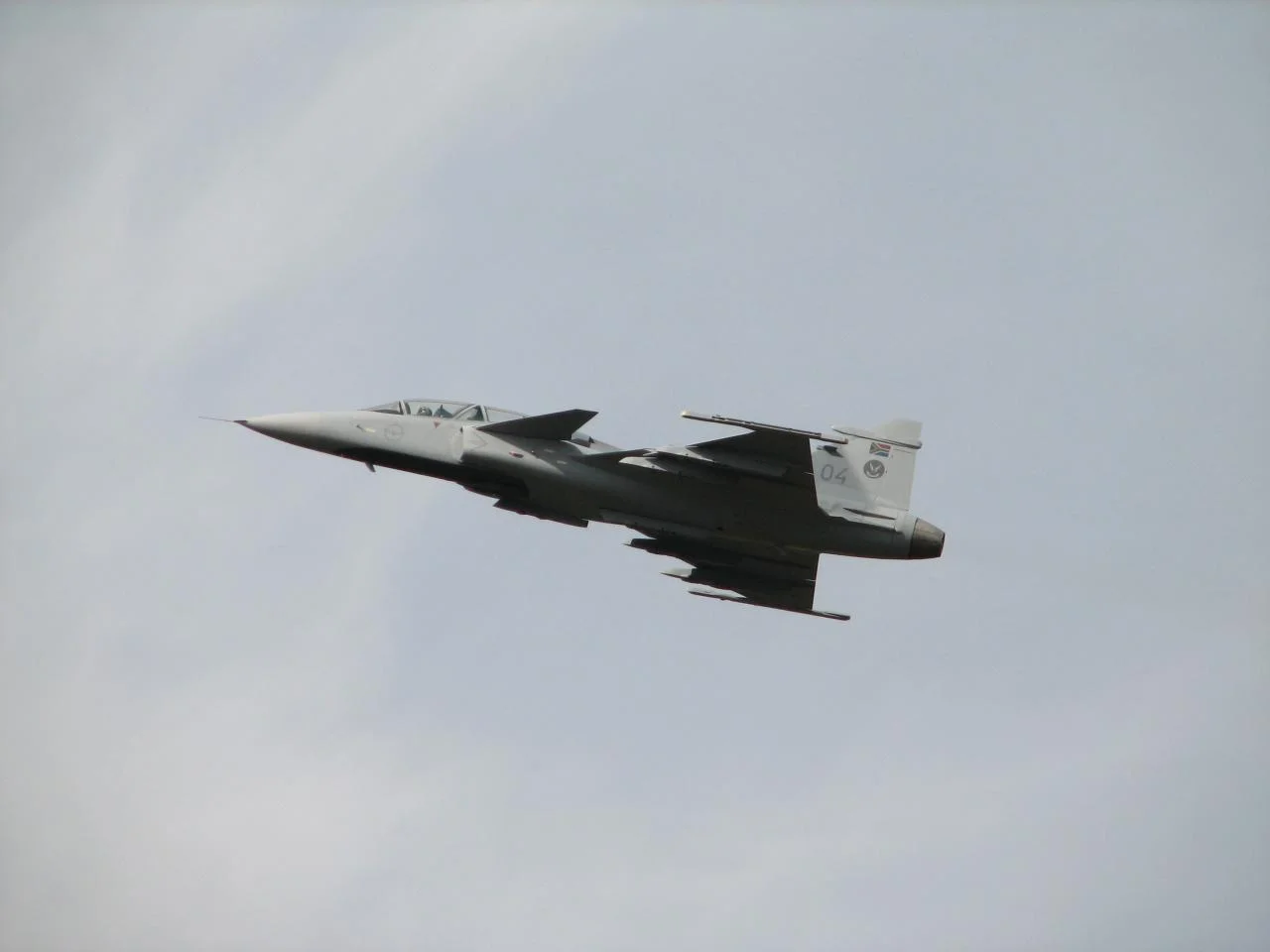
South Africa ranks fourth despite a comparatively small standing force because GFP credits its domestic defense-industrial capacity — Denel, Paramount Group and Rheinmetall Denel Munition all design and export locally. The South African Air Force’s Gripen fleet remains its most capable fast-jet asset, though serviceability has been a persistent budget-driven challenge over the past decade.
Ethiopia: Manpower-Driven Climb
Ethiopia’s fifth-place finish is the clearest example of GFP’s manpower weighting in action: a very large population base translates into a very large available-manpower figure, which lifts the PwrIndx score even where equipment modernization has lagged regional peers. Treat this ranking as a manpower-and-scale metric, not a statement about equipment sophistication or combat readiness.
Morocco, Angola, DR Congo, Sudan and Tunisia: Ranks 6–10
Morocco (6th, global rank 56) fields one of Africa’s most modern air forces, with F-16V Block 70/72 aircraft delivered from 2024 and an increasingly diversified supplier base that now includes Turkish and Israeli systems alongside its traditional US and French inventory. Rabat’s decision to co-produce Bayraktar TB2 and AKINCI airframes domestically, launched in December 2024, is the most advanced local-manufacturing arrangement Baykar has struck anywhere in Africa.
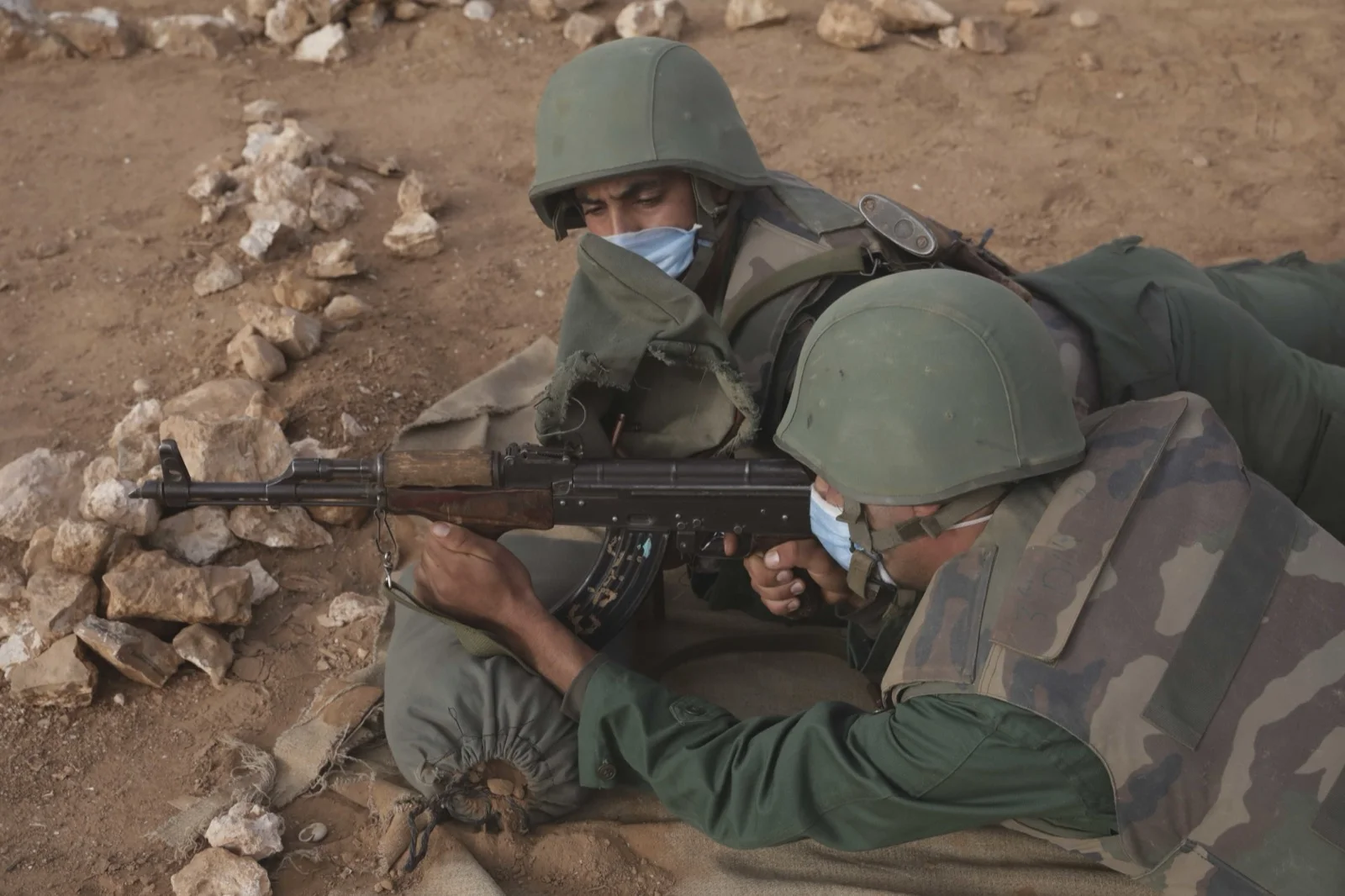
Angola (7th, global rank 59) carries the largest armored vehicle inventory in southern Africa, a legacy of its Soviet- and Russian-sourced Cold War and post-war procurement, now aging and only partially modernized.
DR Congo (8th, global rank 64) ranks on the strength of a very large available-manpower pool rather than equipment quality; the Congolese armed forces (FARDC) remain engaged in protracted operations in the eastern provinces, a factor GFP’s index does not directly score.
Sudan (9th, global rank 66) posts a high manpower figure that reflects the scale of forces mobilized on multiple sides of the country’s ongoing internal conflict rather than a single, cohesive national force — a case where the raw ranking number requires heavy context.
Tunisia (10th, global rank 79) is the smallest force in Africa’s top 10 by most measures, but a comparatively professionalized and well-trained one, focused on border security and counter-terrorism rather than large-scale conventional operations.
Africa’s Defense Spending Is Rising Faster Than the Ranking Table Shows
Total African military expenditure rose 8.5% in 2025 to reach approximately $58.2 billion, according to SIPRI — more than triple the roughly $18 billion the continent spent in 2000. Nigeria’s defense budget alone grew 55% year-on-year to about $2.1 billion in 2025, driven by sustained counter-insurgency and internal-security operations in the northeast and northwest. That spending growth is a better forward-looking signal than a single-year GFP snapshot: it is the budget line, more than the current PwrIndx score, that determines which air forces re-equip, which navies add hulls, and which armies expand their unmanned-systems fleets over the next five years.
Regional Breakdown: Four Different Africas, Militarily
Ranking all 54 African states on one list flattens four genuinely distinct regional dynamics:
- North Africa (Egypt, Algeria, Morocco, Tunisia, Libya) holds the continent’s heaviest conventional platforms — fast jets, main battle tanks, layered air defense — and the deepest supplier diversification, sourcing from the US, France, Russia, China and increasingly Turkey in parallel.
- West Africa / Sahel (Nigeria, Mali, Niger, Burkina Faso, Ghana, Togo) is defined by counter-insurgency operational tempo rather than platform count, which has made cost-effective ISR and strike drones — led by the Bayraktar TB2 — the fastest-growing procurement category in the region.
- East Africa (Ethiopia, Kenya, Tanzania, Uganda, Rwanda, Somalia) combines very large manpower bases with comparatively modest equipment budgets, though Kenya and Ethiopia have both added unmanned systems in the past two years.
- Southern Africa (South Africa, Angola, Zimbabwe, Namibia) is the region with the most domestic defense-industrial capacity, anchored by South Africa’s Denel and Paramount Group, even where standing force sizes are comparatively small.
East Africa’s Rising Militaries: Kenya, Tanzania, Uganda, Ghana, Rwanda
Outside the continental top 10, several East and West African militaries have climbed steadily in recent GFP editions, driven mainly by modernization spending and, in some cases, new unmanned-systems programs.
| Country | Global Rank (of 145) | GFP PwrIndx |
|---|---|---|
| Kenya | 84 | 1.8588 |
| Tanzania | 89 | 1.9111 |
| Uganda | 107 | 2.3252 |
| Ghana | 112 | 2.4566 |
| Rwanda | ~112 | not publicly disclosed |
Kenya took delivery of six Bayraktar TB2s in late 2024 and has continued to expand its ISR fleet since, part of a wider regional trend covered in our region-by-region guide to African TB2 operators.
Where Turkish Equipment Fits In
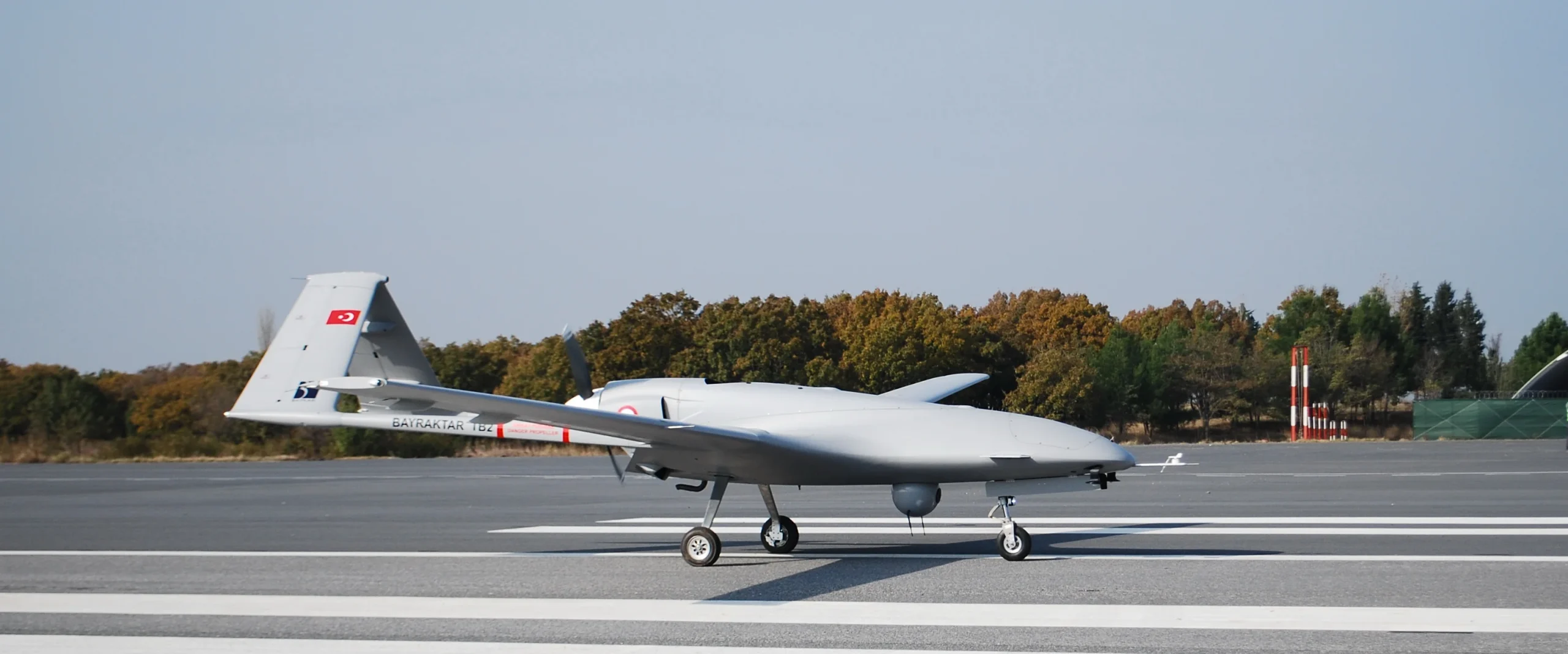
Turkey does not appear in the GFP African ranking because it isn’t an African state, but Turkish-made systems increasingly shape the equipment side of that ranking across the continent. Confirmed Bayraktar TB2 operators in Africa include Morocco, Ethiopia, Niger, Mali, Togo, Rwanda, Burkina Faso, Nigeria, Angola, Djibouti, Somalia and Tunisia — several of them appear in the tables above. Baykar has also begun local assembly and maintenance work on TB2 and AKINCI airframes in Morocco, and continues periodic AKINCI deliveries to Sahel operators such as Mali, detailed in our coverage of Mali’s latest AKINCI shipment.
Beyond drones, ASELSAN’s Nigeria and South Africa expansion (see our dedicated breakdown) reflects a broader push into electronic-warfare and radar systems on the continent. None of this displaces the traditional US, Russian, French or Chinese suppliers that still dominate Africa’s heavy platforms — tanks, fighter jets, frigates — but it has made Turkey the fastest-growing supplier in the unmanned-systems segment specifically, largely on a cost-and-delivery-speed basis rather than head-to-head capability claims against competing systems.
For the regional air-power picture next door, see our related ranking of the Middle East’s 10 strongest air forces in 2026, several of whose top entrants also supply or compete for African contracts.
What This Means for Defense Planners and Investors
Three procurement patterns stand out across the 2026 ranking that matter more than the raw score order:
- Single-source dependency is shrinking. Even historically Russia-aligned buyers like Algeria and Sudan, and historically Western-aligned buyers like Egypt and Morocco, now run mixed-supplier fleets. A single geopolitical shift — a sanctions regime, a spare-parts embargo, a delivery delay — no longer grounds an entire air force the way it once could.
- Unmanned systems are the fastest-growing budget line, not the largest. Fast jets and frigates still consume the bulk of Africa’s roughly $58 billion in annual defense spending, but ISR and strike drones are where new suppliers — Turkey foremost among them — have gained share fastest, because acquisition cost and delivery timelines matter more to counter-insurgency-focused militaries than they do to conventional peer-conflict planners.
- Manpower-heavy rankings can mask readiness gaps. Ethiopia, DR Congo and Sudan all place in or near Africa’s top 10 largely on population-derived manpower scores. None of that manpower figure substitutes for training pipelines, maintenance infrastructure, or sustainment budgets — the categories most likely to determine outcomes if a force is actually committed to combat.
FAQ
What is Africa’s strongest military in 2026?
Egypt, according to the 2026 Global Firepower Index (19th globally), ahead of Algeria, Nigeria, South Africa and Ethiopia.
Is the Global Firepower ranking an official military assessment?
No. GFP is a privately compiled index that weights manpower and equipment quantity heavily. It is a useful comparative tool, not a substitute for SIPRI, IISS, or official defense-ministry data.
Why does Ethiopia rank above more industrialized militaries like Morocco’s?
GFP’s scoring heavily weights available manpower and raw equipment counts, categories where Ethiopia’s large population base scores well regardless of equipment age or readiness levels.
Which African countries operate Turkish Bayraktar drones?
Confirmed operators include Morocco, Ethiopia, Niger, Mali, Togo, Rwanda, Burkina Faso, Nigeria, Angola, Djibouti, Somalia and Tunisia. See our full African TB2 operator guide for a country-by-country breakdown of confirmed deliveries versus reported interest.
Does a high GFP rank mean a country would win a war against a lower-ranked one?
No. The index does not model combat outcomes, terrain, alliances, logistics under fire, or political will — it is a static comparative snapshot of resources, not a war-simulation tool.
How much does Africa spend on defense each year?
Around $58.2 billion in 2025, an 8.5% increase on 2024, according to SIPRI’s Military Expenditure Database — roughly three times the continent’s total spending in 2000.
Why do Sudan and DR Congo rank in Africa’s top 10 despite ongoing internal conflicts?
GFP’s manpower metrics count total mobilized personnel figures, which in both cases reflect forces spread across an active internal conflict rather than a single unified, combat-ready national army — the ranking measures scale, not cohesion or operational readiness.
Sources
- Global Firepower — African Military Strength (2026), globalfirepower.com
- Ecofin Agency — “Global Firepower Index 2026: Egypt, Algeria, Nigeria Lead Africa’s Military Rankings”
- Sputnik Africa — “Africa’s Top 10 Military Powers Ranked by Global Firepower 2026”
- Key.Aero — “Niger, Djibouti Become Africa’s Latest Bayraktar TB2 Operators”
- Africa Defense Forum (adf-magazine.com) — “As Drone Warfare Expands in Africa, Turkey Increases Share of the Market”
- SIPRI Military Expenditure Database, sipri.org
- IISS Military Balance, iiss.org
Last updated: August 26, 2026.