SIPER Air Defence System: Range, Block-1 and Block-2

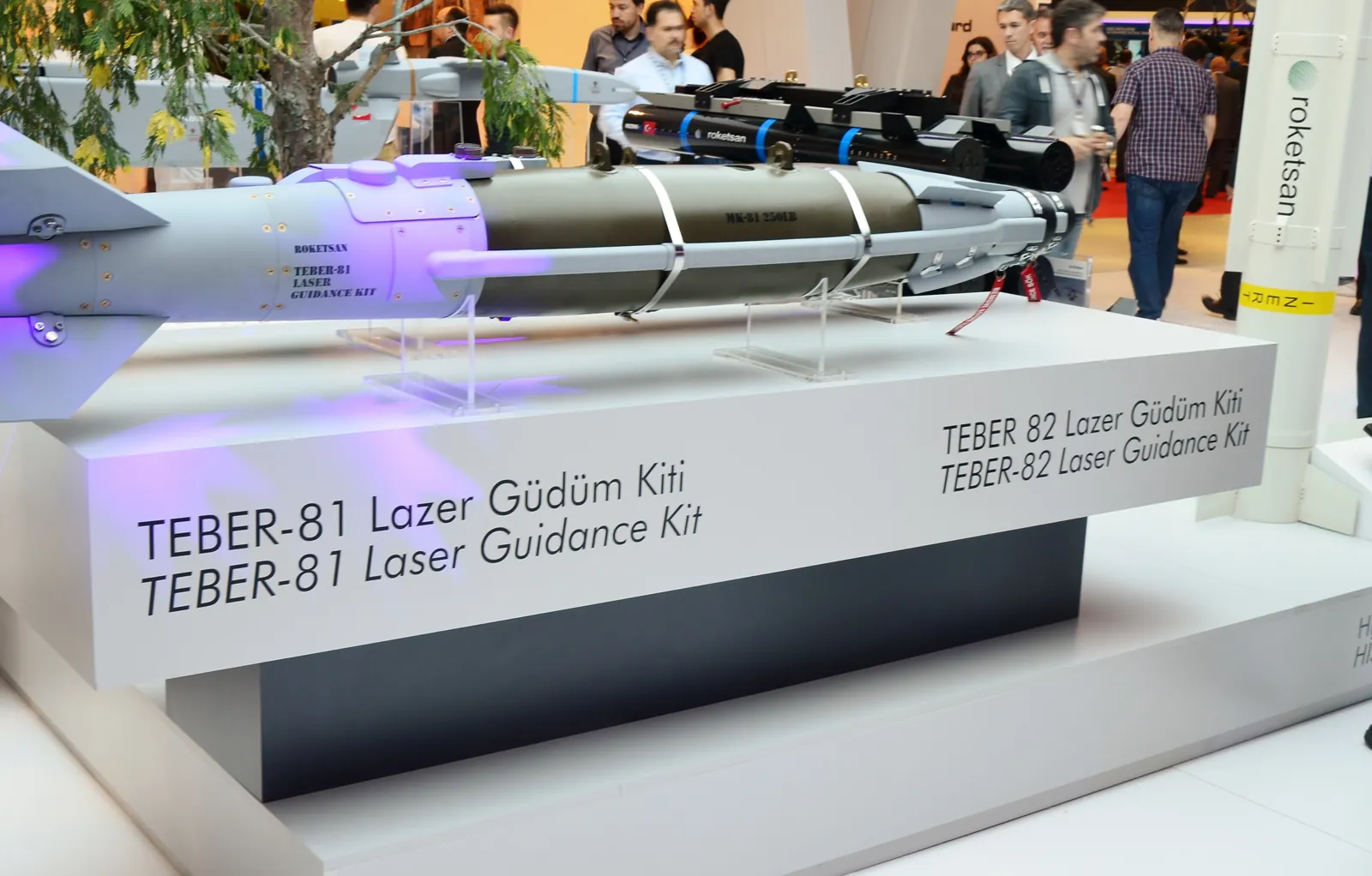
SIPER is Turkey’s first indigenous long-range air and missile defence system. Developed jointly by ROKETSAN, ASELSAN and TUBITAK-SAGE, its first version, SIPER-1 (Block-1), entered service with the Turkish Armed Forces in January 2026, offering more than 100 km of range and about 20 km of engagement altitude. SIPER is the top tier of Turkey’s layered air defence architecture, widely known as the Steel Dome.
| SIPER — At a Glance | |
|---|---|
| Category | Long-range air and missile defence system |
| Developer | ROKETSAN + ASELSAN + TUBITAK-SAGE |
| Launched by | Presidency of Defence Industries (SSB), 2018 |
| In service | SIPER-1 (Block-1) — January 2026 |
| Range | Block-1: 100+ km · Block-2: 150+ km |
| Altitude | Block-1: ~20 km · Block-2: ~30 km |
| Speed | Not officially disclosed |
| Length / diameter | Block-1: 5.4 m / 370 mm · Block-2: 6.3 m / 420 mm |
| Guidance | Active radar seeker + INS / data link |
| Propulsion | Two-stage solid fuel (derived from HISAR-O+ RF) |
| Platform | Land vertical launcher; MIDLAS VLS for SIPER-1D |
| Operator | Turkish Armed Forces |
What is SIPER?
SIPER is a system developed to meet Turkey’s long-range air and missile defence needs with indigenous technology. It is designed to detect and destroy aircraft, cruise missiles, drones and other non-ballistic aerial threats at long distances. The programme was launched in 2018 by the Presidency of Defence Industries (SSB), with ROKETSAN responsible for the missile and motor, ASELSAN for the radar and fire control, and TUBITAK-SAGE contributing to the systems engineering.
SIPER is a natural continuation of the HISAR family. While HISAR-A+ covers the low-altitude layer and HISAR-O+ the medium-altitude layer, the long-range requirement once envisaged as HISAR-U never emerged as a separate product; it evolved directly into SIPER. As a result, SIPER sits at the very top of Turkey’s layered air defence approach and localises a capability that could previously be met only with imported systems such as the S-400 or Patriot class at long range.
The system’s first version, SIPER-1 (Block-1), entered service with the Turkish Armed Forces in January 2026 after an extensive test campaign. This marks a threshold: Turkey now fields a fully indigenous long-range air defence system. SIPER is described as the upper tier of the integrated air defence architecture commonly referred to as the Steel Dome, in which short-, medium- and long-range systems are designed to operate together under a single command-and-control network.
Technical specifications and how it works
SIPER is being developed in two blocks. The in-service Block-1 has a range of 100+ km and an engagement altitude of about 20 km. The interceptor is 5.4 m long with a 370 mm diameter. Propulsion is provided by a two-stage solid-fuel motor, reported to be derived from the RF (active-radar-guided) version of the HISAR-O+ system. The guidance architecture relies on INS and a data link during mid-course and an active radar seeker in the terminal phase, allowing the missile to lock onto the target with its own radar and reduce dependence on external illumination.
The Block-2 version, still in development, aims to extend range to 150+ km and altitude to about 30 km. Its interceptor is larger, at 6.3 m long and 420 mm in diameter. No official in-service date has been announced for Block-2. The flight speed of the missile has not been officially disclosed for either block; such figures are usually kept classified for long-range air defence systems.
As a system, SIPER is far more than a missile. A fielded SIPER battery comprises early-warning and tracking radars, a fire-control centre and interceptors on vertical launchers. Vertical launch gives the system 360-degree threat coverage and rapid successive engagements. ASELSAN’s phased-array radars detect and prioritise targets; the fire-control system decides which interceptor to assign to which threat, and the missiles are guided via the data link.
- Block-1: 100+ km range, ~20 km altitude, 5.4 m / 370 mm, two-stage solid fuel.
- Block-2: 150+ km range, ~30 km altitude, 6.3 m / 420 mm, in development.
- Guidance: INS + data link (mid-course) and active radar seeker (terminal).
- Launch: land-based vertical launcher; MIDLAS VLS for the naval variant.
The table below summarises the officially released core figures for SIPER’s two blocks. Some parameters, such as speed, have not been officially disclosed and are marked accordingly.
Platforms, operator and the naval variant
SIPER’s primary deployment form is land-based vertical launchers. Batteries are fielded with mobile launchers, radars and fire-control elements. The only disclosed operator is the Turkish Armed Forces; no official statement has been made regarding exports.
One of SIPER’s most notable developments is its naval variant. The missile designated SIPER-1D was successfully fired from the MIDLAS vertical launching system (VLS) in October 2025. This is an important step toward bringing long-range air defence to ships, giving Turkish naval platforms an indigenous upper tier against distant aerial threats. Ship integration work is ongoing; which vessel classes will field SIPER-1D and when it will become operational have not yet been officially announced.
Within the Steel Dome, SIPER acts less as a standalone missile than as a network node. While SUNGUR and HISAR-A+ operate at low altitude and HISAR-O+ at medium altitude, SIPER fills the long-range, high-altitude layer. Merging these layers under a single command-and-control structure allows them to share the same air picture and engage each threat with the most suitable system. SIPER’s entry into service means the top of this architecture is now indigenous.
Place in Turkey’s defence industry: advantages and limits
SIPER is a localisation project of high strategic importance for Turkey. Long-range air and missile defence has long been an area produced by only a handful of countries and subject to political restrictions on export. Turkey producing this capability with its own means reduces supply dependence and gives it the freedom to develop, integrate and upgrade the system to its own needs. Block-1 entering service is a concrete sign of this independence.
Another advantage is the technology base shared with the HISAR family. The Block-1 motor being derived from the HISAR-O+ RF version implies a common infrastructure for production, maintenance and logistics. ROKETSAN’s growing missile-production capacity, expanded through its new facilities at Lalahan and Kirikkale, is scaling to support serial production of large interceptors like SIPER.
That said, some limits should be noted. SIPER is at a relatively early stage of maturity: Block-1 has only just entered service and Block-2 is still in development. Maturity in long-range air defence is earned through years of testing, integration and operational experience, so direct comparison of SIPER with systems fielded for decades, such as Patriot or the S-400, should be made with caution. Moreover, many parameters, including missile speed, full radar range and engagement capacity, have not been officially disclosed, so precise performance comparison is not possible. SIPER’s real value lies in providing Turkey with this critical layer indigenously and in establishing a base open to future block upgrades.
SIPER’s entry-into-service date (Block-1, January 2026), range and altitude bands (Block-1 100+ km/~20 km; Block-2 150+ km/~30 km) and developer organisations are drawn from open sources. Missile speed and the in-service date of Block-2 have not been officially disclosed and are not presented here as firm figures. Naval integration of SIPER-1D is ongoing and its operational timeline has not yet been announced.
Frequently Asked Questions
What is SIPER’s range?
The in-service first version, Block-1, has a range of 100+ km and an engagement altitude of about 20 km. The Block-2 version in development aims to extend range to 150+ km and altitude to about 30 km.
When did SIPER enter service?
The first version, SIPER-1 (Block-1), entered service with the Turkish Armed Forces in January 2026. Block-2 is still in development and no in-service date has been officially announced.
Who developed SIPER and who operates it?
SIPER was developed jointly by ROKETSAN (missile and motor), ASELSAN (radar and fire control) and TUBITAK-SAGE, under the management of the Presidency of Defence Industries. The only disclosed operator is the Turkish Armed Forces.
How is SIPER launched?
SIPER is fired from land-based vertical launchers. Its naval variant, SIPER-1D, was successfully test-fired from the MIDLAS vertical launching system in October 2025; ship integration work is ongoing.
What are SIPER’s equivalents?
In the long-range air and missile defence class, SIPER is assessed in the same category as the upper layers of the US Patriot (PAC-2/PAC-3), the Franco-Italian SAMP/T (Aster 30) and the Russian S-400.
Where does SIPER fit in the Steel Dome?
SIPER forms the uppermost (long-range, high-altitude) layer of Turkey’s layered air defence architecture, the Steel Dome. It is designed to work alongside SUNGUR and HISAR-A+ at short range and HISAR-O+ at medium range under a single command-and-control network.
Sources
- ROKETSAN official — roketsan.com.tr
- Presidency of Defence Industries (SSB) statements
- ASELSAN and TUBITAK-SAGE project announcements
- Anadolu Agency and defence-industry publications (2025-2026)
- Open-source (OSINT) records, verified as of 22 July 2026