The 7 Best Helicopters for Mountain and High-Altitude Operations in 2026
Summary Not Found.
Mountain warfare punishes aircraft: thin air starves engines, sudden downdrafts threaten rotors, and resupply often hinges on a single airframe’s hot-and-high margin. This ranking grades the world’s leading helicopters for high-altitude operations by service ceiling, power margin, lift, and proven performance in theatres from the Himalayas to the Andes, with a NATO procurement and export lens.
Each system is scored 0-10 across 8 criteria; the weighted total is out of 100.
Criterion
Weight
What It Measures
Operational Success
%18
Mission performance and operational reliability
Combat Experience
%16
Proven record in real conflicts
Technology Level
%16
Level of sensor, weapon and protection technology
Export Success
%12
International sales and contract volume
Operator Count
%10
Number of active operator nations
Upgrade Potential
%10
Availability of upgrade and modernization paths
Production Status
%10
Whether serial production continues
Cost-Effectiveness
%8
Unit price and life-cycle cost
Ranking Table
Rank
System
Origin
Score
#1
Boeing CH-47F Chinook
United States
87.0/100
#2
Sikorsky UH-60M Black Hawk
United States
84.4/100
#3
Airbus H125 (AS350 B3e)
France
81.8/100
#4
Mil Mi-17 / Mi-171
Russia
76.8/100
#5
Airbus H215M / AS532 Cougar
France
74.2/100
#6
TAI T625 Gökbey
Türkiye
65.4/100
#7
HAL Light Utility Helicopter (LUH)
India
56.2/100
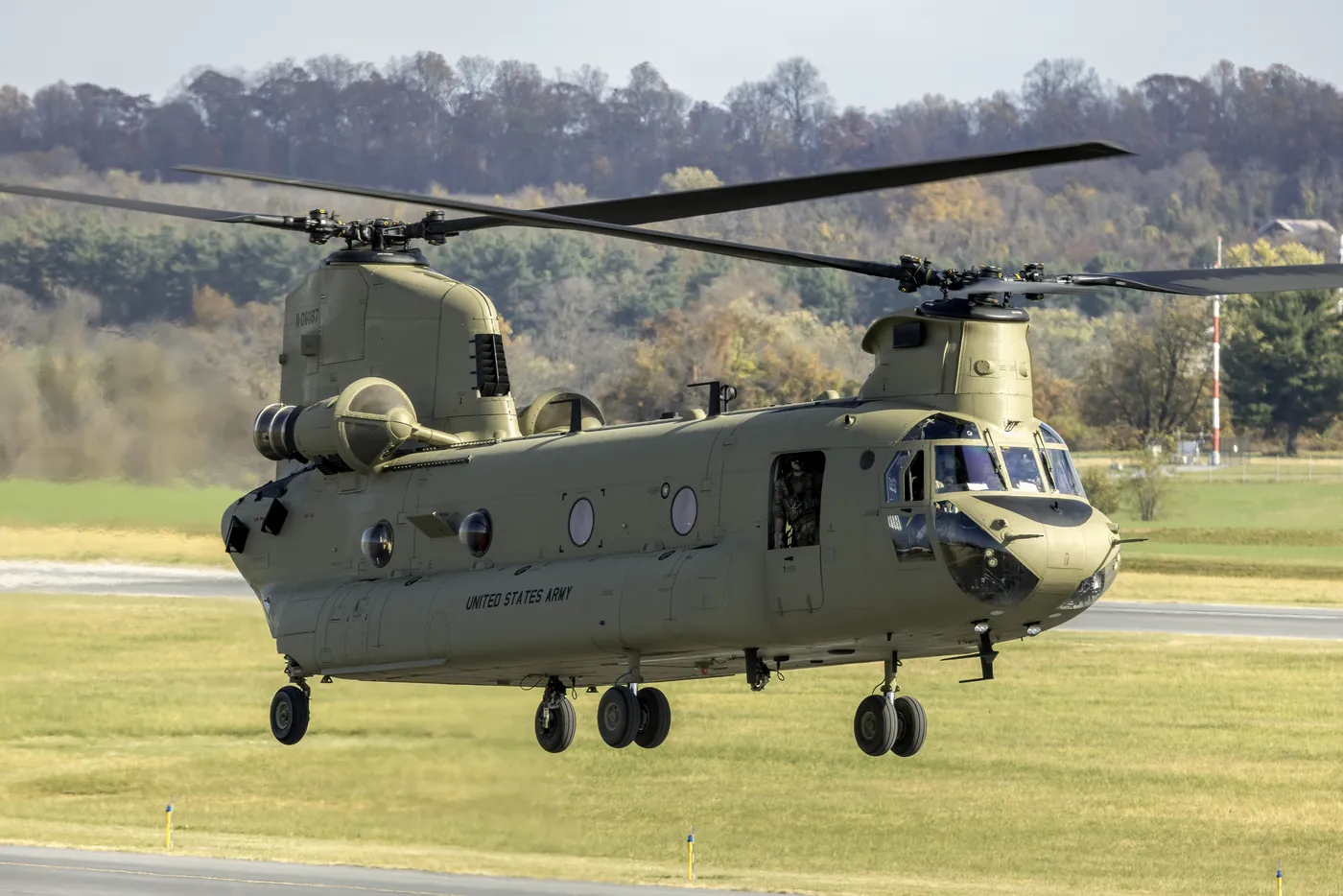
#1 — Boeing CH-47F Chinook (United States) · 87.0/100
Boeing CH-47F Chinook — CC BY-SA 4.0
Score Breakdown — 87.0/100
Operational Success10/10
Combat Experience8/10
Technology Level9/10
Export Success9/10
Operator Count9/10
Upgrade Potential9/10
Production Status9/10
Cost-Effectiveness5/10
The tandem-rotor CH-47F is the undisputed king of high-altitude heavy lift; with no power bled off to a tail rotor, it retains exceptional payload where single-rotor types fade.
It is the backbone of Himalayan resupply for India and NATO mountain logistics alike, making it the most strategically important rotorcraft for elevated theatres.
Key Specifications
Service ceiling
Capable of operating up to ~20,000 ft
Rotor configuration
Tandem twin-rotor (no power lost to tail rotor)
Payload
~10,900 kg external load
Engines
2 × Honeywell T55-GA-714A
Max speed
~315 km/h
In service (F)
2007
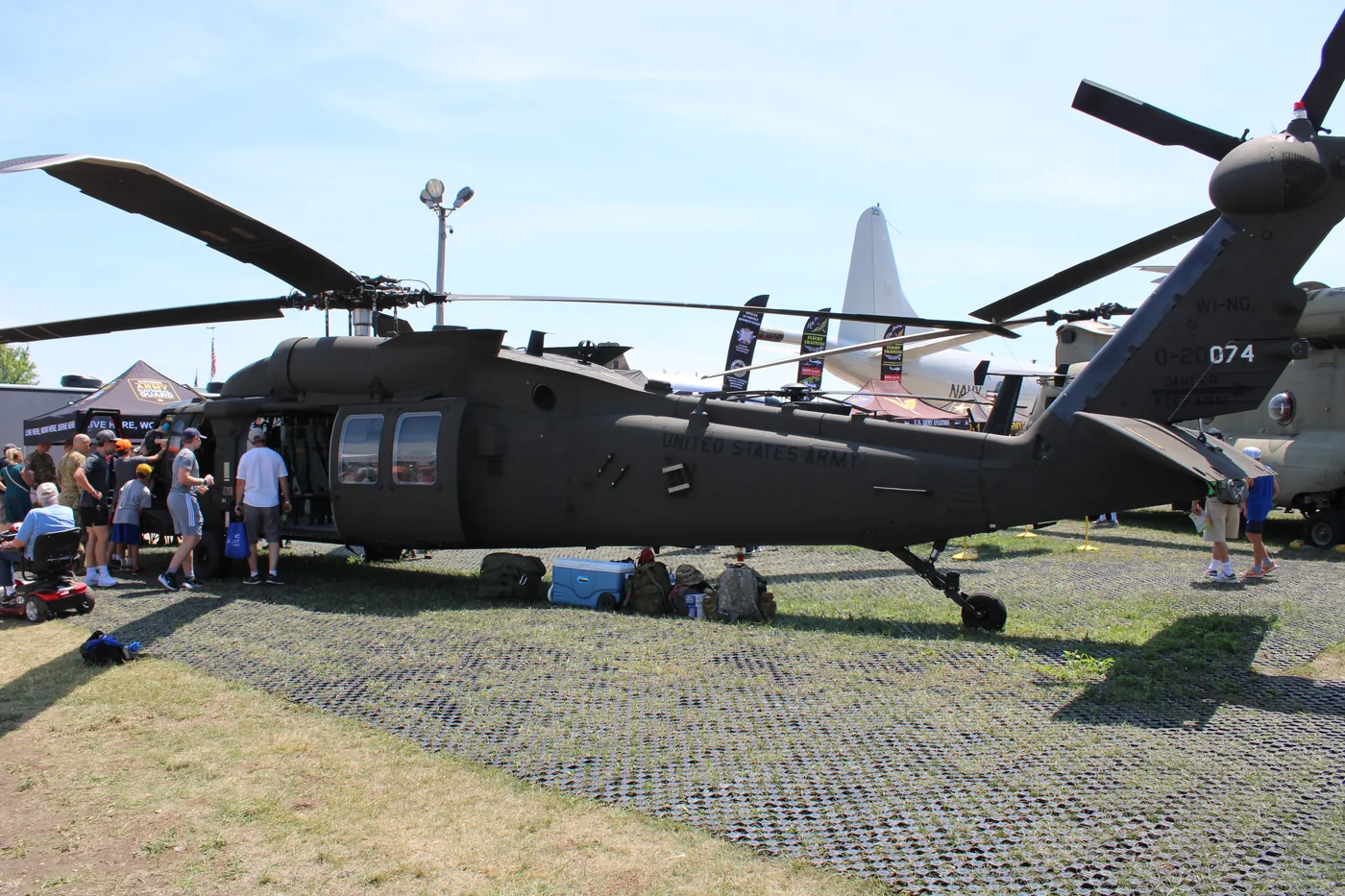
#2 — Sikorsky UH-60M Black Hawk (United States) · 84.4/100
Sikorsky UH-60M Black Hawk — CC BY-SA 4.0
Score Breakdown — 84.4/100
Operational Success9/10
Combat Experience8/10
Technology Level8/10
Export Success9/10
Operator Count9/10
Upgrade Potential8/10
Production Status10/10
Cost-Effectiveness6/10
The UH-60M’s improved wide-chord blades and uprated T700 engines give it a markedly better hot-and-high margin than earlier Black Hawks, sustaining utility lift at altitude.
Operated by dozens of NATO and allied armies, its global support chain and proven mountain record keep it the workhorse of elevated tactical airlift worldwide.
Key Specifications
High-altitude upgrade
Wide-chord rotor blades for improved hot-and-high lift
Troop capacity
11 troops / 4,000 kg sling load
Engines
2 × General Electric T700-GE-701D
Max speed
~294 km/h
Range
~590 km
In service (M)
2007
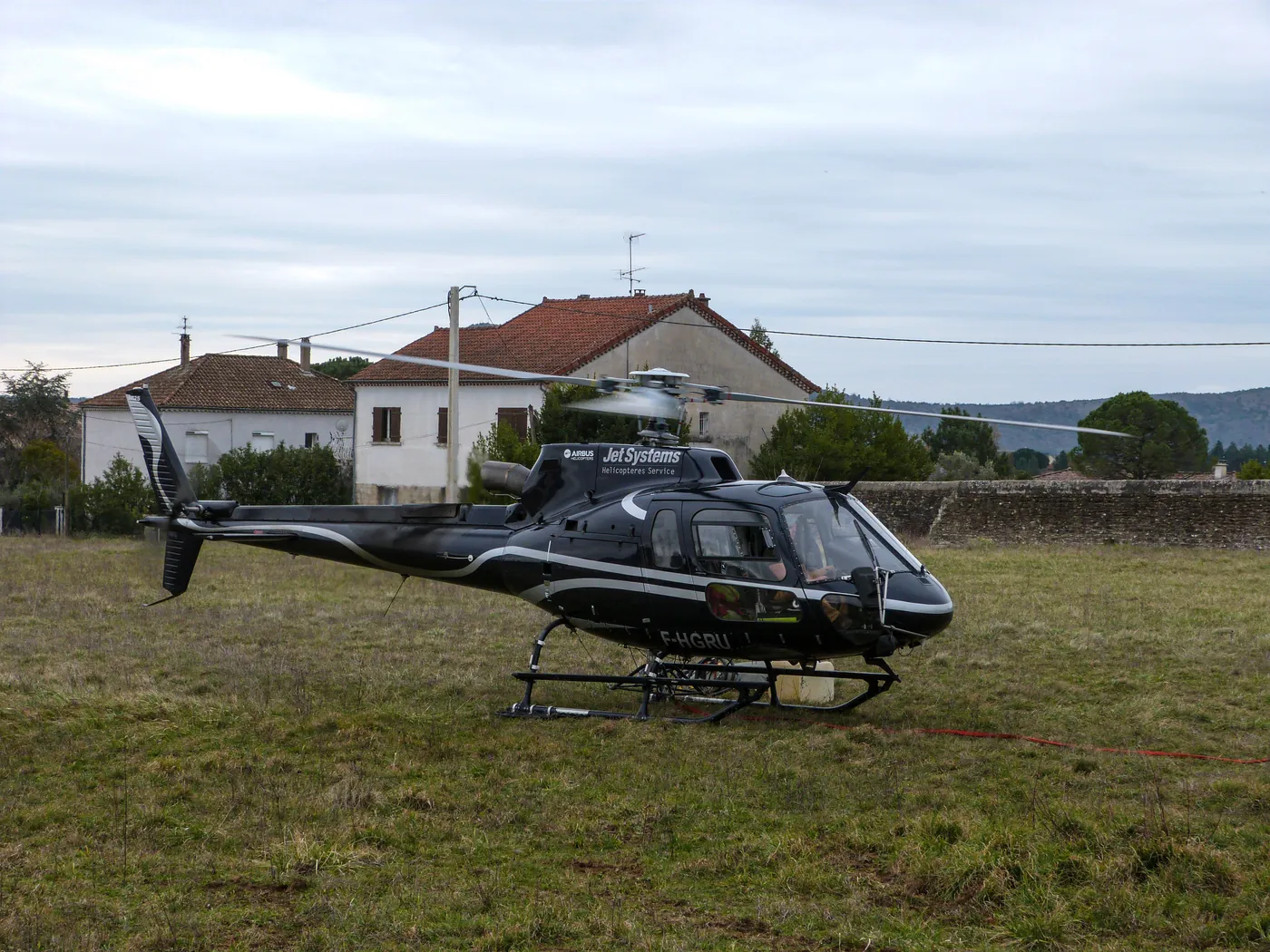
#3 — Airbus H125 (AS350 B3e) (France) · 81.8/100
Airbus H125 (AS350 B3e) — CC BY-SA 4.0
Score Breakdown — 81.8/100
Operational Success9/10
Combat Experience5/10
Technology Level7/10
Export Success10/10
Operator Count10/10
Upgrade Potential8/10
Production Status10/10
Cost-Effectiveness8/10
The H125 holds the absolute world altitude record for rotorcraft and remains the benchmark for hot-and-high light operations, prized for its power margin in thin air.
As a militarized light utility and observation platform it equips numerous armies; its unrivalled high-altitude pedigree makes it a default choice for mountain and Andean units.
Key Specifications
Altitude record
Highest landing/take-off on Everest summit (8,848 m, 2005)
The uprated Mi-17V-5 is a Himalayan mainstay, valued for rugged simplicity and a powerful engine pairing that delivers heavy internal lift from unprepared high-altitude strips.
Despite ageing avionics and sanctions pressure, its enormous operator base across mountainous South and Central Asia keeps it among the most widely fielded high-altitude transports.
Key Specifications
High-altitude variant
Mi-17V-5 optimized for Himalayan operations
Payload
24-37 troops / up to 4,000 kg internal
Engines
2 × Klimov VK-2500 (uprated for altitude)
Max speed
~250 km/h
Ruggedness
Austere-base operation without ground support
In service
1977 (Mi-8/17 family)
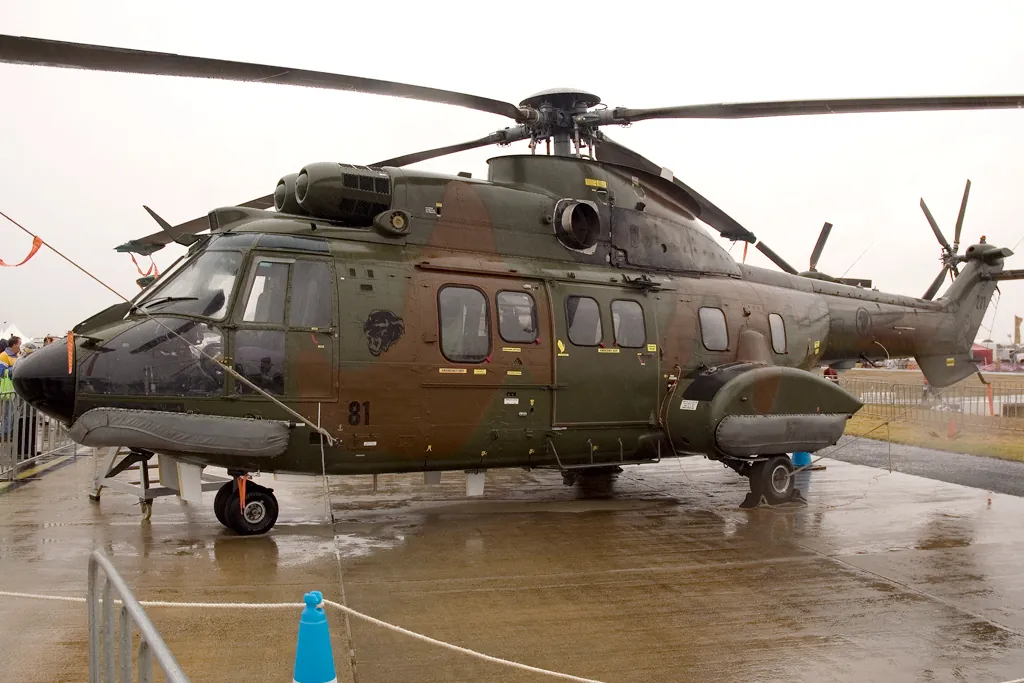
#5 — Airbus H215M / AS532 Cougar (France) · 74.2/100
Airbus H215M / AS532 Cougar — GFDL
Score Breakdown — 74.2/100
Operational Success8/10
Combat Experience7/10
Technology Level7/10
Export Success8/10
Operator Count8/10
Upgrade Potential7/10
Production Status8/10
Cost-Effectiveness6/10
The Cougar/Super Puma family offers a dependable twin-engine medium lift with strong altitude performance, long proven in Alpine, Andean and Himalayan service.
Widely exported across Europe, Latin America and Asia, it gives mountain forces a rugged, well-supported alternative between light singles and heavy tandems.
Key Specifications
Category
Medium twin-engine tactical transport
Troop capacity
Up to 25 troops / ~4,500 kg sling load
Engines
2 × Safran Makila 1A1/1A2
Max speed
~278 km/h
Role
Tactical transport, SAR, mountain resupply
In service
1990s (Super Puma/Cougar family)
#6 — TAI T625 Gökbey (Türkiye) · 65.4/100
Score Breakdown — 65.4/100
Operational Success7/10
Combat Experience6/10
Technology Level8/10
Export Success4/10
Operator Count4/10
Upgrade Potential10/10
Production Status6/10
Cost-Effectiveness7/10
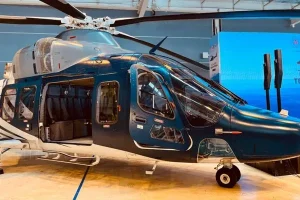
Designed and tested across Türkiye’s varied terrain, the Gökbey is a modern twin-engine utility helicopter whose indigenous TS1400 engine is sized for demanding hot-and-high envelopes.
Still early in fielding, its fully digital ASELSAN avionics and sovereign supply chain position it as an emerging export contender for mountainous and austere operators.
Key Specifications
Avionics
34 integrated ASELSAN avionics systems (IMAS)
Max take-off weight
~6,050 kg
Max cruise speed
~306 km/h
Capacity
2 crew + 10-12 troops
Target engine
Indigenous TEI TS1400
First delivery
October 2024
#7 — HAL Light Utility Helicopter (LUH) (India) · 56.2/100
Score Breakdown — 56.2/100
Operational Success7/10
Combat Experience5/10
Technology Level6/10
Export Success3/10
Operator Count3/10
Upgrade Potential8/10
Production Status5/10
Cost-Effectiveness8/10
India’s LUH was conceived specifically to replace the ageing Cheetah/Chetak on the world’s highest battlefields, validated by demanding Siachen-region hot-and-high trials.
Though its operator base and exports are nascent, the LUH demonstrates how indigenous designs can be tailored from the outset for extreme-altitude national requirements.
Key Specifications
Design driver
Purpose-built for Siachen / high-altitude operations
Demonstrated ceiling
Hot-and-high trials above 6,000 m
Engine
Safran Ardiden 1U (HAL Shakti family)
Max speed
~235 km/h
Role
Reconnaissance, surveillance, light utility
First flight
2016
Technical Comparison Table
System
Origin
Key Spec
Score
Boeing CH-47F Chinook
United States
Capable of operating up to ~20,000 ft
87.0/100
Sikorsky UH-60M Black Hawk
United States
Wide-chord rotor blades for improved hot-and-high lift
84.4/100
Airbus H125 (AS350 B3e)
France
Highest landing/take-off on Everest summit (8,848 m, 2005)
81.8/100
Mil Mi-17 / Mi-171
Russia
Mi-17V-5 optimized for Himalayan operations
76.8/100
Airbus H215M / AS532 Cougar
France
Medium twin-engine tactical transport
74.2/100
TAI T625 Gökbey
Türkiye
34 integrated ASELSAN avionics systems (IMAS)
65.4/100
HAL Light Utility Helicopter (LUH)
India
Purpose-built for Siachen / high-altitude operations
56.2/100
Operating Nations
System
Operators
Boeing CH-47F Chinook
United States, United Kingdom, India, Netherlands, Australia, Italy
Airbus H125 (AS350 B3e)
France, India, Switzerland, Chile, dozens of armed forces
Sikorsky UH-60M Black Hawk
United States, and dozens of NATO and allied armies
Mil Mi-17 / Mi-171
Russia, India, Afghanistan (legacy), Peru, Central Asia
Airbus H215M / AS532 Cougar
France, Germany, Brazil, Chile, Saudi Arabia, Turkey
TAI T625 Gökbey
Türkiye (entering service)
HAL Light Utility Helicopter (LUH)
India (entering service)
Frequently Asked Questions
What is the best helicopter for mountain operations?
The Boeing CH-47F Chinook leads for high-altitude operations because its tandem twin-rotor layout loses no engine power to a tail rotor, letting it retain heavy payload up to roughly 20,000 ft where single-rotor types lose lift. It is the backbone of Himalayan resupply for India and NATO mountain logistics, making it the most strategically valuable high-altitude rotorcraft.
Which helicopter holds the high-altitude record?
The Airbus H125 (AS350 B3) holds the absolute world rotorcraft altitude record after landing and taking off from the summit of Mount Everest at 8,848 m in 2005. Its exceptional power margin in thin air makes it the benchmark light helicopter for hot-and-high and mountain-rescue work.
Why does thin air make mountain flying so hard?
At altitude, lower air density reduces both rotor lift and engine power output, shrinking payload and hover margin. The best mountain helicopters compensate with uprated engines, optimized wide-chord rotor blades and, in the Chinook’s case, a tandem layout that wastes no power on a tail rotor.
Where do Turkish and Indian designs fit in?
Türkiye’s TAI T625 Gökbey, with its indigenous TS1400 engine sized for demanding envelopes, and India’s HAL LUH, purpose-built for Siachen-class altitudes, both show how sovereign programs are tailoring rotorcraft for extreme high-altitude national needs, though their operator bases are still emerging.
How was this ranking compiled?
Each helicopter was scored across eight criteria, operational reach, combat capability, technology, export success, operator base, modernity, production volume and cost-effectiveness, with the order calculated automatically from the total score.