Greece or Turkey? Which Army Is Stronger? (2026 Military Strength Comparison)

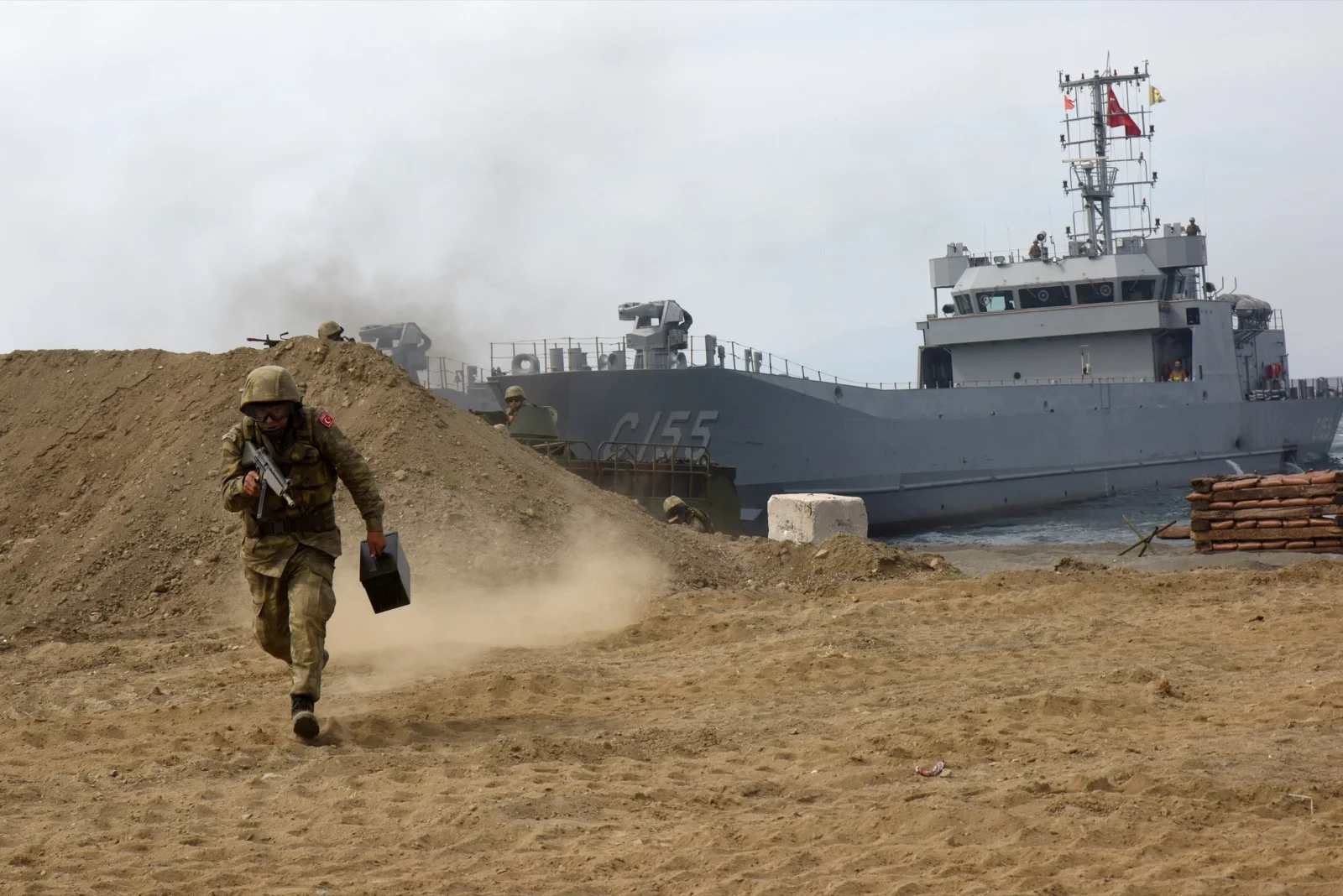
Aegean and Eastern Mediterranean neighbors locked in a decades-long balancing act. With 2026 data, Turkey and Greece go head-to-head, category by category — how wide is the real gap?
Though both sit under the NATO umbrella, Turkey and Greece remain in a constant military calculus over Aegean islands, Eastern Mediterranean energy and airspace disputes. Both devote a major share of their defense budgets to mutual deterrence.
Instead of a classic countdown, we compare the two armies category by category: personnel, land power, air power, navy, defense budget and — perhaps the most decisive column — indigenous defense industry. Using Global Firepower data, we examine where each leads, and the strategic difference beyond the numbers.
Head to Head: Category by Category
Personnel
~355,000
In personnel there is a serious scale gap. Turkey fields roughly 355,000 active troops and a broad reserve pool, operating one of NATO’s largest armies. Greece sustains its defense with a more compact force of about 140,000 active personnel. The population difference (85 million vs 10 million) naturally tilts this balance toward Turkey. Greece tries to offset the numerical disadvantage with conscription and high readiness. But in total mobilization capacity, Turkey holds a clear edge.
Turkey exceeds Greece by roughly 2.5 times in personnel.
| Turkey active | ~355,000 |
| Greece active | ~140,000 |
| Turkey reserve | Broad |
| Edge | 🇹🇷 Turkey |
➤ But does the land-power picture change?
Land Power
~2,230
In land forces, Turkey holds a clear numerical edge with about 2,230 tanks and a broad armored inventory. M60T (Israeli upgrade), Leopard 2A4 and the serial production of the indigenous ALTAY tank strengthen ground power both in quantity and quality. Greece fields about 1,300 tanks — mostly Leopard 2 and Leopard 1 — a strong armored force for its region. Though the Greek Leopard 2A6 fleet is capable, Turkey’s ALTAY production and armored-vehicle industry (FNSS, Otokar, BMC) shape the long-term balance.
Turkey nearly doubles Greece in tank count and closes the quality gap with indigenous ALTAY production.
| Turkey tanks | ~2,230 |
| Greece tanks | ~1,300 |
| Indigenous | ALTAY in production |
| Edge | 🇹🇷 Turkey |
➤ The most critical column is decided in the skies.
Air Power
~1,080
Air power is the most sensitive column between the two. Turkey holds a numerical edge with about 1,080 aircraft and a broad modernized F-16 fleet (the Özgür project). Greece answers with quality via Rafale fighters and F-16 Viper upgrades; its Rafales carry Meteor missiles for a serious range advantage. But the real difference is in domestic production: Turkey builds the future of its air power itself — the KIZILELMA unmanned combat aircraft, AKINCI and TB2 drones, plus the HÜRJET and KAAN programs. Greece must import these platforms.
Turkey leads in numbers and domestic production; Greece builds a quality balance with the Rafale+Meteor combination.
| Turkey aircraft | ~1,080 |
| Greece aircraft | ~610 |
| Indigenous UCAV | 🇹🇷 KIZILELMA, TB2 |
| Edge | 🇹🇷 Turkey |
➤ Which country is stronger at sea?
Navy
~150+
At sea, Turkey stands out both numerically and technologically. The MİLGEM project (Ada and Istanbul-class corvettes/frigates), the indigenous TCG Anadolu (the world’s first drone carrier) and a growing submarine fleet (Reis class) make the Turkish Navy one of the Eastern Mediterranean’s most powerful actors. Greece fields a strong navy with capable MEKO frigates and modern submarines (Type 214); French FDI Belharra frigates reinforce the fleet. But Turkey’s indigenous shipbuilding capacity and power-projection platforms like TCG Anadolu shape the balance.
Turkey leads in ship count and domestic production; TCG Anadolu provides a unique regional power-projection capacity.
| Turkey ships | ~150+ |
| Greece ships | ~115 |
| Amphibious | 🇹🇷 TCG Anadolu |
| Edge | 🇹🇷 Turkey |
➤ So how do budget and industry affect this picture?
Budget & Industry
Domestic industry
The final and perhaps most decisive column: defense budget and domestic industry. Turkey’s defense budget is larger than Greece’s, but the real difference is in how the money is used. Turkey channels a major share into domestic production, cutting foreign dependence: ASELSAN, ROKETSAN, TUSAŞ, Baykar, FNSS and HAVELSAN produce everything from drones to missiles, tanks to fighters. Greece, despite high defense spending as a share of GDP, devotes most of it to foreign procurement (Rafale, FDI frigates). Domestic-production capacity gives Turkey strategic depth in long-term deterrence.
Greece spends heavily as a share of GDP but stays import-dependent; Turkey gains strategic independence through domestic production.
| Turkey budget | Larger |
| Greece | High GDP share |
| Domestic industry | 🇹🇷 Very strong |
| Edge | 🇹🇷 Turkey |
What sets Turkey apart isn’t only numerical superiority; it’s a defense-industry ecosystem producing its own fighter (KAAN), drones (TB2, AKINCI, KIZILELMA), tank (ALTAY), ships (MİLGEM) and missiles. This indigenization means supply independence and rapid modernization in a crisis — an advantage an import-dependent military cannot hold.
➤ So what happens when all the columns come together?
The Verdict: Which Army Is Stronger?
Column by column, Turkey holds a numerical and structural edge across personnel, land power, air power, navy and defense industry. Greece builds a quality deterrent with Rafale fighters, Meteor missiles and modern frigates, and is a strong army for its region. But total scale, geographic depth and especially indigenous-production capacity place Turkey clearly ahead.
The Verdict
The Turkey-Greece military balance is a delicate equation constantly recalculated despite both being NATO members. The numerical comparison shows a clear Turkish edge: Turkey leads in personnel, tanks, aircraft and ships. Yet Greece’s recent modernization drive — the Rafale fleet, F-16 Viper upgrades and FDI Belharra frigates — shows the seriousness of its effort to close the quality gap.
Greece’s strategy rests on offsetting numerical disadvantage with the most modern Western platforms. The range advantage its Rafales gain with Meteor missiles is a notable card in the Aegean air balance. But this model is fully dependent on foreign procurement; every modernization step requires Paris, Berlin or Washington.
This is exactly where Turkey’s difference stands out. Ankara meets a growing share of its defense needs with its own industry: the ALTAY tank, MİLGEM ships, TB2 and AKINCI drones, the KIZILELMA unmanned combat aircraft and the KAAN fifth-generation fighter program. This indigenization means supply independence in a crisis, rapid modernization and growing export revenue. In the balance between the two countries, what matters is no longer only inventory counts but who can produce that inventory. Seen this way, Turkey enters both today’s and the coming decade’s military equation on a firmer foundation.
Comparison Table
| Category | Turkey | Greece | Edge |
|---|---|---|---|
| Active Personnel | ~355,000 | ~140,000 | 🇹🇷 Turkey |
| Tanks | ~2,230 | ~1,300 | 🇹🇷 Turkey |
| Total Aircraft | ~1,080 | ~610 | 🇹🇷 Turkey |
| Navy Ships | ~150+ | ~115 | 🇹🇷 Turkey |
| Indigenous Drones | TB2, AKINCI, KIZILELMA | Imported | 🇹🇷 Turkey |
| 5th-Gen Fighter | KAAN (development) | None | 🇹🇷 Turkey |
| Rafale/Meteor | None | Yes | 🇬🇷 Greece |
| Defense Industry | Very strong | Limited | 🇹🇷 Turkey |
Tomorrow: NATO’s Strongest Militaries
The US, France, the UK, Turkey… the alliance’s ten strongest armies and a surprising order, tomorrow on envantermedya.
Frequently Asked Questions
Turkey or Greece — which is stronger?
By 2026 Global Firepower data, Turkey leads Greece in personnel, tanks, aircraft and ships, and ranks far higher in the overall military index.
What is Greece’s strongest card?
Greece’s strongest card is its Rafale fighters armed with Meteor missiles, plus a modernized F-16 Viper fleet.
What is Turkey’s biggest advantage?
Turkey’s biggest advantage is its domestic defense industry: it can build its own tank, ships, drones, missiles and fighter.
Are both countries NATO members?
Yes; both Turkey and Greece are NATO members, though ongoing disputes in the Aegean and Eastern Mediterranean sustain mutual deterrence.
Is the Greek navy stronger than Turkey’s?
The Greek navy has capable frigates and submarines, but Turkey leads with ship count, domestic production and power-projection platforms like TCG Anadolu.
Sources
Global Firepower 2026 comparative country profiles; IISS Military Balance; SIPRI defense spending; Turkish Armed Forces, ASELSAN, Baykar and official sources.
Source: https://www.globalfirepower.com/