Taiwan Delivers 1,520 FPV Attack Drones for U.S. Drone Dominance Program

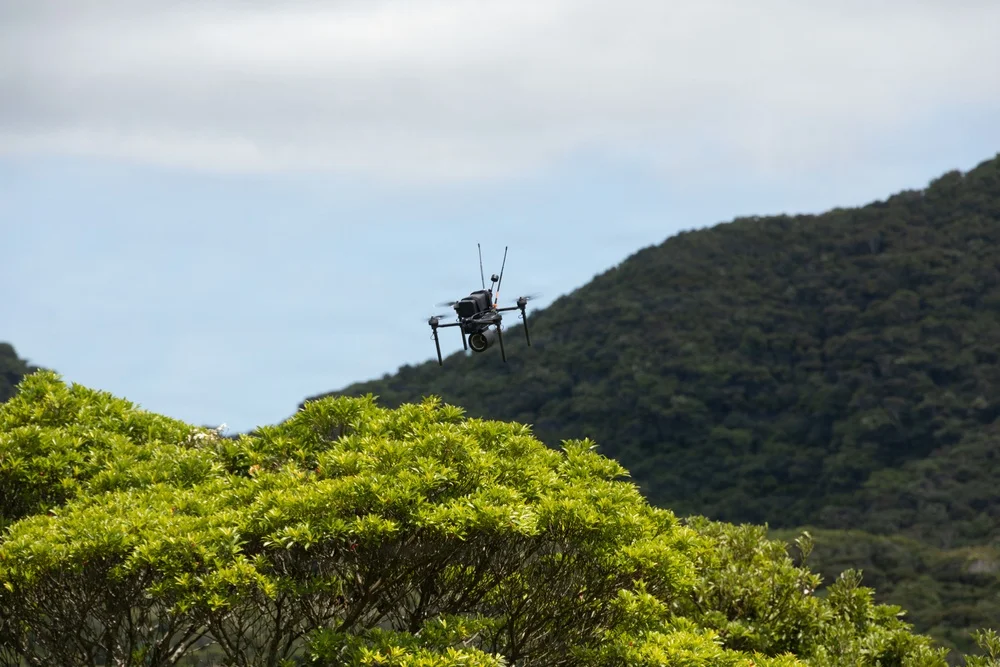
Taiwanese drone maker Thunder Tiger Technology says it has completed delivery of 1,520 FPV attack drones ordered under the Pentagon’s Drone Dominance Program, with all units accepted according to U.S. Department of Defense figures updated as of October 1, 2026. The delivery was carried out through Thunder Tiger’s American partner, Farage Precision LLC, and was first reported by Army Recognition on October 18.
A programme built to test supply chains
The Drone Dominance Program (DDP) buys drones through a series of competitive rounds called “gauntlets” rather than a single long-term contract, ranking suppliers on operational performance, operator assessments, production capacity, and supply-chain eligibility. In Gauntlet I, 11 suppliers were selected out of 25 invited manufacturers. Farage Precision, working with Taiwanese industrial partner Rehfeldt Group, placed 11th with a score of 70.0 points, securing 6.81% of the initial 22,320-drone order — 1,520 units. The top three scorers were Skycutter (99.3 points, 2,560 drones), Neros (87.5 points, 2,400 drones), and Perennial Autonomy (80.3 points, 2,320 drones).
The order is estimated at $7.6 million, or roughly $5,000 per unit. Deliveries ran in two tranches: 760 drones accepted in September, with the remaining 760 accepted by October 1, bringing the total to 1,520.
A test of non-Chinese supply chains
The order’s real significance lies in testing whether manufacturing networks outside China can meet U.S. supply-chain requirements, including NDAA compliance and verification by the Defense Contract Management Agency. The drones Thunder Tiger delivered use Blue UAS-approved hardware and Auterion flight controllers, meeting the U.S. military’s policy of avoiding Chinese-origin components.
China holds an estimated 70% to 90% of the global commercial drone market and dominates critical components — motors, speed controllers, cameras, video transmitters, batteries, and flight electronics. Non-Chinese substitutes can cost 25% to 70% more. Taiwanese manufacturers estimate that an all-domestic FPV drone would need to sell for $2,000 to $3,000 to break even. At a scale of 100,000 drones, a $100 increase in a single component’s cost adds $10 million to the total bill. Battery cells are the hardest component to substitute, often requiring firmware changes, new flight testing, and fresh cybersecurity checks.
Taiwan’s industrial push
Taiwan’s government runs a six-year, NT$44.2 billion drone industrial programme, with NT$14.3 billion allocated to R&D and NT$9 billion to procurement. The programme backed 31 drone innovation projects in 2024-2025. Thunder Tiger’s Pentagon order is seen as one of the first concrete export successes to emerge from that state-backed industrial push.
Manufacturing and partnership moves in the U.S.
Shortly before completing the delivery, Thunder Tiger signed an agreement on October 13 with Michigan’s economic development agency covering possible U.S.-based manufacturing and testing. A day later, on October 14, it signed a separate agreement with U.S. defense firm AeroVironment to explore potential co-production in Taiwan and the integration of Switchblade launchers onto Thunder Tiger’s unmanned surface vessels. Those moves read as part of a strategy to embed the company permanently in the U.S. supply chain, beyond a single order.
The product family
Thunder Tiger’s Overkill family spans one-way attack, fiber-optic, and interceptor variants. An earlier model in the line was rated at 120 km/h, a 3 kg payload, and 30 minutes of endurance, though it is unconfirmed whether those figures apply to the specific 10-inch variant delivered to the Pentagon. The company’s separate Papadelta PD-136 long-range attack drone is rated for a 12 kg payload and a projected range of 500 km, while a PD-136J variant under development with Taiwan’s NCSIST uses a CS-80 micro turbojet engine.
Where this fits in the Taiwan-China equation
Thunder Tiger’s entry into the U.S. supply chain carries weight beyond a single commercial win. Taiwan’s government has spent years building a defense doctrine centered on cheap, mass-producible attack drones as a deterrent in any confrontation with China — a doctrine that depends on Taiwanese manufacturers being trusted suppliers not just to their own military, but to allies such as the United States. The cost data in this case also shows the structural hurdle facing that goal: without breaking China’s grip on components, a non-Chinese drone industry struggles to compete on price. Thunder Tiger’s 1,520-unit order offers a small but concrete data point on how much of that gap can realistically be closed.
Sources
Army Recognition, “Taiwan Delivers 1,520 FPV Attack Drones for U.S. Drone Dominance Program to Reduce Reliance on China” (October 18, 2026, by Jérôme Brahy) — used to verify the programme structure, delivery figures, Gauntlet I rankings, and China supply-chain data.