The US Navy Just Made 3D-Printed Parts Normal on Its Submarines

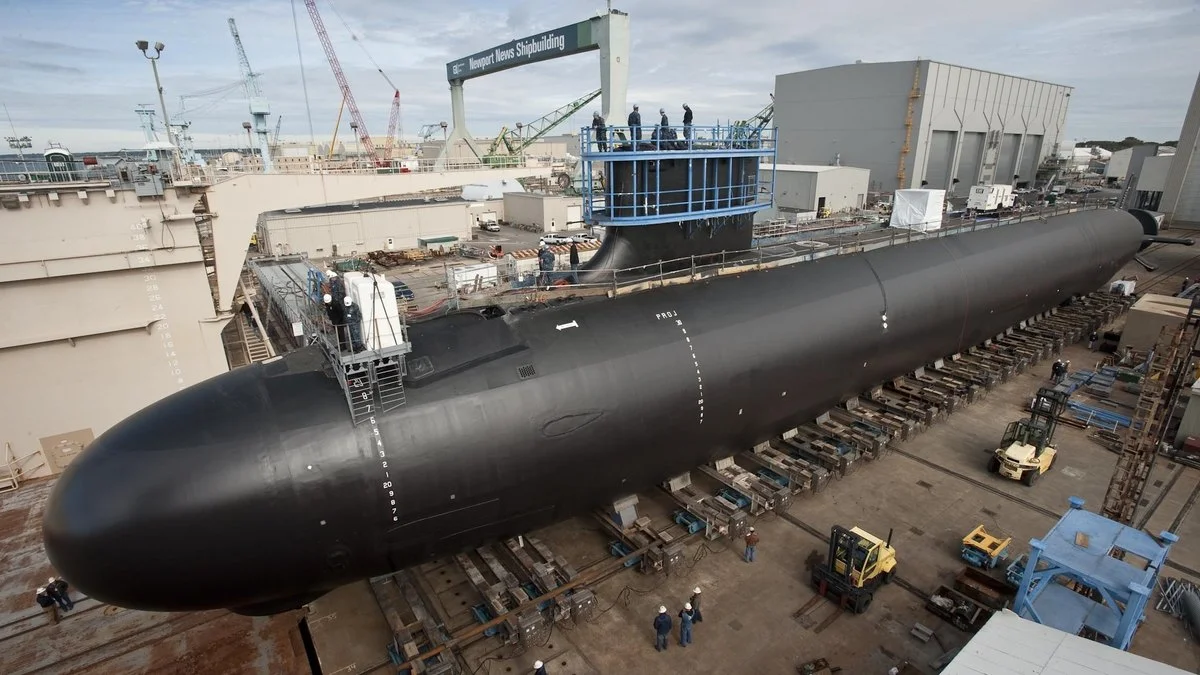
The US Navy is attacking one of its most stubborn problems from the manufacturing side. The Advanced Manufacturing team within the Submarine Industrial Base Program Office issued a directive on 11 August 2026 clearing the way for metal additive manufacturing — 3D printing — across design, construction, overhaul and repair work on submarines.
The directive defines where additively manufactured components may replace legacy cast and wrought parts. Vice Admiral Robert Gaucher, Director of Submarine Programs, framed the reasoning plainly: “This is exactly the type of barrier we must remove if we are going to unlock 21st century technology to get our submarine programs on plan and ahead of the threat.”
The bottleneck was never the part
The US submarine programme has been stuck in the same place for years. The number of suppliers capable of making the thousands of specialised components a nuclear submarine needs is small, and their capacity does not match the tempo the Navy wants. Lead times at foundries run to years for some items. The part itself may not be technically demanding; the queue is the problem.
This is where additive manufacturing earns its place. The same component can be produced straight from a digital model without tooling a casting. That compresses lead time and, just as importantly, makes obsolete parts producible again — on a submarine that has been in service for thirty years, the second benefit can outweigh the first.
The 1+2 requirement
The Navy’s stated goal is one Columbia-class ballistic missile submarine and two Virginia-class attack boats delivered per year, while sustaining the existing fleet. The programme has been running behind that number, and the shortfall bears directly on American undersea calculations in the Indo-Pacific.
Columbia is the next generation of the US sea-based deterrent, replacing the Ohio class. Virginia is the backbone of the attack submarine fleet and the platform earmarked for transfer to Australia under AUKUS. Any slip in build rate lands on both files at once.
Already at sea
The directive rests on operational evidence rather than laboratory data. Metal additively manufactured components are already in service aboard USS Washington and USS Nevada in deep-sea conditions.
The scope is not unlimited, however. Level I material control items and SUBSAFE components remain subject to enhanced Navy requirements and non-destructive inspection. SUBSAFE was created after the loss of USS Thresher in 1963 and applies a separate certification regime to every part affecting watertight integrity. The Navy has never relaxed it for the sake of production convenience, and this directive does not either.
Why submarines were late to this
Metal 3D printing has been in series aerospace production for more than a decade. Submarines lagged because the operating environment is different. A pressure hull and its associated systems work under tens of tonnes per square metre at depth, and that load cycles with every dive. Fatigue performance — and therefore the smallest porosity inside the material — becomes critical.
Cast and forged parts come with more than a century of accumulated behavioural data. In additive manufacturing, properties can vary with the machine, powder particle size, laser power and build orientation. The qualification regime the Navy is building aims to control exactly that variability by approving processes rather than individual parts.
The industrial base picture
The American submarine industrial base was sized in the early 2010s to deliver roughly one Virginia a year. When Columbia entered the picture, two programmes began drawing on the same supplier pool and the bottleneck became visible. Recent congressional funding for the industrial base aims to widen the supplier count and grow existing capacity; the additive manufacturing directive is the technology leg of that package.
Sources
- US Submarine Industrial Base Program Office directive, 11 August 2026
- Defence Industry Europe, 24 August 2026