Saronic’s First Port Alpha Build Will Be a Navy Landing Craft, Not a Drone Boat

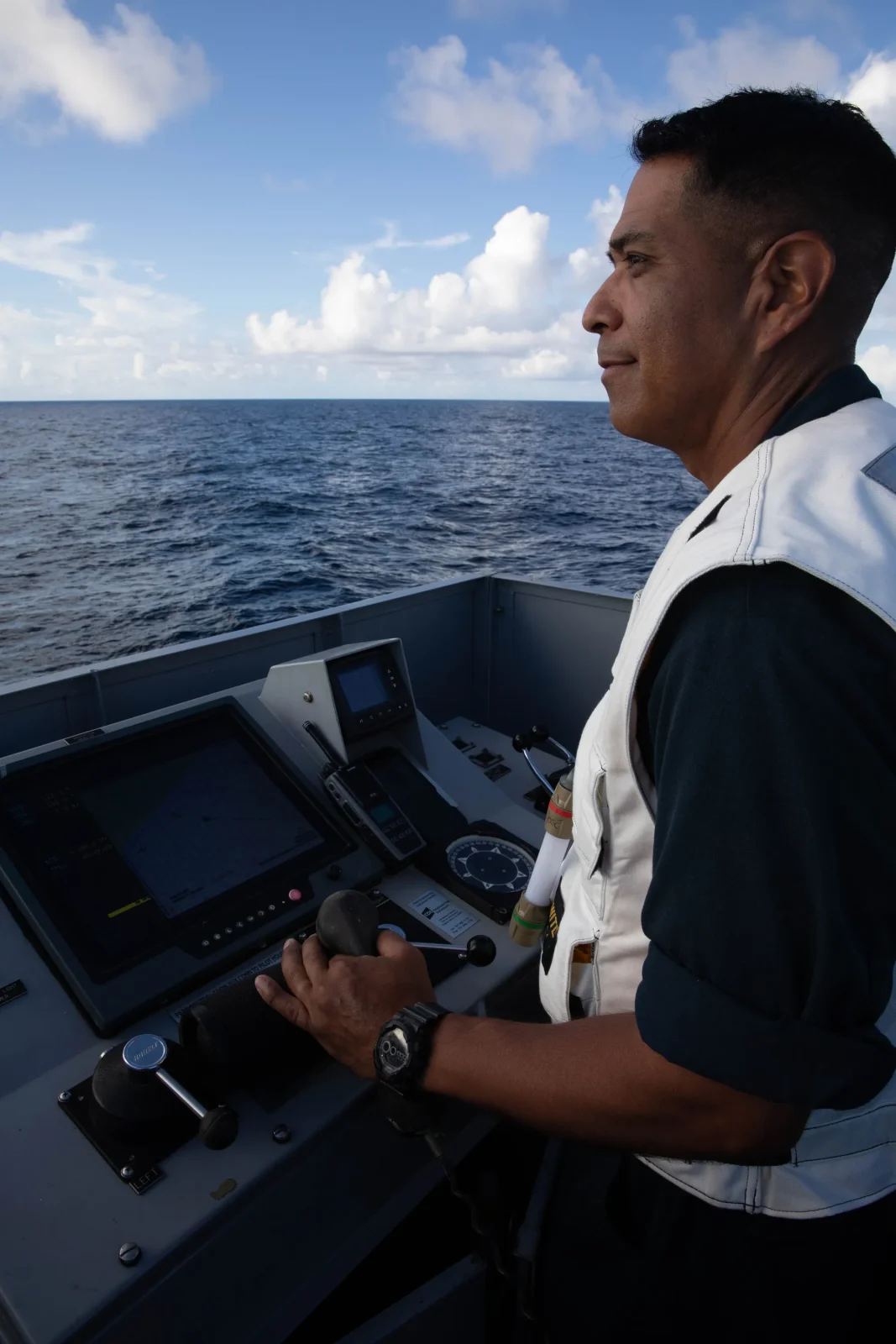
Saronic, the U.S. defense tech company best known for autonomous surface vessels, will build its first crewed ship under a new U.S. Navy contract: a Landing Craft Utility (LCU) 1700-class vessel. The build will be the inaugural project at Port Alpha, the company’s next-generation shipyard rising in Brownsville, Texas.
At a Glance
- Saronic will build the LCU 1700 under a firm fixed-price Other Transaction Authority (OTA) award.
- The contract is part of a $280.5 million Navy LCU 1700 program split among Saronic, Conrad Shipyard, and Master Boat Builders.
- The first build will take place at Port Alpha in Brownsville, with production set to begin in 2028 and first deliveries expected in 2029.
- The LCU 1700 carries roughly 170 tons of cargo over a range of about 1,200 nautical miles, supporting amphibious operations, resupply, and disaster response.
- For Saronic, this marks a step beyond autonomous platforms like Corsair and Marauder into crewed vessel construction.
Background
Saronic has so far been known primarily for its Corsair autonomous surface vessel and Marauder platform, backed by a production contract worth more than $400 million for Corsair. Port Alpha is the company’s roughly $3 billion next-generation shipyard under construction in Brownsville, designed initially to support vessels up to 850 feet, with room to scale toward 1,200 feet.
Splitting the LCU 1700 award across three yards fits a broader Navy strategy of widening its logistics-vessel supplier base. With traditional large shipyards facing capacity strain, the Navy is folding technology-driven newcomers like Saronic into the industrial base to diversify production.
Regional Impact
Turkey already has a strong industrial base in amphibious logistics shipbuilding: yards including ASFAT, RMK Marine, Sedef, and Dearsan produce Landing Craft Tank (LCT) and similar classes both for the Turkish armed forces and for export. Saronic’s move shows how technology firms from outside the traditional defense-shipbuilding world can break into crewed-vessel construction — a signal that Turkish yards pursuing a similar mix of unmanned and manned platforms may find that diversification increasingly essential to staying competitive.
FAQ
What is the LCU 1700 used for?
It’s a logistics/landing craft class that ferries vehicles, personnel, and cargo from amphibious ships to shore, including unimproved or portless beaches.
Why did the Navy split the contract among three shipyards instead of one?
To broaden the supplier base, reduce dependence on a single builder, and increase total production capacity.