Lockheed Martin Wins $950M Australian AIR6500 Contract

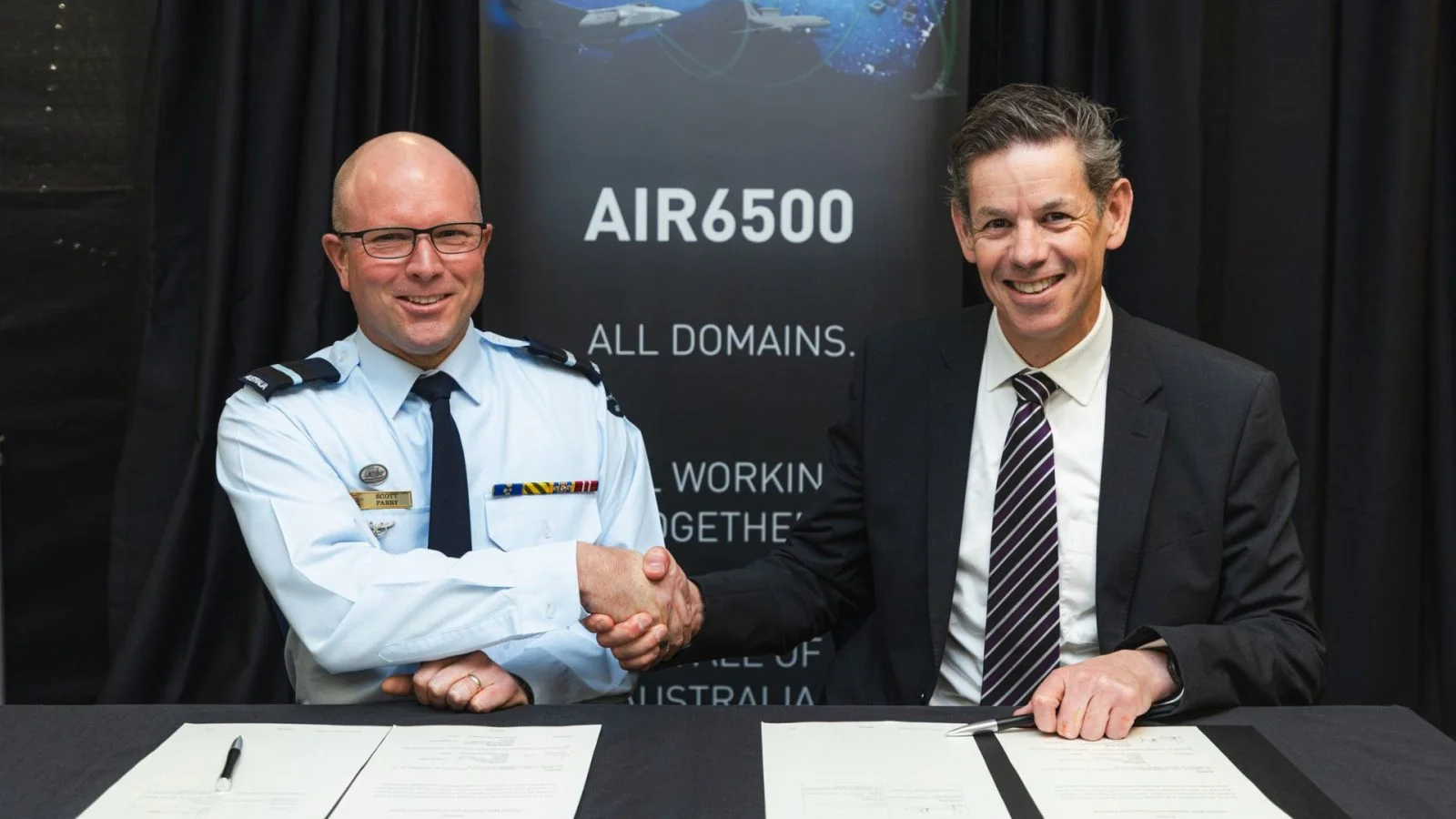
Australia’s Department of Defence has signed a new contract with Lockheed Martin worth AUD 1.32 billion (approximately $950 million) for Tranche 2B of AIR6500, the country’s integrated air and missile defense battle management program. The award, announced in September 2026, builds on the program’s earlier tranches.
AIR6500 is designed to fuse sensors and command-and-control (C2) capabilities across Australia’s services into a single integrated network, extending air and missile defense capability across land, sea, air and space domains to enable earlier threat detection and coordinated response across platforms. Breaking Defense reported that Tranche 2B will deepen the network’s sensor-fusion and tracking capabilities specifically.
Earlier program phases focused on establishing the core architecture and initial integration work. The start of Tranche 2B signals that AIR6500 is moving from a largely conceptual stage into the incremental fielding of operational capability. No specific start or completion dates were disclosed alongside the contract, though the September 2026 announcement suggests work is set to begin in the near term.
Australia’s Department of Defence characterized the award as meeting priorities set out in the 2024 National Defence Strategy and the Defence Industry Development Strategy, which call for strengthening the country’s strike and domain-awareness capabilities amid a shifting threat environment in the Indo-Pacific. AIR6500 is positioned as the backbone of Australia’s future air defense architecture in support of those goals.
Lockheed Martin’s role on the program tracks with the company’s broader expansion of its defense investment in Australia, which includes missile manufacturing and sustainment facilities among other local commitments. The AIR6500 contract is expected to further deepen that industrial base in command-and-control software and systems integration specifically.
Australia’s air and missile defense investment, alongside the nuclear submarine program under AUKUS, has become one of the fastest-growing categories in the country’s defense budget in recent years. AIR6500’s integrated architecture is being designed to eventually connect with Australia’s incoming Aegis-equipped frigates and any future ballistic missile defense capability, positioning the program less as a single weapons purchase and more as the software and sensor backbone for a layered, multi-domain defense network.
No other prime contractor was named alongside Lockheed Martin in the contract announcement, though programs of this scale typically involve numerous subcontractors and software firms whose participation is expected to be disclosed as work progresses. Rising Chinese missile and airpower capability across the Indo-Pacific is pushing regional states toward integrated air defense networks broadly, with Australia’s approach through AIR6500 paralleling similar command-and-control modernization underway in Japan and South Korea, and reinforcing interoperability with allied C2 systems under frameworks such as AUKUS and the Quad.
The Department of Defence has not disclosed a target date for AIR6500 reaching full operational capability. The scale of the Tranche 2B award marks one of Australia’s largest command-and-control investments of the past decade, and its signing suggests requirements identified in earlier phases have matured enough for Lockheed Martin’s software architecture to be trusted by the Australian Defence Force for the network’s next stage of build-out.
Sources
- Breaking Defense — “Lockheed Martin secures $950M Australian air battle management contract” (Eylül 2026) — https://breakingdefense.com/2026/09/lockheed-martin-secures-950m-australian-air-battle-management-contract/ — used as a source for this report.
- Lockheed Martin Australia (resmi basın odası) — “Lockheed Martin AIR6500 Tranche 2B announcement” (9 Eylül 2026) — https://lockheedmartinau.mediaroom.com/index.php?s=2429&item=122734 — used as a source for this report.