What is THAAD? The U.S. High-Altitude Missile Shield That Made Its Combat Debut in Israel

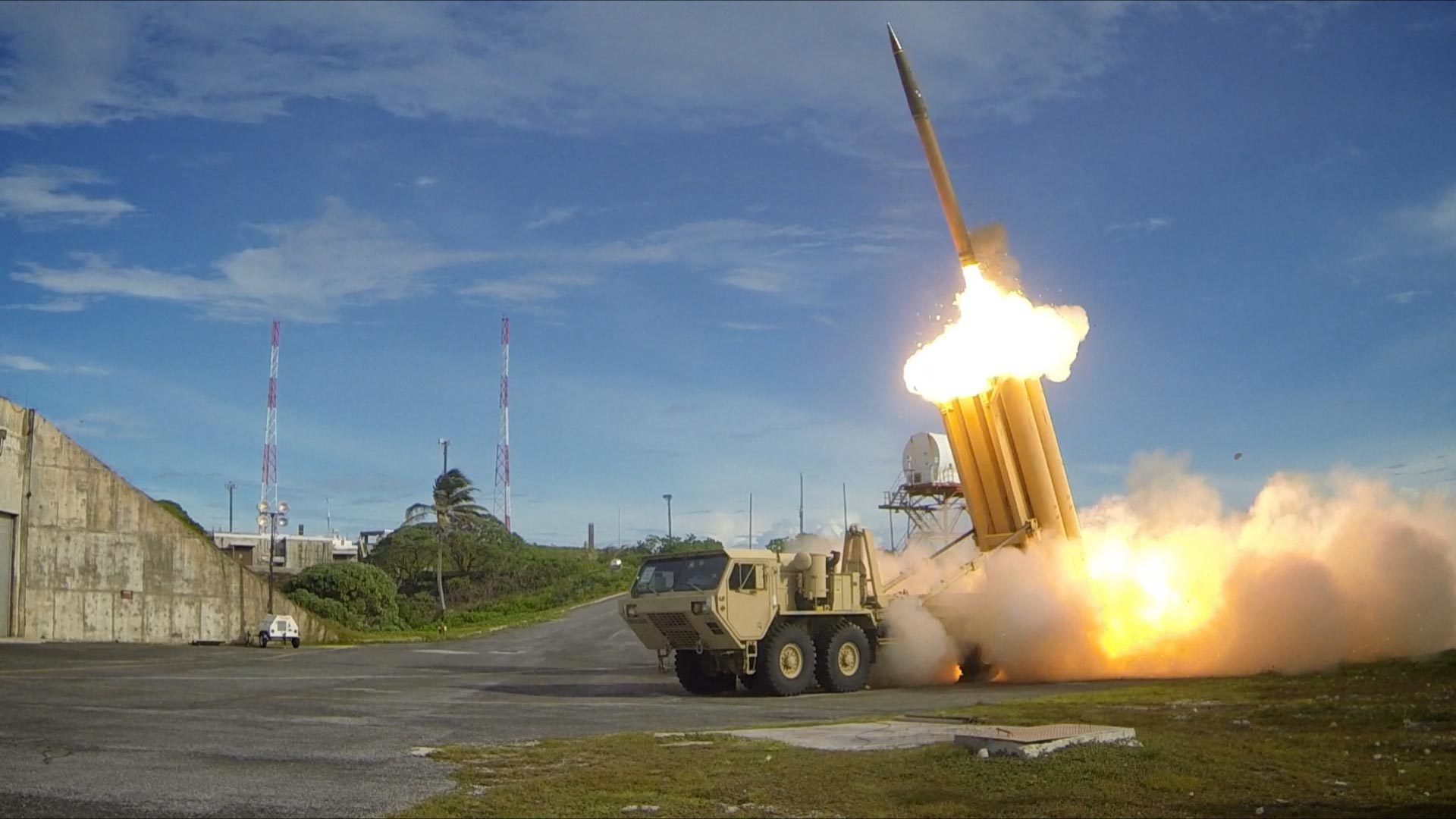
The THAAD — Terminal High Altitude Area Defense — is the U.S. Army’s exo-atmospheric ballistic-missile defense system, manufactured by Lockheed Martin Missiles and Fire Control. Designed to intercept short-, medium- and intermediate-range ballistic missiles in their terminal phase, THAAD uses a hit-to-kill kinetic warhead with no explosive — relying on the kinetic energy of a 200 kg interceptor closing at Mach 8 to disintegrate the warhead in the upper atmosphere. After nearly twenty years in service without firing a single shot in anger, THAAD made its combat debut in October 2024, when a U.S. Army battery deployed to Israel intercepted multiple Iranian ballistic missiles during the Iranian retaliatory strike on Israel — the first combat use of any U.S. exo-atmospheric BMD system in history.

Key facts at a glance
| Attribute | Value |
|---|---|
| Type | Exo-atmospheric / upper-endo ballistic-missile defense system |
| Origin | United States |
| Manufacturer | Lockheed Martin Missiles and Fire Control (system); Raytheon (AN/TPY-2 radar) |
| In service | 2008 (operational); 2024 first combat use |
| Engagement altitude | 40 — 150+ km (terminal exo-atmosphere) |
| Engagement range | ~200 km |
| Interceptor speed | ~Mach 8 (2,800 m/s) |
| Warhead | Hit-to-kill (no explosive) |
| Radar | AN/TPY-2 X-band, ~1,000 km detection |
| Launcher | M1075 PLS truck-mounted; 8 interceptors per launcher |
| Battery composition | 6 launchers (48 missiles), 1 radar, 1 fire control |
| Operators | United States, South Korea (hosted), UAE, Saudi Arabia, Israel (temporarily hosted) |
| Battery cost | ~ USD 800 million |
| Interceptor cost | ~ USD 12.5 million each |
Why a separate “upper-tier” system
U.S. integrated air and missile defense rests on a three-tier architecture that THAAD anchors at the top:
- Lower tier — Patriot PAC-3 / PAC-3 MSE intercepts inside the atmosphere up to about 25 km altitude.
- Upper terminal tier — THAAD intercepts between 40 and 150 km, the boundary between atmosphere and space.
- Midcourse tier — Aegis BMD (SM-3) and Ground-Based Interceptors (GBI) engage further out in space for IRBM and ICBM threats.
THAAD fills a critical gap: ballistic missiles in the terminal phase (after their motor burns out but before they re-enter the dense lower atmosphere) had no dedicated U.S. interceptor before THAAD. By killing the warhead exo-atmospherically, THAAD also ensures that any chemical, biological or nuclear payload disintegrates outside breathable air.
The kinetic kill mechanism
THAAD’s interceptor carries no warhead at all. The kill vehicle is a 200 kg slug of metallic mass — combined sensors, divert thrusters and structure — that converts pure kinetic energy into target destruction. At closing velocities of 6,000–8,000 m/s, the interceptor’s impact delivers roughly 4 GJ of energy, equivalent to ~1,000 kg of TNT, but concentrated to a 1 m³ volume. Any payload, including hardened warheads, is reduced to fragments.
Terminal guidance uses an onboard imaging infrared seeker that opens its shroud above 100 km altitude. The seeker tracks the incoming warhead against the cold background of space and steers the kill vehicle with small side-thrusters (DACS — Divert and Attitude Control System). Final closure is autonomous.
The AN/TPY-2 radar
Each THAAD battery is paired with a Raytheon-built AN/TPY-2 X-band phased-array radar. The radar has two modes: terminal mode, in which it cues THAAD launchers; and forward-based mode, in which it acts as an early-warning sensor for the broader BMD architecture, including AEGIS Ashore in Romania and Poland and the U.S. Northern Command. Detection range against typical ballistic-missile targets exceeds 1,000 km; sensor data flows into the U.S. C2BMC command and control network for joint engagement coordination.
The Israel combat debut
On 13 October 2024, in response to Iran’s Operation True Promise II strike of 1 October, the U.S. Department of Defense announced the deployment of a THAAD battery and approximately 100 U.S. soldiers to Israel — the first deployment of any U.S. strategic BMD system to an operational combat zone. Within weeks the battery engaged Iranian-launched ballistic missiles during continued exchanges. While exact intercept tallies remain classified, U.S. officials publicly confirmed that THAAD engaged and destroyed multiple Iranian medium-range ballistic missiles before they could threaten Israeli territory. The deployment validated nearly two decades of testing and turned THAAD from an untested deterrent into a combat-proven shield.
Operators and deployments
| Country | Status | Batteries / units |
|---|---|---|
| United States | Operator | 7 batteries |
| South Korea | Hosts 1 U.S. battery (Seongju, since 2017) | 1 hosted |
| UAE | FMS purchase, delivered 2016 | 2 batteries |
| Saudi Arabia | FMS purchase 2017 | 7 batteries (delivery ongoing) |
| Romania (Deveselu) | Temporary deployment (2019, 2024) | — |
| Israel | Hosted U.S. battery (Oct 2024 – present) | 1 hosted |
| Guam | Permanent U.S. forward deployment since 2013 | 1 battery |
The Saudi contract — worth roughly USD 15 billion — is the largest single foreign sale of a U.S. missile-defense system in history.
How THAAD compares
| THAAD | Patriot PAC-3 MSE | Arrow-3 (Israel) | SM-3 Block IIA (US/Japan) | |
|---|---|---|---|---|
| Mission | Terminal exo-atmospheric | Lower-tier endo | Exo-atmospheric midcourse | Sea-based midcourse |
| Engagement altitude | 40–150 km | up to 25 km | 100+ km (space) | 500+ km (space) |
| Engagement range | ~200 km | ~35 km (BMD) | 2,400 km | 2,500 km |
| Warhead | Hit-to-kill | Hit-to-kill | Hit-to-kill | Hit-to-kill |
| Combat use | Yes (Israel 2024) | Yes (Saudi, Ukraine) | Yes (Israel 2023 Houthi MRBM) | No public combat use |
Limitations
- Magazine depth. 48 interceptors per battery; against saturation strikes of 100+ missiles, magazine exhaustion is a real risk.
- Hypersonic glide vehicles. THAAD was not designed against HGVs maneuvering in the mid-atmosphere where it cannot reach. The U.S. is developing the Glide Phase Interceptor (GPI) to fill this gap.
- Cost-per-shot. USD 12.5 million per round limits engagement against lower-tier threats.
- Politically sensitive. The South Korea deployment in 2017 triggered Chinese economic retaliation costing South Korean exporters an estimated USD 7 billion in two years.
The future: THAAD-ER and GPI
Lockheed Martin has proposed a THAAD-Extended Range (THAAD-ER) variant with a larger second-stage motor and an enlarged kill vehicle for engagement of intermediate-range and selected hypersonic threats. Funding has been intermittent, but the 2024 Iran strikes appear to have revived congressional interest. The complementary Glide Phase Interceptor — being developed by Northrop Grumman under a Missile Defense Agency contract — will be deployed on Aegis ships rather than land batteries but will share THAAD’s discrimination and tracking architecture.
Why THAAD matters
For most of its history THAAD existed as the most expensive untested system in U.S. missile defense — a controversial purchase whose value would only be measured in deterrence. The Iranian strikes on Israel in 2024 changed that overnight. THAAD now sits alongside Patriot and Aegis as a combat-proven element of the integrated missile shield, and the strategic case for moving from research and development into production at scale has, for the first time in twenty years, become unambiguous.