NATO Launches $40 Billion ‘Drone Edge’ Initiative at Ankara Summit
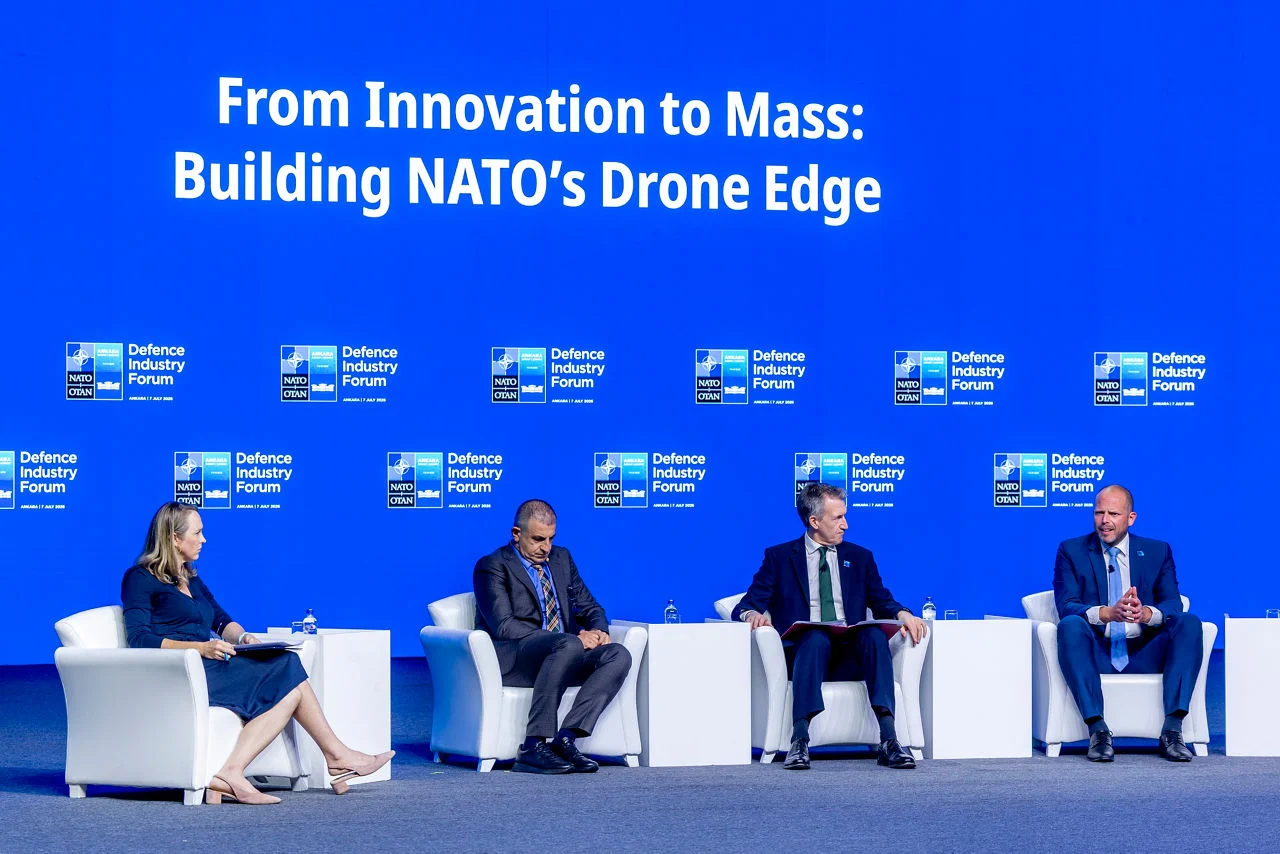
NATO unveiled a new initiative called “Drone Edge” on July 7, 2026, at the Summit Defence Industry Forum in Ankara. According to the alliance’s official statement, the program envisions a combined $40 billion in investment in drone and counter-drone systems over the next five years. The forum, held alongside the NATO Summit, brought together allied ministers, senior officials, and representatives from more than 100 companies.
Rutte: “The money is there, and more is coming”
NATO Secretary General Mark Rutte told the forum “the money is there, and more is coming,” urging industry and financial institutions to “do more, faster, together.” Rutte also issued a direct call to action to major financial institutions to increase capital flows into the defense sector. Deputy Secretary General Radmila Shekerinska separately announced new initiatives spanning space, surveillance, strike capabilities, and integrated air and missile defense.
What the initiative covers
Twenty NATO members are taking part in Drone Edge. The program will establish a dedicated “marketplace” where allies can procure tested, alliance-interoperable counter-drone solutions. It also aims to increase drone-operator training capacity fivefold by the end of 2027; 16 training centers across eight countries are already operating under the initiative. NATO is framing the effort as a direct response to how drone warfare has reshaped the battlefield in Russia’s war on Ukraine.
Beyond drones: the forum’s other announcements
The Ankara forum extended well beyond the drone initiative. NATO announced delivery of the 10th Airbus A330 MRTT to the Multinational MRTT Fleet, Northrop Grumman’s MQ-4C Triton surveillance drone acquisition, and expanded airborne early-warning coverage through Saab’s GlobalEye. The forum also introduced “NATO Front Door,” a platform meant to simplify how companies engage with the alliance; “NATO Engine,” an initiative linking civilian and defense production lines; and the first public, unclassified “Demand Signal” giving industry direct visibility into allied capability requirements. Officials said the forum produced more than €50 billion in newly disclosed procurement deals overall.
Türkiye’s role at the center of the announcement
Hosting the forum in Ankara underscored Türkiye’s growing weight in NATO’s industrial agenda. Official NATO photos from the event show Baykar CEO Haluk Bayraktar alongside Belgian and UK defense officials, a visual marker of Turkish drone manufacturing’s international standing. NATO’s push to scale counter-drone spending to $40 billion over five years also points to the size of a market in which Türkiye figures as both producer and buyer.
Ukraine’s imprint on drone doctrine
NATO officials, in unveiling Drone Edge, have stressed that Ukraine’s deep strikes into Russian territory with drones have directly shaped the alliance’s investment debate. Ukraine’s practice of fielding low-cost unmanned systems at mass scale, with software updated rapidly in the field, has accelerated NATO members’ own push to build production and training capacity with similar agility. The goal of expanding the 16 training centers already running across eight countries reads as a direct attempt to translate battlefield lessons into alliance doctrine.
Why now, and why at this scale
Pushing counter-drone investment to $40 billion within a five-year window directly mirrors the battlefield shift observed in Ukraine, where cheap, mass-produced drones have repeatedly forced defenders to expend far costlier air-defense munitions. In that environment, allies need both cheaper counter-drone options and an industrial base able to produce them to common standards. The planned marketplace mechanism is meant to spare individual nations from running separate testing and certification processes, shortening procurement timelines — a practical benefit especially for smaller allies operating with tighter defense budgets.
Sources: NATO official news page (nato.int, July 7, 2026), Army Recognition (July 8, 2026), Dronewatch Europe (July 8, 2026).